Страницы

Showing posts with label Foreign trade. Show all posts

Wednesday, April 19, 2017

Foreign trade

Citing national security interests, Trump orders investigation into foreign steel
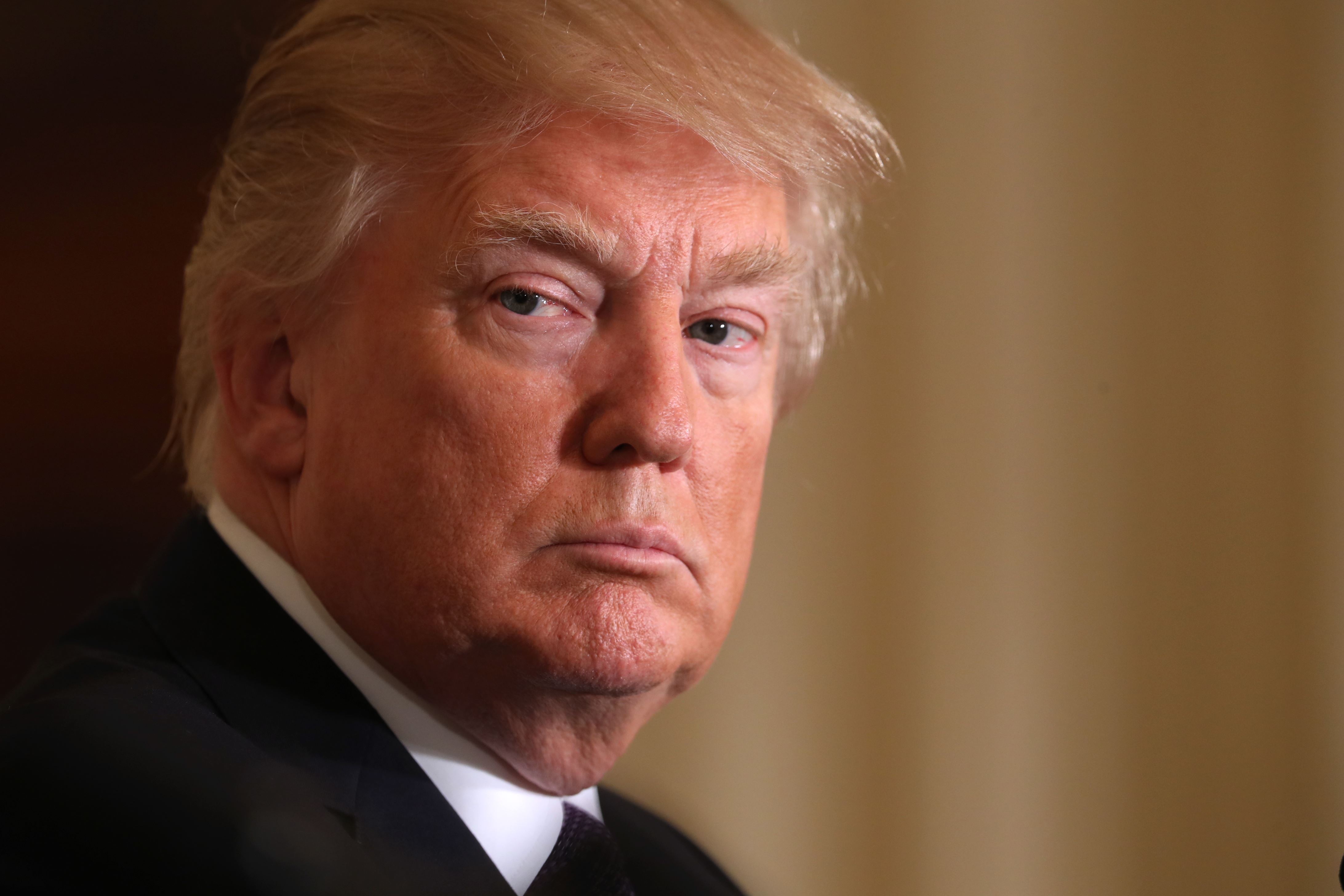

The government is launching an investigation into steel dumping and other trade practices detrimental to the domestic industry.

President Donald Trump is expected to order the study Thursday, according to an official at the Department of Commerce, which will run the investigation.

It could lead to increased tariffs and penalties on steel imports, the official said.

Authority for the investigation comes from the Trade Expansion Act of 1962, which gives Commerce broad authority over trade affecting national security.

Steel trade raises national security concerns because of the country’s reliance on domestic capacity to produce materials for the infrastructure and for defense, the commerce official said.


Wednesday, February 8, 2017

Foreign trade

We have a national security crisis: Let's do nothing


Story image for We have a national security crisis from Fox News
Can the United States do anything to reverse a dangerous dependence on crucial mineral supplies that put our future military security in the hands of China? We may be about to find out.
The challenge to our future security was outlined in a grim, largely overlooked report from the U.S. Geological Survey. In stark terms, it demonstrated that the U.S. is 100 percent reliant on foreign producers for at least 20 elements and minerals, some of them of strategic importance to our military. The most common source: China.
As Bellwether noted last week, a group of 17 materials, known collectively as rare earths, are produced almost exclusively by China. That’s the country President Trump has labelled a currency manipulator and trade cheat and which he has vowed to bring to heel in future bilateral negotiations. 

Friday, February 3, 2017

Foreign trade

China's secret Trump card: Could Beijing deprive our military of critical defense components?


FILE -- Jan. 17, 2017: China's President Xi Jinping speaks at the World Economic Forum in Davos, Switzerland.Candidate Donald Trump promised to bring jobs back to America, rebuild our military, and on trade get tough with China, which he said was “raping” our economy. President Trump may find his administration the victim of exactly the job-exporting policies he railed against and face the very real possibility that China could cut off U.S. access to 17 rare materials vital to our advanced aircraft and guided missile systems.
Among major U.S. military projects imperiled by a potential China squeeze play is a $340 billion Navy program to create new, Columbia-class nuclear submarines, and a new electro-magnetic aircraft launch (EMAL) system, which the Navy hopes to use for catapults that launch planes from aircraft carriers.

Friday, May 27, 2016

Foreign trade

German Machine Makers Move to Russia to Bypass European Sanctions

A machine-tool plant in the Rostov Region
A German machinery firm in Chemnitz has decided to recoup its export losses to Russia by localizing the production of its machine tools in Russia's Republic of Tatarstan, local German newspaper Freie Presse reported on Wednesday.

During Soviet times Chemnitz was known as Karl-Marx-Stadt, and the Soviet Union was the largest purchaser of the machinery goods produced there.

German manufacturers continued to benefit from this trade connection until the imposition of anti-Russian sanctions in 2014, which were followed by Russia's counter-sanctions and policy of import substitution, also partly stimulated by last year's fall in the ruble's value. As a result the state of Saxony, where Chemnitz is the third largest city, has seen a drop in the value of its exports to Russia from 327 million euros ($365 million) in 2013, to 177 million euros in 2015, Freie Presse reported.


Foreign trade

Trade Is a National Security Imperative

The New World Trade 7
In an uncertain world, America’s future security depends on both upgrading military capabilities and expanding economic opportunities. The Trans-Pacific Partnership, a trade accord among 12 countries accounting for almost 40% of the global economy, draws together these two strands of strategy. But TPP has been widely criticized by Republican and Democratic presidential candidates alike and faces an uphill battle in Congress.

Strategists have long recognized the interrelationship between economics and security. As early as 1787, John Jay pointed out in Federalist No. 4 that U.S. trade with Asia could one day lead to conflict. Over the years that followed, oceans that once barred foreign armies became highways for the U.S. Navy and mariners seeking markets. In 1854, Commodore Matthew Perry “opened” Japan to trade. In 1899, Secretary of State John Hay resisted imperialist designs to carve up China, as Africa had been, in favor of an “Open Door” policy to secure equal commercial opportunities.

Friday, February 19, 2016

Foreign trade

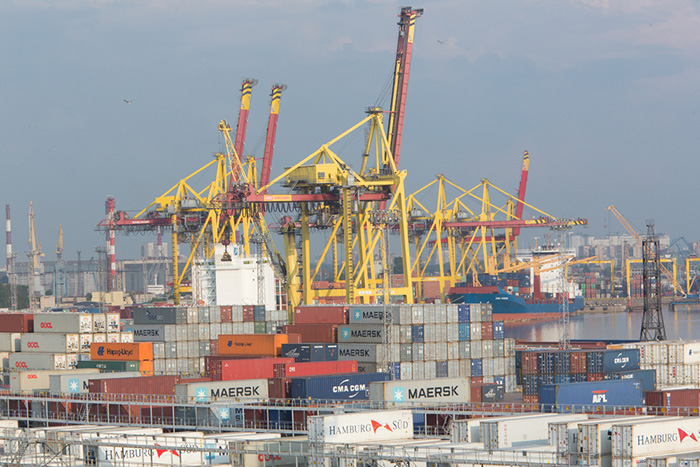
Customs change could dethrone St. Petersburg as top Russia port

The Bronka and Ust-Luga seaports are expected to become the new container hubs of northwest Russia due to Russian Federal Customs Service plans to cease servicing export-import cargo on site at Big Port St. Petersburg.
The decision will make importing and exporting out of Big Port inconvenient as all the necessary paperwork will take place in the new Bronka seaport roughly 40 miles away. The distance means there will be huge delays for shippers if inspectors require additional paperwork or need to inspect cargo.
The decision is mainly because of “massive violations of the customs legislation,” at the Baltiysky Customs Post, which oversees Big Port, according to Andrei Belyaninov, head of the Federal Customs Service. Those violations cost the federal budget enormous amounts of money, and the FCS wants to end the corruption.
The plan is sure to benefit the nearby Baltic ports of Bronka and Ust-Luga, and is supported by the municipal authorities in St.Petersburg who have been lobbying for the closure of port terminals within the city since the mid-2000s.

Monday, June 15, 2015

Foreign trade

You Can’t Read the TPP and You Can’t Find Out Who in Congress Has


You Can’t Read the TPP and You Can’t Find Out Who in Congress HasYou probably know by now that no normal Americans are allowed to see the text of the Trans-Pacific Partnership trade agreement. It’s classified. Even members of Congress can only read it by going to secure reading rooms in the basement of the Capitol.
But here’s what you might not know: you’re not even allowed to know who in Congress has bothered to do this.