Страницы

Showing posts with label Defense procurement. Show all posts

Wednesday, July 15, 2020

Defense procurement

Lockheed Martin's C-130J production line in Marietta, Georgia.US May Need to Nationalize Military Aircraft Industry, USAF Says


The United States might need to nationalize parts of the military aviation sector if the Pentagon does not come up with new ways to buy planes that stimulate more competition in private industry, a top Air Force official warned.

Will Roper, the head of Air Force acquisition, spoke Tuesday morning as the service finalizes ambitious plans to buy a new series of combat fighter jets called the Digital Century Series.

“We have multiple vendors who can still build a high-end, tactical platform,” Roper told reporters. “I think it’s really important that we find a new model where there are no big winners and no big losers, but continual competition.”

Lockheed Martin and Boeing are the only U.S. companies that make tactical fighter jets. Boeing’s F-15 Eagle and F/A-18 Super Hornet are considered a generation behind Lockheed’s F-22 Raptor and F-35 Lightning II. Boeing and Sweden’s Saab are building the new T-7 pilot training jet.

Friday, May 8, 2020

Defense procurement

Russian defense procurement on schedule despite pandemic — deputy premier

Юрий Иванович Борисов
Work to fulfill this year’s defense procurement order continues in full strength and on schedule despite the novel coronavirus pandemic, Russian Deputy Prime Minister Yuri Borisov told reporters on Thursday.
"As far as the work on the state procurement order is concerned, a total of 72.6% of assignments have been placed, which corresponds to the 2019 pace. The same applies to the volume of financing, transferred to general contractors of the state procurement order," he said.
"At present, we are on schedule. All the necessary measures are being taken," Borisov added.
According to the deputy premier, due to the current novel coronavirus pandemic, Russian defense companies are working in special regime. The situation is monitored on a daily basis.

Monday, January 27, 2020

Defense procurement

A group of sham companies sold the US Navy $2.7 million worth of nothing

The bungling crew sold the Navy nonexistent training explosives.
...Michael Kitrel, 42, was charged this week with conspiracy to commit larceny of government money. His alleged crimes were part of a larger $2.7 million scheme involving two Navy lieutenants and a senior chief petty officer who are already serving punishments for their roles in the brazen operation.

“The potential damage from procurement fraud extends well beyond financial losses,” explains a 2018 report from the Department of Defense (pdf). “This crime poses a serious threat to the DoD’s ability to achieve its objectives and can undermine the safety and operational readiness of the warfighter.”

Between 2013 and 2017, the department gave more than 15 million contracts (pdf) to companies that had been indicted, fined, or convicted of fraud, valued at more than $334 billion, according to the DoD’s own data. It was only a slight improvement over the period between 2001 and 2010, when the department awarded more than $1.1 trillion worth of contracts (pdf) to companies that had been found guilty of fraud against the government. Some recent frauds, as first reported by Quartz, have included vendors selling the Navy Chinese-made ballistic vests and helmets that were labeled as having been manufactured in America, and shipping hundreds of counterfeit radio antennas to the Navy SEALs.

Saturday, January 4, 2020

Defense procurement

How the Pentagon Was Duped by Contractors Using Shell Companies


The Pentagon January 2008.jpg
Shell companies have come under attack for obscuring illicit money flowing into real estate. But it turns out they’re also a problem for the Pentagon.
Some Defense Department suppliers have used such front companies to fraudulently win manufacturing bids, according to a U.S. Government Accountability Office study of Defense Department contractors.
In some cases, the shell companies helped contractors obscure that they were making U.S. military equipment abroad, the GAO said, posing a risk to national security and quality control. More often, they were used to win contracts meant for companies owned by disabled veterans or minorities, it said.
The government watchdog reviewed 32 cases that made their way to criminal prosecutions or lawsuits between 2012 and 2018. Taken together, they illustrate how the Pentagon’s $350 billion in annual contracting can be gamed using companies that exist largely on paper.
The problem could be far bigger, since the GAO’s study wasn’t intended to gauge its scope. The watchdog said the Pentagon had made only spotty efforts to pierce the secrecy of shell companies.

Tuesday, May 14, 2019

Defense procurement

Defense Contracting Fraud: A Persistent Problem


Steven AftergoodDuring the five year period from 2013-2017, there were 1,059 criminal cases of defense contracting fraud resulting in the conviction of 1,087 defendants, including 409 businesses, according to a newly released Department of Defense report to Congress. There were another 443 fraud-related civil cases resulting in judgments against 546 defendants.
During that same period, the Department of Defense entered into more than 15 million contracts with contractors who had been indicted, fined, and/or convicted of fraud, or who reached settlement agreements. The value of those contracts exceeded $334 billion, according to the DoD report. See Report on Defense Contracting Fraud, DoD report to Congress, December 2018.
The report was prepared in response to a requirement in the FY2018 defense authorization act at the initiative of Sen. Bernie Sanders. It was released this week under the Freedom of Information Act.
A previous report covering the period of 2001-2010 was produced by the Department of Defense in 2011, also at the request of Senator Sanders. The earlier report likewise found extensive fraud including criminal and civil offensive in defense contracting.
“Simply put, the Pentagon continues to be riddled with waste, fraud and abuse of taxpayer funds to a degree unmatched across the federal government,” Sen. Sanders said in 2017. “It is unacceptable that the Department of Defense continues to lose vast sums of taxpayer money because of fraud perpetrated by major defense contractors. This has got to end.”

Monday, April 22, 2019

Defense procurement

4 questions on the risks facing Turkey’s defense industry


 Since his early days in power, Turkish President Recep Tayyip Erdogan has made growing the country’s defense industry a long-term goal. But with the future of Ankara’s participation in the F-35 program in doubt, and the country in the midst of an economic downturn, can Turkey’s defense firms stay on track?
Defense News talked with Bulent Aliriza, director and senior associate on the Turkey Project at the Center for Strategic and International Studies, about the challenges ahead.
Under Erdogan, Turkey has made growing its indigenous defense industry a priority. How would you rate that development?
Developing a self-sufficient defense industry was one of Erdogan’s very ambitious 2023 goals, for the centennial of the Turkish republic. By his own self-proclaimed yardstick, the sector is not where he wants it to be. However, there has been impressive progress under Erdogan’s personal direction with around 65 percent of the sector now indigenous, compared to 20 percent when he came to power in 2003, along with defense exports of over $2 billion last year.

Thursday, April 18, 2019

Defense procurement

The cost of a new ICBM is going up. Here’s why the US Air Force isn’t concerned.


The Air Force expects the price of its next-generation intercontinental ballistic missile to increase in the short term to pay for improved infrastructure, such as an overhaul of the existing silos, the head of Air Force Global Strike Command said Wednesday.
But ultimately, the service projects that the total cost estimate for the Ground Based Strategic Deterrent program will come back down after the Air Force makes a source selection decision, in which competitors Boeing and Northrop Grumman will duke it out over which company can offer the best price, Gen. Timothy Ray told reporters during a roundtable event.
Why the fluctuation in cost? GBSD will reuse much of the infrastructure where the existing Minuteman III missiles are housed, and by making certain investments into those facilities up front, the Air Force will be able to maintain the new missiles more easily and more cheaply over the life of the program, Ray said.

Friday, March 29, 2019

Defense procurement

U.S. military turns away from drones

Картинки по запросу RQ-4 Global Hawk
The secretive and lethal technology that has defined U.S. counterterror operations for the last decade – and remains the subject of global controversy – appears to be diminishing in importance as America prepares for the next era of combat.

New Pentagon documents show the military plans to invest next year in the lowest number of new drones in more than a decade. Though the complexity of Defense Department budgets makes it difficult to isolate a single reason for the shift, budget analysts agree the Trump administration's stated intention of withdrawing from costly and deadly Middle East wars and instead focus on a resurging China and Russia is driving a focus on other technologies.

Since it was first employed on an industrial scale in Afghanistan, drone technology has evolved, become more lethal and expanded to conflict zones in Iraq and Syria, Libya, Yemen and across sub-Saharan Africa from Somalia to Nigeria. Their ability to exceed prior limits imposed on manned aircraft and to kill America's enemies without putting its warfighters in harm's way has proven irresistible to U.S. presidents since George W. Bush, and a tempting way to obscure involvement in foreign conflict.

Wednesday, March 27, 2019

Defense procurement

Palantir wins competition to build Army intelligence system

The Army has chosen Palantir Technologies to deploy a complex battlefield intelligence system for soldiers, according to Army documents, a significant boost for a company that has attracted a devoted following in national security circles but had struggled to win a major defense contract.
Industry experts said it marked the first time that the government had tapped a Silicon Valley software company, as opposed to a traditional military contractor, to lead a defense program of record, which has a dedicated line of funding from Congress. The contract is potentially worth more than $800 million.
The Army’s decision to go with Palantir, which was co-founded by Peter Thiel, the billionaire investor and sometimes adviser to President Trump, brings to a close the latest chapter in a fierce competition.

Tuesday, March 12, 2019

Defense procurement

INSIDE THE ROOM WHERE TECH ACTUALLY VIES FOR MILITARY JOBS
The Pentagon views tapping into Silicon Valley's expertise as essential to competing in an arms race that may hinge on developing technologies like artificial intelligence. But landing a government contract has traditionally been a grueling and laborious process, requiring companies to comply with a list of regulations that, when printed out, weighs 8.5 pounds. That’s discouraged lots of startups from even trying to compete and has prevented the government from accessing some of the freshest emerging ideas in tech.
With the demo day in New York, the Air Force wanted to shrink that process. Over the course of one day, Raj and 50 other grantees walked away with $3.5 million in initial funding, with another $5 million set to be paid out in installments. On average, it took 15 minutes from the end of their pitches for the funds to be transferred into the companies' bank accounts, using an Air Force credit card. (And yes, the folks running the event did get some frantic calls from payment processors wondering why the US government was spending millions of dollars in $50,000 increments in Times Square.)

Tuesday, January 15, 2019

Defense procurement

Reform panel warns Congress to overhaul Pentagon acquisitions, or lose technological edge

For the United States to maintain its technological edge against Chinaand other competitors, Congress must radically simplify the way Pentagon acquisitions work with companies outside the beltway, according to an influential advisory group established by Congress.

The Section 809 Panel on Tuesday released its third and final volume of recommendations to streamline the Defense Department’s lumbering acquisition bureaucracy. In 500-plus pages, it emphasized changes to revamp the way the military buys commercial products, information technology and major weapons programs, among other far-reaching ideas.

When panel members on the hunt for ways to make the acquisition process more accessible visited one Silicon Valley firm flying under the Pentagon’s radar, the members were alarmed to learn a Chinese delegation had visited only a week before, offering to buy the company’s production capability, if not the company itself.

“These are companies that the United States I guess knows about at some level, but the Department of Defense didn’t know existed, they weren’t interested and wouldn’t know how to do business with them,” Section 809 Panel Chair David Drabkin, a former General Services Administration official, said at Tuesday’s rollout event.

Friday, May 4, 2018

Defense procurement

Pentagon procurement in the digital age

In modern warfare, information is king. The United States military has long relied on its superior ability to obtain, process, access and share data within the U.S. Joint Forces and with allies as an “offset” to the capabilities of other states. The next step? Moving to the “cloud” — remotely accessible systems for storing data, computing with it, and using it in military operations.

Last month, the Department of Defense announced it was seeking to move quickly ahead with a single-award contract — that is, one provider for all cloud services — for at least two years. While moving DoD data to a cloud-based system is urgently needed, a sole-source award in the presence of a vibrant marketplace for cloud-based IT services runs counter to private sector practice, where companies typically turn to at least a handful of different providers based on particular requirements.

So far, the Pentagon is short on answers to some very basic questions. By rapidly seeking a sole cloud provider — as opposed to a multi-cloud provider solution — will DoD be missing out on the future innovation opportunities offered by a vibrant cloud industry? Is a single provider the best approach to security? Will a single provider best serve the process of integrating thousands of existing DoD and allied systems?

Thursday, April 19, 2018

Defense procurement

Russia retains 2nd place in military-technical cooperation despite sanctions — deputy PM

Russia has retained the 2nd place in the world in the sphere of military and technical cooperation despite sanctions, Russian Deputy Prime Minister Dmitry Rogozin said on Wednesday.
‘Despite the sanctions, the Industry and Trade Ministry and other our structures responsible for the development of the defense sector have managed to keep the high level of military and technical cooperation: we are still in the second place and are retaining this position, despite the illegal sanctions and unfair competition with us on the arms sale markets," the vice-premier said at a board meeting of the Industry and Trade Ministry.
Speaking about Russia’s successes over the past few years, the vice-premier said the rate of fulfilling the country’s state defense order had increased from 80 to 97-98%.
Besides, the ‘price wars’ of defense contractors have now gone and a flexible pricing system has been established in the defense sector, the vice-premier said.

Defense procurement

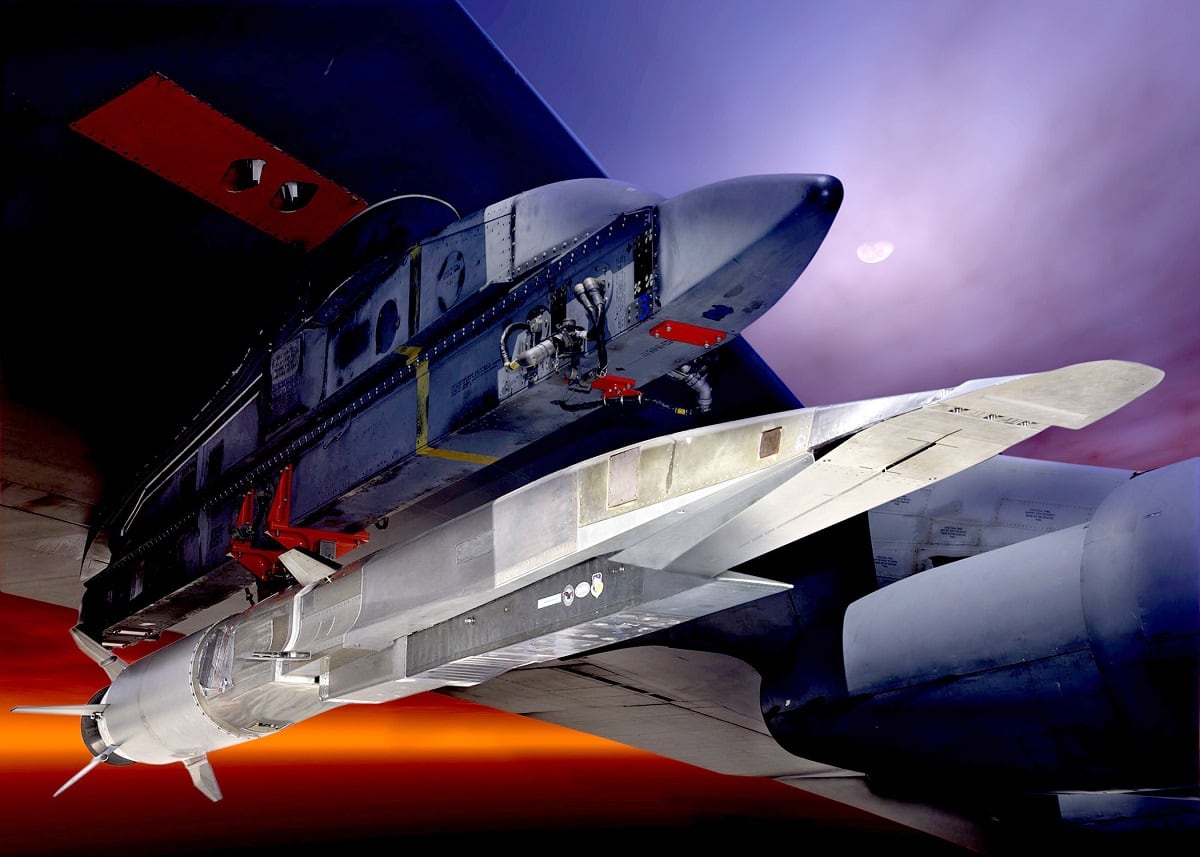
Air Force awards nearly $1 billion contract for a hypersonic cruise missile


The U.S. Air Force has selected Lockheed Martin to design and prototype a new hypersonic cruise missile, as part of a broad Pentagon push to kickstart America’s hypersonic arsenal.
The indefinite-delivery/indefinite-quantity contract for the “design, development, engineering, systems integration, test, logistics planning, and aircraft integration support of all the elements of a hypersonic, conventional, air-launched, stand-off weapon” was announced by the service April 18.
The total value for Lockheed could be as high as $928 million over the course of the program’s unspecified timeline. The program is known formally as the Hypersonic Conventional Strike Weapon.
“This effort is one of two hypersonic weapon prototyping efforts being pursued by the Air Force to accelerate hypersonics research and development,” service spokeswoman Ann Stefanek said in a statement. “The Air Force is using prototyping to explore the art-of-the-possible and to advance these technologies to a capability as quickly as possible.”

Tuesday, March 20, 2018

Defense procurement

Five Myths About Pentagon Weapons Programs

The aircraft carrier Gerald R. Ford (CVN 78), under construction at Huntington Ingalls Newport News Shipbuilding.
There is an unfortunate array of mythological perceived wisdom in Washington about the development, testing, and production of America’s cutting-edge weapons. Here are five examples:

Myth 1: The defense acquisition system is broken. The United States has possessed the best-equipped military in the world for decades. The superior performance of its defense acquisition system helped bring the Soviet Union to defeat and allowed America to engage any adversary it has faced on conventional battlefields with decisive advantages. The defense sector of the U.S. economy has a strong positive trade balance largely because U.S. weapons are superior to those of our competitors.

Sustaining the U.S. position of military technological superiority over time requires that the acquisition system must take risk, and sometimes those risks result in cost overruns, schedule slips, and even canceled programs. This does not imply, however, that the system is broken. Creating a complex weapon system that is a generation more advanced than anything in existence is never a low-risk venture. That risk can be managed and mitigated, but it cannot be eliminated...

Wednesday, February 14, 2018

Defense procurement

US Buys More Bombs to Target Nuclear Weapons Stored Underground

Mock up MOP inside bomb bay of B-2 Simulator, 2007
The US just ordered a lot more of the bombs tailored for missions of “reaching and destroying our adversaries’ weapons of mass destruction located in well-protected facilities,” scenarios that call to mind potential military foes like Iran or North Korea.
The Pentagon is paying Boeing for about $21 million worth of Massive Ordnance Penetrator bombs, the largest bomb in the US arsenal not packing a nuclear punch. The 33,000-pound MOP outweighs the "Mother of All Bombs" by about 10,000 pounds and is intended for targets in caves or underground tunnels or bunkers. The US Air Force's B-2 Spirit bomber can carry about two at a time.
The number of munitions to be procured was not disclosed.
The February 8 contract announcement follows an apparently successful upgrade of the bomb in late January, the fourth such round of upgrades the bombs have received. The modification "improved the weapon's performance against hard and deeply buried targets," a US Air Force spokesman told Bloomberg.
The GPS-guided weapon is "designed to accomplish a difficult complicated missions or reaching and destroying our adversaries' weapons of mass destruction located in well-protected facilities," according to an Air Force fact sheet summary on the weapon.

Tuesday, January 9, 2018

Defense procurement

How to Sneak New Weapons Past Government Minders


How to Sneak New Weapons Past Government Minders
When U.S. Army leaders decided they needed an upgraded version of the M-1 Abrams tank, they wanted to get it without enduring what they consider to be a cumbersome formal acquisition process.
Any program of this scale would ordinarily be classified as a Major Defense Acquisition Program and be subject to the oversight reviews and regulations that status entails. To avoid this, Army leaders claimed a major modernization effort to a weapon central to their very identity was a mere design tweak, and managed the project through the far less rigorous Engineering Change Proposal process.
This is a problem. The MDAP process may be cumbersome, but its intended purpose is to ensure the Pentagon properly evaluates its needs and then enters into programs that will properly meet them. It is also meant to exert the kind of pressure necessary to keep costs under control.
While the system is indisputably flawed — the F-35 is an MDAP — the services should not be permitted to simply ignore the laws. Doing so will almost certainly result in weapons of dubious combat value and more cost overruns.

Wednesday, November 15, 2017

Defense procurement

DARPA aims to ‘disrupt’ national security space business


DARPA's director of tactical technology Fred Kennedy speaks at a meeting of the Commercial Spaceflight Federation. (SpaceNews)The military space business is stuck in its old ways and missing a “golden opportunity” to capture the energy of a rejuvenated commercial industry, said a former White House space and aviation technology adviser who is now a top official at the Defense Advanced Research Projects Agency.
“In the national security space sector, we’re in dire need of new thinking and innovation,” said Fred Kennedy, director of DARPA’s Tactical Technology Office. He assumed that post in September after serving as deputy director since January.
Speaking at a breakfast meeting of the Commercial Spaceflight Federation Nov. 15, Kennedy criticized the Pentagon’s methods for acquiring satellites and called for a “shakeup” in national security space programs.
In the Defense Department, Kennedy said, “We’ve gotten very good at building small numbers of extremely exquisite things, very expensive things on very long time schedules.” That culture that emphasizes high performance and low risk is now working against the military because its satellites have become huge targets for adversaries.

Monday, May 22, 2017

Defense procurement

Pentagon overbills US military for fuel to pour surplus into ‘slush fund’ – report


Pentagon overbills US military for fuel to pour surplus into ‘slush fund’ – reportThe Pentagon overbilled the US Army, Navy, Air Force, and the Marines for fuel, pocketing the massive price differences to fill a “slush fund” used for inefficient or mismanaged defense programs, according to the Washington Post.
The Department of Defense amassed $6 billion over the past seven years by billing the US armed forces excessive prices for fuel, the newspaper reports, citing official documents. The rates were often much higher than those paid by commercial airlines for jet fuel. 
Since World War II, the Department of Defense, which is the largest single consumer of fuel in the world, purchases all of its fuel – around 100 million barrels of refined petroleum annually – and resells it at fixed prices to the Air Force, Navy, Army, and Marine Corps. To procure fuel, each branch of the US military pays for it out of their own budgets.

Saturday, February 25, 2017

Defense procurement

Russia’s Defense Ministry unveils amount of state defense order


Yuriy BorisovDeputy Head of the Russian Defense Ministry, Yury Borisov, announced that in 2017, over 1,4 trillion rubles will be allocated for implementation of the state defense order, Life.ru reports on Wednesday.
“The main share, more than 65% of the funds, is allocated to the procurement of modern weapons and technology. As at January 1st, the share of modern weapons and equipment in the units of constant combat readiness exceeded 58%,” Yury Borisov told reporters.
At present, a state program of armaments for 2011-2020 is being implemented in the Russian Federation. Within this program, about 20 trillion rubles are planned to be spent on modernization of the Russian Armed Forces and 3 trillion rubles more are to be allocated to technical re-equipment of defense industry.