Quiet American
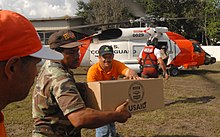
http://en.wikipedia.org/wiki/United_States_Agency_for_International_Development
DECEMBER
22, 2014
Our
Man in Havana
Who Was Alan Gross Working For?
by CARMELO RUIZ-MARRERO
Alan P. Gross, an
American arrested in Cuba in 2009 for smuggling broadband satellite
communications equipment, made world headlines on December 2014 when he was
released the same day that US president Obama ordered the release of three
Cubans who were in American prisons serving sentences for espionage. Press
reports mentioned that Gross was in the Caribbean island in his capacity as a
subcontractor for USAID, a US government agency that administers aid programs
abroad. Throughout its history this agency has been accused of being an arm of
US foreign policy and at worst a mere front for intelligence operations rather
than the neutral and apolitical provider of aid to poor countries that it
pretends to be. In 2014 USAID was caught red-handed in bizarre schemes to
destabilize Cuba through Twitter and by funding hip hop artists.
A
lesser known fact is that Gross was in Cuba working for a USAID contractor
called Development
Alternatives Inc. (DAI), a company that supervises and
executes economic development projects all over the world. In 2010 it was
USAID’s fifth biggest contractor, raking in almost $382.5 million in contracts
just in that year.
DAI has also worked for
the US State Department, the Pentagon, the World Bank, the United Nations, the
European Commission, and private sector giants like Monsanto, Wal-Mart, Hewlett
Packard, Sun Microsystems, Exxon Mobil, Daimler Chrysler, Unilever and The Gap.
“We
tackle fundamental social and economic development problems caused by
inefficient markets, ineffective governance, and instability”, says DAI about its work. “Since 1970, we have
worked in more than 150 countries—delivering results across the spectrum of
international development contexts, from stable societies and high-growth
economies to challenging environments racked by political or military
conflict.”
The company’s services
include: corporate social responsibility, public-private partnerships, business
strategy, exploration and analysis of market opportunities, integration of
small businesses and small farmers into global value chains, food security and
agribusiness promotion, financial services, drafting laws to make competitive
economies, innovation and entrepreneurship, gender issues, climate change
adaptation, carbon markets, water resources management, market
environmentalism, legislative reform, citizen participation, public safety,
health care, information and communications technology, and more. In short, if
you want to set up a country from scratch, just call DAI.
“DAI acted as a conduit
for USAID (through the Office of Transition Initiatives) and National Endowment
for Democracy (NED} funds to the Venezuelan opposition to president Hugo
Chavez. Furthermore, it was instrumental along with NED affiliated
organizations for financing black propaganda on Venezuelan private network TV
during the general strike in 2002. Documents obtained through a Freedom of
Information Act request show that DAI was required to keep certain personnel in
Venezuela and had to consult with USAID about staff changes. Philip Agee, a
former CIA officer, suggests that this is merely a cover for what passed for
CIA operations in the past.”
The
company’s own web site informs that it
has played an important role in the United States’ geopolitical and military
strategy in the Middle East:
“Following the 9/11
attacks of 2001 and the subsequent U.S. military actions, DAI was called on to
lead a variety of challenging development projects in the midst of the counterinsurgency
in Afghanistan, a country where we worked as early as 1977. Similarly, after
the United States toppled the Iraqi regime in 2003, DAI won a project to help
provide legitimate governance in the country. Other assignments in Iraq covered
agriculture.”
It is most interesting
that DAI would be in Afghanistan in 1977, way before the Soviet invasion, just
when the CIA was arming and training an islamic fundamentalist insurgent force
to destabilize the country.
“Western backing for
these (Afghan) rebels had begun before Soviet troops arrived. It served western
propaganda to say the Russians had no justification for entering Afghanistan in
what the west called an aggressive land grab. In fact, US officials saw an
advantage in the mujahedin rebellion which grew after a pro-Moscow government
toppled (Prime Minister) Daoud in April 1978. In his memoirs, Robert Gates,
then a CIA official and later defence secretary under Presidents Bush and
Obama, recounts a staff meeting in March 1979 where CIA officials asked whether
they should keep the mujahideen going, thereby “sucking the Soviets into a
Vietnamese quagmire”. The meeting agreed to fund them to buy weapons.”
Needless
to say, this type of work can be pretty hazardous. In December 2009 five DAI
employees were killed by an explosion in the USAID headquarters in Gardez,
Afghanistan. From that facility DAI was running a Local Governance and
Community Development project. According to DAI:
“Our
mission on behalf of (USAID) was crucial:
encourage communities in the most volatile parts of the country to turn away
from the insurgency and toward the Government of the Islamic Republic of
Afghanistan. We set out to do this in large part by facilitating 2,635
community projects that addressed local grievances, fostered stability,
facilitated dialogue, and engendered trust in district and provincial leaders.”
The most notorious death
of a DAI employee in a war zone was that of Linda Norgrove, who was abducted by
the Taliban in eastern Afghanistan on September 2010. The US sent a Navy elite
force to rescue her but the Rambo-style operation did not go well. Norgrove was
killed, not by her captors but by a grenade thrown by one of her would-be
rescuers, according to an official joint US-UK investigation of her death.
According
to DAI CEO Jim Boomgard, Gross was in Cuba running a US government program
called “Cuba Democracy and Contingency Planning Program”. In an August 2008
meeting, officials from this program told DAI
representatives that “USAID is not telling Cubans how or why they need a
democratic transition, but rather, the Agency wants to provide the technology
and means for communicating the spark which could benefit the population.” The
program, the officials said, intended to “provide a base from which Cubans can
‘develop alternative visions of the future.'”
In 2012 Gross and his
wife sued USAID and DAI for allegedly not informing him adequately of the risk
that his mission entailed – the case was settled out of court in 2013. If what
Gross claimed in his lawsuit is true, then the man was an unwitting dupe in a
US intelligence operation. It remains to be seen how many American aid workers
who sincerely believed they were engaging in harmless, uncontroversial activity
helping people abroad were actually being used by the CIA or other agencies as
pawns in high risk games of political chess.

No comments:
Post a Comment