Страницы

Showing posts with label Afghan war. Show all posts

Saturday, February 29, 2020

Afghan war

US waves the white flag of surrender to the Taliban and al Qaeda

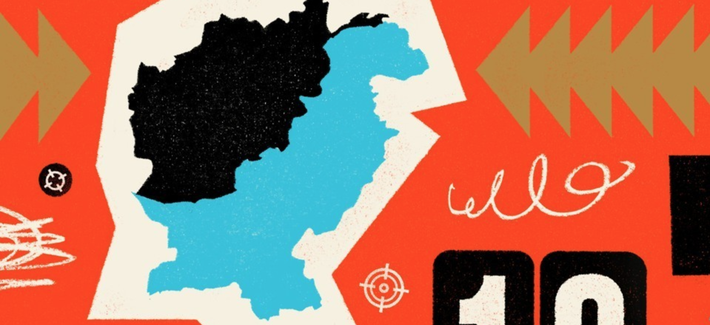
No alt text provided for this image
Eighteen years, five months, two weeks, and four days after the Sept. 11 attacks, the United States waved the white flag of surrender to the Taliban and al Qaeda.
Ambassador Zalmay Khalilzad and Gen. Austin Miller, great Americans, no doubt secured the best deal they could after Secretaries Mike Pompeo and Mark Esper pulled the plug on what was unironically christened Operation Enduring Freedom. President Trump’s partisans will polish this turd of an agreement best they can, to help his reelection. But this war now likely ends like Vietnam did: enemy tanks crashing through our embassy gate and a CIA officer slugging a liaison partner trying to board the last helicopter out.
Withdrawal conditions will be interpreted with a view toward getting out fast. The Taliban did not even follow through on its promised weeklong ceasefire, quickly rebranded as a “reduction in violence.” The Taliban will break its agreements, al Qaeda will return, literally with a vengeance, and terror attacks will be launched to kill people in the U.S.
Those who say we can manage this threat from the air forget how that worked out between 1996-2001, while those who say from barstools that we can “carpet bomb” the enemy forget we have not done that since 1945. The military experience of those who say we can simply parachute in a handful of special forces may be limited to watching Rambo.

Tuesday, September 10, 2019

Afghan war

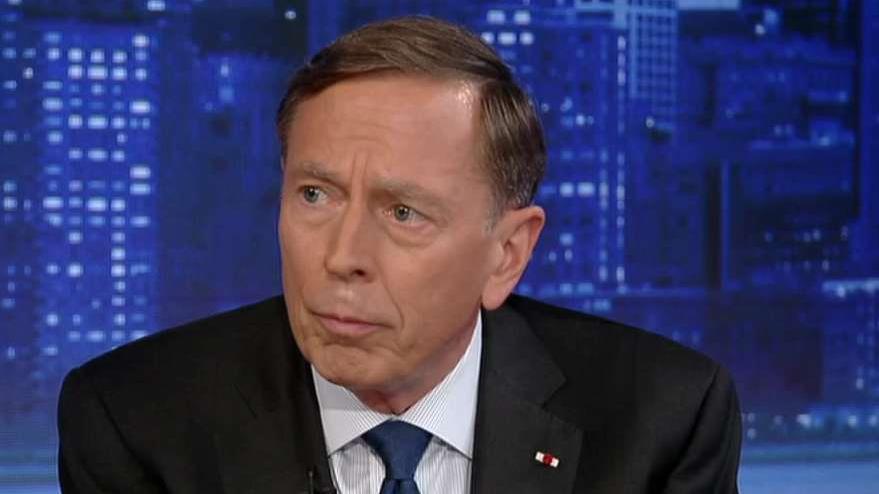
Gen. David Petraeus: Camp David Taliban meeting's 'symbolism would've been troubling,' Trump was right to cancel

Petraeus: A lot of us had reservations about Taliban keeping to their side of a deal
Former CIA Director Gen. David Petraeus said the symbolism of hosting Taliban officials at the Camp David presidential retreat would've been troubling — and President Trump made the right call in the end.

The president was right to call off the summit at the compound in the mountains near Thurmont, Md., especially given the fact the U.S. is very close to remembering the 18th anniversary of the September 11 terror attacks, Petraeus said Monday on "The Story."

"I think the symbolism of that [meeting] would've been a bit troubling," he said.

"Remember, that was where the decision was made to invade Taliban in the wake of the 9/11 attacks. As you reflect on that, certainly, again, I think the president very much made the right call."

Of the Taliban keeping its word following a negotiated deal with the U.S., Petraeus said there was some concern among those at the Pentagon.

Tuesday, September 3, 2019

Afghan war

'Agreement in principle' reached with Taliban to withdraw 5,000 US troops within five months

The Trump administration's envoy to Afghanistan said Monday that the United States had reached a preliminary peace deal with the Taliban that will pave the way for a phased withdrawal of U.S. military forces from Afghanistan and bring an end to America's longest war.

U.S. negotiators have agreed to remove approximately 5,000 American troops from five bases over the next five months if the Taliban fulfills promises to reduce violence and prevent Afghanistan from becoming a haven for terrorists, the U.S. special envoy, Zalmay Kalilzad, told the local news channel TOLO .

The deal – the fruit of months of negotiations between Trump administration officials and Taliban leaders – could allow Trump to declare victory on a core campaign promise as he enters the 2020 reelection cycle. The president has repeatedly said the U.S. should not be engaged in expensive "endless wars."

"We have reached an agreement with the Taliban in principle but of course until the U.S. president agrees with it, it isn't final," Khalilzad said in an interview with TOLO News.

Wednesday, February 14, 2018

Afghan war

Taliban, stung by escalated U.S. military effort, calls for dialogue

The Taliban in Afghanistan, under pressure from a stepped-up Trump administration military campaign, released a rambling letter to the American people on Wednesday, calling for dialogue to end the prolonged Afghan war.

Taliban spokesman Zabihullah Mujahid released copies of the 10-page document in several languages, detailing what he claimed were Taliban gains and so-called failures of the “illegitimate” U.S.-led intervention in Afghanistan, which is now in its 17th year.

“If you want peaceful dialogue with the Afghans specifically, and with the world generally, then make your president and the war-mongering congressmen and Pentagon officials understand this reality and compel them to adopt a rational policy towards Afghanistan,” the letter said.

The letter came at a time when the United States has increased the pace and intensity of air strikes in support of anti-insurgent ground and air operations by Afghan forces. The effort is part of President Trump’s new strategy to break the military stalemate with the Taliban, and push them to the negotiating table.


Tuesday, January 30, 2018

Afghan war

America’s Longest War—and the Ally That Fuels It


Two months after the 2008 U.S. presidential election, Vice President–elect Joe Biden sat with Afghanistan’s president, Hamid Karzai, in the Arg Palace, an 83-acre compound in Kabul that had become a gilded cage for the mercurial and isolated leader. The discussion was already tense as Karzai urged Washington to help root out Taliban sanctuaries in Pakistan, implying that more pressure needed to be exerted on Pakistani leaders. Biden’s answer stunned Karzai into silence. Biden let Karzai know how Barack Obama’s incoming administration saw its priorities. “Mr. President,” Biden said, “Pakistan is fifty times more important than Afghanistan for the United States.”

It was an undiplomatic moment for sure, but also a frank expression of the devastating paradox at the heart of the longest war in American history. In 16 years, the United States has spent billions of dollars fighting a war that has killed thousands of soldiers and an untold number of civilians in a country that Washington considers insignificant to its strategic interests in the region. Meanwhile, the country it has viewed as a linchpin, Pakistan—a nuclear-armed cauldron of volatile politics and long America’s closest military ally in South Asia—has pursued a covert campaign in Afghanistan designed to ensure that the money and the lives have been spent in vain. The stakes in Pakistan have been considered too high to break ties with Islamabad or take other steps that would risk destabilizing the country. The stakes in Afghanistan have been deemed low enough that careening from one failed strategy to another has been acceptable.

Tuesday, May 23, 2017

Afghan war

No proof to back allegations Russia gave weapons to Taliban – US military intel chief


No proof to back allegations Russia gave weapons to Taliban – US military intel chiefThe thinly-veiled accusations in the US that Russia supplied arms to Taliban militants were not based on any physical evidence of weapons or money transfers, a senior US military official told lawmakers.
“We have seen indication that they offered some level of support but I have not seen real physical evidence of weapons or money being transferred,” Marine Lieutenant General Vincent Stewart, who serves as director of the US Defense Intelligence Agency (DIA), said at a Senate hearing.
Last month allegations against Russia were voiced by some US officials, including US Army General Curtis Scaparrotti, military commander of alliance forces in Europe, and US Army General John W. Nicholson Jr., who commands US troops in Afghanistan.
The officials claimed that Russia was exerting influence on the Taliban and may be involved in supplying weapons to the militants.
The Russian Foreign Ministry dismissed the allegations as “fabrications designed to justify the failure of the US military and politicians in the Afghan campaign.”


Monday, May 23, 2016

Afghan war

Killing of Afghan Taliban leader reduces likelihood of peace talks in six-month outlook as hardliners dominate Taliban

On 22 May, US and Afghan officials announced that Mullah Akhtar Mansour, the head of the Afghan Taliban, had been killed in an Unmanned Aerial Vehicle (UAV) strike in Nushki District, in Pakistan's Balochistan province.
Over the past several months, the Afghan Taliban has appeared to be at substantial risk of disintegration as a single organisation. Mullah Akhtar Mansour was never able to properly consolidate his leadership, despite having the advantage, according to an IHS source, of having access to most of the Taliban's financial resources and of considerable support from the Pakistani military establishment, who regarded Mansour as their key proxy within the Taliban. However, that relationship - and Mansour's support for pursuing a peace process with the Afghan government - drove several Taliban commanders to oppose the former leader. Mullah Rasul, Mansour's principal opponent, had proven capable of attracting not only commanders and cadres from Mansour's ranks, but had also begun to attract some senior commanders of the Haqqani Network.

Saturday, May 21, 2016

Afghan war

Afghan Taliban leader Mullah Mansour 'likely' killed in US airstrike, official says


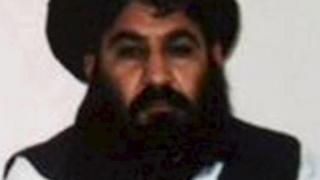
Mullah Akhtar Mohammad Mansour, the new leader of the Taliban
A U.S. airstrike targeting Afghan Taliban leader Mullah Mansour on Saturday “likely” killed him and a second combatant, a US official tells Fox News.
The strike, authorized by President Obama, took place at about 6 a.m. ET in a remote area along the Pakistan-Afghanistan border, near the town of Ahmad Wal, the official said.
Mansour was traveling in a vehicle while traveling two hours southwest of Quetta, Pakistan just across the Afghan border,when the strike occurred. It was carried out by multiple unmanned aircraft operated by U.S. Special Operations Forces.

Sunday, May 15, 2016

Afghan war

A 'global terrorist' comes in from the cold: Afghan warlord was ally of CIA, then Osama bin Laden

Gulbuddin Hekmatyar
He was a CIA ally against the Soviet Union, a friend of Osama bin Laden and a ruthless insurgent leader whose forces killed thousands of civilians during the Afghan civil war.
Now the inveterate militant Gulbuddin Hekmatyar is trying to open a new chapter by making peace with the Afghan government.
Hekmatyar, the leader of the Hezb-i-Islami militant organization, is reportedly close to a truce that would end nearly two decades in exile for one of the most enduring and controversial figures in the long Afghan conflict.
Now in his 60s, Hekmatyar has been exiled since the Taliban came to power in 1996 and drove him out of the country. Hezb-i-Islami is often described as the second largest insurgent group in Afghanistan, but his fighters have little presence on the battlefield and many of Hekmatyar’s former loyalists have defected to the much larger Taliban.

Thursday, October 15, 2015

Afghan war

Citing 'very fragile' security in Afghanistan, Obama slows pace of U.S. troop withdrawal

Reversing policy on Afghanistan, President Barack Obama announced on Thursday he will prolong the 14-year-old U.S. military engagement there, effectively handing off the task of pulling out troops to his successor.
Calling it a "modest but meaningful" adjustment to winding down the American presence in Afghanistan, Obama said Afghan forces were not yet as strong as they needed to be given a "very fragile" security situation and the United States will maintain a force of 9,800 through most of 2016.
Obama had previously aimed to withdraw all but a small U.S.-embassy based force in the capital, Kabul, before he leaves office in January 2017. Under the new plan, troops will be drawn down to 5,500 starting sometime in 2017 and will be based at four locations - Kabul, Bagram, Jalalabad and Kandahar.