Страницы

Showing posts with label Law enforcement. Show all posts

Saturday, June 13, 2020

Law enforcement 

Minneapolis Police Department - Home | FacebookMinneapolis approves plan to create ‘community’ alternative to police department


In a unanimous vote Friday, the city council of Minneapolis, Minnesota passed a plan to ultimately move police department responsibilities to a yet undefined ‘community’ alternative.

The plan calls for a commission of most major city departments to lay out the plan over the course of the next year.

The Minneapolis City Council shared a copy of its resolution titled “Declaring the intent to create a transformative new model for cultivating safety in our city” on Friday.


The resolution calls for “Recommendations that advance the work of the 911 working group and other strategies for
transitioning work of the Minneapolis Police Department to alternative, more appropriate responses to community requests for help and identifying the resources needed to perform this work in City departments, other agencies, and/or community partners while the work of creating a new public safety system is in progress.”


During the year long study period, the city will reportedly be “prototyping new responses to mental health calls, and reporting; and further explore 911 call options beyond the Minneapolis Police Department.”

The idea to replace 911 call features comes just days after a veto-proof majority on the city council voted to disband the police, Axios reported.

Sunday, May 17, 2020

Law enforcement

How the FBI's intelligence experiment went wrong


FBI partners with Auburn University in crime fighting efforts
For the second time in two decades, the FBI finds itself in turmoil. This time, unlike the first, the problem is of the bureau’s own making — and it needs to course-correct quickly, for the sake of itself and the country it serves.
To do so, one must consider that earlier tumultuous episode and how the response to it ultimately led to the second.
The events of 9/11 have been variously described as a gut punch or a Mike Tyson uppercut to the FBI. Unprepared to understand the threat before the attack or to immediately respond afterward, FBI agents across the country went home to email documents and photographs of the terrorists using their personal AOL accounts because, unbelievably, they lacked technology at work. Then-Director Robert Mueller, who had experience in criminal matters as a prosecutor and Department of Justice official, had been on the job just seven days on that Tuesday morning, but he knew the bureau had to change — and fast.
There were cries to break up the FBI or establish a stand-alone internal security service like Britain’s MI5. Mueller reflexively knew that was a bad idea for two reasons: Other democracies with internal services didn’t have a Constitution and Bill of Rights, and most of those services wanted what the FBI already had — the ability to use criminal investigative tools in the fight against terrorism and counterintelligence threats.

Sunday, April 12, 2020

Law enforcement

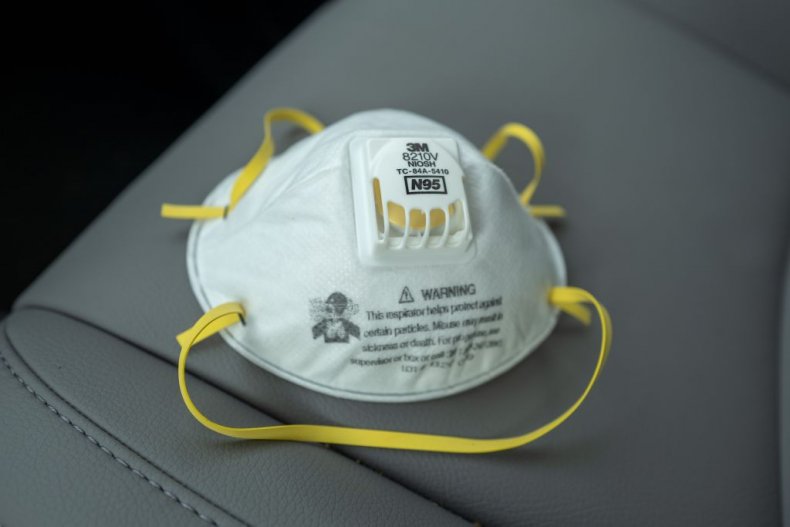
FBI DISCOVERS PROMISED STOCKPILE OF 39 MILLION MEDICAL MASKS WAS A SCAM

N95 mask
As state governments and hospitals have scrambled to obtain masks and other medical supplies during the coronavirus pandemic, scammers attempted to sell a fake stockpile of 39 million masks to a California labor union.

The Los Angeles Times first reported on Sunday that the FBI had uncovered the scam, which has been traced back to a broker in Australia and a supplier in Kuwait. The investigators discovered the scam because they were looking into whether the supply could be intercepted by the federal government through the Defense Production Act.

The Service Employees International Union-United Healthcare Workers West (known as SEIU) promised at the end of March that it would make the millions of masks available, as government agencies and hospitals planned to purchase some of the supply. But as the FBI investigated, it became apparent that the union had been duped, although no financial transaction had yet been made.

"There are opportunists who are looking for any victim," U.S. Attorney Scott Brady told The Times.

Wednesday, March 11, 2020

Law enforcement

Feds arrest over 600 alleged Mexican cartel members 


Cuffs, Police, Arrest, Gangster, Equipment, Lock Up
The Department of Justice (DOJ) and Drug Enforcement Administration (DEA) announced Wednesday that more than 600 arrests have been made as a result of an interagency operation cracking down on Mexican cartel activity. 
“Project Python,” a DEA-led initiative, targeted members of Cártel de Jalisco Nueva Generación (CJNG). According to the DEA, over the last six months federal law enforcement officials have been monitoring the activities of the accused.
The operation resulted in more than 600 arrests nationwide, 350 indictments and “significant seizures of money and drugs,” according to the agencies. 
“Project Python marks the most comprehensive action to date in the Department of Justice’s campaign to disrupt, dismantle, and ultimately destroy CJNG,” Assistant Attorney General Brian A. Benczkowski said in a statement.
Benczkowski cited an executive order President Trump passed shortly after Trump was inaugurated in 2017 that condemned cartel operations in the U.S. and directed federal law enforcement to use the Threat Mitigation Working Group, which was put in place by the Obama administration in 2011. 

Thursday, December 26, 2019

Law enforcement

Police take over drug dealers’ phone numbers and text users in new fight against county lines gangs

phone
Police are seizing control of drug dealers' phone numbers and texting users themselves in an attempt to combat county lines gangs.

Officers in Sussex have become the first in the country to test a pioneering new tool that allows them to get phone lines turned over to their control

Drug dealing telecommunications restriction orders (DDTROs) mean that officers can disrupt the flow of messages between dealers and users, and therefore the flow of drugs.

Detective Superintendent Jo Banks, the senior detective leading the fight against county lines drug gangs in Sussex, said : "It's a disruptions tool. But actually what we are then doing is messaging out to the users from that line to say what the alternatives are for them to actually get some help and try and get out of providing that demand for the drugs line in the first place.

Thursday, February 28, 2019

Law enforcement 

A History of Asset Forfeiture


Supreme Court of the United States...The decades-long abuse of this policy has reached such extreme proportions that people on all sides of the political aisle have been turning against it. As I am writing this (February 20th, 2019), the Supreme Court has unanimously voted in favor of Tyson Timbs, whose $42,000 Land Rover was seized in 2015, following a conviction for selling $400 in heroin. The Court is asserting that asset forfeiture constitutes a fine, and the Eighth Amendment – which protects citizens from excessive fines – applies to both state and local governments. The consequences of the ruling remain to be seen, but it seems nearly certain that the unanimous decision was motivated by the increasing outrage against the Civil Asset Forfeiture policies.

Friday, January 25, 2019

Law enforcement

The Wheels of Justice Are Grinding to a Halt


FBI agents have lost irreplaceable sources. Joint Terrorism Task Force officers can’t get into the bureau’s computer systems. Federal investigations are being stymied by a lack of resources. The partial government shutdown, now in its 33rd day, has become a serious national-security threat, the FBI Agents Association said on Tuesday.
Over the past several weeks, the association has been compiling stories from agents about the the shutdown’s impact on the bureau’s operations. One agent, speaking anonymously, said his unit had “lost several sources who have worked for months, and years, to penetrate groups and target subjects” due to the inability to pay confidential sources. “These assets cannot be replaced,” the agent said. “Serving my country has always been a privilege, but it has never been so hard or thankless.” Another agent reported: “Not being able to pay Confidential Human Sources risks losing them and the information they provide FOREVER. It is not a switch that we can turn on and off.”

Wednesday, January 16, 2019

Law enforcement

The Spyware That Brought Down El Chapo’s Drug Empire


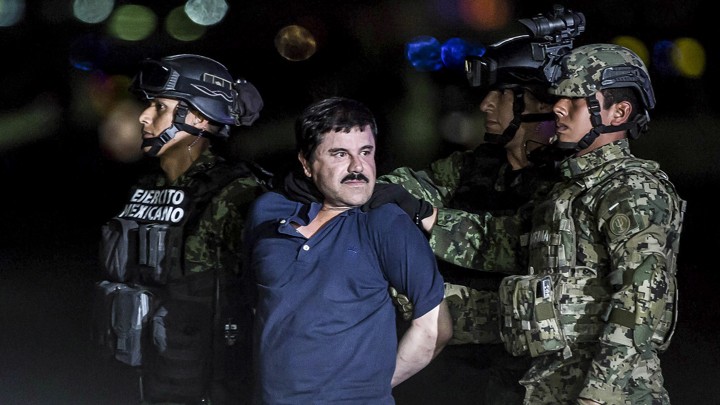
In total, the FBI intercepted more than 200 calls from Guzmán himself, and hundreds more from his operatives, lieutenants, and family members. But only last week did the FBI reveal how: They had an inside man. In court last Thursday, the FBI agent Stephen Marston revealed a series of high-risk operations coordinated with the Sinaloa IT guy, and eventual federal informant, Christian Rodriguez, who has since relocated to the U.S. under FBI protection.
“We realized without insider access to the system we were not going to get inside,” Marston told the court Thursday.
Rodriguez’s first act as informant was to circumvent the secure network he’d installed in Guzmán’s mountain hideout. In May 2010, Rodriguez faked an outage that temporarily took the network offline. Jorge Cifuentes, Rodriguez’s then-boss, assumed the servers were down because Rodriguez had simply forgotten to renew the lease. In truth, the outage was orchestrated to force Guzmán and his agents to use compromised cellphones, which allowed the FBI to listen in on Guzmán allegedly negotiating a six-ton cocaine deal with members of the FARC guerrilla group.

Sunday, July 8, 2018

Law enforcement

What Is ICE and Why Do Critics Want to Abolish It?

ICE stands for Immigration and Customs Enforcement, an agency within the Department of Homeland Security. ICE was created in 2003, as a part of the government’s reorganization after the Sept. 11, 2001, attacks.

ICE is one of three agencies that absorbed and assumed the functions of the former Immigration and Naturalization Service (which was previously housed under the Justice Department) and the United States Customs Service (which was part of the Treasury Department).

The other two Homeland Security agencies that took some of those responsibilities are Customs and Border Protection and Immigration and Citizenship Services.

Monday, July 2, 2018

Law enforcement

Ex-Border Patrol boss Vitiello takes over immigration agency battered by protests and ‘abolish ICE’ rage

Ronald Vitiello is the acting director of U.S. Immigration and Customs Enforcement  (CBP Photo by Glenn Fawcett)
When Ronald Vitiello took over as acting director of U.S. Immigration and Customs Enforcement on Saturday, he inherited an agency under siege.

Activists have focused their outrage over President Trump’s “zero-tolerance” policies squarely on the deportation division, as anti-ICE protesters take to the streets and Democratic lawmakers call to "abolish ICE" entirely.

In Washington, Trump has strongly defended the agency and warned Democrats that their anti-ICE rhetoric will backfire at the polls.

But amid signs that the nonstop protests and political warfare are taking a toll on morale, Vitiello will be tasked with shepherding the immigration agency through crises both internal and external.

“The men and women of ICE are among the most dedicated and honorable law enforcement professionals in the country,” Vitiello said in a statement sent to Fox News. “I am honored to lead them as they continue to carry out their sworn mission to faithfully enforce our nation's immigration and customs laws and protect the homeland.”

It may send a signal that Vitiello comes from the ranks of those tasked with protecting America's borders.

Sunday, July 1, 2018

Law enforcement

19 ICE investigators call for agency to be disbanded in letter amid 'abolish ICE' protests

ICE badge reuters
Nineteen senior investigators at U.S. Immigration and Customs Enforcement (ICE) have called for the government agency to be disbanded in a letter to Homeland Security Secretary Kirstjen Nielsen.

The massive law enforcement agency, which employs more than 20,000 people and was created in 2003 in response to the Sept. 11, 2001, terrorist attacks, is responsible for both homeland security investigations (known as HSI) and for the deportation of undocumented migrants (known as ERO, for enforcement and removal operations).

The agents’ letter, first reported by the Texas Observer, expressed concern that President Trump’s crackdown on undocumented migrants has made it more difficult for them to conduct investigations into significant national security issues.

HSI is “supposed to be out there making these major cases, these big cartels that are smuggling guns, drugs, money,” Alonzo Peña, a former ICE deputy director, told the Texas Observer. “And because of this whole immigration rhetoric — that immigrants are bad, that they’re criminals and rapists and all that — the focus is totally off mission.”

Thursday, June 21, 2018

Law enforcement

ICE JUST LAUNCHED A $2.4M CONTRACT WITH A SECRETIVE DATA SURVEILLANCE COMPANY THAT TRACKS YOU IN REAL TIME


Картинки по запросу pen-link ltdThe U.S. Immigration and Customs Enforcement (ICE) agency has signed a $2.4 million contract with a little-known surveillance company that mines communications data and provides "real-time" tracking.
Data published on the U.S. government's spending website shows the Department of Homeland Security contracted Pen-Link Ltd. (PenLink), a software company that develops communications surveillance collection systems, on June 4 with ICE listed as the contracting subagency.
PenLink provides software that allows enforcement bodies to collect and analyze "massive amounts of social media and internet communications data," as well as collect wiretap intercepts "in real-time" for "tracking" and "live monitoring," according to its website.
Julian Sanchez, a privacy and surveillance expert with the Cato Institute, said the company appears to specialize in telephone data analysis and geolocation data mining and tracking that could potentially determine where people are "within a block" of a cell tower. 

Tuesday, May 15, 2018

Law enforcement

Frank Sinatra’s Mob Ties and Other Secrets from His FBI File

Singer Frank Sinatra posing for a mug shot after being arrested and charged with "carrying on with a married woman" in 1938 in Bergen County, New Jersey. A scan of this mugshot was included in Sinatra's FBI file. (Credit: Michael Ochs Archives/Getty Images)Frank Sinatra was many things: A crooner who could make bobby-soxers faint, an Academy Award-winning actor, the elder statesman of the Rat Pack. At the height of his career, it was rumored that “every woman wants to have him; every man wants to be him.” But his fans and detractors weren’t the only people who wanted a piece of Old Blue Eyes: So did the FBI.
The Federal Bureau of Investigation tracked Sinatra for over 40 years, amassing a dossier of thousand of pages about his movements, words, and friendships. The files, which were made public after Sinatra’s death in 1998, cover Sinatra throughout his tempestuous career—and read like a thrilling account of a life he lead “his way.”
Sinatra rose to fame during the 1940s, and soon attracted the attention of the FBI for claims that he’d paid a doctor $40,000 to declare him medically unfit for World War II service. Though the FBI dismissed the allegations, calling his exemption for a punctured eardrum and psychological issues legitimate, rumors that he’d dodged the draft persisted throughout his lifetime and even hurt his career in the late 1940s.

Friday, February 23, 2018

Law enforcement

Revealed: Two Secret Cogs In The FBI National Surveillance Machine


Forbes learned about the existence of the furtive Collections Operations Group (insiders call it "the COG") from the results of a freedom of information act request filed with the FBI in 2017. That FOIA filing concerned a deal signed last year between tech contractor CDW Government and the Data Intercept Technology Unit (DITU, pronounced "dee-too") for $1.1 million in services. DITU, part of the Operational Technology Division in Quantico, Virginia, is one of the most clandestine divisions within the FBI, helping gather crucial data for investigations and intelligence. The OTD is the overarching body that oversees bleeding edge tech development for the entire FBI.

The FBI confirmed to Forbes that the COG is a sub-unit within DITU. The agency refused to comment on the specific nature of the group and its operations. But there's some tantalizing new information nonetheless: according to the FOIA response, the COG's mission "is to provide tools, expertise and solutions to effect lawfully-authorized electronic surveillance of data communications on today's evolving local area network and internet technologies. The COG is responsible for the procurement, development and deployment of network equipment to assist in electronic surveillance to various field offices and OGAs."

Monday, February 5, 2018

Law enforcement

FBI knew Trump dossier author was unreliable but didn’t bother to let FISA court know – why?
The House Intelligence Committee memo about 2016 surveillance abuses, released Friday, lays out grave evidence that the FBI wasn’t fully forthcoming with the Foreign Intelligence Surveillance Court as it sought an order to wiretap former Trump adviser Carter Page. It’s possible the FBI’s lack of candor was even worse than the memo describes.

Democrats are disputing the memo on lots of grounds, but they’ve said little about the FBI’s failure to inform the court that the bureau had itself decided one of its main sources, dossier author Christopher Steele, was unreliable. Mr. Steele in October 2016 gave Mother Jones an unauthorized interview about the dossier. As a former British intelligence officer, Mr. Steele would have known that sources are not supposed to blab to the press. The interview appeared but a few days before the election, was at the direction of his paymaster, the opposition-research firm Fusion GPS, and was clearly designed to help the ultimate client: the Hillary Clinton campaign.

Stuck with a source now brazenly using the FBI for political purposes, the bureau suspended and then terminated Mr. Steele. Only nine days before the Mother Jones interview, the bureau had filed its application for the Page wiretap order, which rested on the Steele dossier. Yet the FBI did not immediately go back to tell the court it no longer trusted Mr. Steele, the author of a crucial piece of evidence.

Wednesday, January 24, 2018

Law enforcement

'Criminal Cabal'? FBI Fears Political Attacks May Imperil Work Of Field Agents

It has been called a "criminal cabal" rife with corruption. It's been said that its leaders need to be taken out in "handcuffs." And its reputation, one high-placed official has charged, is "in tatters."
The FBI has come under criticism before, but the ongoing barrage of allegations has left its current and former officials shaken. It also has fueled concerns that the bureau's reputation with the public could begin to crumble.
"We're very concerned about the credibility of the FBI because we're having to defend it on a daily basis and we've never had to do that before," said Chris Swecker, who finished his 24-year bureau career as an acting assistant director.
"There's been plenty of controversies but never accusations that the FBI has become a political tool for one party or another, or one set of political beliefs or another."

Monday, January 22, 2018

Law enforcement

Report Shows US Law Enforcement Routinely Engages In Parallel Construction


事故 1A long report by Human Rights Watch delves into the secretive world behind the evidence given in criminal cases. Multiple law enforcement entities are making use of DEA tips to build cases and secure convictions, but they're burying the original evidence using parallel construction, whitewashing it of possible Fourth Amendment violations.
Parallel construction is nothing new. The DEA has been a long-time participant in the practice. Documents obtained by C.J. Ciaramella in 2014 included training materials laying out explicit directions for hiding the origin of questionably-obtained intelligence. The DEA has had full accessto domestic phone records thanks to the Hemisphere program. Records obtained via this legally-dubious method have been passed on to local law enforcement agencies with instructions to obscure the origin of "new" criminal investigations.
The FBI has also encouraged parallel construction, most notably with the non-disclosure agreements its forces local agencies to sign before acquiring cell tower spoofers. Agencies are told to keep info about Stingray devices out of court at all costs -- up to and including dismissing charges. Consequently, Stingray deployments have been hidden behind ping requests and pen register orders, preventing courts from examining the origin of the evidence for Constitutional issues and preventing defendants from challenging the legality of the evidence used against them.
Parallel construction goes far beyond Stingrays and phone records. It can involve nascent technology with unproven track records, allowing criminal sentences to be obtained based on very questionable evidence.

Tuesday, December 5, 2017

Law enforcement

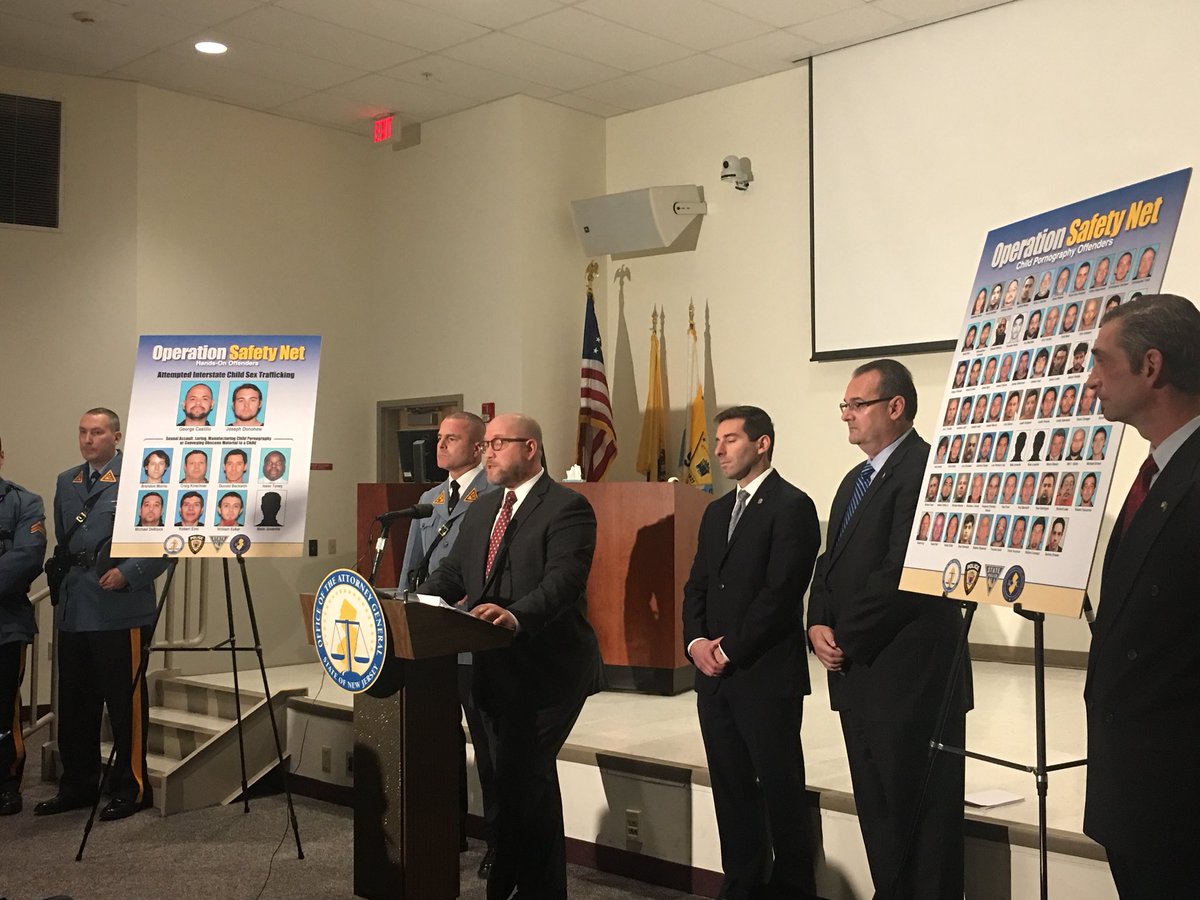
COPS & GOV’T WORKERS ARRESTED IN MASSIVE STING, PEOPLE BUYING KIDS AS YOUNG AS 4 FOR SEX


Scores of people were arrested this week in a multi-agency sting that targeted child predators. “Operation Safety Net” was led by the New Jersey Regional Internet Crimes Against Children Task Force and took down 79 predators, some of whom were attempting to purchase children as young as 4-years-old for sex.
Setting this sting apart from the multiple other stings throughout the country is the fact that it concentrated solely on children instead of simply busting willing adults paying for consensual sex.
As TFTP has reported in the past, arresting consenting adults engaging in sex for money causes far more problems than it prevents by pushing the sex trade into the criminal market and actually fostering illegal human trafficking. Concentrating law enforcement efforts on stopping those who go after children is a much more effective and moral crusade than busting consenting adults for sex.

Thursday, November 23, 2017

Law enforcement

Big Brother at Sea

Ship to ship transfers can be made quickly and covertly on the high seas, leaving law enforcement officials unaware of the passage of illegal cargo in this watery Wild West. And it’s no small problem: a 2014 study found that up to a third of wild-caught seafood sold in the United States was harvested illegally. To combat this shadowy business, Global Fishing Watch, is monitoring the world’s fishing fleets by satellites, hoping to cast light on the dark places beyond national borders.
Global Fishing Watch monitors the positions of boats by tracking the broadcasts from their onboard automated identification system (AIS) transponders. All passenger ships and vessels larger than 300 gross tonnage are required by the International Maritime Organization to transmit their position. The system’s main purpose is to reduce the likelihood of collisions between ships, but Global Fishing Watch analysts found they can follow a vessel, decipher its fishing activity, and see where it meets other ships.
With data from AIS and other satellite tracking systems, the team has created a global map of transshipping activity. They’ve found that ships cluster outside the boundaries of exclusive economic zones—areas where marine resources are regulated—raising suspicions that the transshipments are associated with illegal fishing.

Monday, November 20, 2017

Law enforcement


For the last few years, the media has been dominated by a number of sensational stories: that Trump colluded with Russia to influence the presidential election; that the Trump team was wiretapped by Obama intelligence officials; that Hillary used a private email server to transmit classified information; that Hillary and the DNC colluded with Russian sources to compile a dossier on Trump, and finally, that Russia acquired 20% of America’s uranium supply during the same time period $145 million miraculously appeared in the Clinton Foundation’s bank account. It all stinks to high heaven but it’s created a confusing array of facts that has bewildered most Americans. They all know something is seriously wrong with their country even if they can’t pinpoint exactly what the problem is.
But there is a common denominator in all these scandals or alleged scandals, and that would be the FBI and the actions they took or didn’t take. Indeed, it’s hard to not conclude that the agency’s actions in these events were improper if not illegal. If so, this validates the warnings by constitutionalists in the early 1900s that a federal police force would someday be used to prop up the ruling elites and attack those who dare challenge the establishment.