Страницы

Showing posts with label Information security. Show all posts

Wednesday, September 2, 2020

Information security

FBI worried that Ring doorbells are spying on police
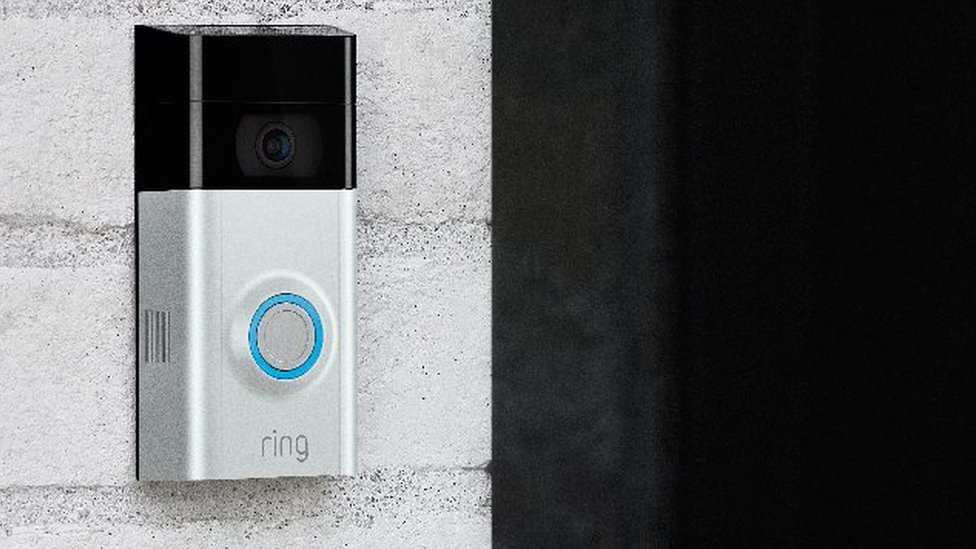
Ring Video Doorbell 2
Hacked documents suggest that the FBI is concerned some people may be using Ring or other smart doorbells to watch the police.
The papers describe a 2017 incident where someone remotely watched live footage of police preparing to serve a search warrant.
The information was found online by The Intercept among hacked documents.
Previously, privacy advocates have raised concerns about data from smart doorbells being shared with police.
The hacked papers, known collectively as BlueLeaks, were stolen from more than 250 police websites.
The document in question is a technical analysis bulletin, offering an overview of the opportunities and challenges for police from home security systems and smart doorbells.
The 2017 incident describes how someone under investigation was able to "covertly monitor law enforcement activity while law enforcement was on the premises" and alert his neighbour and landlord. It does not name the brand of video doorbell used.

Wednesday, July 29, 2020

Information security

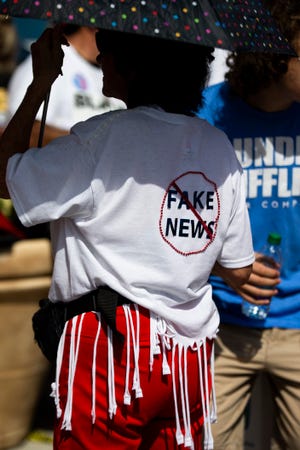
I'm a former CIA analyst trained to spot fake news. Here's how you can do it, too.


At a rally for President Donald Trump in 2018 in Estero, Florida.In early 2017, I watched from my desk at the CIA as the world learned Russia had waged an influence campaign targeting the U.S. presidential election months before. As an intelligence analyst, I worked in a world where countries often used covert action against each other to influence events, outcomes and policies, but the scale and scope of Russia’s actions to try to help Donald Trump get elected were unprecedented. As the intelligence community’s declassified assessment stated, Russia’s interference was “a significant escalation” in its long-running effort to undermine the United States. 
Since then, I have seen this revelation lead to a (mostly) collective panic, but essentially no government action. The panic has manifested in a growing distrust of institutions we traditionally counted on for information, like the news media, fear that social media conversations are orchestrated by “Russian bots,” the mainstreaming of conspiracy theories, and in the most extreme cases, people giving up on the existence of facts and truth altogether. But none of these things will solve our information problem.

Saturday, June 20, 2020

Information security

Former intelligence analyst sentenced to 30 months in prison for leaks


Assistant U.S. Attorney Danya Atiyeh, right, and U.S. Attorney G. Zachary Terwilliger leave an October news conference in Alexandria, Va.Henry Kyle Frese had dreamed of working in the intelligence field his whole life; he gave up his Canadian citizenship and a longtime girlfriend to work in Washington. He was preparing to serve in Iraq last fall. Instead, he was arrested at his desk in the Defense Intelligence Agency and on Thursday was sentenced to 2½ years in prison for leaking classified information.
“It was never for personal gain or out of anger; it was never for political reasons,” Frese said at sentencing in Alexandria federal court Thursday. “At the time, I thought my reasons were important. . . . Looking back, I’m embarrassed at how foolish and weak they were.”
Frese, 32, was a counterterrorism analyst at the DIA from 2017 until last October. He admitted in February to sharing national defense information with a consultant and two reporters, one of whom he was dating.

Wednesday, May 20, 2020

Information security

Researchers Use a Beer App To Track the Military and CIA


daily life in warsaw
A beer networking app with millions of followers inadvertently allowed security researchers to track military and intelligence personnel, including at a top secret CIA facility.

Researchers with the group Bellingcat discovered check-ins at places as diverse as the Pentagon, Germany, and Greenland. The researchers also discovered shared photos that included shots of government ID cards, documents, and military hardware. The data could be used to reconstruct travel and work habits of military and intelligence personnel, including precise locations.

The beer rating app Untappd has a big following in the U.S. and Europe, and is used by beer drinkers to discover new bars, breweries, and beers. Users rate beers, unlock badges, get directions to local events, and most importantly share that information with others. Untappd has 8 million users, including those in armed forces and intelligence agencies worldwide.

Tuesday, March 17, 2020

Information security

No spying from home in CIA's coronavirus plan

Cia Headquarter, Building, Night, Evening, Architecture
In the age of the coronavirus, working from home is no option for many employees of America’s spy agencies.

Handling highly sensitive information requires meeting in the secure confines of the CIA, the National Counterterrorism Center and the Office of the Director of National Intelligence, which oversees all U.S. intelligence agencies, three sources with knowledge of the matter told Reuters.

U.S. intelligence workers are being offered more flexible working hours where possible, one of the sources said, although such agency offices as operations centers remain staffed around the clock.

The outbreak has prompted the CIA to bar outside visitors from its buildings, and meetings with other government agencies are via video teleconferences, the source said.

The agency is considering a social-distancing plan for key employees to work in different offices. Any employee suspected of having been exposed to the virus would need to self-quarantine for 14 days.

One CIA employee tested negative for the coronavirus at the weekend, two sources said. So far none of the three intelligence agencies reports any employees have contracted the virus, the three sources said.

Monday, March 9, 2020

Information security

Mistrial declared at federal trial of accused CIA leaker Joshua Schulte


A courtroom sketch of Joshua Schulte.
A Manhattan federal jury on Monday found a former CIA programmer guilty of lying to the FBI and of contempt — but failed to reach a verdict on the far more serious charges that he turned a trove of secret documents from the spy agency over to Wikileaks.
US District Judge Paul Crotty declared a mistrial in the case of accused leaker Joshua Schulte after the jury declared itself “extremely deadlocked” on the eight most serious charges at the trial — including illegal gathering and transmission of national defense information.
Schulte, 31, still faces up to five years on the lesser counts.
Prosecutors accused the onetime programmer of pulling off the largest breach of classified information in the history of the CIA when he allegedly gave hackers access to the agency’s top-secret hacking tools.

Thursday, March 5, 2020

Information security

Defense contractor charged with giving up military secrets


Department of Defense sign
A Defense Department contract linguist has been charged with giving classified information, including the names of U.S. government sources, to a Lebanese national with ties to the militant group Hezbollah, the Justice Department announced Wednesday.
Federal prosecutors accused Mariam Taha Thompson, 61, formerly of Rochester, Minnesota, of turning over information that placed in danger those intelligence assets and American military personnel.
Thompson appeared briefly in Washington’s federal court, where she was ordered held without bond pending a detention hearing next week. Neither she nor her lawyer addressed the allegations in court.
Thompson, who held a top secret security clearance, was arrested last Thursday in what prosecutors say was an overseas military facility.

Saturday, February 22, 2020

Information security

Intelligence employee pleads guilty to leaking classified info to journalists


Картинки по запросу "Defense Intelligence Agency"
Henry Kyle Frese pleaded guilty Thursday in federal court to illegally transmitting national defense information to journalists.
Frese, 31, was employed as a counterterrorism analyst for the Defense Intelligence Agency from February 2018 to October 2019, and held a top-secret clearance. 
“Frese violated the trust placed in him by the American people when he disclosed sensitive national security information for personal gain,” said Assistant Attorney General for National Security John Demers in a statement. “He alerted our country’s adversaries to sensitive national defense information, putting the nation’s security at risk."

Tuesday, February 4, 2020

Information security

Ex-CIA Engineer Set to Go on Trial for Massive Leak


Manhattan federal prosecutors are poised to open their case Tuesday in the trial of a former software engineer for the Central Intelligence Agency who is charged with handing over a trove of classified information on the spy agency’s hacking operations to WikiLeaks.
In 2017, WikiLeaks released more than 8,000 pages of secret materials—which the antisecrecy organization called “Vault 7”—detailing the CIA’s cyberespionage arsenal, including the agency’s playbook for hacking smartphones, computer operating systems, messaging applications and internet-connected televisions. It was one of the largest breaches in the agency’s history.
Federal prosecutors say the defendant, Joshua Schulte, stole the documents when he worked in a CIA unit that designed the hacking tools.
Mr. Schulte, 31 years old, faces 11 criminal counts, including illegal gathering and transmission of national defense information—charges that derive from the Espionage Act, a statute that has been applied in other WikiLeaks cases. Some of the charges relate to Mr. Schulte’s alleged misconduct and obstruction following his 2017 arrest—prosecutors say he lied to law enforcement and disobeyed court orders.

Wednesday, January 15, 2020

Information security


Top-secret Navy UFO slides: What's likely on them

Top-secret Navy UFO
slides: What's likely on them
We can confidently guess what's on at least some of the Navy's top-secret UFO briefing slides.
What slides, you ask?
Well, those the Office of Naval Intelligence referenced in a December 2019 response to researcher Christian Lambright. Lambright made an October 2019 Freedom of Information Act request for ONI records held in relation to the so-called 2004 Nimitz encounter. That incident, one of numerous similar occurrences since 2004, involved U.S. Navy flight crews interacting with UFOs.
Rejecting Lambright's request, the ONI explained, "We have discovered certain briefing slides that are classified Top Secret." The ONI said these slides are "appropriately marked" in that "the release of these materials would cause exceptionally grave damage to the national security of the United States." Releasing the slides would threaten "intelligence activities of the United States, as well as the sources and methods that are being used to gather information in support of the national security of the United States. In addition, the materials would trigger protections under ... scientific and technological matters related to [U.S. national security]."
That's a lot of government bureaucratic talk, but I have a good idea of what the government is trying to hide here. It's worth noting that the slides are likely those that have been used to brief President Trump and senior congressional leaders on certain truly remarkable UFOs.
Now, let's take the ONI's excuses in turn.
First, the ONI's claim that publication would undermine U.S. "intelligence activities ... as well as the sources and methods that are being used to gather information in support of the national security of the United States."

Saturday, January 4, 2020

Information security

China has allegedly stolen billions of dollars worth of American science


The Federal Bureau of Investigation (FBI) and other federal agencies have failed to prevent China from openly recruiting American scientific experts in exchange for payment and perks. This, according to Judicial Watch.
The Judicial Watch story relies on a report published by the Senate Homeland Security Committee. According to Judicial Watch, “This report exposes how American taxpayer funded research has contributed to China’s global rise over the last 20 years.”
The U.S. Senate report says the U.S. taxpayers spend over $150 billion a year on scientific research. Most of the federal agencies conducting this research have been impacted by the Chinese infiltration efforts, according to the story.
In 2008, the Chinese government announced its plan to recruit top overseas researchers and to eventually bring their talents and expertise to China to benefit the government. Despite China’s public declaration of its intentions, the FBI took nearly ten years to recognize that Chinese government talent programs posed a threat to the U.S. academic community and federal research grants...

Wednesday, December 25, 2019

Information security

DN-NO WAY 

Pentagon warns home DNA kits bought as Xmas presents could expose spies and put soldiers at risk


 Millions of the highly-popular DNA kits have been sold in recent years
Several companies now allow people to track down their genetic makeup and geographic heritage just by providing a cheek swab or saliva sample.
The results provide consumers revealing information on their ancestry, insights into possible health risks and can even identify unknown family members.
Millions of the kits have been sold in recent years and they have become popular presents during the festive period.
However, the popularity boom has raised ethical issues as some companies have shared data with law enforcement organisations or sold it on to third parties.
Now a US department of defence memo - obtained by Yahoo News - warns some of the kits could put members of the military at risk.

Tuesday, December 17, 2019

Information security

Russia Bans Fired FSB Agents From Traveling Abroad

Fired Russian security agents have been banned from leaving the country for five years, according to a new law signed by President Vladimir Putin on Monday.

Russia imposed a travel ban on active Federal Security Service (FSB) employees in 2010 after an FSB double agent exposed the identities of a network of Russian spies in the United States and Britain. Until the latest ban, former FSB employees faced travel restrictions only if they had access to state secrets.

Putin’s new law adds fired FSB agents to the list of persons restricted from international travel.

Russia needs to ban ex-agents from leaving the country because foreign states carry out “openly hostile actions” against Russians abroad, lawmakers who proposed the travel ban said this fall.

Ukraine and Georgia’s intelligence services in particular use the threat of criminal prosecution to coerce former Russian security agents into cooperation, the lawmakers said.

Wednesday, December 11, 2019

Information security

Security clearance loophole allowed ex-NSA hackers to work for UAE

How do you keep a coveted top-secret U.S. government security clearance while working for a foreign spy service? That question vexed U.S. intelligence operatives recruited to work as contractors for a secret United Arab Emirates hacking team.

But maintaining this privileged status, which allows access to America’s most sensitive secrets, wouldn’t be a problem, operatives say their employer told them.

In an arrangement that highlights a potential weakness in how Washington oversees an army of contractors engaged in classified projects, American recruits told Reuters they were allowed to maintain the U.S. intelligence community’s stamp of approval even after involving themselves in foreign hacking operations.

Security clearances are powerful tools. Having a “Top Secret” designation allows a U.S. contractor to be briefed on carefully guarded government information.

Monday, November 4, 2019

Information security

Boeing to provide information security and cryptography for arsenal of Minuteman III nuclear missiles


Minuteman Iii 1 Nov 2019
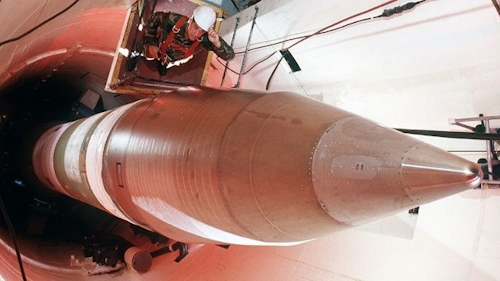
U.S. Air Force strategic weapons experts needed encryption and information security for the nation's fleet of Minuteman III intercontinental ballistic missiles (ICBMs). They found their solution from the Boeing. Co. Defense, Space & Security segment in Layton, Utah.
Officials of the Air Force Nuclear Weapons Center's ICBM contracting division at Hill Air Force Base, Utah, announced a $22.6 million order to Boeing on Thursday for ICBM Cryptography Upgrade Increment II (ICU II) production.
This modification exercises production lot 2, option 1 and provides the government 54 A-4 drawers, Air Force officials say. This effort supports Minuteman III nuclear missile continuous signal lockout, remote code change, and irreversible transform capabilities in the A4 drawer programmer group of the launch facility.

Friday, October 18, 2019

Information security

State Department's investigation found 38 individuals violated classification rules in relation to Clinton email server

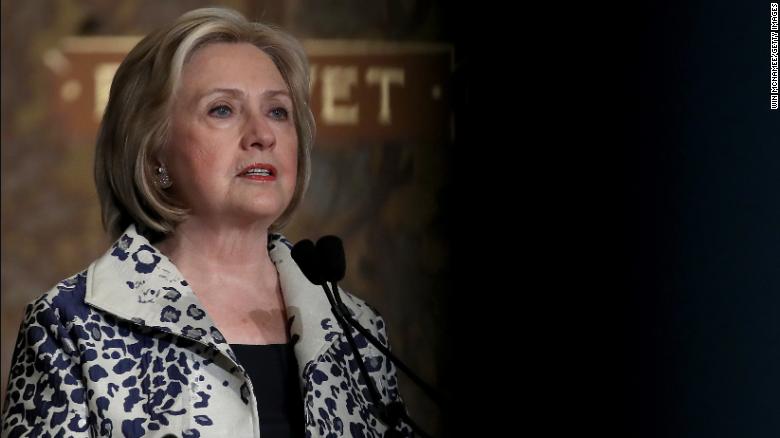
WASHINGTON, DC - SEPTEMBER 27:  Former U.S. Secretary of State Hillary Clinton speaks at Georgetown University September 27, 2019 in Washington, DC .Clinton delivered remarks before recognizing the winners of the 2019 Hillary Rodham Clinton Awards for Advancing Women in Peace and Security. (Photo by Win McNamee/Getty Images)
An investigation by the State Department released on Friday said 38 individuals employed at one time by the State Department sent classified emails to Hillary Clinton's private email server and found nearly 100 violations of classification rules.
An unclassified report detailing the investigation was sent to Sen. Chuck Grassley, an Iowa Republican and a member fo the Senate Judiciary Committee, and he released it publicly Friday afternoon. The Associated Press was first to report on the findings.
The investigation found 91 separate violations of classification rules. The report said the use of personal email by Clinton posed an "increased risk of unauthorized disclosure."
"While the use of a private email system itself did not necessarily increase the likelihood of classified information being transmitted on unclassified systems, those incidents, which then resulted in the presence of classified information upon it, carried an increased risk of compromise or inadvertent disclosure," the report stated.
But, it added that those interviewed for the report were aware of security precautions that were needed.

Monday, October 14, 2019

Information security

The Story Behind the Accidental Photo of a Spy

Ambassador Joseph Wilson, with his wife Valerie Plame in the background, at home in Washington, D.C., in October 2003.
In the fall of 2003, photographer David Burnett pitched a portrait shoot of career diplomat Joseph Wilson to U.S. News & World Report. That July, the New York Times had published an op-ed by Wilson that had significantly dented George W. Bush’s key argument for invading Iraq: that Saddam Hussein had tried to buy uranium from the west African nation of Niger to fuel his nuclear weapons program.
Wilson had written that some of this intelligence “was twisted to exaggerate the Iraqi threat,” an assertion that embarrassed the White House. It quickly retracted the claim that Bush had made in his State of the Union address earlier that year.
Shortly afterward, Wilson’s wife, Valerie Plame, was outed as a Central Intelligence Agency “operative on weapons of mass destruction.” The columnist Robert Novak, citing that two Bush administration officials had leaked Plame’s identity to him, wrote that Plame had suggested sending her husband to Africa. In an interview with TIME then, Wilson said that was “bullsh-t” and “a smear job.”

Saturday, October 5, 2019

Information security

Donald Trump: “We Ought To Start Our Own Network And Put Our Own News Out There”


Donald Trump
President Donald Trump again suggested starting his own global news network to “put some really talented people and get a real voice out there. Not a voice that is fake.”
His remarks were yet another slam at CNN, but also existing media outlets that are funded by the U.S. government, the largest of which is Voice of America. VOA’s mission is to provide an “objective and reliable source of U.S., regional and world news and information,” and is set up with a “firewall” to be free of political interference.
Speaking to a crowd in Florida on Thursday, though, Trump criticized those entities, which are overseen by the U.S. Agency for Global Media. Trump said that “we used to have Radio Free Europe and Voice of America. We did that to build up our country, and that is not working out too well.”

Wednesday, October 2, 2019

Information security

BREAKING: Anti-Trump Whistleblower Colluded With House Democrats Before Filing Complaint

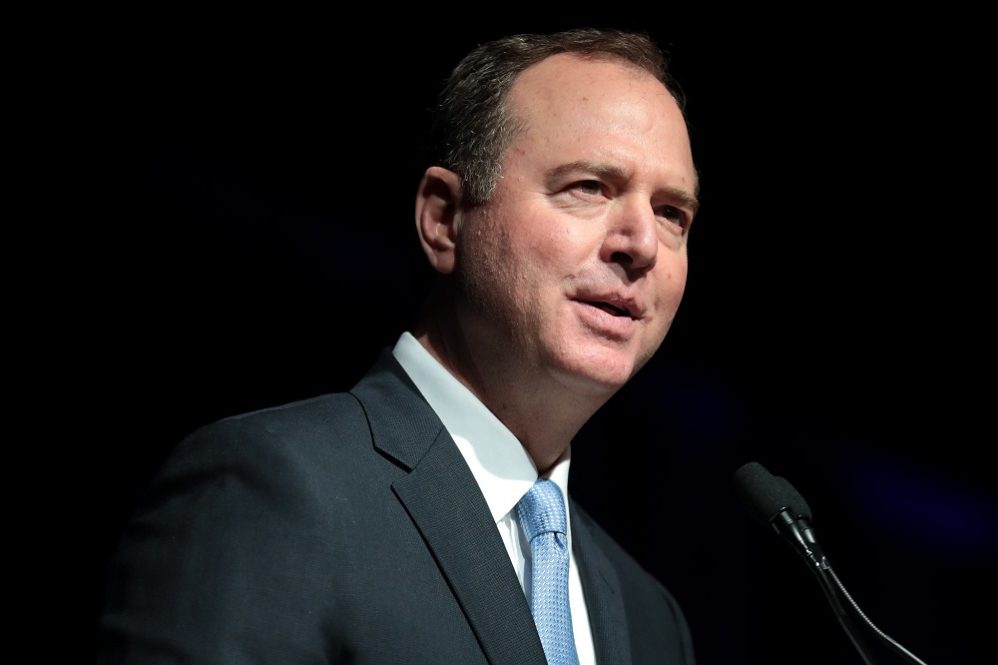
BREAKING: Anti-Trump Whistleblower Colluded With House Democrats Before Filing ComplaintAn anti-Trump whistleblower at the center of ongoing Democratic efforts to impeach President Donald Trump coordinated with Rep. Adam Schiff, D-Calif., and his Democratic staff prior to filing his whistleblower complaint, The New York Times reported on Wednesday afternoon. The bombshell report that the whistleblower and his Central Intelligence Agency (CIA) colleagues actively worked exclusively with congressional Democrats before filing the complaint raises serious questions about whether the complainant followed federal laws providing whistleblower protections for employees within the U.S. intelligence community.
“Before going to Congress, the C.I.A. officer had a colleague convey his accusations to the agency’s top lawyer,” The New York Times reported. “Concerned about how that avenue for airing his allegations was unfolding, the officer then approached a House Intelligence Committee aide, alerting him to the accusation against Mr. Trump.”
...Under federal law, whistleblowers within the intelligence community are required to report any allegations of wrongdoing to the Intelligence Community Inspector General (ICIG) in order to receive statutory whistleblower protections for their disclosures. The law does not provide any protections to employees or contractors who bypass the process required by law and go directly to Congress, nor does it provide any avenue to disclose classified information to Congress without first going through the ICIG. If the complainant or a colleague leaked classified information to Schiff or his committee, those individuals could be subject to criminal liability for illegal and unauthorized disclosure of classified information.

Sunday, September 15, 2019

Information security

Former CIA station chief Hoffman on disputed CNN story about Russian spy: Leakers committed 'grave transgression'

Credibility crisis at CNN as CIA slams 'false' Russia spy report
Former CIA station chief Daniel Hoffman said Wednesday that government leakers have "committed a grave transgression against our national security" following a disputed CNN story that claimed the CIA had to extract a spy from Russia partly based on fears around President Trump's handling of classified information.

Hoffman, a Fox News contributor who served in Moscow, Pakistan and Iraq, said on "The Brian Kilmeade Show" that he takes particular issue with unnamed officials who spoke anonymously to the media about the spy extraction.

The CNN report cited "multiple Trump administration officials with direct knowledge" of the matter.

"I don't know how these people, who gave up this information; frankly, they should be more than just ashamed. They've really committed a grave transgression against our national security," Hoffman said.

The CIA on Monday evening slammed what it called CNN's "misguided" and "simply false" reporting, after the cable channel's chief national security correspondent, Jim Sciutto, authored a hole-filled piece claiming that the CIA had pulled a high-level spy out of Russia because Trump had "repeatedly mishandled classified intelligence and could contribute to exposing the covert source as a spy."

The extraordinary CIA rebuke came as The New York Times published a bombshell piece late in the evening, which largely contradicted CNN's reporting. According to the Times, CIA officials "made the arduous decision in late 2016 to offer to extract the source from Russia" — weeks before Trump even took office.

Concerns about media reporting on Russian election interference drove the decision, according to the Times, which described the source as "the American government’s best insight into the thinking of and orders” from Russian President Vladimir Putin.