Страницы

Showing posts with label Human rights security. Show all posts

Tuesday, May 15, 2018

Human rights security

PAKISTAN: CAMPAIGN OF HACKING, SPYWARE AND SURVEILLANCE TARGETS HUMAN RIGHTS DEFENDERS

Картинки по запросу amnesty international
Human rights defenders in Pakistan are under threat from a targeted campaign of digital attacks, which has seen social media accounts hacked and computers and mobile phones infected with spyware, a four-month investigation by Amnesty International reveals.
In a new report released today, “Human Rights Under Surveillance: Digital Threats against Human Rights Defenders in Pakistan”, Amnesty International reveals how attackers are using fake online identities and social media profiles to ensnare Pakistani human rights defenders online and mark them out for surveillance and cybercrime.
“We uncovered an elaborate network of attackers who are using sophisticated and sinister methods to target human rights activists. Attackers use cleverly designed fake profiles to lure activists and then attack their electronic devices with spyware, exposing them to surveillance and fraud and even compromising their physical safety,” said Sherif Elsayed-Ali, Director of Global Issues at Amnesty International.
“Our investigation shows how attackers have used fake Facebook and Google login pages to trick their victims into revealing their passwords. It is already extremely dangerous to be a human rights defender in Pakistan and it is alarming to see how attacks on their work are moving online.”

Thursday, June 29, 2017

Human rights security

British spies could be forced to disclose deepest secrets in legal challenge


British spies could be forced to disclose deepest secrets in legal challenge
A legal challenge brought against British intelligence services aims to shed light on the nature of their most secretive operations.
Civil rights groups Reprieve and Privacy International want to make public the allegedly highly intrusive activities of the UK’s security agencies by bringing a case before the Investigatory Powers Tribunal.
The tribunal is responsible for overseeing the activities of the UK’s intelligence agencies, including MI5, MI6 and GCHQ.
The legal action is concerned with the set of “directions” issued by then-Prime Minister David Cameron, enabling the Intelligence Services Commissioner to supervise highly invasive and covert intelligence activities.
Two of these directions were subsequently released to the public with certain redactions.
One document governed interrogation of detainees abroad by UK intelligence personnel, while the other regulated the extensive collection of personal data by British spooks.
The third direction was only once referred to in public in a separate legal challenge brought by Privacy International, but was redacted in its entirety.

Wednesday, June 7, 2017

Human rights security


hand-on-brain
HAVE you ever thought about something you never shared with anyone, and have been horror-struck at the mere thought of someone coming to know about your little secret? If you have, then you probably have all the more reason to be paranoid now thanks to new and improved security systems being developed around the world to deal with terrorism that inadvertently end up impinging on one's privacy.
Some of the countries involved in such programmes include USA, UK, Spain, Germany and France. Recently, the National Security Agency (NSA) of the US has developed a very efficient method of controlling the human brain. This technology is called Remote Neural Monitoring (RNM) and is expected to revolutionise crime detection and investigation.

Friday, July 22, 2016

Human rights security

Turkey to temporarily suspend European Convention on Human Rights after coup attempt


AA photoTurkey will temporarily suspend the implementation of its obligations emanating from the European Convention on Human Rights (ECHR), in line with the declaration of a state of emergency, Deputy Prime Minister Numan Kurtulmuş has said, while vowing that fundamental rights and freedoms will not be affected during this period. 

“France has also recently proclaimed a state of emergency. And they suspended the ECHR, based on Article 15 of the convention,” Kurtulmuş told a group of Ankara bureau chiefs of media outlets on July 21. 

“A declaration of a state of emergency is not against the ECHR,” he said, adding thatAnkara would announce its decision to suspend the ECHR through a formal statement. 

Article 15 of the ECHR stipulates: “In time of war or other public emergencies threatening the life of the nation, any High Contracting Party may take measures derogating from its obligations under this Convention to the extent strictly required by the exigencies of the situation, provided that such measures are not inconsistent with its other obligations under international law.”

Thursday, May 19, 2016

Human rights security

U.S. Lawmakers Approve Global Magnitsky Act Targeting Rights Abusers


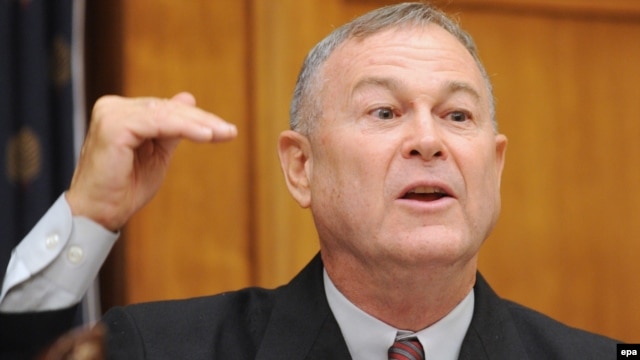
U.S. Representative Dana Rohrabacher argued that naming the legislation after Magnitsky would provoke Moscow unnecessarily and that the circumstances surrounding his death remain in dispute.
 A U.S. congressional committee has approved legislation targeting human rights abusers worldwide with sanctions modeled after the Magnitsky Act, a U.S. law punishing Russians deemed by Washington to be rights violators with visa bans and asset freezes.
The U.S. House Foreign Affairs Committee approved the Global Magnitsky Human Rights Accountability Act at a May 18 hearing that included fireworks over whether to name the bill after a whistle-blowing accountant who accused Russian officials of a massive tax fraud before his death in a Moscow jail.
The legislation is named after Sergei Magnitsky, who died in November 2009 while in custody after alleged beatings, torture, and medical negligence that supporters claim were retribution for implicating tax and law enforcement officials in a $230 million tax scam.

Monday, April 25, 2016

Human rights security

UK must leave European convention on human rights, says Theresa May

Картинки по запросу theresa mayBritain should withdraw from the European convention on human rights regardless of the EU referendum result, Theresa May has said, in comments that contradict ministers within her own government.
The shadow justice secretary, Charles Falconer, said he was appalled by the home secretary’s comments, which he described as “so ignorant, so illiberal, so misguided”, while the Tory MP and former attorney general Dominic Grieve said he was disappointed by the intervention.
May used a speech in central London to argue that it was the convention, rather than the EU, that had caused the extradition of extremist Abu Hamza to be delayed for years and that had almost stopped the deportation of Abu Qatada.
“The ECHR can bind the hands of parliament, adds nothing to our prosperity, makes us less secure by preventing the deportation of dangerous foreign nationals – and does nothing to change the attitudes of governments like Russia’s when it comes to human rights,” she said.

Friday, April 22, 2016

Human rights security

Russia human rights: New ombudsman is former police general


Tatyana Moskalkova in a an undated handout picture
The Russian parliament has controversially appointed a former police general as the country's new human rights ombudsman.
MPs overwhelmingly backed Tatyana Moskalkova for the job, despite concerns that she is an interior ministry insider rather than an independent advocate of human rights.
Human rights groups and activists have criticised the choice.
Ms Moskalkova is a member of the Kremlin-friendly Just Russia party.
She used her confirmation speech to lash out at Western critics of Russia's human rights record.
And she said veterans would be among those whose rights she would particularly seek to protect, as she was assuming office in the year of the 75th anniversary of the Soviet Union's entry into World War Two.

Wednesday, April 20, 2016

Human rights security

Norway violated mass killer Breivik's human rights, court rules


Norwegian mass killer Anders Behring Breivik attends the second day of his terrorism and murder trial in Oslo, Norway, April 17, 2012. REUTERS/Hakon Mosvold Larsen/Pool/File Photo
Norway violated mass killer Anders Behring Breivik's human rights by keeping him in a "completely locked world" after being sentenced for killing 77 people in twin attacks in 2011, a court ruled on Wednesday.
The ruling, which took many by surprise, found that the killer had been subjected to strip searches, had been woken up hourly by guards for long periods and that the authorities had done little to alleviate the impact of his isolation.
A survivor of Breivik's shooting spree said the decision "feels a bit like being punched in the gut" and a newspaper editorial denounced the decision as "wrong". A law professor said it was likely to be appealed.
Breivik killed eight people in a bomb attack in Oslo in July 2011 before attacking a youth meeting of the Labour Party on an island to the northwest of the capital, killing 69 people.
He took Norwegian authorities to court in March, accusing them of exposing him to inhuman, degrading treatment or punishment in breach of the European Convention on Human Rights.