Страницы

Showing posts with label Air defense. Show all posts

Sunday, August 30, 2020

Air defense

Anti-Drone System – New Development Stage

Anti drone capabilities are becoming more and more essential for military forces. Northrop Grumman Armament Systems is moving to verify the design and upgrade its Mobile Acquisition Cueing and Effector (M-ACE) system following a test event completed in July. M-ACE comprises a multi-mission ground and air security which can be tasked with counter-unmanned aircraft system (C-UAS) operations.
The testing was aimed at demonstrating advanced predictive cueing integration between the M-ACE vehicle – which is equipped with radar, electro-optical/infrared (EO/IR), radio frequency (RF) sensors, and a command and control (C2) suite – and several Scorpion air defence (AD) vehicles fitted with 30 mm M230LF Bushmaster cannons, according to janes.com.
Northrop Grumman Armament Systems conducted its latest field test of M-ACE and Scorpion AD tactical ground vehicles in July. Further tests are scheduled in October when M230LF Bushmaster cannons will fire proximity fused 30 mm ammunition to neutralise UASs. 

Thursday, December 26, 2019

Air defense

Russia developing air defense systems based on new physical principles

Russia is developing air defense systems based on new physical principles, Air Defense Force Chief Lieutenant-General Alexander Leonov said on Wednesday.
"Eventually, there are plans to arm air defense troops with systems based on new physical principles, which are currently being developed," the general said in an interview with the Defense Ministry’s Krasnaya Zvezda newspaper.
New physical principles are a notional term used to underline that the weapon’s destructive factors are based on processes and phenomena that were not earlier applied for military purposes. The weapons based on these principles include laser and microwave guns, sonic weapons, electromagnetic bombs and others.

Friday, November 8, 2019

Air defense

Air Force Downs Several Drones With New ATHENA Laser Weapon System


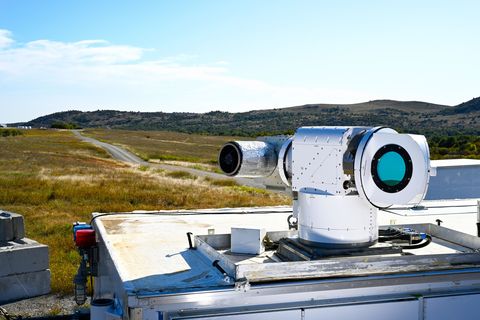
imageA laser defense system burned several flying drones out of the sky at army base in Oklahoma, demonstrating it can handle multiple threats per engagement. The U.S. military is pushing to develop laser weapons as a counter to the threat of drone swarms against military bases, especially air bases, where a single drone can do a lot of damage against multi-million dollar aircraft.
Advanced Test High Energy Asset, or ATHENA, is a 30 kilowatt laser weapon system that uses the 30 kilowatt Accelerated Laser Demonstration Initiative (ALADIN) laser. ALADIN combines the power of three 10 kilowatt fiber lasers into a single 30 kilowatt beam. The use of multiple lasers means it can also operate at lower levels, say 10 or 20 kilowatts, if necessary. Thirty kilowatts is sufficient to inflict structural damage against drones, causing them to fall out of the sky.

Sunday, October 20, 2019

Air defense

Company Claims Success in Detecting F-35 Stealth Fighter

detecting f-35
The F-35 program is one of the more expensive weapon development programs in history, with the program costs, up to the year 2070, reaching over $1.5 trillion dollars. Just one F-35 will set you back over $89 million. Despite (or due to) the hefty price tag, the F-35 is considered the most advanced multi-role stealth fighter, with a plethora of stealth related components. 
However, recently a German radar manufacturer has claimed that they have been able to track two F-35s for over 150 kilometers after the 2018 Berlin Air Show.
The passive radar system, dubbed TwInvis and developed by Hensoldt, promises to find undetectable activities in a given airspace and since the radar is passive, no pilots entering a monitored airspace would know if they are being tracked.
The system works by monitoring the radio signals that bounce off the jet, therefore making it possible for the radar to detect aircraft that have been designed to slip past radar.
However the system has its limitations. The system depends on the existence of radio signals, so the system may come off as useless in isolated parts of the world.
The technology is also not accurate enough to guide missiles, however C4isrnet.com reports that the system could be used to fire an infrared homing weapon close enough to the target.

Wednesday, October 2, 2019

Air defense

The 1 Thing About the Saudi Oil Attacks That Should Terrify You

The Abqaiq attacks this month raised many questions. Who did it? How did they do it? What did they do it with? One question was notably absent: Why couldn't Saudi Arabia stop it? The answer is not straightforward, nor is it necessarily clear that anything could have stopped it. After all, the Kingdom spends as much as any country on defense.

The uncomfortable reality is that no one knows how to deal with this threat. It is not just the Saudis. American military bases in the Middle East were likely equally exposed. Inexpensive, asymmetric, ubiquitous threats traveling at high speeds is a hard problem. They resemble something similar to an emergent property, in which simple entities (drones and cruise missiles, for example) operate in an ecosystem, forming more complex behaviors as a collective. Stopping one drone may have not been a challenge. Stopping 17 drones and eight cruise missiles launched together confusing radars, communications infrastructure, and human operators all at once are. Whether we like it or not, when it comes to this new era of defense, humans can be just as much the problem as they are the solution...

Monday, September 30, 2019

Air defense

Stealthy no more? A German radar vendor says it tracked the F-35 jet in 2018 — from a pony farm


In the illustrious history of the F-35 fighter jet, add a pony farm outside Berlin as the place where one company claims the plane’s stealth cover was blown.
The story that follows is a snapshot in the cat-and-mouse game between combat aircraft — designed to be undetectable by radar — and sensor makers seeking to undo that advantage. In the case of the F-35, the promise of invisibility to radar is so pronounced that it has colored much of the jet's employment doctrine, lending an air of invincibility to the weapon: The enemy never saw it coming.
But technology leaps only last so long, and Russia and China are known to be working on technology aimed at nixing whatever leg up NATO countries have tried to build for themselves.
Now, German radar-maker Hensoldt claims to have tracked two F-35s for 150 kilometers following the 2018 Berlin Air Show in Germany in late April of that year. The company’s passive radar system, named TwInvis, is but one of an emerging generation of sensors and processors so sensitive and powerful that it promises to find previously undetectable activities in a given airspace.

Sunday, September 29, 2019

Air defense

Pentagon May Replace Patriot Systems in US Pacific Territories After Saudi Aramco Attacks

Members of US 10th Army Air and Missile Defense Command stands next to a Patriot surface-to-air missile battery during the NATO multinational ground based air defence units exercise Tobruq Legacy 2017 at the Siauliai airbase. (File)The Saudi oil facility was reportedly protected by two Patriot systems, but despite that, it was crippled in a combined missile-drone attack on 14 September. A source in the Russian Defence Ministry linked their failure to the system's "low efficiency".
Commander of the Pacific Air Forces (PACAF) General Charles Brown has stated in an interview with Aviation Week that he is interested in equipping US military bases across the Indo-Pacific region with laser weapons powered by "a small nuclear reactor" to better protect them from aerial attacks. The general suggested that such systems may be more effective than "larger and heavier interceptor-based systems", such as Terminal High Altitude Area Defence (THAAD) or Patriot systems.
The latter's reputation recently suffered a blow after the much vaunted system failed to avert the devastating attack of missiles and drones on Saudi Aramco oil refineries on 14 September. The US reacted to the incident by deploying an additional battalion of Patriots to Saudi Arabia.

Thursday, September 26, 2019

Air defense

Air Force awards contract for $16M drone-killing microwave weapon

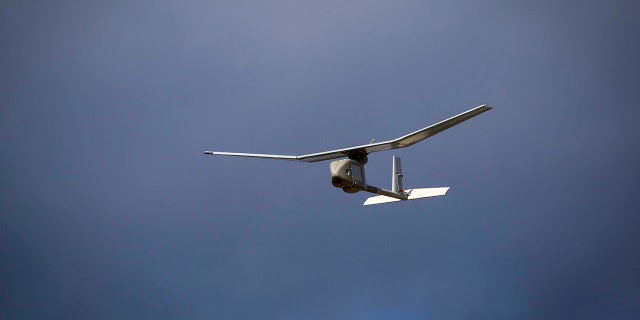
A U.S. Army RQ-11 Raven B flies at the New Jersey Army National Guard's unmanned aerial system Raven operator’s course at Joint Base McGuire-Dix-Lakehurst, N.J. (New Jersey National Guard photo by Mark C. Olsen)
The Pentagon has awarded a contract worth nearly $16.3 million to Raytheon for a prototype high-power microwave weapons system, officials announced this week.
The system is the first direct energy weapon said to be able to destroy certain types of drones, Popular Mechanics reported Tuesday. The system uses microwaves that emit "radio frequencies in a conical beam," destroying a drone's circuit with "a burst of overwhelming energy," the publication said.
“It's not a thermal effect, it's an electric-field effect that is basically imposed on the electronics to either upset or permanently damage them. And the effect is essentially instantaneous,"  Raytheon's missile systems' chief technologist for directed energy, Don Sullivan told the outlet.

Wednesday, September 25, 2019

Air defense

Counter-UAV Solution Will Protect Critical Installations

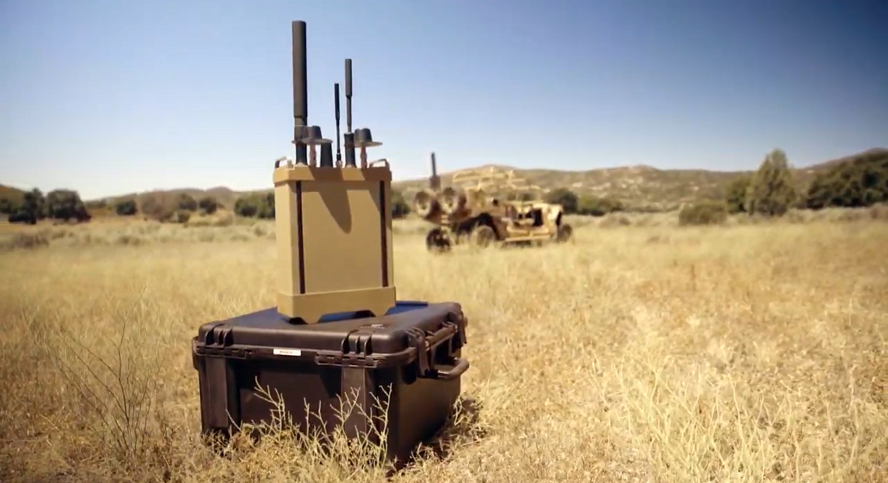
Counter UAV solution titan
The United States Air Force has recently awarded a counter-UAV technology manufacturer a $1.5 million contract to deliver anti-UAV technology to keep soldiers, assets, and critical infrastructure safe from UAV and drone threats.
The United States Air Force will utilize Citadel Defense’s anti-UAV technology, Titan, to provide airspace awareness and protection for critical installations. Titan provides confidence and readiness against potential drone and UAV threats as a way to protect national security.
“Weaponized drones are being employed on the modern battlefield by adversaries,” said Citadel’s CEO, Christopher Williams. “The need for effective and reliable counter drone technology is critical today”.
Citadel’s Titan utilizes targeted electronic countermeasures and artificial intelligence to detect, identify, and neutralize unidentified drones, as mentioned by Yahoo.com. This allows Titan to combat potentially threatening drones while minimizing interference with friendly communications. 
It takes about 3 minutes to set up Titan. Once online, Titan creates a three kilometer bubble of protection from hostile UAVs and drones.

Monday, April 15, 2019

Air defense

S-400 Boosts Turkey's Position in Mediterranean in NATO Nightmare - German Media

Personnel near an S-400 Triumf anti-aircraft weapon system during the combat duty drills of the surface to air-misile regiment in the Moscow Region.Although the US has been trying to talk Turkey out of purchasing the Russian-made S-400 air defence systems, Ankara seems to have refused to back down. A journalist at the German outlet Stern, Gernot Kramper, points out that the deal could become a huge problem for NATO, as Moscow could eventually gain access to the alliance’s technology.
After purchasing and deploying four batteries of the Russian-made S-400 air defence missile systems, Turkey would increase its influence in the eastern Mediterranean enormously, changing its geostrategic position, German journalist Gernot Kramper notes in his article for the magazine Stern. According to him, nobody will be able to operate in the area against Ankara’s will. He points out that although the US has dominated the air globally, the S-400 poses a danger even to stealth jets. So while the system is a bestseller for the Kremlin, it is a nightmare for NATO, he explains.
The author points out that the US had refused to provide Turkey with similar weapons for a long time. Even during the war in Syria, US-made Patriot air defence batteries belonging only to other countries were meant to defend Turkey. Kramper concludes that “Ankara has learned that Turkey is only a second-class ally”.

Saturday, March 2, 2019

Air defense

Russia’s latest S-500, S-350 systems to enter service soon

The advanced S-500 surface-to-air missile/anti-ballistic missile systems and S-350 medium-range surface-to-air missile systems will enter service with the Russian armed forces soon, the commandant of the Zhukov Air-Space Academy, Lieutenant General Vladimir Lyaporov, said in an interview published by the Krasnaya Zvezda daily on Friday.
In 2019, the first group of officers will complete a training course to use S-500, a long-range system that will form the backbone of Russia’s integrated air defense and missile defense system.
"I would like to note that in 2019, the first group of officers will complete the academy’s course to use the S-500 systems. The systems are yet to enter service, but we expect them to do so in the near future," he said.
"In the end of the year, the center is expected to receive first S-350 Vityaz systems," the general added.
Earlier, Russian Defense Minister Sergei Shoigu said the delivery of S-500 systems to Russian troops will begin in 2020. Depending on the type of missiles it is equipped with, the system will be able to shoot down both air-breathing targets, such as planes and drones, and ballistic missiles. According to earlier Western media reports, Russia’s advanced system hit a target a distance of 481.2 km, exceeding the previous record by 80 km.


Friday, February 15, 2019

Air defense

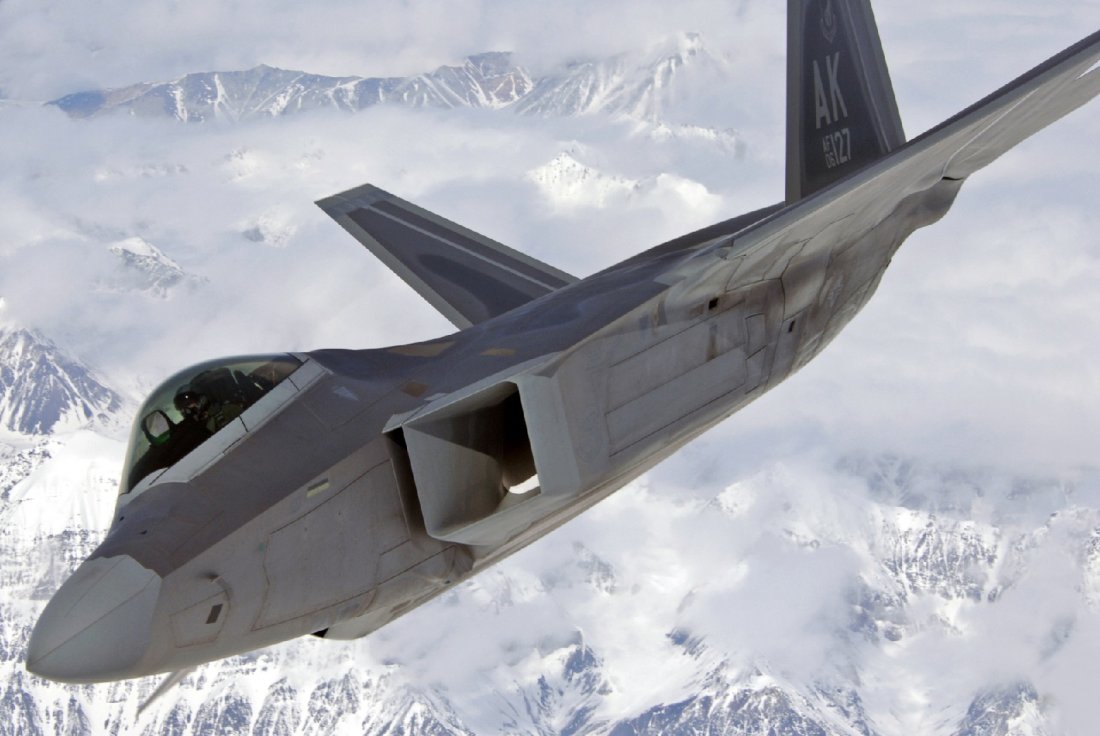
Quantum Radars: China's New Weapon to Take Out U.S. Stealth Fighters (Like the F-22)?

While theoretically, if such a radar existed, it would be able to detect and track stealth aircraft with impunity, but it is unclear if China truly mastered such technology. The Chinese defense industry has claimed a breakthrough in mastering quantum radar technology, but Western defense industry officials said that such a system is not likely to exist outside a laboratory. Even then, the quantum radars would be difficult to build and test reliably even in a lab environment. Indeed, it is likely that networked low-frequency radars—which can also detect and track fighter-sized stealth aircraft—are more likely to be a more pragmatic development.Last year, China Electronics Technology Group Corporation (CETC) announced it had tested such a radar at ranges of roughly 60 miles. While 60 miles is not particularly huge feat, the fact that such a radar would be able to provide a weapons quality track on a stealth aircraft at those distances is impressive.

Most radars operating in the fire-control bands such X or Ku are only able to paint a low observable aircraft at much shorter ranges. And indeed, Chinese sources claim that the range for an operational version of the quantum radar is likely to be much greater. “The figure in declassified documents is usually a tuned-down version of the real [performance],” a Chinese military researcher told the South China Morning Post last year.

As the paper describes, quantum radar uses a novel concept in physics, which scientist are only just starting to understand.

Saturday, January 26, 2019

Air defense

Russian Military Confirms Syria Repulsed Israeli Missile Attack

Rocket launch by the Pantsir-S surface-to-air missile system, file photo.
A military source indicated that air defence systems in the country's south have successfully repelled an Israeli air attack, preventing the attackers from achieving any of their objectives.
"Our air defence systems have repelled Israel's air strike in a southern region. All missiles have been intercepted, none of them hit their targets," a Syrian military source told Sputnik on Sunday.
Later in the day, the Russian military confirmed that the Israeli Air Force had carried out an attack against Syria, saying the strikes consisted of guided missiles launched from the Mediterranean Sea by four IAF F-16 fighters at 1:32 pm Moscow time.
Speaking to journalists at the National Defence Management Centre in Moscow, a Russian military spokesman confirmed that Syrian air defences had repulsed the Israeli attack, which was aimed at the Damascus International Airport, southwest of the Syrian capital.
According to the Russian military, Syrian-operated Pantsir and Buk air defence systems destroyed seven Israeli missiles. "The airport's infrastructure was not damaged. There are no victims, and no damage," a spokesman said.

Monday, January 7, 2019

Air defense

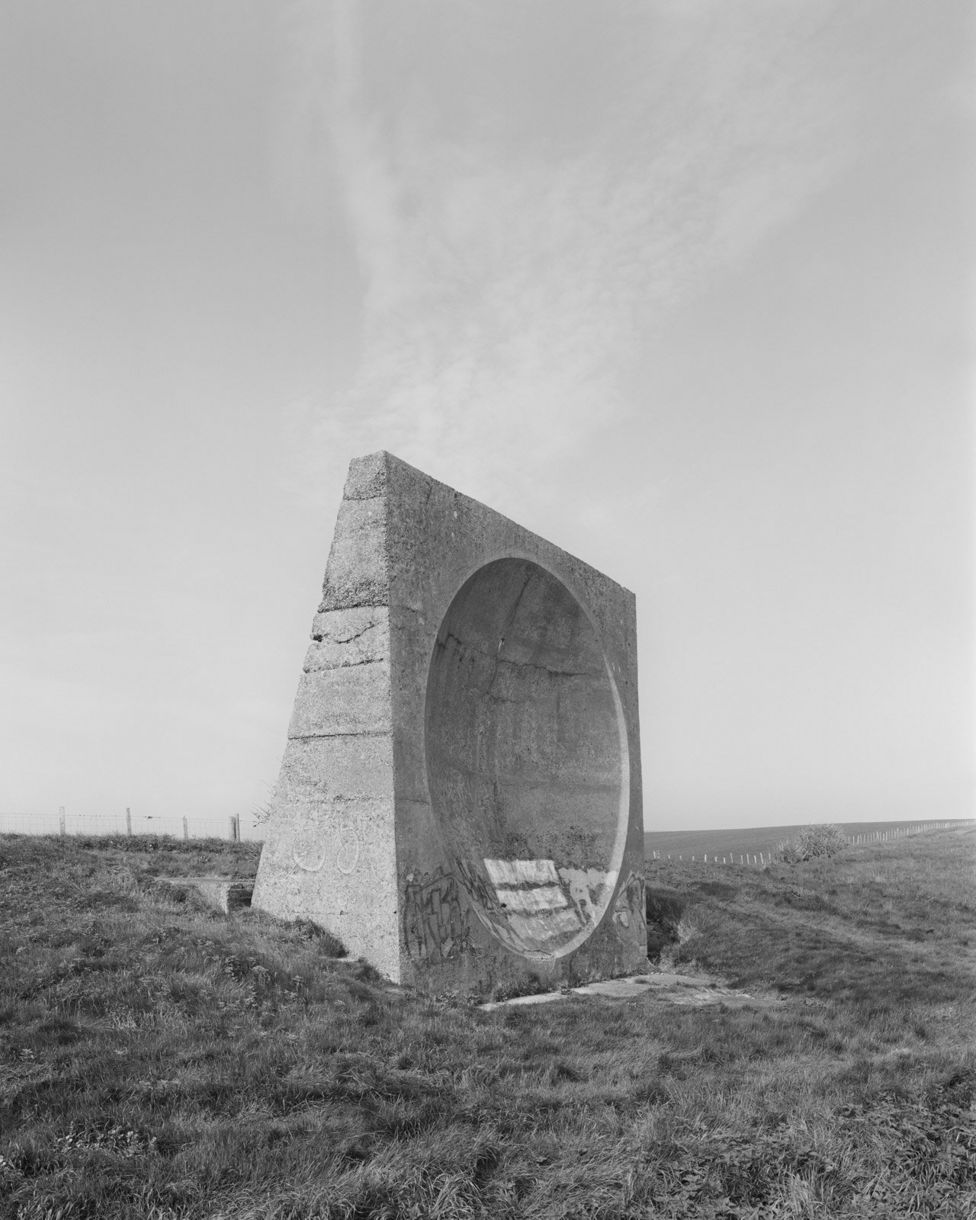
The concrete blocks that once protected Britain


Abbot's Cliff sound mirror
More than 100 years ago acoustic mirrors along the coast of England were used to detect the sound of approaching German zeppelins.

The concave concrete structures were designed to pick up sound waves from enemy aircraft, making it possible to predict their flight trajectory, giving enough time for ground forces to be alerted to defend the towns and cities of Britain.

nvented by Maj William Sansome Tucker and known as sound mirrors, their development continued until the mid-1930s, when radar made them obsolete.

Joe Pettet-Smith set out to photograph all the remaining structures following a conversation with his father, who told him about these large concrete structures dotted along the coastline between Brighton and Dover.

Wednesday, September 26, 2018

Air defense

Work on Russia's New S-500 Air Defense System Almost Complete - Deputy PM

The all-altitude radar (center) and anti-aircraft missile containers (left) of the S-400 Triumph air defense regiment. File photoThe S-500 Prometey ("Prometheus") is a new generation surface-to-air missile system with a range of 400-600 kilometers (250-370 miles), designed for intercepting and destroying intercontinental ballistic missiles, as well as hypersonic cruise missiles and aircraft.
On May 15, Russian President Vladimir Putin said that development and preparation for the serial production of the newest S-500 air defense system should be completed as quickly as possible. The deliveries of S-500 systems to Russia's Aerospace Forces are expected to start around 2020.

Friday, July 20, 2018

Air defense

Russian MoD: New Air Defense Missile Succesfully Test-Fired in Kazakhstan

Inter-missile launch from Sary Shagan testing ground. Still frame taken from a video courtesy of the Russian Defense Ministry
A new air defense missile was successfully test fired from a testing range in Kazakhstan, the Russian Defense Ministry said in an official publication on Friday.
"A missile defense unit of the Russian Aerospace Forces has tested a new, modernized air defense missile at the Sary Shagan testing range (Kazakhstan)," the ministry said in the affiliated Krasnaya Zvezda (Red Star) newspaper.
Russian Maj. Gen. Andrei Prikhodko, deputy commander of air and anti-ballistic defense forces, was cited in the statement as saying that the projectile had successfully engaged its target. The weapon is in military service.
In April, the Russian Defense Ministry said the new, modernized anti-ballistic missile system has been successfully tested in Kazakhstan at the Sary Shagan testing range.

Tuesday, July 17, 2018

Air defense

S-400: The Air Force's Ultimate Nightmare or Over-hyped?

Russia has spent decades developing multilayered air-defense systems, each tier of weapons capable of handling different targets at varying altitudes and ranges. The bottom layer is made up of point-defense vehicles capable of engaging low-flying aircraft at short ranges as they approach frontline troops or key installations, a role performed in Syria by Russia’s Pantsir S-1 (NATO codename: SA-22 Greyhound) air-defense vehicles. One level up, there are medium-range missiles that can strike targets at higher altitudes a few-dozen miles away, such as the Buk-M (SA-17 Grizzly) missile involved in the Malaysian Flight MH 17 incident.

The S-300 and -400 family of missile systems, starting with the S-300P first deployed in 1978, constitute the long-range end of the spectrum. The have the range to be considered anti-access/area-denial (A2/AD) weapons capable of denying the airspace of an entire region, and can also, in theory, take out incoming cruise missiles and shorter-range ballistic missiles. A specialized missile-defense variant, the S-300V4, was deployed to the Russian naval base at Tartus in October 2016.

Wednesday, May 16, 2018

Air defense

Putin calls to prepare S-500 missile system for mass production

Russian President Vladimir Putin said on Tuesday further efforts are needed to improve anti-precision warfare tools and called to prepare S-500 missile systems for mass production.

"One of the key tasks is to improve anti-precision warfare means. It is necessary to develop and build up technological groundwork in the area of air defense, to continue modernization of Pantsir systems, to finish the development and preparations for mass production of the S-500 newest systems capable of hitting targets at super-high altitudes, including near-the-earth space," he said at a meeting with Russia’s top brass and executives of defense-sector enterprises.
The meeting with Armed Forces commanders and defense industry executives was attended by acting Defense Minister Sergei Shoigu, Chief of General Staff Valery Gerasimov, Deputy Defense Minister Yuri Borisov and other officials.


Thursday, May 10, 2018

Air defense

Swiss eye stealth-nixing radar to protect Alpine valleys


Swiss defense officials say they are monitoring progress in the field of passive radar, a technology with the potential to track stealthy aircraft, as the country plans a multibillion-dollar upgrade of its air defenses.

Some European vendors are looking to the Alpine nation, hoping its “Air 2030” program, which is slated to include a combination of new aircraft and ground-based sensors, could finally offer a breakthrough for the still-dormant radar technique.

Unlike traditional radar sets, which emit radar waves and then track their path, passive radar equipment computes an aerial picture by reading how civilian communications signals bounce off of airborne objects. The technique works with any type of signal that’s already present in a given airspace, including radio or television broadcasts as well as emissions from mobile phone stations.

Passive radar technology promises the advantage that it cannot be detected, meaning pilots entering a monitored area may be unaware they are being tracked. That could even be the case for pilots flying stealthy aircraft like the F-35, experts say, though there appears to be no publicly available data pitting passive radar against low-observable aircraft designs and their radiation-absorbing coatings.

Sunday, April 15, 2018

Air defense

Israeli Media Alarmed Over Russia’s S-300 Supply to Syria

S-300 Favorite surface-to-air missile systems during a bilateral drill of air defense and aviation forces of the Western Military DistrictThe statement, made by the Russian Defense Ministry, that Moscow might reconsider a sale of the S-300 systems to Damascus following the US and allied airstrike, has raised concern among Israeli analysts and journalists, who are concerned over possible threats it may pose to the Jewish state.
The Jerusalem Post has warned that “Israel’s air superiority is at risk of being challenged in one of the most difficult” areas if Russia decides to sell Syria more advanced air defense systems. The newspaper has voiced fears that the Israeli pilots might get killed if Damascus had its hands on more effective missiles.  The unit in question is the S-300, a Russian long range surface-to-air missile system, developed to defend against aircraft and cruise missiles. The system is one the most advanced weapons in its class.
Analyst from I24 news broadcaster Ron Ben-Yishai backs these concerns, saying that the Jewish state would have to take “cautionary and preventive measures not yet taken so far.”