Chemical, Biological, Radiological,and Nuclear Response
The blog is devoted to the multiple issues of the security culture.
Страницы
Showing posts with label Emergency preparedness. Show all posts
Thursday, October 27, 2016
Emergency preparedness
Chemical, Biological, Radiological,and Nuclear Response
A CBRN incident is any occurrence resulting from
the use of CBRN weapons and devices; the
emergence of secondary hazards arising from
counterforce targeting; or the release of toxic
industrial materials (TIMs) into the environment,
involving the emergence of CBRN hazards. A
USG response would normally only be required
when local, territorial, tribal, or state authorities
are overwhelmed by the incident; if there are
shortfalls in local, territorial, tribal, state, or federal
response capabilities, other USG departments and
agencies may require a defense support of civil
authorities (DSCA) request for Department of
Defense (DOD) assistance. For CBRN incidents
occurring on foreign soil, either a host nation (HN)
or international organization could request a USG
response.
Chemical, Biological, Radiological,and Nuclear Response
Friday, July 1, 2016
Emergency preparedness
In January 2006, Singapore conducted Exercise Northstar 5, a drill designed to educate the public about chemical, biological, radiological, and nuclear attacks—and how best to respond to them. In April 2015, authorities followed up with another drill, Northstar 9. The Southeast Asian city-state has also established a specialist agency, the Chemical, Biological, Radiological, and Explosive Defence Group, as well as a Community Emergency Preparedness Program. Most important, it has built shelters—in the rapid-transit system, in schools and community centers, and in the Housing Development Board buildings in which most Singaporeans dwell—for the public to use in the event of an attack. In addition to other life-saving facilities, the shelters feature “protective blast doors, decontamination facilities, ventilation system[s], power and water supply systems and dry toilet system[s],” according to the Singapore Civil Defence Force.
Is the West prepared for an Islamic State attack?
Wednesday, June 8, 2016
Emergency preparedness
Westerners lack education on nuclear disaster risks, expert warns

Western societies would not respond well to a Fukushima-style nuclear disaster due to a lack of public information, a leading disaster expert has warned.
Christopher Abbott said he firmly believed that the public ought to be better educated over the hazards and risks they may face.
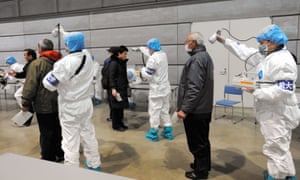
Illustrating his point, he referred to the Fukushima disaster of 2011 in which 160,000 people were evacuated from the vicinity of the plant as experts attempted to tackle the emergency. The evacuation worked, said Abbott, because “the Japanese educate the public”.
“I just don’t see that it would have worked as successfully in western society,” he added. “[It’s] a very personal opinion but one that is backed up by Japanese colleagues.”
Emergency preparedness
SPECIAL - Terrorism And The Fire Service
Since the fire service has a role in the fight against terrorism, training and preparedness must become integral to fire departments around the nation. Fire departments are now involved in identifying threats aimed at a range of targets, including critical infrastructure, such as bridges and tunnels, and public events, such as concerts, fairs, and sporting events. The fire service needs its training to evolve around incidents that may occur at those targets and in those venues.
SPECIAL - Terrorism And The Fire Service
Chief Bryant further explained that although there was no specific training in terrorism response before the Oklahoma City bombing, the city had experienced frequent natural disasters, including tornados, floods, wildfires, etc., and therefore was “well trained and experienced in responding to large scale, high casualty events.”
Fire departments across the United States, including Oklahoma City, have adapted their training from basic search and rescue operations to now include training in the use of specialized equipment. Firefighters are warned about the need to exercise additional caution, especially as it relates to secondary explosive devices.
Monday, June 6, 2016
Emergency preparedness
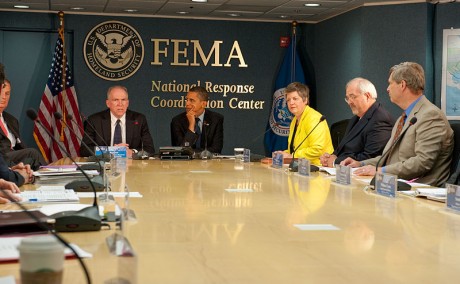
Interesting news reports are surfacing all across the country as our commander and chief, President Barack Obama, addressed FEMA’s National Response Coordination Center in Washington DC on Tuesday, May 31st warning that Americans must prepare for a national emergency and/or disaster in preparation for the hurricane season.
Cryptic Message: Obama Tells Americans to Prepare For Disaster! Does He Know Something We Don’t??
In the address he also emphasized that it is our responsibility to prepare for “a” disaster, meaning any disaster that strikes our country. He also emphasized the importance to stocking up and having an exit plan:
“One of the things that we have learned over the course of the last seven and a half years is that government plays a vital role, but it is every citizen’s responsibility to be prepared for a disaster. And that means taking proactive steps, like having an evacuation plan, having a fully stocked disaster supply kit. If your local authorities ask you to evacuate, you have to do it. Don’t wait.” President Obama.
Subscribe to:
Posts (Atom)