Страницы

Showing posts with label Power grid security. Show all posts

Friday, May 8, 2020

Power grid security

The best way to protect the US electrical grid is with open source


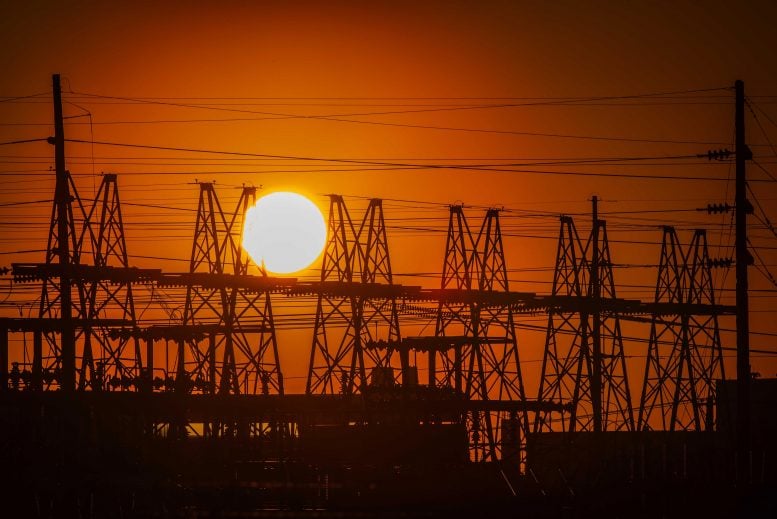
Electrical, Power, Distribution, Towers, High Voltage
Recently, President Donald Trump signed an executive order to protect the US electricity grid from cyber attacks by blocking power-equipment imports from "foreign adversaries." Presumably, that includes Russia, Iran, and -- most important of all -- China. There's only one problem with that: The vast majority of high-end electrical equipment is built outside of the US. 
In specific, China is leading the way in advanced electrical grid technology. State Grid Corporation of China (SGCC), the world's largest power company, is building the first ultra-high-voltage DC (UHVDC) electrical lines, which can carry over a million volts. China is doing this in partnership with the Swiss-Swedish ABB Group. Are Switzerland and Sweden "foreign adversaries" too?
We don't know. While Trump declared this to be a national emergency, it's up to the Energy Secretary and other cabinet-level officials to decide what electric equipment that may fall under the ban. The global power companies are struggling to work out what Trump's executive order really means. 

Sunday, May 3, 2020

Power grid security

Trump Declares National Emergency As Foreign Hackers Threaten U.S. Power Grid

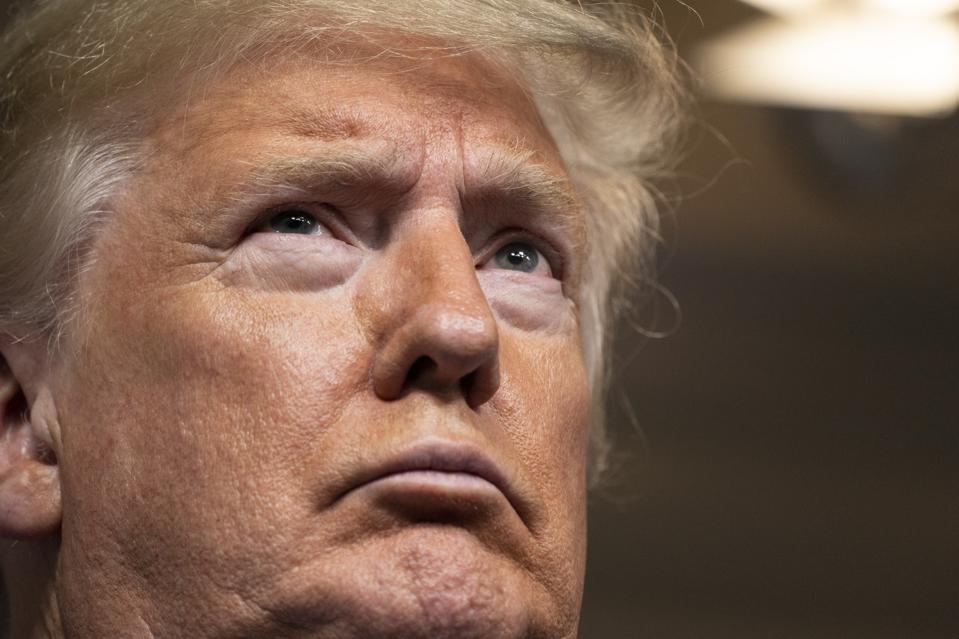
Close up of the face of U.S. President Donald Trump
President Trump has signed an executive order that declares foreign cybersecurity threats to the U.S. electricity system a national emergency.
President Trump signed an executive order, May 1, to further secure the U.S. bulk-power system from foreign adversaries that he wrote are "increasingly creating and exploiting vulnerabilities." The executive order, declaring a national emergency over the hacking threat, bans the "acquisition, importation, transfer, or installation," of bulk-power system electricity equipment from companies under foreign adversary control.
The executive order also confirmed that a task force had been established, with members including the Secretary of Defense, Secretary of Homeland Security, and the Director of National Intelligence, to work to protect against national security threats to energy infrastructure. What this order did not do is go as far as naming any specific foreign adversaries, nor the companies they may control.

Thursday, March 26, 2020

Power grid security

New Protection for US Energy Grid and Nuclear Weapons Systems

SNL Threat Defense
One is focused on defending large U.S. electrical utility systems from potential attacks by hostile nations, as well as from damage inflicted by extreme natural disasters like hurricanes and solar flares. The Resilient Energy Systems campaign, a multi-year research portfolio with up to $40 million in total funding, is supported by Sandia’s Laboratory Directed Research and Development program, which funds exploratory work in science and technology.
“The original electric grid was not designed with security in mind against cyberhacks, or protection from electromagnetic disturbances, or natural disasters such as hurricanes or geomagnetic solar storms,” portfolio manager Craig Lawton said.
“The primary objective of our mission portfolio is to mitigate vulnerabilities caused by antiquated technology in transformers and other components. Solutions require research, and we’re looking for collective inputs of ideas from researchers in industry, utility companies, universities, other labs and of course Sandia,” he said.

Saturday, January 18, 2020

Power grid security

How is the Electric Grid Vulnerable to Cyber Attacks?

power grid vulnerable to cyber attacks
The electric utility industry is a valuable target for adversaries seeking to exploit industrial control systems and operations technology for a variety of purposes. 
Attacks on electric systems – like attacks on other critical infrastructure sectors – can further an adversary’s criminal, political, economic, or geopolitical goals. As adversaries and their sponsors invest more effort and money into obtaining effects-focused capabilities, the risk of a disruptive or destructive attack on the electric sector significantly increases.
A power disruption event from a cyberattack can occur from multiple components of an electric system including disruptions of the operational systems, targeting enterprise environments to achieve an enabling attack through interconnected and interdependent IT systems, or through a direct compromise of cyber digital assets.
According to a report by dragos.com, an Iranian-sponsored hacking group called Magnallium has been trying to get access to American electric utilities for at least a year. The hackers have been trying to guess passwords for hundreds of accounts linked to US electric utilities, plus oil and gas firms, a technique known as “password-spraying.” This chimes with findings from Microsoft, which revealed it had seen a similar campaign in November 2019.

Friday, September 13, 2019

Power grid security

China’s Grid Architect Proposes a “Made in China” Upgrade to North America’s Power System

Image of Liu Zhenya signing a copy of his 2015 book Global Energy InterconnectionTransmission lines in the United States and Canada require approval from every state and province traversed, and that political fragmentation hinders deployment of long power links of the type connecting vast swaths of territory in regions such as China, India, and Brazil. As a result, few studies detail how technologies that efficiently move power over thousands of kilometers, such as ultrahigh-voltage direct current (UHV DC) systems, might perform in North America. Earlier this week, the Beijing-based Global Energy Interconnection Development and Cooperation Organization (GEIDCO) stepped in to fill that gap, outlining an ambitious upgrade for North America’s grids.
GEIDCO’s plan promises to greatly shrink North America’s carbon footprint, but its boldest prescriptions represent technical and economic optimizations that run counter to political interests and recent trends. “Thinking out of the box is how you solve complicated, difficult problems,” said former Southern California Edison CEO Ted Craver in response to the plan. But GEIDCO’s approach, he said, raises concerns about energy sovereignty that could prove difficult to settle. As Craver put it: “There’s theory and then there’s practice.”

Monday, September 9, 2019

Power grid security

First Ever DoS Cyber-Attack On A US Power Grid Detailed In Startling Report


cyberattack power gridOn March 5th, 2019, an unprecedented Denial of Service (DoS) cyberattack occurred on American soil, targeted at the US power grid. This attack mainly affected the Western United States, and was a fortunately low-impact attack. No blackouts were caused, and the machines in question were out of commission for no more than five minutes, according to the North American Electric Reliability Corp, or NERC.

Even so, this leaves a historical mark on American infrastructure, and clearly demonstrates the dangers of increased connectivity. A simple firewall vulnerability was enough to cause multiple devices to be compromised and rebooted from a single point of failure. While the impact this time around was minimal, this could have gone much worse.

According to NERC's report, this problem was caused by outdated firmware. A firmware fix to patch the vulnerability that allowed this attack to happen had been released prior to the attack, but internal processes had been too lax to ensure that patch was applied before it was too late. Even after applying the patch, NERC continued to address the problem by implementing more safeguards in their networks

Saturday, September 7, 2019

Power grid security

Security News This Week: An Unprecedented Cyberattack Hit US Power Utilities


man working in power grid control room
This week saw some aftershocks from recent revelations about a large-scale iOS hacking campaign. Brokers of so-called zero day exploits—the kind that companies haven't yet patched—have started charging more for Android hacks than iOS for the first time. And Apple finally released a statement that both criticized Google's characterization of the attacks and downplayed the significance of the targeted surveillance of at least thousands of iPhone owners.
We took a look at a bug in Supermicro hardware that could let hackers pull off a USB attack virtually. Google open-sourced its differential privacy tool, to help any company that crunches big data sets invade your privacy less in the process. And speaking of privacy, we detailed the 11 settings you need to check on Windows 10 to preserve yours.
And while it feels like forever ago that Jack Dorsey's Twitter account got hacked, it's worth revisiting exactly how it happened. (Twitter this week closed the texting loophole at the heart of it.) We also took a look at Jeremy Renner's content moderation woes. Bet you weren't expecting to see that sentence in your lifetime.

Thursday, May 9, 2019

Power grid security

How Much Will It Cost to Protect America’s Electrical Grid? Who Will Pay?

Recently, a neighbor asked one of us whether Russia, China, North Korea and Iran really are capable of hacking into the computers that control the U.S. electricity grid. The answer, based on available evidence, is “Yes.” The follow-up question was, “How expensive will it be to prevent, and who will end up paying for it?”

The answers are: Likely tens of billions of dollars, and probably us, the electricity customers. This is a major – and, in our view, vital – investment in community and national security. But as scholars of grid cybersecurity, we understand it’s not very clear what consumers will be getting for their money, nor whether utility companies themselves should bear some share of the cost.

Paying for reliability

In the U.S., the electricity grid is a ubiquitous system that’s highly reliable. Most consumers expect the lights to turn on when they flip the switch, and don’t think much more about it – except when paying the monthly bill.

Electric power companies’ high levels of performance depend on interconnected computer systems, which are vulnerable to cyberattacks

Saturday, April 27, 2019

Power grid security

Trump administration is ignoring a massive problem at U.S. nuclear plants

From day one, the Trump administration has looked for ways to prop up money-losing nuclear power plants, which face increasing competition from cheap natural gas and renewable energy sources.

At first, the main effort was a direct bailout — Energy Secretary Rick Perry’s failed plants subsidize nuclear (and coal) power plants by raising consumer energy bills.

Now the administration has started cutting corners in nuclear safety and oversight. Trump appointees, who are a majority at the U.S. Nuclear Regulatory Commission (NRC), are allowing the nuclear industry to avoid costly upgrades to plants that are not designed to withstand current flood risk.

What’s especially shocking about this decision, made by the NRC in January, is that a remarkable “54 of the [60] nuclear plants operating in the U.S. weren’t designed to handle the flood risk they face,” as Bloomberg reported last week after reviewing information exchanged between the plant owners and the NRC.

Saturday, March 9, 2019

Power grid security

Could Venezuela's Power Outage Really Be A Cyber Attack?

As Venezuela endured one of its worst blackouts in recent memory this week, the government repeatedly claimed the widespread outage of power, phone and internet was due to a foreign cyberattack attempting to unseat its president. While the reality is that Venezuela’s blackout was most likely due to chronic underfunding of its electrical infrastructure and deferred maintenance, the idea of a foreign nation state manipulating an adversary’s power grid to force a governmental transition is very real.
In 2015 I explored the concept of “cyber first strike” in which governments would increasingly turn to cyberwarfare either on its own or as part of hybrid warfare to weaken an adversary prior to conventional invasion or to forcibly and deniably effect a transition in a foreign government.
Interrupting power and water supplies, disrupting traffic patterns, slowing or interfering with internet access, causing smart homes to go haywire and even remotely triggering meltdowns at nuclear power plants were all topics increasingly being discussed in the national security community at the time as legitimate and legal tactics to undermine a foreign state.
Power grid security

Venezuela power cuts: Blackouts continue as protests loom


People stand on a dark corridor at Miguel Perez Carreno hospital, in Caracas
A widespread power cut affecting much of Venezuela has continued throughout Friday ahead of planned protests on Saturday.
President Nicolás Maduro and the US-backed opposition trying to oust him have blamed each other for the outage.
Hospitals struggled to cope and at least one hospital patient died when her respirator stopped working.
The power cuts, which started on Thursday, have been caused by problems at a major hydroelectric plant.
Venezuela depends on its vast hydroelectric infrastructure, rather than its oil reserves, for its domestic electricity supply. But decades of underinvestment has damaged the major dams, and sporadic blackouts are commonplace.

Monday, March 4, 2019

Power grid security

QUANTUM PHYSICS COULD PROTECT THE GRID FROM HACKERS—MAYBE

Cybersecurity experts have sounded the alarm for years: Hackers are ogling the US power grid. The threat isn’t merely hypothetical—a group affiliated with the Russian government gained remote access to energy companies’ computers, the Department of Homeland Security published last March. In some cases, the hackers could even directly send commands to mess with hardware, which meant they could have cut off the power entirely to customers’ homes. To shut these hackers out, utility companies need better security.
One group of physicists think they have a patch: quantum-encrypted power stations.
They tested the idea this February, hauling several SUVs’ worth of lasers, electronics, and extremely sensitive detectors from Oak Ridge National Laboratory in Oak Ridge, Tennessee, down to Chattanooga. After a hundred-mile drive, they pulled the vehicles up to EPB, the local utility company, and hooked up their machines to some of EPB’s unused optical fiber.

Tuesday, January 29, 2019

Power grid security

Why America is not prepared for a Stuxnet-like cyber attack on the energy grid

J.M. Porup
Opening circuit breakers is bad. Closing them again is worse.
When Russia attacked Ukraine's energy grid in December 2016, it opened the circuit breakers at the utility, causing a power outage that lasted about an hour. The attack could have been much worse, experts say. The Russians chose not to then close the breakers, which would have caused a phase shift in the AC power and fried the energy grid, requiring physical replacement of infrastructure.
The United States is vulnerable to just such an attack, experts warn. Although the distributed and segmented nature of the U.S. energy grid means that there is no single point of failure for the entire country, an attacker could still plunge the West Coast or the Northeast Corridor into darkness for months, a year or more.
"The Russians didn't want that [in Ukraine]," ICS security expert Joe Weiss tells CSO. "All they had to do was reclose the breakers. They chose not to."

Thursday, January 3, 2019

Power grid security

Can Nuclear Power Plants Resist Attacks Of Electromagnetic Pulse (EMP)?
Yes. Specifically, the small modular nuclear reactor company, NuScale, out of Oregon, has made their reactor resistant to electromagnetic pulses (EMP) and most other reactor designs should follow.
EMPs are one of those things that many people think is fake, or over-blown, or a conspiracy theorist’s dream. But they are real. EMPs can be either natural, from things like extreme solar geomagnetic disturbances, or man-made like a large thermonuclear detonation or a cyberattack. If they are coordinated with physical attacks then things can get real dicey real fast.
As the U.S. Commission to Assess the Threat to the United States from EMP Attack points out, “the physical and social fabric of the United States is sustained by a system of systems - a complex and dynamic network of interlocking and interdependent infrastructures whose harmonious functioning enables the myriad actions, transactions, and information flow that undergird the orderly conduct of civil society.”

According to the Commission, EMP effects represent arguably the largest-scale common-cause failure events that could affect our electric power grid and undermine our society, leaving it vulnerable on many fronts. High-voltage control cables and large transformers that control the grid are particularly vulnerable. Transformers weigh 400 tons, take two years to build, and cost $7 million apiece. We are already way behind in having backup transformers ready, so if many go out at once, we have a big problem powering our country.

Monday, June 18, 2018

Power grid security

Nuclear Energy Institute report explores potential blackout threats

A recent Nuclear Energy Institute (NEI) study examines how a gas pipeline disruption could lead to extended electricity service disruption in the areas served by the PJM Interconnection if nuclear power plant retirements continue.
The report, conducted by ICF, explored an event involving the loss of approximately 27 gigawatts (GW) of gas-fired generation, 18 GW of which served the PJM Mid-Atlantic area.
If combined with the loss of a similar amount of nuclear capacity due to retirement, approximately 22 percent of PJM service area’s load could be put at risk of being shed in the highest load hours, the report showed. During a gas pipeline disruption lasting 60 days, the PJM service area could experience load losses for more than 200 hours across approximately 34 days, ICF found.
Over 45 percent of the 18 GW of impacted gas-fired capacity would have no backup fuel capability and immediately become unavailable during the event, according to the study.
The study noted that preserving nuclear power plants would mitigate the risk of electricity service disruptions.
“The nuclear capacity that remains online is able to offset the gas generation impacted by the infrastructure event, resulting in load being served in all hours over the 60-day period,” the report said.
Last year, Energy Secretary Rick Perry directed the Federal Energy Regulatory Commision (FERC) to issue a rule requiring organized markets to develop rules that compensate “fuel-secure” electricity generators, such as nuclear plants, for their resiliency attributes. FERC declined to adopt the proposed rulemaking.

Monday, June 4, 2018

Power grid security

President calls for action to preserve US nuclear plants


Three Mile Island - 460 (NRC)"The United States of America has the most technologically advanced and developed infrastructure in the world, with access to a reliable, dependable, and diversified electric grid," a statement issued on 1 June by the White House said, adding that the president "believes in total energy independence and dominance" and the importance of a "strong and secure" energy grid and infrastructure to protect US national security, public safety, and economy.
"Unfortunately, impending retirements of fuel-secure power facilities are leading to a rapid depletion of a critical part of our Nation's energy mix, and impacting the resilience of our power grid," the statement said. "President Trump has directed Secretary of Energy Rick Perry to prepare immediate steps to stop the loss of these resources, and looks forward to receiving his recommendations." Fuel-secure facilities include nuclear and coal-fired plants, which are able to store fuel securely on site, enabling them to continue operating in times of major disruption whether from "adversarial attack" or natural disaster.
Bloomberg reported that the Department of Energy (DOE) had outlined in a memo a strategy to establish a strategic generation reserve and to compel grid operators to buy electricity from at-risk plants. The 40-page draft memo, which is marked as privileged and confidential, is dated 29 May and was circulated ahead of a US National Security Council meeting scheduled for 1 June.

Saturday, May 19, 2018

Power grid security

Critical U.S. Military Sites Can't Cope With A Prolonged Power Outage


The United States spends more money on military preparedness than any other country -- nearly $2 billion per day. But some of the most obvious challenges get short shrift in the federal budget. A case in point is the inability of essential defense installations to function if the lights go out for more than a few days.
Ten years ago, the Pentagon's Defense Science Board issued a study warning that "military installations are almost completely dependent on a fragile and vulnerable commercial power grid, placing critical military and homeland defense missions at unacceptable risk of extended outage." The study went on to assert that "backup power at military installations is based on assumptions of a more resilient grid than exists and much shorter outages than may occur."
Nothing has been done during the intervening decade to remedy these vulnerabilities. In fact, the danger has grown worse as overseas adversaries such as Russia, China, North Korea and Iran increasingly probe the U.S. electric grid using cyber tools. With 99% of the electricity used at domestic military sites coming from "outside the fence '' -- meaning off-base -- the military is limited in its ability to prevent on-line disruption of power sources.

Tuesday, March 27, 2018

Power grid security

IF WE ARE GOING TO SPEND THE MONEY ANYWAY, LET’S SPEND IT TO HARDEN THE ELECTRIC GRID FROM AN EMP (ELECTROMAGNETIC PULSE)


Electricity
The HVTs are vulnerable to four types of attacks:
  1. EMP- An Electromagnetic Pulse is generated as a result of a nuclear bomb. It is a burst of electromagnetic energy that damages electrical equipment, such as the Supervisory Control and Data Acquisition (SCADA) systems regulating the voltage in HVTs. If the SCADA systems go down, the HVTs go down.
  2. CME- The sun is perhaps the most dangerous adversary of the electric grid. A Coronal Mass Ejection from the Sun would have the same effect as an EMP, but on a global scale. A CME is an ejection of particles from the sun, also known as a solar flare. These happen quite often. The last major CME event to hit the Earth was in 1859. When it hit, there were reports of sparks shooting off telegraph wires in telegraph stations. A CME event today could shut down electronic devices worldwide.
  3. Cyber- As we saw with Stuxnet, SCADA systems are vulnerable to cyber-attacks. Attacking the SCADA systems that run the electric grid could cause severe physical damage and shutdown significant portions of the system.
  4. Physical- Since 2013 there have been two attacks on electric substations. One in Metcalf, California and another in rural Utah. In both attacks the HVTs were targeted with rifles and caused temporary shutdowns.
Clearly the electric grid is the most important of the sixteen infrastructure sectors the Department of Homeland Security declared critical. Without electricity the banking system fails, without electricity the healthcare industry becomes non-existent, and without electricity there is no way to pump water to homes and businesses.

Wednesday, March 21, 2018

Power grid security

Britain would be 'only a few meals from anarchy' and cities uninhabitable within days if National Grid is taken down by a cyber attack, experts warn


Looting and rioting would erupt on the streets and 'thousands and thousands and thousands' would die if Britain was crippled by a cyber attack, experts warnLooting and rioting would erupt on the streets and 'thousands and thousands and thousands' would die if Britain was crippled by a cyber attack, experts warn.
Modern life is so reliant on electricity security services said if disaster knocked out the energy grid the country would be 'four meals away from anarchy'.
Such are the risks Britain faces from a belligerent Russia should it launch a cyber attack or shut off gas supplies, as identified by Cambridge University academics.
A catastrophic cyber attack is one of several 'black sky hazards' that could plunge the country into chaos, along with extreme weather, solar storms or terrorist attacks.
Julius Weitzdorfer at Cambridge's Centre for the Study of Existential Risk said law and order would start to break down within days.
'I think that is a risk that is very real in the UK and it's also neglected and that sort of scenario could happen any time - it could happen tomorrow,' he told the Telegraph.
Mr Weitzdorfer warned looting would erupt as soon as people ate what was in their cupboards and authorities would lose control of the country.
Water supply and sewage rely on electricity, as do petrol pumps, and a communications blackout would mean the government couldn't inform the public.


Thursday, March 15, 2018

Power grid security

In a first, U.S. blames Russia for cyber attacks on energy grid

Torres de Energia 3The Trump administration on Thursday blamed the Russian government for a campaign of cyber attacks stretching back at least two years that targeted the U.S. power grid, marking the first time the United States has publicly accused Moscow of hacking into American energy infrastructure.

Beginning in March 2016, or possibly earlier, Russian government hackers sought to penetrate multiple U.S. critical infrastructure sectors, including energy, nuclear, commercial facilities, water, aviation and manufacturing, according to a U.S. security alert published Thursday.

The Department of Homeland Security and FBI said in the alert that a “multi-stage intrusion campaign by Russian government cyber actors” had targeted the networks of small commercial facilities “where they staged malware, conducted spear phishing, and gained remote access into energy sector networks.” The alert did not name facilities or companies targeted.


The direct condemnation of Moscow represented an escalation in the Trump administration’s attempts to deter Russia’s aggression in cyberspace, after senior U.S. intelligence officials said in recent weeks the Kremlin believes it can launch hacking operations against the West with impunity.