Страницы

Showing posts with label Arms race. Show all posts

Wednesday, April 29, 2020

Arms race

Russia & US are rushing into new arms race as they run out of time for realistic arms-control deal
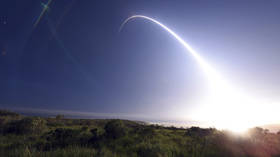
Russia & US are rushing into new arms race as they run out of time for realistic arms-control deal
The New START Treaty is set to expire in February 2021. The US insists that China be brought into any new agreement; Russia insists that any new talks include NATO nukes. The likely result is no deal and a dangerous new arms race.

The last remaining vestige of Cold War-era arms control agreements between the US and Russia — the New START Treaty — will expire in February 2021. For its part, Russia has been seeking US concurrence in invoking a provision of the treaty which allows for an automatic five-year extension of the agreement without the need to seek any further legislative ratification. The US has balked, indicating that the Obama-era treaty, dating back to 2010, does not include China, and as such places the US at a strategic disadvantage (the US used similar logic to justify its withdrawal from the Intermediate-Range Nuclear Forces — or INF — Treaty.)

New arms, new race

Both the US and Russia are engaged in the early stages of developing new strategic nuclear weapons to replace older systems. These weapons, which will cost trillions of dollars to develop and deploy, are with few exceptions still many years away from entering into service. A five-year extension of New START would provide both nations time to reach an agreement which responsibly addresses the need for strategic nuclear force modernization while continuing the past practice of seeking additional cuts in their respective nuclear arsenals.



Monday, March 4, 2019

Arms race

The hypersonic arms race is a billion-dollar boon for one US weapons maker


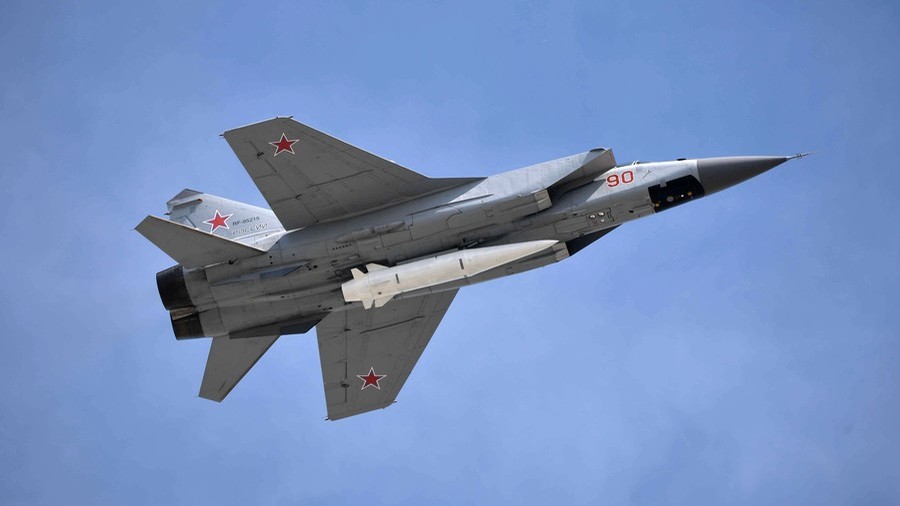
A Russian Air Force MiG-31K jet carries a high-precision hypersonic aero-ballistic missile Kh-47M2 Kinzhal during the Victory Day military parade to celebrate 73 years since the end of WWII and the defeat of Nazi Germany, in Moscow, Russia, Wednesday, May 9, 2018.
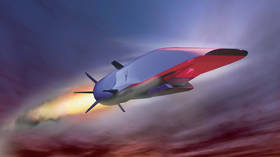
Lockheed Martin has won $2.5 billion worth of contracts in the past year for hypersonic missiles, weapons at the heart of a conventional arms race between the US, China, and Russia that the military may seek to adapt for nuclear weapons.
If the military takes that step, the Bethesda, Md.-based defense company might have a big advantage on work that could be valued at as much as $20 billion, said Roman Schweizer, an analyst with Cowen Washington Research Group, which has tracked federal policy for the past four decades.
Hypersonic missiles, which can travel at Mach 5 — five times the speed of sound — or faster, are among an array of advances from robotics to lasers and biotechnology that former Defense Secretary Jim Mattis said are vital to US dominance in future wars.
In addition to an $846 million award this week to develop hypersonic boosters for the Navy, Lockheed landed two contracts worth a total $1.7 billion last year to build similarly fast missiles for the Air Force.

Friday, February 8, 2019

Arms race

Hypersonic fever: France enters the INVINCIBLE gliders game, but does it have what it takes?


Hypersonic fever: France enters the INVINCIBLE gliders game, but does it have what it takes?
The French Defense Ministry says it’s embarked on its own hypersonic glider quest, promising to test a prototype missile shield-piercing device in 2021, after Russia and China tested their gliders and the US began developing one.
The question now is whether Paris is able to deliver on the ambitious –and potentially costly– military project, as questions have been raised whether it would even have a plane to lift off such a weapon.
“We have decided to issue a contract for a hypersonic glider demonstrator,” Defense Minister Florence Parly said late in January, unveiling the V-MaX (Experimental Maneuvering Vehicle) project. 

Sunday, January 20, 2019

Arms race

Russia Warns US Missile Defense Plans Will Fuel Arms Race


Russian Foreign Minister Sergey Lavrov speaks during a news conference in Moscow on Jan. 18. He has rejected the U.S. claim of Russian violations of the 1987 Intermediate-Range Nuclear Forces Treaty, charging that Washington hasn't offered any proof. (AP Photo) Russia said Friday the Pentagon's new missile defense strategy will trigger an arms race in space and further undermine global stability.
The tough Russian statement came in response to the U.S. administration's Missile Defense Review released Thursday during President Donald Trump's visit to the Pentagon.
The Pentagon's new strategy calls for a new array of space-based sensors and other high-tech systems to more quickly detect and shoot down incoming missiles. It makes clear that the new defense technologies are needed to counter advanced weapons being developed by Russia and China along with threats from North Korea and Iran.
The Russian Foreign Ministry described the new U.S. strategy as a proof of "Washington's desire to ensure uncontested military domination in the world."
It warned that the expansion of the U.S. missile defense system "will inevitably start an arms race in space with the most negative consequences for international security and stability."

Wednesday, January 16, 2019

Arms race

How the U.S. Is Quietly Winning the Hypersonic Arms Race

The U.S. Navy since 2012 has been developing its own railgun, but as of early 2019 the weapon had yet to go to sea. That doesn't mean the Americans weren't working on super-fast weapons, however.

Pentagon officials in early January leaked news of the U.S. Navy's own hypersonics test, this one involving a Navy warship firing hypersonic shells during a summer 2018 war game near Hawaii. The Pentagon's secretive Strategic Capabilities Office helped to oversee the trial.

In the test, the destroyer USS Dewey fired 20 of the hypervelocity projectiles from its standard, five-inch-diameter gunpowder cannon, officials told the website of the U.S. Naval Institute.

The new projectile is more aerodynamic than old-style shells and features tiny fins and a radar guidance system that helps it to hone in on a target at speeds as fast as seven times the speed of sound. That’s roughly three times the velocity a normal naval shell can achieve.

Far-flying and accurate, the shells in theory can target ships, ground targets, aircraft and even incoming missiles.

Thursday, June 7, 2018

Arms race

Putin teases new arms: Lasers & hypersonic missiles in service, but ‘that’s not all’

Putin teases new arms: Lasers & hypersonic missiles in service, but ‘that’s not all’
All the recently unveiled cutting-edge Russian weapons will be put into service in time, while some are already adopted, President Vladimir Putin said during his annual Q&A session in Moscow, teasing more surprises to come.

“The hypersonic air-deployed Kinzhal system – the missile which can travel at 10 Mach speed – is already used by our troops in the South Federal District,” Putin said. “A laser combat system is in service as well.”

Two other novelties – the hypersonic Avangard system and Sarmat ICBM – will be put into service in 2019 and 2020 respectively. The Avangard hypersonic glider system, which can exceed the speed of sound 20 times during final approach, has been already put into serial production, the president revealed.

“I don’t think that any other country will develop such weapon [as Avangard]. Naturally, it will emerge at some point, but, as I’ve said already, it won’t bother us, since we already have it,” he said.

The nuclear powered weapon systems – drone submarine and cruise missile of global range – will be put into service “on schedule,” Putin said, adding that he had “no doubts” about this as the propulsion systems have been already developed and successfully tested.

But the Russian military has more aces up their sleeve, the president hinted, promising cutting-edge weaponry to be unveiled “soon,” without giving any details. “That’s not all that we are planning to produce and adopt,” Putin said. “We’ll talk about it soon.”

Sunday, September 10, 2017

Arms race

Arms Race in The Field of Artificial Intelligence

artificial intelligenceThe Pentagon sees Artificial Intelligence (AI) and related technologies as key enablers of future military operations. But the Defense Department faces challenges as it seeks to acquire them. “All the services are actually quite engaged in a campaign to understand where advanced artificial intelligence and autonomy can be inserted to help defeat adversaries across the spectrum of potential conflicts that we might find ourselves in,” Vice Chairman of the Joint Chiefs of Staff, Gen. Paul Selva said, at a recent Senate Armed Services Committee hearing. “It’s very compelling when one looks at the capabilities that AI can bring to command and control and the capabilities that advanced robotics might bring to a complex battle space,” he added.
In April, then-Deputy Secretary of Defense Robert Work established an algorithmic warfare cross-functional team at the Pentagon to advance these efforts. “Although we’ve taken steps to explore the potential of AI, big data and deep learning, I remain convinced that we need to do much more to take advantage of recent and future advances in these critical areas,” he said.

Friday, December 23, 2016

Arms race

Trump Says U.S. Would ‘Outmatch’ Rivals in a New Nuclear Arms Race

President-elect Donald J. Trump on Friday welcomed a new nuclear weapons arms race with Russia, vowing in an off-camera interview with a television host that America would “outmatch” any adversary. The comment came one day after he said in a post on Twitter that the United States should “strengthen and expand” its own nuclear capabilities.

The president-elect escalated his comments about nuclear weapons with the show of bravado during a brief, off-air telephone conversation from his estate in Florida, according to Mika Brzezinski, the co-host of MSNBC’s “Morning Joe” program.

Wednesday, August 31, 2016

Arms race

Pentagon Scientists Worry the US Is Losing the Artificial Intelligence Arms Race


Pentagon scientists worry that the U.S. could be on the losing side of a AI arms race.
The Defense Science Board’s much-anticipated “Autonomy”study sees promise and peril in the years ahead. The good news: autonomy, artificial intelligence, and machine learning could revolutionize the way the military spies on enemies, defends its troops, or speeds its  supplies to the front lines. The bad news: AIin commercial and academic settings is moving faster than the military can keep up. Among the most startling recommendations in the study: the United States should take “immediate action” to figure out how to defeat new AI-enabled operations.
In issuing this warning, the study harks back to military missteps in cyber and electronic warfare. While the Pentagon was busy developing offensive weapons, techniques, plans, and tricks to use against enemies, it ignored U.S. equipment’s own vulnerabilities.

Thursday, April 21, 2016

Arms race

Race escalates for latest class of nuclear weapons

Weapons experts Lee Druxman, Bryn Miyahara and Andrew Van Blarigan examine warhead models for an advanced cruise missile authorized by the Obama administration. (DINO VOURNAS/SANDIA NATIONAL LAB/NYT)
The United States, Russia and China are aggressively pursuing a new generation of smaller, less destructive nuclear weapons. The buildups threaten to revive a Cold War-era arms race and unsettle the balance of destructive force among nations that has kept the nuclear peace for more than 50 years.

It is, in large measure, an old dynamic playing out in new forms as an economically declining Russia, a rising China and an uncertain United States resume their one-upmanship.


U.S. officials largely blame the Russian president, Vladimir Putin, saying his intransigence has stymied efforts to build on a 2010 arms-control treaty and further shrink the arsenals of the two largest nuclear powers. Some blame the Chinese, who are looking for a technological edge to keep the United States at bay. And some blame the United States for speeding ahead with a nuclear “modernization” that, in the name of improving safety and reliability, risks throwing fuel on the fire.

Wednesday, April 20, 2016

Arms race

Pursuit of smaller nuclear weapons sparks fears of Cold War arms race revival

Nuclear Warning 3
The United States, Russia and China are now aggressively pursuing a new generation of smaller, less-destructive nuclear weapons. The build-ups threaten to revive a Cold War-era arms race and unsettle the balance of destructive force among nations that have kept nuclear peace for more than a half-century.
It is, in large measure, an old dynamic playing out in new form as an economically declining Russia, a rising China and an uncertain US resume their one-upmanship.
American officials largely blame Russian President Vladimir Putin, saying his intransigence has stymied efforts to build on a 2010 arms control treaty and further shrink the arsenals of the two largest nuclear powers. Some blame the Chinese, who are looking for a technological edge to keep the US at bay. And some blame the US itself for speeding ahead with a nuclear “modernisation” that, in the name of improving safety and reliability, risks throwing fuel on the fire.
Arms race

US can’t keep pace with Russian submarine deployments – top Navy official


5711e30fc3618894558b45a7The US Navy is facing better and more numerous Russian submarines capable of taking out aircraft carrier groups. The service can’t ensure full awareness of Russian sub activity, CNN reported, citing American admiral.
“The submarines that we’re seeing are much more stealthy,” Adm. Mark Ferguson, commander of US Naval Forces in Europe, told the news channel. “We’re seeing [the Russians] have more advanced weapons systems, missile systems that can attack land at long ranges, and we also see their operating proficiency is getting better as they range farther from home waters.”
Russian deployments of attack and ballistic missile submarines are currently at levels unseen since the Cold War, he said. The US has 53 submarines in service and the number will drop to 41 by the late 2020s due to budget constraints, Ferguson added.
Even with the current numbers, the Pentagon can’t monitor all Russian subs, according to retired Adm. James Stavridis, a former NATO supreme allied commander.
“We cannot maintain 100 percent awareness of Russian sub activity today,” he said. “Our attack subs are better, but not by much. Russian subs pose an existential threat to US carrier groups.”

Tuesday, December 15, 2015

Arms race

The New Arms Race: NATO Missile Defense Versus Russian Missiles 

NATO is just at the beginning of the deployment of its European missile defense architecture; the first Aegis Ashore site is expected to be operational in 2016. But only two sites are planned. In truth, NATO needs a dozen or more such sites, a combination of the Aegis/SM-3 system and THAAD batteries. In addition, NATO should invest in defenses against advanced cruise missiles, such as that provided by the U.S. Patriot system and the German-Italian MEADS with broad applicability across Europe. Investments in advanced fighter aircraft such as the F-35 will contribute both to NATO’s defense against air breathing threats and to its counteroffensive potential. With no quick, cheap victory possible, Russia is unlikely to risk a confrontation with NATO. 


Monday, August 10, 2015

Arms race

Russia and China’s bomber plans could muster support for LRS-B


asset image
Russia and China’s pursuit of modern, long-range bombers is essentially an endorsement of the US Long-Range Strike Bomber, and not the start of some Cold War-era bomber race. That’s the view of retired US Air Force Lt Gen David Deptula, now dean of the Air Force Association’s Mitchell Institute.
In an interview with reporters this week ahead of his “Beyond the Bomber” report launch in September, Deptula said LRS-B should be viewed as a national asset and budget priority, because the air force’s “capable but eroding” inventory of nuclear-capable bombers is aging out.