Страницы

Showing posts with label National security. Show all posts

Thursday, July 30, 2020

National security

Secrets and Spies: The UK's Proposal for Foreign Agent Registration


The Intelligence and Security Committee of ParliamentOn July 21, 2020, the Intelligence and Security Committee of Parliament published the Russia Report (the Report). The Report found that the UK was one of Russia’s “top Western intelligence targets” and that the UK government had thus far failed to investigate allegations of Russian interference, including potential involvement in the Brexit referendum. One of the underlying issues the Report identified was the lack of adequate legislative powers granted to the intelligence community. It brought attention to the Law Commission’s 2017 consultation, in relation to updating the Official Secrets Acts1, and the possibility of creating a new Espionage Act. The committee recommended the introduction of a new Espionage Act that would address the issue of “individuals acting on behalf of a foreign power and seeking to obfuscate the link”. While no details of how the UK will incorporate this recommendation, the Report made reference to the U.S. Foreign Agents Registration Act 1938 (FARA) and Australian equivalent. Given the explicit reference to FARA, it is very likely that a registration requirement for foreign agents is imminent, and the new requirement will be fashioned on the U.S. legislative framework. Additionally, the report highlighted the importance of updating the Computer Misuse Act, and encouraged the use of tools such as unexplained wealth orders to eliminate the proceeds of crime infiltrating the UK’s economic system.

Saturday, April 25, 2020

National security


Spy agencies and human rights in the era of coronavirus


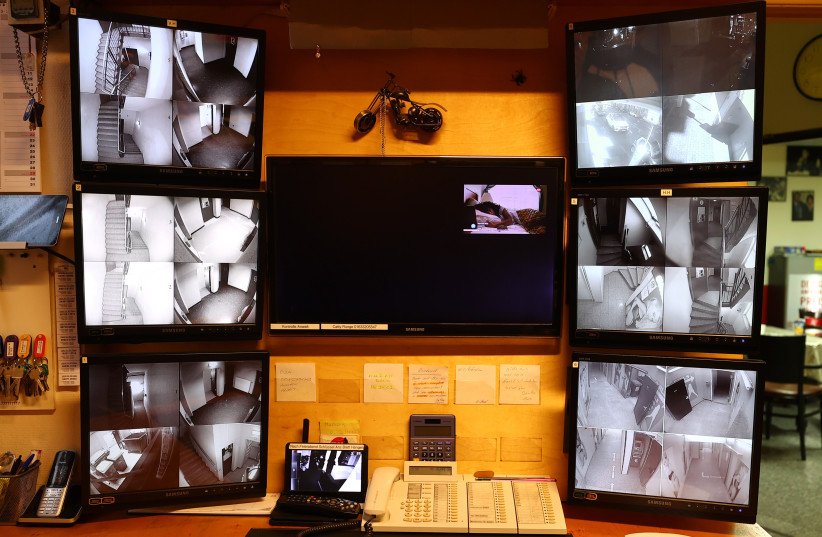
SECURITY SURVEILLANCE monitors. Privacy advocates argue that even if the official transfer of data does not identify individuals, anyone who wants to abuse the information to invade an individual’s privacy can do so with ease (photo credit: KAI PFAFFENBACH/REUTERS)The Shin Bet tells you when to go to the doctor, the Mossad brings you your medical equipment and NSO Group or some other private organization may hold on to your private information until you are coronavirus-free (and maybe even after?)

Do you recognize this world? It is a world in which government spy agencies and private organizations with alumni of those agencies are far more deeply involved in Israeli citizens’ lives and internal issues than ever before. It is a corona world where spying meets human rights.

Former Shin Bet chief Yaakov Perry told the Magazine this week that there “must be parliamentary oversight. This is problematic during this time. Yes, there are some operating Knesset committees, but there is not really fluid parliamentary oversight.”
The country “must reduce Shin Bet tracking when we are at the end [of the corona crisis] or even near the end of the crisis,” he added.
Of the three involvements of current or former Israeli intelligence agencies in handling aspects of civilian life related to the coronavirus crisis, the role of the Mossad would seem to be the most positive.

Saturday, December 21, 2019

National security

MI5: Power for informants to commit crimes is ruled 'lawful'


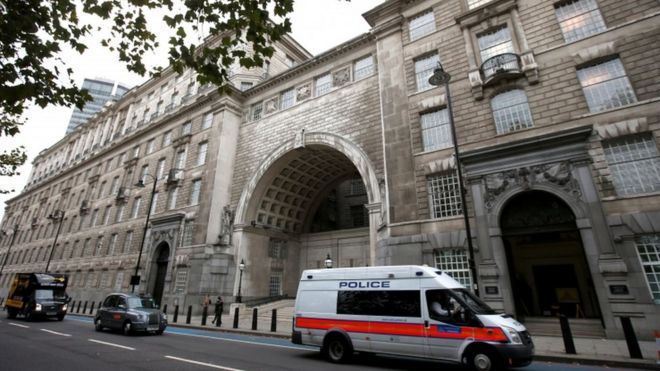
MI5's London headquarters
Rules allowing MI5 informants to commit crimes are lawful, a tribunal has ruled.
Human rights groups had argued that the government's policy was unlawful and could hide serious abuses.
But the Investigatory Powers Tribunal (IPT), in a 3-2 ruling, said MI5 has "an implied power" to allow crimes under the Security Service Act, although not to grant immunity.
Campaigners said they will appeal the "knife-edge" ruling.
The case came a year after the government confirmed the existence of a previously secret document, dubbed the "Third Directive".

'Most profound issue'

Signed by former Prime Minister David Cameron, it confirmed that MI5 officers could allow their informants and agents to commit crimes in the national interest, without any duty to tell police and prosecutors.

Wednesday, October 2, 2019

National security

Intelligence agency unveils new weapon to deter spies — a museum

Against the backdrop of a growing wave of espionage cases involving American traitors, the National Counterintelligence and Security Center (NCSC) has taken the wraps off its latest weapon to combat the threat — public shaming.
At its secure offices at the Intelligence Community Campus in Bethesda, Maryland, the NCSC unveiled the “Wall of Spies Experience” museum on Tuesday.
The faces of over 135 spies who betrayed America from the Revolutionary War to the 21st Century are depicted, including Benedict Arnold, the nation’s first traitor in Colonial times, and the most damaging turncoats of modern times — Aldrich Ames, Robert Hanssen and Edward Snowden.
The exhibit — supplemented by items on loan from the CIA, FBI, NSA and private collections — also features some of the ingenious tools used by American traitors and other nations.
Among them are a typewriter that was bugged at the U.S. Embassy in Moscow in the 1970s, the laptop used by an American engineer to spy for China in the early 2000s, and even a World War II-era German Enigma cipher machine.

Wednesday, September 18, 2019

National security

Trump Names Robert O’Brien, a Hostage Negotiator, as National Security Adviser

Robert C. O’Brien takes over the national security portfolio as President Trump faces a decision over how to respond to last weekend’s attacks on Saudi oil facilities.
President Trump on Wednesday selected Robert C. O’Brien, the State Department’s chief hostage negotiator, to become his national security adviser, moving to reconstitute his foreign policy staff even as he faces rising tension with Iran.
In choosing Mr. O’Brien to replace John R. Bolton, who left the White House last week, the president picked a Los Angeles lawyer who impressed him with his work to extricate Americans detained overseas. But it is not clear how different his advice will be, given that Mr. O’Brien previously worked for Mr. Bolton and has cited his hawkish views.
Mr. O’Brien takes over the national security portfolio at a time when the president faces a decision over how to respond to last weekend’s attacks on oil facilities in Saudi Arabia that officials in Washington and the region have blamed on the Tehran government. Mr. Trump announced Mr. O’Brien’s selection on Twitter shortly after saying he would also “substantially increase Sanctions” on Iran.

Thursday, September 12, 2019

National security

New York City firefighters work near the area known as Ground Zero after the collapse of the Twin Towers September 11, 2001 in New York City.After 9/11, U.S. Intelligence Reinvented Itself. It’s Time to Do It Again

Eighteen years ago, al-Qaeda operatives hijacked planes, toppled buildings, terrified an entire nation, and killed nearly 3,000 innocents. That the elaborate 9/11 plot went undetected will forever be remembered as one of the intelligence community’s worst failures. For many U.S. intelligence officials, memories of that day remain fresh, searing, and personal. Still hanging over the entrance to the CIA’s Counterterrorism Center is a sign that reads, “Today is September 12, 2001.” It’s a daily reminder of the agency’s determination to prevent future attacks—but also of the horrifying costs when intelligence agencies adapt too slowly to emerging threats.

For a decade after the Soviet Union’s collapse, the CIA and FBI were mired in Cold War structures, priorities, processes, and cultures even as the danger of terrorism grew. My research has shown that, even though many inside and outside U.S. intelligence agencies saw the terrorist threat coming and pressed for change years earlier, they could not get the necessary reforms enacted. The shock of 9/11 finally forced a reckoning—one that led to a string of counterterrorism successes, from foiled plots to the operation against Osama bin Laden. But now, nearly two decades later, America’s 17 intelligence agencies need to reinvent themselves once more, this time in response to an unprecedented number of breakthrough technologies that are transforming societies, politics, commerce, and the very nature of international conflict.

Tuesday, September 10, 2019

National security

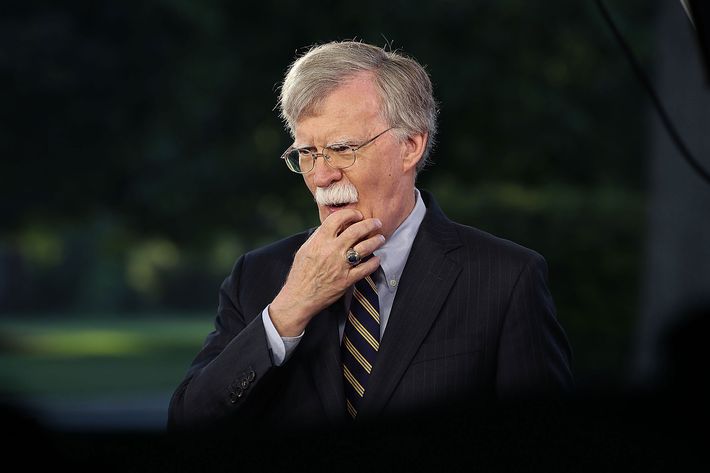
John Bolton: Trump's national security adviser is out


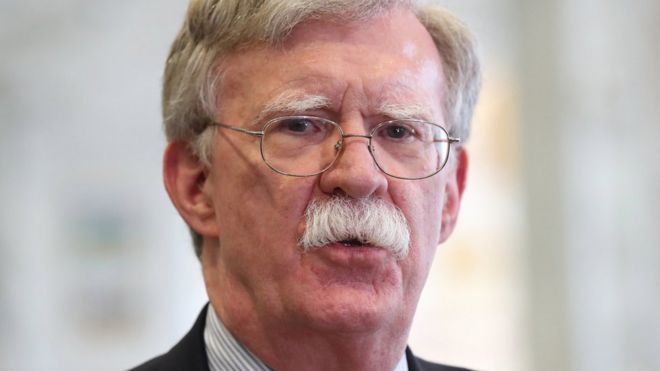
John Bolton
US President Donald Trump says he has fired his National Security Adviser John Bolton.
"I informed John Bolton last night that his services are no longer needed at the White House," he wrote.
"I disagreed strongly with many of his suggestions," Mr Trump wrote, adding that a new national security adviser would be appointed next week.
The firing comes after Mr Bolton argued with Mr Trump over the administration's peace talks with the Taliban.
Mr Bolton, who had served since April 2018, was Mr Trump's third national security adviser after Michael Flynn and HR McMaster.
White House press secretary Stephanie Grisham told reporters: "[The president] didn't like a lot of his policies, they disagree."
She said the president asked for Mr Bolton's resignation on Monday night, and it was delivered on Tuesday morning.

Sunday, March 17, 2019

National security

Premier: Telling companies to spy is 'not how China behaves'


China's No. 2 leader on Friday denied Beijing tells its companies to spy abroad, refuting U.S. warnings that Chinese technology suppliers might be a security risk.
Premier Li Keqiang's comment at a news conference was the communist government's highest-level rejection of accusations Chinese companies might spy on foreign customers.
Asked whether Beijing told Chinese companies to spy, Li said, "Let me tell you explicitly that this is not consistent with Chinese law. This is not how China behaves. We did not do that and will not do that in the future."
The United States and some other governments have imposed curbs on use of technology from Chinese vendors including Huawei Technologies Ltd. as possible security risks.
Huawei, the biggest global maker of network gear for phone and internet companies, has denied accusations it facilitates Chinese spying.
Huawei's founder told reporters this year he would reject government requests to disclose confidential information about foreign customers.

Monday, January 21, 2019

National security

From the Barracks to the Courtroom: US ‘Lawfare’ in Action


From the Barracks to the Courtroom: US ‘Lawfare’ in ActionSomewhere along the line in recent history, some US think tank in the employ of the Central Intelligence Agency must have come up with the idea that overthrowing governments in Latin America by military coups came with bad optics for the coup plotters. Often, democratically-elected Latin American leaders were demonized by a cabal of military officers who left their barracks and laid siege to the presidential palaces. After taking control of the national radio stations, these generals would announce they had seized control of the government to “protect” the people from “communism” or some other concocted bogeyman.
Beginning in the early 2000s, another plan was devised by US national security planners ensconced in their faux academia “think tanks.” Their plan was simple: overthrow anti-American elected leaders in Latin America through the courts. In effect, lawyers and judges, not generals, caudillos, or military juntas, would carry out coups by abusing constitutional provisions and laws as a clever ruse.
Under Allen Dulles and Richard Helms, the Central Intelligence Agency relied on the old tried and true method of promoting coups via the façade of a “popular” rebellion. After the 1973 CIA-directed coup in Chile, which saw Socialist president Salvador Allende die in a hail of bullets fired from aircraft and tanks at the La Moneda presidential palace, the CIA began to look at other avenues to overthrow presidents in the Western Hemisphere.


Tuesday, January 1, 2019

National security

A national security agenda to rebuild American leadership


Картинки по запросу congressThe new Congress has an opportunity to lay the groundwork for the revival of American global leadership. For the past decade, Congress has overseen a depletion of our diplomatic capacity. As the State Department was squeezed under an austerity budget, money was thrown at the Pentagon, putting more on the shoulders of our military. This has left American foreign policy badly out of balance and poorly equipped to confront the challenges of a rising power competition in a changing world. Moreover, the Trump administration has created openings for our adversaries by turning the United States away from its role as a force for democracy and instead stoking nationalism and authoritarianism.
Lawmakers must rebalance American foreign policy and reinvigorate American global leadership. Doing so will require Democrats to not only fill the immense task of conducting rigorous oversight over the Trump administration, such as examining its mismanagement of the State Department and its foreign conflicts of interest, but also by presenting an affirmative vision of American foreign policy. Congress does not need to wait until 2020 to make the United States more secure and to put in place the early building blocks of a progressive foreign policy. Here are three major areas Democrats can start building out an affirmative agenda.

Sunday, December 23, 2018

National security

House of Frauds! Spy chiefs draw up secret lists of peers with dubious connections to Russia and China amid fears they could pose threat to national security


Spy chiefs have drawn up a secret watchlist of lords with dubious connections to Russia or China
Spy chiefs believe the scale of Russian and Chinese influence on Parliament is now a major threat to national security and have drawn up a secret watchlist of lords with dubious connections.
It is understood that more than a dozen are feared to have been compromised by financial interests with foreign powers – with MPs today demanding a tough crackdown.
However, security sources add that concerns within MI5 and the Home Office go beyond commercial ties, with other members of the Upper House suspected of being cultivated by enemy agents. Concern has soared as diplomatic relations between London and Moscow have plunged in the wake of the Salisbury nerve agent outrage.
The stark warning raised at the highest levels in Whitehall comes as an investigation by The Mail on Sunday reveals 30 members of the House of Lords have direct financial links to Russia or China.
Among them are peers with board memberships on Moscow-owned firms or positions with Chinese companies. They include a Russian expert who has written books about the country and executives of Russian banks, mining firms and state-backed shipping conglomerates. 

Sunday, August 26, 2018

National security

‘Most Americans have no idea’: With all eyes on Russia, China spends millions influencing US


‘Most Americans have no idea’: With all eyes on Russia, China spends millions influencing US
China has unleashed a massive multi-pronged propaganda effort across the US, using a combination of money and influence to sway key policy and opinion-makers, says a new Congress-backed report.
Completed at the behest of US-China Economic and Security Review Commission, the 39-page report focuses on United Front, an umbrella organization for Beijing’s soft power, which lead author says has dramatically expanded under the rule of Xi Jinping.
“United Front work serves to promote Beijing’s preferred global narrative, pressure individuals living in free and open societies to self-censor and avoid discussing issues unfavorable to the Chinese Communist Party, and harass or undermine groups critical of Beijing’s policies,” states the report.
According to the report, prominent US institutions, such as Johns Hopkins University, and think-tanks like the Atlantic Council, Brookings Institution and the Carter Center are either receiving funding directly from various arms of the Chinese government, or cooperating on projects financed by United Front.

Thursday, July 26, 2018

National security

Trump to hold National Security Council meeting on election security Friday

President Trump will convene a meeting Friday of the National Security Council on election security, a session that could include a discussion of possible Russian interference in November’s midterm elections, according to a White House official.
In addition, national security adviser John Bolton plans to hold two NSC Principals Committee meetings this week, one Thursday on Iran and one Friday on North Korea, according to the White House official, who spoke on the condition of anonymity to discuss internal plans.
Friday’s NSC meeting comes a week and a half after Trump’s summit with Russian President Vladi­mir Putin in Helsinki. Trump was roundly criticized for his comments at a news conference there siding with Putin — who has denied that Russia interfered in the 2016 U.S. presidential election — over U.S. intelligence agencies, which have concluded based on evidence that Russia did interfere.

Sunday, July 22, 2018

National security

Coming Coup Against Trump


U.S. President Donald Trump addresses a joint news conference with NATO Secretary General Jens Stoltenberg in the East Room at the White House in Washington
The US political class have cast their verdict that Trump is a state enemy, and are openly calling for a mutiny against the White House.
Trump's political survival is the balance. Possibly the only thing staying the hands of his enemies for now is their wariness about how the ordinary American citizens would react to a deep state maneuver to overthrow the elected leader.
Despite the torrid hysteria in the US political elite over the meeting with Putin, the mass of American citizens seem rather sanguine about the development. It's fair to say that many Americans would applaud the attempt by Trump to normalize relations with Moscow. After all, that was one of the main reasons why they voted him into the White House in 2016.

Thursday, July 19, 2018

National security

Commerce Dept. reviewing impact of uranium imports on US national security


Commerce Dept. reviewing impact of uranium imports on US national security
Commerce Secretary Wilbur Ross announced Wednesday that his agency would investigate whether uranium imports to the United States pose any threat to national security.
Reviewing whether uranium imports pose such a threat could open the door to the administration imposing new tariffs amid months of backlash over President Trump's trade policies.
In a statement citing idle U.S. mines and massive layoffs in the U.S. uranium mining sector over the past two years, Ross announced that he had accepted a petition from two U.S. energy companies to launch the probe.
“Our production of uranium necessary for military and electric power has dropped from 49 percent of our consumption to five percent,” Ross said. “The Department of Commerce’s Bureau of Industry and Security will conduct a thorough, fair, and transparent review to determine whether uranium imports threaten to impair national security.”

Wednesday, May 30, 2018

National security

Bolton Installs Anti-Muslim Wingnut As NSC Chief of Staff


While less flamboyant in fear and loathing of Muslims than Flynn was, Bolton is one of many fringe neoconservatives who’s taken up residence in the alt-right-wing foreign-policy think tanks erected by the Islamophobia industry: Since 2013, Bolton has served as chairman of the Gatestone Institute, an organization that claims Muslims have established hundreds of  “microstates governed by Islamic Sharia law”(a.k.a. “no-go zones”) throughout France; that Muslim refugees have brought “a rape epidemic” and “exotic diseases” with them to Germany; and that the United Kingdom is on the cusp of becoming an “Islamist colony.”
And now, Bolton is remaking the National Security Council in his image. On Tuesday, Trump’s latest national security adviser named former CIA analyst Fred Fleitz as his chief of staff. 

Saturday, May 12, 2018

National security

America’s biggest national security crisis: Drug wars


America’s biggest national security crisis: Drug warsThe expansion of the Mexican drug war to America is the greatest threat to our society. Past successes in interdiction along waterways and efforts to curb supply and demand, such as Plan Colombia in the early 2000s, only resulted in adaptive efforts by drug cartels to meet demand. According to the Department of Health and Human Services’ Substance Abuse and Mental Health Services Administration, the use of illicit drugs has consistently increased. There is no higher priority than defending the American people, their communities and their future. The United States should galvanize resources and leadership toward drug demand and supply reduction.
Cartels, like any business, compete with one another to meet drug demand and control importation and distribution across the United States. These violent organizations have expanded their influence up and down the supply chain, from production networks in South America to distribution hubs in American cities.

Monday, May 7, 2018

National security

National security and home front

author_image
For an independent and sovereign country, there cannot be anything more important than national security. Security, both internal and external, is a sine qua non for a people to lead their lives in peaceful, orderly, economically prosperous, and dignified conditions enabling their genius to flower and their potential to develop to its maximum. Insecurity, on the other hand, can endanger the very existence of a country through loss of independence and internal chaos and disintegration. A nation beset with external threats and armed conflicts, and mired in internal disharmony can hardly hope to prosper or even survive.

The foremost task of the national leadership, therefore, is to safeguard a country’s security defined in a comprehensive manner covering its political, economic, diplomatic and military dimensions. External security undoubtedly requires as its centerpiece military means—-armed forces and armaments—-to deter and, if the deterrent fails, to defend the country against external aggression. However, because of the changed nature of warfare in modern times, defense against external aggression requires not just military means but also the support of economic and technological strength. Therefore, emerging powers have generally built up their military power on the foundation of a strong economic and technological base rather than the other way around, particularly in the modern era starting with the industrial revolution.

Friday, May 4, 2018

National security

Strategy: Directing the Instruments of National Power


Steven AftergoodThe tools that can be used to assert national power and influence have often been summarized by the acronym DIME — Diplomatic, Informational, Military, and Economic.
But “US policy makers and strategists have long understood that there are many more instruments involved in national security policy development and implementation,” according to a new Joint Chiefs of Staff publication on the formulation of national strategy.
“New acronyms such as MIDFIELD — Military, Informational, Diplomatic, Financial, Intelligence, Economic, Law, and Development — convey a much broader array of options for the strategist and policymaker to use.” See Strategy, Joint Doctrine Note 1-18, April 25, 2018.
The pursuit of strategic goals naturally entails costs and risks, the document said.
“Risks to the strategy are things that could cause it to fail, and they arise particularly from assumptions that prove invalid in whole or in part. Risks from the strategy are additional threats, costs, or otherwise undesired consequences caused by the strategy’s implementation.”

Tuesday, May 1, 2018

National security


The Dead Metaphors of National Security


When the U.S. national security community thinks about language, often the first things—not surprisingly—that come to mind are foreign languages. Much less often it thinks about its own language (for example, its habitually sloppy use of terms such as “strategic” and “complexity.”) Rarer yet is any deeper consideration of its common metaphors, those linguistic devices that can illuminate one thing by framing it in terms of another.

Consider a few examples: the Iron Curtain, the Cold War, containment, nation-building, and the War on Drugs. Even this short list demonstrates what a central and powerful role metaphors play in the national security discourse. Indeed, many are now so widely accepted and used that they are no longer even recognized as metaphors. These “dead metaphors” are often so deeply ingrained (like the term “ingrained” here) that they tend to rise above scrutiny. Moreover—and worse—they too easily get repurposed and misapplied to new and fundamentally different issues.