Страницы

Showing posts with label Military spending. Show all posts

Friday, May 8, 2020

Military spending

Record global military spending undermines human security


Record global military spending undermines human security
The Stockholm International Peace Research Institute (SIPRI) released its annual assessment of global military spending this week, and the results are stunning. In the leadup to the COVID-19 crisis – the most significant threat to humankind and human security in decades – the governments of the world were busy investing in the sort of defense that is of almost no practical value in shielding us from this pandemic.

Global military spending peaked at over $1.9 trillion last year, the highest level in five decades. Spending by the United States has been the driver of this massive expenditure, accounting for 38 percent of the total — over two-and-a-half times what China spends and over ten times what Russia spends.

In short, the SIPRI report throws into sharp relief the inadequacies of Washington’s notion of security — thousands of Americans are dead, and our massive military budget did little to protect them. Meanwhile, the Centers for Disease Control and Prevention and the World Health Organization, which are on the front lines of the effort to blunt the results of this pandemic and prevent future outbreaks, receive roughly $8 billion per year in U.S. government resources, a tiny fraction of the more than $700 billion lavished on the Pentagon. That’s a total of less than 2 percent of U.S. defense spending for both agencies combined. Looked at in another way, the $35 billion the Pentagon spends on nuclear weapons each year could pay for 300,000 ICU beds, 35,000 ventilators, 150,000 nurses and 75,000 emergency room doctors.

Wednesday, May 6, 2020

Military spending

Now Is the Time to Cut the Defense Budget


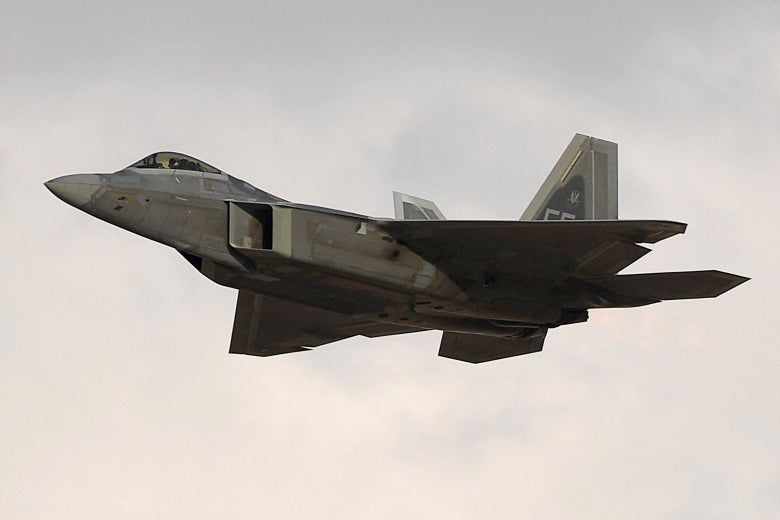
A U.S. Air Force F-22 fighter jet
Secretary of Defense Mark Esper is worried that the COVID-19 crisis might waylay his plans to increase the military budget. No kidding. But the way Esper formulated the problem shows he isn’t remotely prepared to deal with it.
Esper said on Monday that “we need 3 to 5 percent annual real growth” in the defense budget. Since this year’s budget amounts to $740 billion, he’s talking about increasing it by $22 billion to $37 billion—for a total, next year, of up to $777 billion, or actually a bit more than that, since he called for that much “real growth,” meaning growth beyond the level of inflation.
Yet, Esper added, he is “concerned” that the government’s $3 trillion infusion into the economy, to keep the country and its people alive during the lockdown, “may throw us off that course.”

Thursday, April 30, 2020

Military spending

Global military spending just saw its biggest spike in a decade, but the US outspends everyone else by far

F-35 fighter jet elephant walk
Global military expenditure was $1.917 trillion in 2019, rising 3.6% from 2018 and 7.2% from 2010 to reach the highest level since 1988, according to the Stockholm International Peace Research Institute.
World military spending decreased steadily in the years after the 2008-2009 global financial crash but has risen in each of the five years since 2015, the latest in what SIPRI researcher Nan Tian described as four phases in military spending over the past 30 years.
The post-Cold War years saw spending decline in what many saw "as a peace-dividend period," Tian said Tuesday during a webcast hosted by the Stimson Center and SIPRI.

Wednesday, April 29, 2020

Military spending

Russia’s military spending: Frequently asked questions


Russia’s military spending: Frequently asked questionsIn recent years, Russia has embarked on a military modernization programme funded by rapidly increasing military spending and has pursued a more assertive foreign policy. This has attracted attention to the level of its military spending. The data in the SIPRI Military Expenditure Database is often used as a convenient way to compare two or more states’ military effort and, by implication, their military strength. Yet according to SIPRI’s data, Russia spends less than might be inferred from the scale of its military activities and the size of its armed forces. The following answers to frequently asked questions explain the SIPRI figures for Russian military expenditure and how best to interpret them. They should be read alongside the general sources and methods and frequently asked questions for SIPRI military expenditure data.


What are the recent trends in Russian military expenditure?

Russian military expenditure has grown significantly over the past two decades. It increased by 30 per cent in real terms between 2010 and 2019 and by 175 per cent between 2000 and 2019. Although Russian military spending decreased in 2017 and 2018, it rose again in 2019 to reach $65.1 billion (see figure 1 and table 1). The military burden on Russia’s economy—that is, military spending as a share of gross domestic product (GDP)—was 3.9 per cent in 2019. This was higher than in 2010, but much lower than the peak of 5.5 per cent reached in 2016...

Tuesday, December 17, 2019

Military spending

WHY RUSSIAN MILITARY EXPENDITURE IS MUCH HIGHER THAN COMMONLY UNDERSTOOD (AS IS CHINA’S)


Gresham’s Law states that bad money drives out good money, but anyone who has spent time around Washington, D.C., knows that this law can safely be applied to information too — bad information tends to drive out good information. Such is the case with America’s assessments of other countries’ military and economic power. Defense spending is one of the most commonly used measures for gauging a country’s potential military power, setting expectations of what the military balance might look like in the future. It helps give us a sense of how much of a state’s economic power is being converted into military power. Well, in theory it should, if we knew how to measure it right, but comparing defense spending across countries is a complicated task. As a consequence, the United States doesn’t really know where its military expenditure stands in relation to that of its principal adversaries, what kind of military capability they’re getting for their money, and whether the balance of power is likely to improve or worsen over time.
Policymakers are barraged by a daily stream of think tank reports, academic writing, and media stories competing for their perceptions. For example, by cherry-picking a few gross measures, including military expenditure, a recent RAND report caricatured Russia as a weakling rogue state. Major newspapers generate erroneous headlines: many ran stories asserting that in 2017 Russian defense spending declined by a fifth . In our experience, both in Washington and London, decision-makers have little time to investigate or read and tend to believe many of the headlines they come across.

Friday, December 13, 2019

Military spending

Congress Learns Pentagon Wasted $1 Trillion, Promptly Gives It Bigger Budget


Here’s a fun little thought experiment: Imagine a “big government” bureaucracy embarked on a wildly ambitious project of social engineering — only to discover, almost immediately, that it had little hope of meeting its stated objectives. Reluctant to admit defeat, or jeopardize funding for its endeavors, this federal agency proceeded to deliberately mislead the public about how badly its project was going, and the likelihood of its ultimate success. Over an 18-year-period, these pointy-headed bureaucrats and their allied elected officials conspired to shovel roughly $1 trillion of taxpayer money into an initiative that exacerbated the very problems it purported to solve — and got 2,300 Americans killed in the process!
Now imagine that a major newspaper published a bombshell report meticulously documenting this bureaucracy’s conscious efforts to mislead the American people whom it claimed to serve, so as to ensure that it could carry on squandering our blood and treasure with impunity.
Would Congress reward that bureaucracy with a $22 billion budget increase hours later, with self-identified “small government” conservatives leading the call?
This week, we learned that the answer is “of course.”

Friday, December 6, 2019

Military spending

How Russia Improved its Military With An Economy the Size of Spain


ALEPPO, SYRIA - NOVEMBER 18: Russian soldiers, with Russian flag, are seen on armoured vehicle as they enter the base at the Tishrin Dam on the Euphrates, which the US troops' withdrew from, located 90 kilometres east of Aleppo in Aleppo Governorate, Syria on November 18, 2019. (Photo by Bekir Kasim/Anadolu Agency via Getty Images)
AFTER A DECADE OF HEAVY investment in modernizing its military, Russia, a country with an economy similar in size to Spain, now has an updated army, navy and air force that fuel President Vladimir Putin's ambitions of keeping the country's superpower status. The upgrade has been possible, experts say, by boosting in-house production levels of weapons and equipment, and choosing to spend a larger share of the budget on acquisitions.
The Russian military received increased funding beginning in 2011, which improved pay for employees, allowed for the purchasing of high quantities of new and more sophisticated equipment, and supported more training and exercises.
Although the country spends significantly less in absolute figures than what the United StatesChinaSaudi ArabiaIndia or France each put into their military, in relative numbers Moscow spends a higher share of its defense budget for acquiring new or modernized equipment and weaponry.

Wednesday, December 4, 2019

Military spending

Kremlin says NATO's spending plans confirm its fears about the alliance

Похожее изображение
The Kremlin said on Wednesday that reports that NATO planned to increase its defense spending showed Moscow was right to be concerned over what it said was the military alliance’s eastward expansion and policy of trying to contain Russia.

“We see that NATO carries out actions aimed at containment and expansion with regards our country. This can only prompt our concern,” Kremlin spokesman Dmitry Peskov told reporters on a conference call.

He said that Russia would not be dragged into a costly arms race despite NATO’s behavior.

Friday, November 22, 2019

Military spending

TRUMP SAID U.S. IS 'GETTING RAPED' BY NATO, HAS PUSHED TO EXIT ALLIANCE ACCORDING TO WHITE HOUSE INSIDER

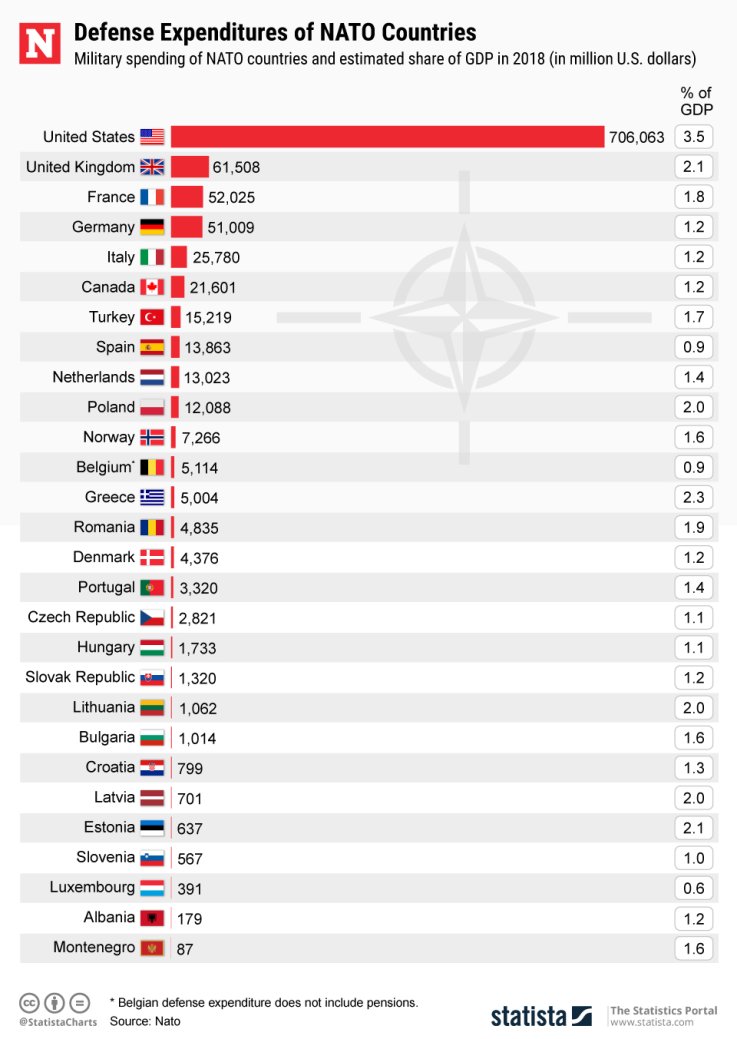
Nato, Statista, spending, military, budgetPresident Donald Trump's criticisms of NATO have been one of the most concerning elements of his presidency to date for career diplomats and Pentagon officials.
A new book written by an anonymous White House insider published this week has shed further light on the president's aversion to the Cold War-era alliance, alleging Trump claimed the U.S. is "getting raped" by its allies and pushed to ditch the accord.
A Warning, by Anonymous, was published earlier this week. It is written by the same unnamed White House official who authored an op-ed for The New York Times last year, claiming to be part of "the resistance" against Trump within his own administration, working to frustrate much of the president's policy agenda.
A portion of the book is dedicated to Trump's belligerent stance on NATO. Since coming into office, the president has repeatedly maligned the alliance and its members, accusing members of not spending enough on joint defense and suggesting the transatlantic bloc is no longer fit for purpose.
Trump even publicly questioned Article 5, the cornerstone of the alliance which requires NATO nations to come to the defense of a member if it is attacked. The article has only been involved once in NATO's 70-year history, by the U.S. following the 9/11 attacks.

Thursday, November 14, 2019

Military spending

Post 9/11 wars have cost American taxpayers $6.4 trillion, study finds


American taxpayers have spent some $6.4 trillion in nearly two decades of post-9/11 wars, which have killed some 800,000 people worldwide, the Cost of Wars Project announced Wednesday.
The numbers reflect the toll of American combat and other military operations across some 80 nations since al-Qaida operatives attacked the World Trade Center in New York and the Pentagon in Washington in 2001, launching the United States into its longest-ever wars aimed at stamping out terrorism worldwide.
The annual spending estimates released Wednesday show a general decline in war costs in 2019 as U.S. troops face less combat in major war zones such as Afghanistan, Iraq and Syria. Still, the estimated price tag for those wars increased some $500 billion since November 2018, and it has doubled since the Cost of Wars Project — a product of Brown University’s Watson Institute of International and Public Affairs and Boston University’s Frederick S. Pardee Center — first looked at cumulative wartime costs in 2011.

Monday, November 11, 2019

Military spending

Putin Explains Why Russia Can Afford to Spend Less on Defence

Russian President Vladimir Putin, second right, speak with Russian Defense Minister Sergei Shoigu, right, as he attends a meeting with top military and leaders of military industry in the Defense Ministry in in Moscow, Russia, Friday, March 11, 2016
Russia is one of just a handful of major military powers to actually make cuts to its defence spending in recent years, and recently dropped out of the top five countries in terms of total spending.
Reductions in Russia’s defence spending are related to the country passing the “peak of modernisation,” allowing the government to contribute fewer resources while maintaining the same level of defence, President Vladimir Putin has said.
“[Cuts] aren’t related to us letting things slide when it comes to these issues, but due to the fact that the main planned initiatives connected to the need to intensify work on ensuring the country’s security…and with regard to the need to ensure the renewal of military equipment and hardware, and we have passed the peak of this work,” Putin said, speaking at a government meeting on Monday.
Putin noted that Russia’s military-industrial complex will need to continue its efforts to create high-tech, competitive equipment, and not resort to “making pots and pans” (i.e. engage low-tech civilian production) as it had to in the 1990s.

Monday, August 26, 2019

Military spending

How global military spending hit a record high

Картинки по запросу world military spendingGlobal military spending increased to a record $1.8 trillion in 2018 — the largest amount since the Cold War.
It’s also about 75% higher than post-Cold War low in 1998.
These spending numbers come from the Stockholm International Peace Research Institute, a Swedish-based think tank that has published widely sited global spending numbers since the 1960s.
Increases from the world’s two biggest military spenders — the United States (41%) and China (14%) — played a major role in pushing 2018′s spending to new heights. For more than two decades, China’s investment in its military has helped push up global spending. Countries throughout the Asia-Pacific region have taken notice and upped their spending as China has become more assertive with upgraded military capabilities.
The U.S. “war on terror” helped push up global spending levels after the Sept. 11, 2001, attacks. However, that spending began to taper off around 2011 as the U.S. faced internal budget pressures and war fatigue. But in 2018, the U.S. began increasing spending once again as the national security focus shifted from terrorism to the rise of China and resurgence of Russia.
While Russia did not increase spending in 2018, the country did complete an expensive military modernization in 2016. 

Monday, March 4, 2019

Military spending

Epic Fail: The U.S. Army Spent $30 Billion on These 5 Weapons (For Nothing)


The United States spent $610 billion in 2018 on defense, roughly one-third of all military spending on the planet —but that doesn’t mean that money is always being used efficiently. Over thirty years, the U.S. Army has engaged in two long-term wars and several briefer ones without replacing the major weapon systems which entered service in the 1970s and 80s.

(This first appeared last month.)

In part, this is because the Army scaled back hi-tech equipment procurement in order to sustain expensive wars in Iraq and Afghanistan. But at the same time, the Army did spend $30 billion dollars on five new hi-tech weapons—all of which were canceled.

Brilliant Anti-Tank Munition

Even in the waning years of the Cold War, the Pentagon remained preoccupied by the threat posed by the Soviet Union’s vastly larger tank force. The “Brilliant Anti-Tank Munition” (BAT) was devised as part of the “Assault Breaker” initiative to qualitatively offset Soviet armored forces. The BATs were miniature guided rockets packed into a larger long-range Army Tactical Missile System (ATACMS) fired by the M270 multiple-rocket artillery system.

The ATACMS would release thirteen BATs that would float down by parachute using directional fins to home in on armored vehicles using sophisticated infrared-seekers. Theoretically, a single ATACM could wipe out an entire company of tanks.


Of course, the dissolution of the Soviet Union in 1991 and the thrashing of Saddam Hussein’s huge mechanized army in the 1991 Gulf War made the threat of tank hordes seem quaint—but the cost of the BAT submunition was anything but quaint at a cool $2.2 billion before it was finally canceled in 2003...

Tuesday, August 14, 2018

Military spending

NATO's East Is Rearming, But It's Because of Putin, Not Trump


Картинки по запросу nato
Donald Trump has taken credit for a rise in military spending by NATO states, but in the alliance’s eastern reaches, it’s his Russian counterpart, Vladimir Putin, who’s driving the rearming effort.
Last month, North Atlantic Treaty Organization Secretary General Jens Stoltenberg thanked the U.S. President for “clearly having an impact” on defense spending by allies while Trump said his demands had added $41 billion to European and Canadian defense outlays.
But the jump in acquisitions behind the former Iron Curtain of aircraft, ships and armored vehicles began when Russia annexed Crimea from Ukraine, well before Trump’s 2016 election victory, according to analysts including Tomas Valasek, director of Carnegie Europe in Brussels. While the median defense expenditure of NATO members is 1.36 percent of gross domestic product, below the alliance’s requirement of 2 percent, eastern members comprise seven of the 13 members that are paying above that level.

Tuesday, May 29, 2018

Military spending

China Outspends the U.S. on Defense? Here’s the Math.

When is $227 billion greater than $606 billion? When comparing Chinese defense spending to that of the U.S. — and if Army Chief of Staff Mark Milley is the one doing the math.
At a hearing last week, the ranking Democrat of the Senate’s defense appropriations subcommittee, Dick Durbin of Illinois, said to Milley: “You tell us that one of our biggest threats, greatest enemies, is Russia; turns out we read recently that Russia spends about $80 billion a year on its military. So let me get this straight: We’re spending 600, 700 billion dollars against an enemy that’s spending $80 billion. Why is this even a contest?”
...Fortunately, Sydney J. Freedberg Jr. of Breaking Defense chose to spare us all a lot of work and crunch the numbers. Freedberg decided that there were two adjustments needed to get to oranges-to-oranges: factoring in the purchasing power parity of the three countries (necessary because Russia and China buy most of their military goods from government-owned or heavily subsidized contractors and pay using domestic currency rather than dollars) and subtracting Pentagon spending on pay and benefits from its budget. 

Saturday, May 19, 2018

Military spending

Spend on schools or bow to US demands? German politicians debate NATO strategy


Spend on schools or bow to US demands? German politicians debate NATO strategy
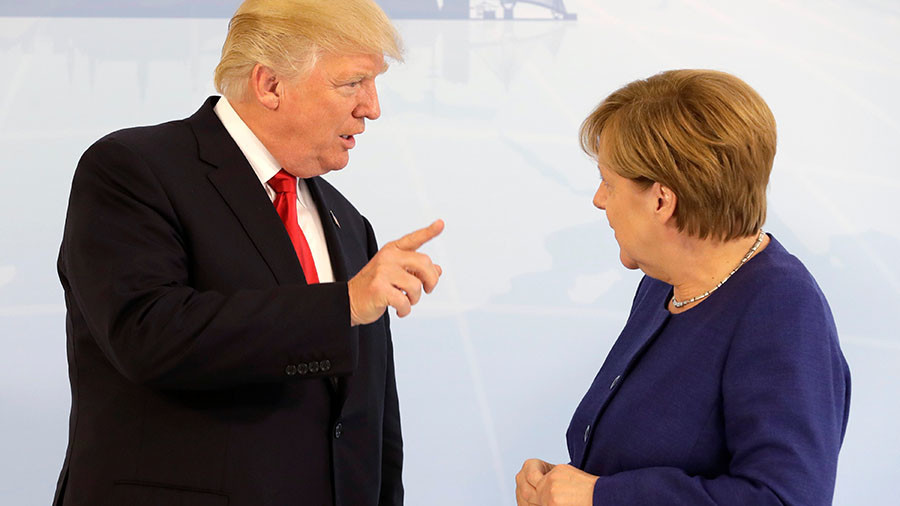
US President Donald Trump has accused Germany of not contributing enough to the NATO budget – but will German Chancellor Angela Merkel dance to Washington’s tune?
Politicians on both sides of Germany’s political spectrum shared their views with RT.
On Thursday, Trump warned NATO members that they will be “dealt with” if they fail to fulfill their financial obligations to the US-led military alliance. Germany was singled out as one of those said to be delinquent on their obligations.
Speaking to RT, Martin Dolzer of Die Linke (Left Party) said that buying into Trump’s ideas may send the world order “into chaos,”citing US policy in the Middle East as evidence. Dolzer stressed that Germans do not want war, and said that more vital issues should be on agenda instead of boosting military spending.
“The German population does not want any more military expenses, the German population needs money for kindergartens, for education, for the growth of civil society organizations and the social sector,” Dolzer said. “There has to be a change. And the people in Germany, I think most of them want this change, but the government does not follow it.”
Though Merkel has shown no interest to raising defense spending, Alternative for Germany (AfD) chief whip Hansjorg Mueller believes she is poised to “bend down before the wish of the big brother” – a reference to Trump and the US.

Wednesday, May 2, 2018

Military spending

German defense budget angers critics — including the defense minister


Chancellor Angela Merkel’s Cabinet has approved a draft federal budget considered so insufficient for the armed forces by Defence Minister Ursula von der Leyen that she submitted a formal note of protest along with her vote.
The unusual move pits the defense chief, a member of Merkel’s Christian Democratic Union, against finance minister and vice chancellor Olaf Scholz of the Social Democratic Party, who crafted the budget primarily with an eye on domestic measures and the premise of incurring no additional debt.
The defense ministry stands to get €38.5 billion in 2018, which is roughly €1.5 billion more than last year, and €41.5 billion in 2019. That trajectory would bring Germany’s share of defense spending measured against gross domestic product to 1.28 percentage points in the next few years, Scholz told reporters in Berlin.

Tuesday, May 1, 2018

Military spending

Global military spending remains high at $1.7 trillion


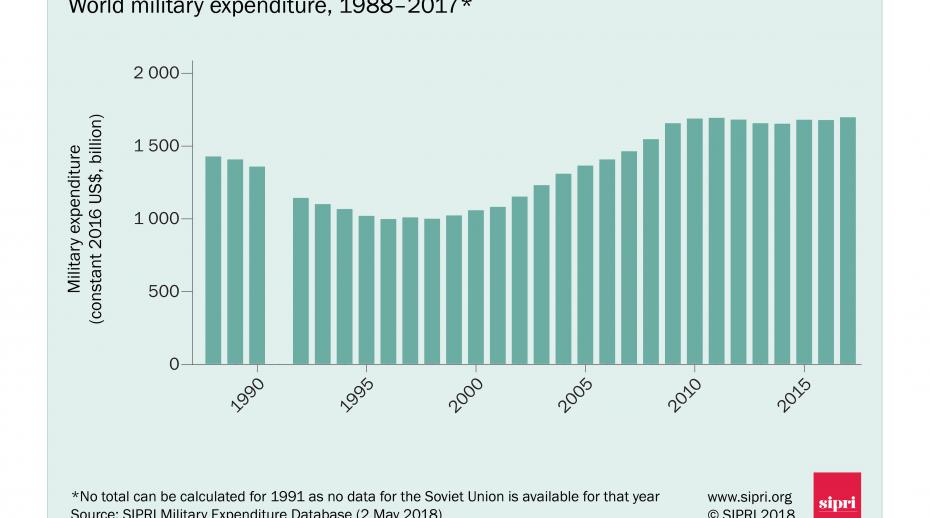
World military spending 1988–2017. Data and graphic: SIPRITotal world military expenditure rose to $1739 billion in 2017, a marginal increase of 1.1 per cent in real terms from 2016, according to new figures from the Stockholm International Peace Research Institute (SIPRI). China’s military expenditure rose again in 2017, continuing an upward trend in spending that has lasted for more than two decades. Russia’s military spending fell for the first time since 1998, while spending by the United States remained constant for the second successive year. The comprehensive annual update of the SIPRI Military Expenditure Database is accessible from today at www.sipri.org.
‘Continuing high world military expenditure is a cause for serious concern,’ said Ambassador Jan Eliasson, Chair of the SIPRI Governing Board. ‘It undermines the search for peaceful solutions to conflicts around the world.’
After 13 consecutive years of increases from 1999 to 2011 and relatively unchanged spending from 2012 to 2016, total global military expenditure rose again in 2017.* Military spending in 2017 represented 2.2 per cent of global gross domestic product (GDP) or $230 per person. ‘The increases in world military expenditure in recent years have been largely due to the substantial growth in spending by countries in Asia and Oceania and the Middle East, such as China, India and Saudi Arabia,’ said Dr Nan Tian, Researcher with the SIPRI Arms and Military Expenditure (AMEX) programme. ‘At the global level, the weight of military spending is clearly shifting away from the Euro–Atlantic region.’

Thursday, November 9, 2017

Military spending

House, Senate negotiators agree on $700 billion for military

House and Senate negotiators have agreed on an annual defense policy bill that authorizes $700 billion for the Pentagon in fiscal 2018.

That's an ample increase over the amount sought by President Donald Trump. It pays for more active-duty troops, aircraft and ships than he requested.

Details are scheduled to be made public later Wednesday, but congressional staff members say the bill allots just over $634 billion for core Pentagon operations and nearly $66 billion for wartime missions in Afghanistan, Iraq, Syria and elsewhere. The staff members spoke on condition of anonymity because they weren't authorized to speak on the record.

Trump's budget request sought $603 billion for basic functions and $65 billion for overseas missions.

The policy bill also grants U.S. troops a 2.4 percent pay raise.

Wednesday, May 24, 2017

Military spending

Winners & losers in Trump’s $603bn national security budget


Winners & losers in Trump’s $603bn national security budget
The Trump administration has unveiled its 2018 budget proposal, which boosts military spending beyond the sequestration cap. It would put total US national security spending, including the Departments of Energy and Justice, at roughly $603 billion.
Under the proposed budget unveiled Tuesday, the Department of Defense would receive $574.5 billion, with another $65 billion earmarked for the Overseas Contingency Operations slush fund. Another $2 billion will go to national defense programs including nuclear security. The budget also envisions $2 billion in savings from improved efficiency and reforms within the Pentagon, including base closures.
This would translate into a 9.5 percent increase in the Pentagon’s budget over the current fiscal year. It is also $52 billion more than the military spending cap under the 2011 Budget Control Act, commonly known as sequestration.