Страницы

Showing posts with label Cybersecurity. Show all posts

Wednesday, September 9, 2020

Cybersecurity

Bring in the experts: It’s time to secure your home network

Sources tell FOX Business’ Charlie Gasparino that President Trump and some of his advisers like Oracle as a TikTok buyer because of GOP ties.
It’s no longer just about protecting the computer on which you may be working from home and the laptops the kids may be using as online school starts. Odds are good you’ve got a few other Internet-connected devices around the house – phones, tablets, game consoles, maybe a “smart” TV or thermostat or refrigerator or light bulb or kid’s toy or security camera or video-streaming gadget or voice-activated digital valet.

The average U.S. home now has 11 such devices, according to Deloitte, many of which are vulnerable to hacking. If you don’t want cyber cat burglars traipsing across them, potentially spreading malware or ransomware as they go, you’ll want to secure your entire home network.

WHAT ARE THE RISKS?

Home networks are a major target for cybercriminals, who use innocuous smart gadgets as steppingstones to loot data from PCs and phones. Or they may co-opt these simpler devices into much larger “botnets” that can be used to wreak havoc across the Internet.

On average, one in three Internet connections from home networks are made through devices other than computers or phones, so there’s lots of opportunity for mischief if you don’t lock your virtual windows to the networked world.

Saturday, September 5, 2020

Cybersecurity

‘We are outnumbered’ — cybersecurity pros face a huge staffing shortage as attacks surge during the pandemic


The push to work from home during the coronavirus pandemic is straining cybersecurity professionals around the country tasked with ensuring workers are able to not only work efficiently from remote locations — but to do so safely. This rapid shift is a tall order for an industry that was already in need of skilled professionals long before the pandemic took hold. 
Cybersecurity workers were taken off some or all of their typical security duties to assist with other IT-related tasks, including equipping mobile workforces, according to an April survey from global nonprofit (ISC)2, the largest association of certified cybersecurity professionals. The survey of 256 cyber pros found nearly half were re-tasked and that a quarter said cybersecurity incidents increased since the transition to remote work, with some seeing as many as double the number of incidents.

Wednesday, September 2, 2020

Cybersecurity

Everything Is Listening—We Already Live In A Surveillance State, We Just Don’t Know It


data on anonymous users As consumers use more and more devices that have CPUs and are constantly connected to the Internet (IoT - Internet of Things), they are exposing themselves to more and more risks that they don’t even know about, nor do they have any proven means to stop it and protect themselves. And you thought Alexa spying on your dinner conversations was creepy?
Everything is listening. Let me illustrate with a few examples.
Samsung TVs are caught listening to consumers conversations in their homes without their consent or even knowledge. It may be a desirable feature to some, but most people didn’t realize it was listening to everything all the time and sending data back to the mothership.

Monday, August 24, 2020

Cybersecurity

Good news: Your PC just got safer from would-be-hackers


Are you living in fear of hackers recently? We understand if you feel that way. After all, with so many stories of cyberattacks and data breaches in the news each week, browsing the web in 2020 can feel like walking into a minefield.
Of course, there are still steps that anyone can take to protect their computer. Staying one step ahead of cybercriminals means being proactive and harnessing the right resources to block malware and phishing attempts. Tap or click here to see our favorite online antivirus programs.
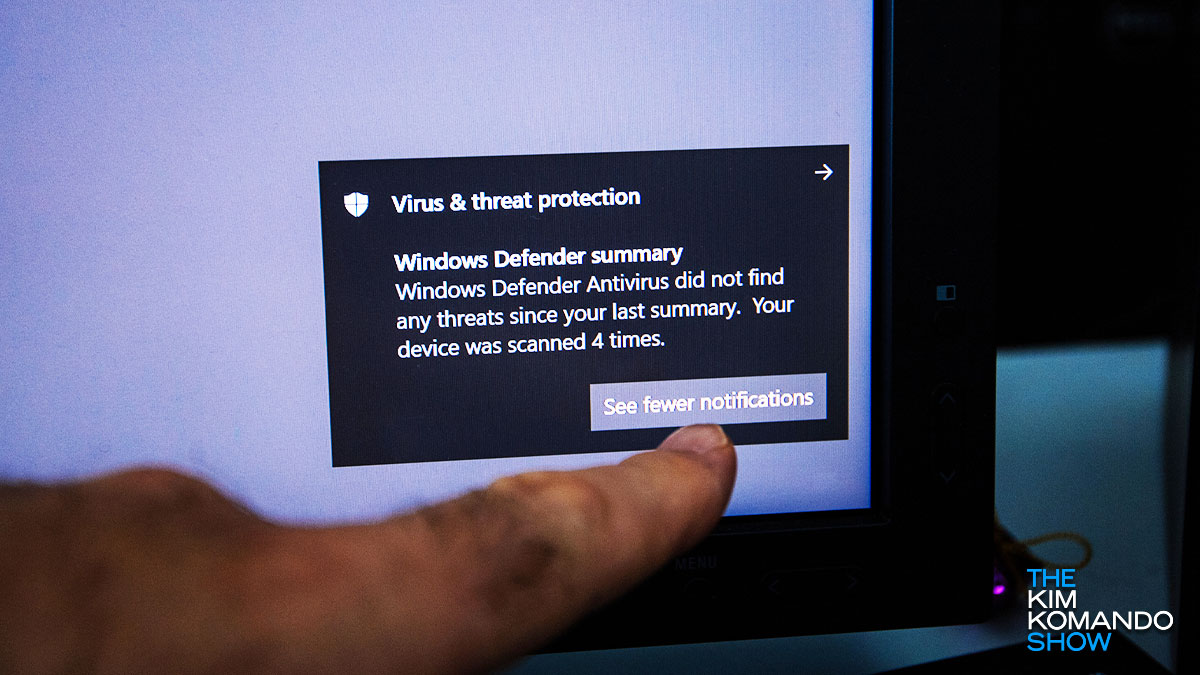
Even though cybersecurity news has been pretty dark for the past several months, there are still positive developments brewing beneath the surface. Case in point, Microsoft has quietly added a new update to Windows 10 that prevents hackers from disabling Microsoft Defender through the system registry. Here’s how you can take advantage of this safeguard.

Monday, August 17, 2020

Cybersecurity

Half of antivirus products ineffective against 'well-known' threats


The attacks deployed in SE Labs' latest round of testing included threats that affect the wider public as well as those which more closely targeted individuals and organizations. The firm also uses the most important threats that are affecting victims during the same time period of the test as judged by its own threat intelligence team.
Edwards pointed out the fact that cybercriminals often help SE Labs out by sending the firm the same types of malware that they use to target other potential victims. The Emotet malware campaign, which ran in July of this year, was a notable example where the firm was able to test antivirus products against a threat that was affecting consumers and businesses in the real world.
Antivirus products from Kaspersky, McAfee, Microsoft, Sophos, Symantec and Trend Micro were able to block all of the public and targeted attacks tested by SE Labs. Avast, AVG, Comodo and F-Secure's products followed close behind and only missed one public threat while stopping all others including targeted attacks. G-Data and Avira's antivirus software missed three to four public threats but were able to stop all targeted attacks while Webroot Antivirus and ZoneAlarm Free Antivirus stopped all but five of the public threats and all of the targeted attacks.
Cybersecurity

New “Cyborg” Technology Could Enable Merger of Humans and AI

Cyborg Technology Concept
Although true “cyborgs” — part human, part robotic beings — are science fiction, researchers are taking steps toward integrating electronics with the body. Such devices could monitor for tumor development or stand in for damaged tissues. But connecting electronics directly to human tissues in the body is a huge challenge. Now, a team is reporting new coatings for components that could help them more easily fit into this environment.
The researchers will present their results today (Agusut 17, 2020) at the American Chemical Society (ACS) Fall 2020 Virtual Meeting & Expo. ACS is holding the meeting through Thursday. It features more than 6,000 presentations on a wide range of science topics.
“We got the idea for this project because we were trying to interface rigid, inorganic microelectrodes with the brain, but brains are made out of organic, salty, live materials,” says David Martin, Ph.D., who led the study. “It wasn’t working well, so we thought there must be a better way.”
Traditional microelectronic materials, such as silicon, gold, stainless steel and iridium, cause scarring when implanted. For applications in muscle or brain tissue, electrical signals need to flow for them to operate properly, but scars interrupt this activity. The researchers reasoned that a coating could help.

Wednesday, August 12, 2020

Cybersecurity

Ransomware: These warning signs could mean you are already under attack


There are as many as 100 claims to insurers over ransomware attacks every day, according to one estimate. And as the average ransomware attack can take anywhere from 60 to 120 days to move from the initial security breach to the delivery of the actual ransomware, that means hundreds of companies could have hackers hiding in their networks at any time, getting ready to trigger their network-encrypting malware.
So what are the early indicators for companies that are trying to spot a ransomware attack before they cause too much damage? Any what should they do if they discover an attack in progress?
Encryption of files by ransomware is the last thing that happens; before that, the crooks will spend weeks, or longer, investigating the network to discover weaknesses. One of the most common routes for ransomware gangs to make their way into corporate networks is via Remote Desktop Protocol (RDP) links left open to the internet.

Thursday, July 23, 2020

Cybersecurity

How do cybercriminals secure cybercrime?


secure cybercrimeCybercrime is a highly professional industry, with sales and advertisements leveraging legitimate marketing techniques and platforms, all driven by cost to some extent. For example, one advertisement was found for dedicated, compromised servers based in the US starting at just $3, rising to $6 with guaranteed availability for 12 hours.
Although many of these services are traded on underground forums, some of which are invite-only, others are clearly advertised and sold via legitimate social media and messaging platforms such as Twitter, VK and Telegram.
In fact, the line between criminality and legitimate business behavior is increasingly difficult to discern. Some hosting providers have a legitimate clientele and advertise openly on the internet but may have resellers that sell exclusively to the criminal underground – either with or without the company’s knowledge.

Friday, July 17, 2020

Cybersecurity

Who’s Behind Wednesday’s Epic Twitter Hack?

Twitter was thrown into chaos on Wednesday after accounts for some of the world’s most recognizable public figures, executives and celebrities starting tweeting out links to bitcoin scams. Twitter says the attack happened because someone tricked or coerced an employee into providing access to internal Twitter administrative tools. This post is an attempt to lay out some of the timeline of the attack, and point to clues about who may have been behind it.
The first public signs of the intrusion came around 3 PM EDT, when the Twitter account for the cryptocurrency exchange Binance tweeted a message saying it had partnered with “CryptoForHealth” to give back 5000 bitcoin to the community, with a link where people could donate or send money.
Minutes after that, similar tweets went out from the accounts of other cryptocurrency exchanges, and from the Twitter accounts for democratic presidential candidate Joe Biden, Amazon CEO Jeff Bezos, President Barack Obama, Tesla CEO Elon Musk, former New York Mayor Michael Bloomberg and investment mogul Warren Buffett.

Tuesday, July 14, 2020

Cybersecurity


Cybersecurity firm finds more spyware hidden in Chinese tax software

A security firm that last month highlighted spyware hidden in Chinese tax software issued a new report Tuesday shedding more light on how Western companies doing business in China are targeted for industrial espionage.
Analysts at cybersecurity firm Trustwave say they have discovered a new type of malware they say was embedded in sales tax software — a different, older malicious tool than the previous one they found.
In June, Trustwave’s SpiderLabs reported on malware they called GoldenSpy, which was hidden inside software that their client, a tech firm with ties to the U.S. defense industry, was required to install to pay local taxes. The malware secretly installed a back door that gave attackers complete access to the company’s networks, Trustwave reported.

Saturday, June 20, 2020

Cybersecurity

Businesses believe the pandemic will change the security landscape forever


After Covid-19, nothing will ever be the same again, at least in terms of how businesses approach cybersecurity. This is according to a new report from cybersecurity firm Bitdefender, based on a poll of 6,700 infosec professionals around the world.
The report states that more than four in five (81 percent) expect long-term changes to the way their business operates, mostly because of remote working. The pandemic has forced a many workers to embrace the home office, and a large proportion are expected to continue working in that manner even after the pandemic subsides.
With this in mind, examining how remote employees approach cybersecurity will become paramount if an organisation is to maintain a strong security posture.
A third of respondents said they worry employees may feel more relaxed about cybersecurity than when they are working out of the office. Employees may also be less likely to follow protocol at home, particularly when it comes to identifying and flagging suspicious activity. 

Thursday, June 18, 2020

Cybersecurity

Exclusive: Massive spying on users of Google's Chrome shows new security weakness

Toplaps
A newly discovered spyware effort attacked users through 32 million downloads of extensions to Google’s market-leading Chrome web browser, researchers at Awake Security told Reuters, highlighting the tech industry’s failure to protect browsers as they are used more for email, payroll and other sensitive functions.

Alphabet Inc’s (GOOGL.O) Google said it removed more than 70 of the malicious add-ons from its official Chrome Web Store after being alerted by the researchers last month.

“When we are alerted of extensions in the Web Store that violate our policies, we take action and use those incidents as training material to improve our automated and manual analyses,” Google spokesman Scott Westover told Reuters.

Most of the free extensions purported to warn users about questionable websites or convert files from one format to another. Instead, they siphoned off browsing history and data that provided credentials for access to internal business tools.

Saturday, June 6, 2020

Cybersecurity
State Dept. using email software the NSA says is being exploited by Russian hackers, report says
Image: Three policemen patrol Red Square in MoscowThe State Department, local governments and at least 50 candidates running for election in 2020 are using email software that the National Security Agency says is being exploited by Russian government hackers, according to a new report by a cybersecurity firm.
Area1, a Silicon Valley security firm, says in its report that candidates and government agencies using the software are leaving themselves vulnerable to the same Russian operatives who hacked the Democrats to interfere in the 2016 presidential campaign.
If the hackers take advantage of the software flaw, "they can exploit the email server and become an administrator on it, which means they can create new email accounts and they can start sending email from [your address]," said Oren Falkowitz, Area1 co-founder and a former NSA cyber warrior. "They can use it to get further into your network."

Saturday, May 23, 2020

Cybersecurity

Top 5 Must-Use Cybersecurity Tools


Top 5 Must-Use Cybersecurity Tools
Nearly 60% of the world’s population has regular access to the Internet, a figure that jumps to more than 85% for developed nations in Europe and North America, while the introduction and widespread adoption of mobile devices and the Internet of Things (IoT) means that the Internet plays a greater and greater role in our daily lives. 
At the same time, fewer than 50% of respondents in a 2017 survey could correctly define basic terms like “ransomware” or determine the accuracy of statements like, “All email is encrypted by default,” or “all Wi-Fi traffic is encrypted by default on all wireless routers” (both of which are false). This lack of awareness makes it easier for cybercriminals to steal personal information and hack into businesses. 
If you’re like most people, you use the Internet in professional and personal settings every day: sending emails, sharing and editing documents, posting photos on social media, and managing your finances. 

Wednesday, May 20, 2020

Cybersecurity

US Department of Homeland Security Warns of Office 365 Security Risks


Cynthia Larose, Privacy, Security, Attorney, Mintz Levin, Law Firm, electronic transactions lawyerWe have been discussing the abrupt roll-out of remote workforce capabilities both in this space (here and here) and in our recent webinar.   As companies raced to get employees up and running remotely, business continuity was the primary focus, while privacy and cybersecurity issues likely took a backseat.   The Department of Homeland Security’s Cybersecurity and Infrastructure Security Agency (CISA) has issued an alert providing security advice for companies that may have rushed out Microsoft Office 365 (O365) deployments to support these remote work environments. 
CISA warns in this latest alert that it continues to see companies that have failed to implement the necessary security for the Office 365 implementation, and expresses concern that the hurried nature of the deployments may have led to important security configuration oversights that could be (and have been in the past) exploited by bad actors.
CISA says “In recent weeks, organizations have been forced to change their collaboration methods to support a full ‘work from home’ workforce… While the abrupt shift to work-from-home may necessitate rapid deployment of cloud collaboration services, such as O365, hasty deployment can lead to oversights in security configurations and undermine a sound O365-specific security strategy. 

Monday, May 18, 2020

Cybersecurity

The 3 Top Cybersecurity Myths & What You Should Know


With millions of employees now attempting to work from home, it's vital to challenge misconceptions about cybersecurity.
Zack SchulerImagine you're working at the front desk of a tech company when a woman walks through the front door and tells you she was just in a car accident. You ask if there's anything you can do to help, but she says it wasn't serious and asks if you could direct her to a restroom.
You later discover that the woman inserted a flash drive into an unattended computer and infected your company's entire system with a destructive form of malware. Or at least that's what she could have done if the malware was real — this strange scenario was actually an elaborate demonstration (arranged by a cybersecurity professional I know) designed to show employees that not all cyberattacks are carried out remotely.
The idea that cybercriminals never interact with their targets is one of many cybersecurity myths that need to be debunked. With millions of employees now attempting to work from home for the first time due to the COVID-19 pandemic — which increases their vulnerability more than ever — it's vital to challenge stubborn misconceptions about cybersecurity.
Cybersecurity

Microsoft Confirms Serious New Security Problem For Windows 10 Users

In this photo illustration a Microsoft Windows 10 logo seen...Microsoft has now joined Intel in confirming a newly reported security vulnerability with Thunderbolt ports, one that enables an attacker with physical access to a PC to modify the port’s controller firmware, disabling its security. As I reported last week, almost all Windows PCs with Thunderbolt ports are vulnerable, except a few from last year that shipped with Kernel DMA protection enabled.
This new security threat has been dubbed “Thunderspy” by Björn Ruytenberg, the Eindhoven University of Technology researcher who discovered and disclosed it. Ruytenberg warns that despite locking or suspending a PC, setting up a Secure Boot and strong system passwords, and enabling disk encryption, “all an attacker needs is five minutes alone with the computer” to compromise a machine.

Sunday, May 17, 2020

Cybersecurity

6 ways to keep hackers off of your network and computer


1. Check your router to see if it’s been compromised

One trick used by hackers to break into routers is “DNS hijacking,” which involves switching the servers your router normally connects with to malicious ones. This forwards your internet traffic to fake versions of websites that steal your data or spy on your activities.
To see if the DNS settings on your router are normal, tap or click here to use a free DNS scanning tool. WhoIsMyDNS.com identifies the DNS server and IP address that performed the scan and checks them against its database to see if the server has been reported for any suspicious activity.
Once the results load, check to see if the DNS server correlates with your Internet Service Provider. If it doesn’t, your router may have been hijacked.

2. Keep everything up to date

Security threats are constantly evolving, which is why you need to keep your browser updated. Updates help protect you from the latest spreading viruses and attacks. Tap or click here to find out if you need to update your browser.

Saturday, May 16, 2020

Cybersecurity

Why The Largest Cyberattack In History Will Happen Within Six Months


Hackers : Illustration
The coronavirus is laying the groundwork for a massive cyberattack. In fact, I’m on record today saying we’ll see the largest cyberattack in HISTORY within the next six months.
Nobody is talking about this today. Fighting hackers is the last thing on most folks’ minds. But coronavirus practically guarantees “largest cyberattack ever” will soon be plastered all over the frontpages.
I’ll explain why in a second. And I’ll show you the proven pattern for making big money off cyberattacks. But first it’s important to understand the key to defending against hackers. Talk to any cyber expert and they’ll tell you a big chunk of time and money is spent on reducing their “attack surface.”

The first is a Beverly Hills mansion. You can try to get in the front door. If that doesn’t work, you can enter through the poolside bar, any one of twenty windows, or sneak in through the basement.

Thursday, May 7, 2020

Cybersecurity

Israeli firm says Chinese cyber-espionage tool used to spy on governments

A computer screen with program code warning of a detected malware script program. (solarseven via iStock)
An Israeli cybersecurity firm has identified a new and highly dangerous Chinese cyber-espionage tool that it says has been used to target governments around the world, The New York Times reported on Thursday. Tel Aviv-based Check Point Software Technologies says that the tool, dubbed Aria-body, has recently been used in cyberattacks against Australia, Indonesia, Vietnam and other regional nations by Naikon, a hacking group linked to the Chinese military. It was discovered after it was used to target a worker in Australian Prime Minister Scott Morrison’s office. Naikon has been described by Russian cybersecurity firm Kaspersky as having conducted “at least five years of high volume, high profile, geo-political attack activity” targeting “top-level government agencies and civil and military organizations” in countries around the South China Sea.