Страницы

Showing posts with label Electronic warfare. Show all posts

Monday, August 17, 2020

Electronic warfare

Army gets prototype for cyber visualization tool


 The U.S. Army now has a prototype for a new tool that allows commanders to visualize and understand the cyber terrain within their environment.
Just as commanders must understand the obstacles and forces — friendly or otherwise — in their battlespace to make informed decisions, so too must they understand their cyber terrain, which they are currently unable to do from the command post.
Cyber Situational Understanding, or Cyber SU, will ingest data and information from a variety of systems and sensors, such as Distributed Common Ground System-Army and the Electronic Warfare Planning and Management Tool. The prototype will also transform that data into useful information.
The system will provide this integrated picture within the web-enabled Command Post Computing Environment, or CPCE, that will consolidate current mission systems and programs into a single user interface at the command post.
Electronic warfare

US Army seeks new airborne tech to detect, defeat radar systems


The U.S. Army is seeking industry input on new technology allowing aircraft to survive and defeat systems in sophisticated adversarial environments made up of sensitive radars and integrated air defense systems.
notice posted online Aug. 12 from the Army Combat Capabilities Development Command’s Command, Control, Communications, Computers, Cyber, Intelligence, Surveillance and Reconnaissance Center is asking industry for ideas ahead of an industry day in September that will provide additional information regarding the technical specifications. The service will also answer questions in depth at the event.
“The future multi-domain operational environment will present a highly lethal and complex set of traditional and non-traditional targets. These targets will include networked and mobile air defense systems with extended ranges, and long and mid-range fires systems that will deny freedom of maneuver,” the notices stated.
To maintain an advantage, the notice stated, the Army aviation community must modernize its reconnaissance, surveillance, target acquisition and lethality with an advanced team of manned and unmanned aircraft as part of its Future Vertical Lift modernization effort, which calls for a future attack reconnaissance aircraft.

Wednesday, August 12, 2020

Electronic warfare

Army Electronic Warfare: Big Tests In ’21


Army graphicAfter decades of US neglect of electronic warfare – while Russia and China pulled ahead – Army soldiers are just months away from getting their hands on two new and long-awaited long-range jammers.
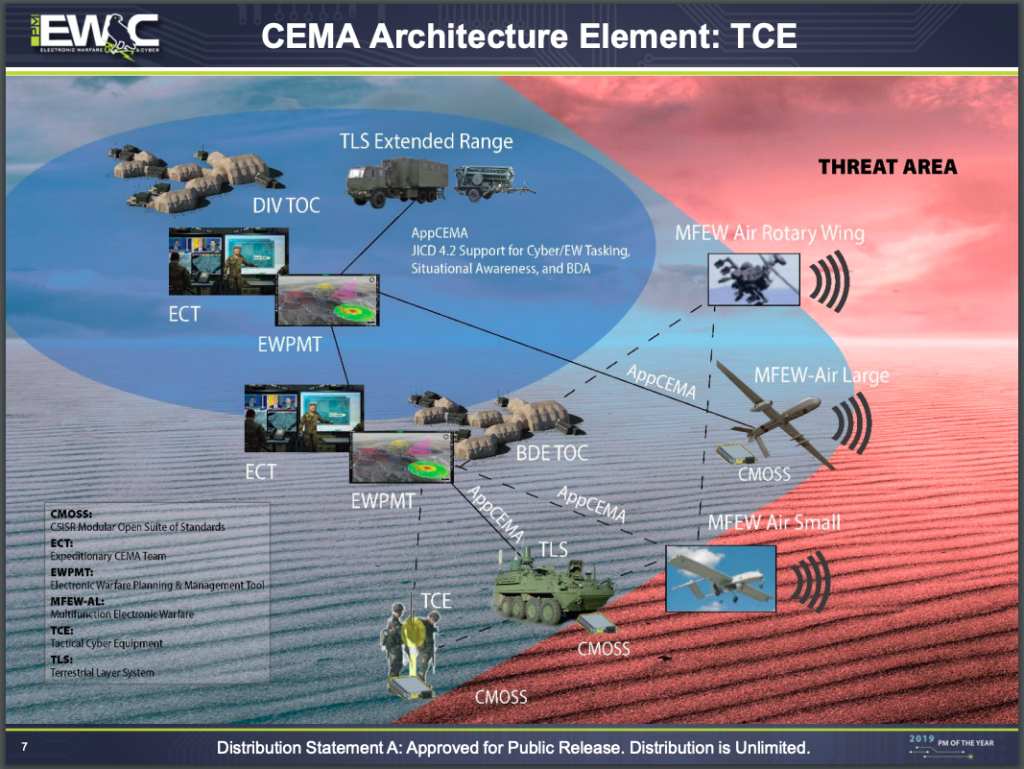
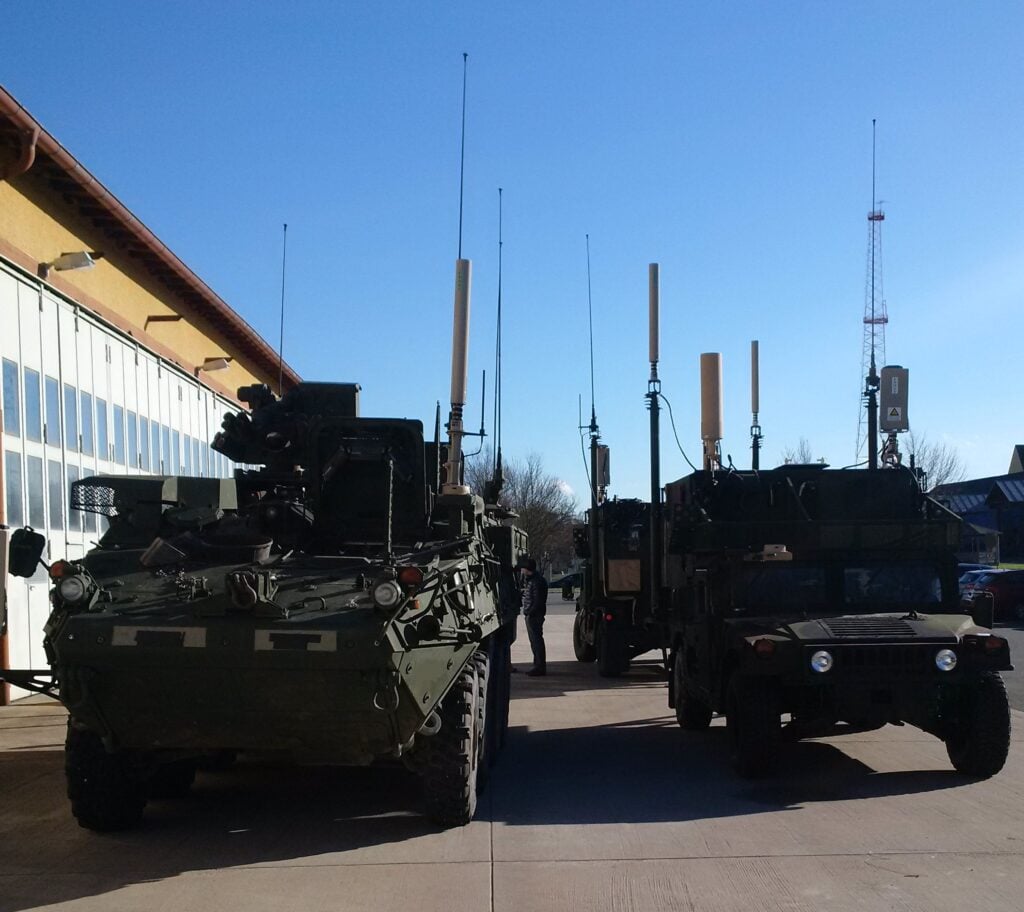
Two contractors, Lockheed Martin and Boeing DRT, are now converting 8×8 Stryker armored vehicles into prototypes of the Terrestrial Layer System (TLS). Both company’s prototypes will be given to troops for field tests next year, starting with Operational Demonstration 1 in January. Meanwhile, Lockheed is putting together the first Engineering & Manufacturing Demonstration (EMD) prototype of an EW pod for the Grey Eagle drone, called Multi-Function Electronic Warfare – Air – Large (MFEW), which will be assessed by soldiers in April-June next year.

Monday, February 24, 2020

Electronic warfare

Getting the services on the same wavelength about electronic warfare


The Pentagon is expected to spend $47 billion over the next five years to modernize its electronic warfare systems. Without this funding, experts say that the U.S. military, already trailing Russia and China in some areas, would struggle on a future battlefield.
But several experts and government personnel now insist the Department of Defense needs a top-down vision to the services that would help guide operations, investments and capabilities within the electromagnetic spectrum.
“On the policy side, not to be terse, but there isn’t necessarily an overarching policy strategy that I can see,” said Will Mackenzie, research associate in the defense program at the Center for a New American Security. “There isn’t necessarily as comprehensive an approach vis-à-vis a Russia or China.”
Leaders from Russia and China have said that in future conflicts they will target communications systems first to prevent opponents from coordinating and to stop radars from detecting threats.

Friday, February 7, 2020

Electronic warfare

What electronic warfare can learn from a wagon full of smartphones


A single red wagon, hand pulled down the middle of a lightly traveled street, is an odd delivery mechanism for an electronic warfare attack.
It is only slightly less unusual as a kind of art exhibit. But the wagon’s payload, and its artist brush, is the same: 99 second-hand smartphones, all opened to Google Maps.
In a simple demonstration, Berlin-based artist Simon Weckert rolled the wagon full of phones through several streets and, in so doing, created virtual traffic jams as Google Maps interpreted the phones as slow-moving cars. Screen captures of the demonstration, paired with video from the street, show the traffic mapper interpreting the wagon phones as first nothing, then as a slowdown, and then in a deep red line painted over the virtual road, as a rush hour-esque standstill.
It is not that often that a Berlin digital arts experiment has lessons for electronic warfare and digital manipulation, but with the greater proliferation of virtual environments its worth pulling a few principles from this wagon of tricks.

Wednesday, January 15, 2020

Electronic warfare


France hires two firms to soup up jets with an electronic warfare capability


France has awarded a contract for Archange, its strategic airborne intelligence program aimed at strengthening the country’s signals intelligence capabilities, to Thales and Dassault Aviation.

The procurement agency DGA awarded the contract on Dec. 30, but it wasn’t announced until Tuesday. The program was launched Nov. 18 by Armed Forces Minister Florence Parly.

The companies would not specify how much the contract was worth.

Thales is expected to install a universal electronic warfare capability on three Dassault-manufactured Falcon 8X aircraft, although the announced deal is only for two aircraft. Another contract is expected to cover a third aircraft at a later date. The first two aircraft should, by 2025, replace the two Transall C-160 Gabriel aircraft that provide the French Air Force which signals intelligence.

The electronic warfare system, known by its French acronym CUGE (capacité universelle de guerre électronique), will make use of sigint technologies developed by Thales over the past decade to enable the system to simultaneously detect and analyze radio and radar signals. Thales said in a statement that this is possible thanks to multipolarization antennas and the use of artificial intelligence for automated data processing.

Thursday, December 19, 2019

Electronic warfare

One way the Pentagon wants to improve electronic warfare


To help commanders better understand their proverbial terrain in the electromagnetic spectrum, some combatant commands have created cells with planners who specialize in electromagnetic spectrum operations.
These cells, known as joint electromagnetic spectrum operations cells, sometimes referred to as JEMSOCs, are in their nascent stages and located at four combatant commands, Maj. Gen. Lance Landrum, deputy director of the Electromagnetic Spectrum Operations Cross Functional Team, told reporters Dec. 18. Those commands are European Command, Africa Command, Central Command and Indo-Pacific Command.
The new cells have been hampered from a lack of personnel and resources, according to a report delivered to Congress this fall. As a result, the Pentagon is expected to set aside money to help establish the teams.
“They are intended to be a ground zero of subject matter expertise for the commander to interpret the electromagnetic environment and give advice in both planning and operational maneuver,” Landrum said.
The cells play into a larger Department of Defense push to create better mechanisms for understanding, championing and operating in the electromagnetic spectrum.

Friday, December 6, 2019

Electronic warfare

Europe-based Army Strykers to receive anti-jamming systems


The Army plans to install anti-electronic warfare systems in more than 300 of its Stryker armored vehicles in Europe, a decision made amid concerns that Russia and other adversaries would attempt to disable GPS-based systems in the event of a conflict.
The new Mounted Assured Positioning, Navigation, and Timing System, or MAPS, allows Strykers to transmit their position and communicate with each other when their GPS systems have been jammed.
The Strykers have been steadily upgraded with new systems and firepower over the past few years. Some can fire CROWS-J anti-tank missiles, while the “Dragoon” armored vehicles equipped with 30 mm cannons look more like narrow, high-speed, trackless tanks than light armored vehicles.
The weapons functions and other systems rely on electronics, which has spurred Army efforts to guard against jamming attacks.

Wednesday, November 13, 2019

Electronic warfare

How a new Air Force unit could help beat Russian air defense systems


A new Air Force unit is expected to generate “unmatched” capabilities for commanders at “a speed and scale that we’ve never seen before,” Gen. David Goldfein, the service’s chief of staff, said recently.
Leaders say the creation of 16th Air Force in October is transforming the way the service fights. The unit is the service’s first information warfare numbered Air Force integrating global intelligence, surveillance and reconnaissance, cyber, electronic warfare and information operations under a single commander. Prior to its creation, these disciplines were spread out among different organizations, a setup that officials said slowed down operations against sophisticated powers, such as Russia and China.
Another Air Force leader, Gen. James Holmes, head of Air Combat Command, said the new combination will make the service’s cyber teams more capable.
“Cyber teams are dependent on intelligence, surveillance and reconnaissance,” Holmes said. “We think we can present more robust teams [to Cyber Command] with better intelligence support behind them and present some information ops options … [at] a larger scale.”

Monday, November 4, 2019

Electronic warfare

Army photoElectronic Warfare: Better, But Still Not Good Enough

Pentagon policymakers — prodded by Congress — are taking electronic warfare seriously again. But reforms at the top will take years to trickle down to tangible improvements for the troops.

“I see a lot of good work being done in OSD, Joint Staff, and the services, but I would say it’s early,” Rep. Don Bacon told me and another reporter on the sidelines of the annual Association of Old Crows electronic warfare conference. “I think we turned the corner, but we’re still on first base…. We’ve got a long ways to go.

While the Navy and Marines retained their jammers, the Army and Air Force largely disbanded their EW forces after the Cold War. A retired Air Force one-star and electronic warrior himself, Bacon recalled that “I was angry when l was active duty because I thought we walked away from the best EW doctrine and capabilities in the early 90s. When I retired, we were second or third best.”

Tuesday, October 15, 2019

Electronic warfare

A new electronic warfare system for the Army is getting closer


The Army is moving into the final phase of bringing its electronic warfare visualization and planning tool to the entire force.
The system is a command-and-control planning capability that allows commanders and soldiers to visualize the potential effects of electronic warfare in the field. It also helps chart courses of action to prevent jammed capabilities.
The program — Electronic Warfare Planning and Management Tool, or EWPMT — is broken into four batches, each with a separate release date, and will provide leaders with incremental improvements.
Raytheon began work on the final batch, known as a capability drop, in September. This group will use artificial intelligence and machine learning as well as a more open architecture to allow systems to ingest swaths of sensor data and, in turn, improve situational awareness. Such automation is expected to significantly ease the job of planners.

Friday, September 20, 2019

Electronic warfare

This is how the Air Force plans on improving its electronic warfare capabilities


The Air Force is taking action to reshape its electronic warfare enterprise after a recent assessment found that the service was too stovepiped and not responsive enough to emerging threats, its No.-2 general said.
“The goal is to make [electronic warfare] part of everything we do in the Air Force,” said Gen. Stephen “Seve” Wilson, the Air Force’s vice chief of staff, during an exclusive interview with Defense News on Tuesday.
Wilson announced in 2017 that the Air Force would conduct an internal study, known as an Enterprise Capability Collaboration Team or ECCT, that would assess whether the service was doing what was necessary to maintain superiority over the electromagnetic spectrum. Brig. Gen. David Gaedecke, the service’s director of cyberspace operations and warfighter communications, was tapped to lead the effort in 2018 and briefed the team’s findings to Air Force leadership in January.

Friday, August 30, 2019

Electronic warfare

Russia testing fundamentally new electronic warfare system

Картинки по запросу krasukha-4 mobile electronic warfare system
Russia’s Radio-Electronic Technologies Group (KRET) is holding state trials of a next-generation electronic warfare system, Adviser to the KRET First Deputy CEO Vladimir Mikheyev said at the MAKS-2019 international aerospace show on Thursday.
"Based on the experience of operating existing systems, we are now developing a principally new electronic warfare system. It is at the stage of state trials. As soon as they are over, the system will go into production," he said.
KRET produces several electronic warfare (EW) systems.
The Krasukha mobile EW system is designated to protect command posts, groupings of forces, air defense capabilities and vital industrial and administrative facilities. The system analyzes the signal type and impairs enemy radar stations by powerful jamming emissions. As a result, enemy aircraft lose their capability to detect targets and aim their precision weapons against them.
The Rtut-BM tracked EW system is designated to protect manpower and military hardware, as well as the areas of troop’s amassment, mobile and stationary command centers against missiles, shells, mortar projectiles and guided high-explosive munitions equipped with radio fuses on an area of 50 hectares.

Friday, May 17, 2019

Electronic warfare

US Air Force deploys missiles that can fry Iran and North Korea’s weapons with microwaves as Saudi urges Trump to launch airstrikes now

 Graphic shows a Counter-electronics High Power Microwave Advanced Missile Project missile taking out a targetTHE US Air Force has deployed 20 missiles which can zap enemy electronics with powerful pulses rendering weapons virtually useless.
They can be launched into enemy airspace at low altitude and emit blasts of high-power microwave energy that immediately disable any devices targeted.
The Counter-Electronics High Power Microwave Advanced Missile Project (CHAMP) is the brainchild of Boeing's Phantom Works lab.
They have not been operation until now and could be used to frazzle the military defences of Iran and North Korea, reports DailyMail.com.
News of the state-of-the-art weapons - which are carried into battle by B-2 stealth bombers - comes as a Saudi state newspaper called for the US to launch "surgical strikes" against Iran now.
Mary Lou Robinson, the chief of the High Power Microwave Division of the Air Force Research Lab at Kirtland Air Force Base, told DailyMail.com the missiles are now operational.
They are equipped with an electromagnetic pulse cannon which causes voltage surges in electronic equipment and military vehicles.

Monday, April 15, 2019

Electronic warfare

Advanced electronic warfare systems to enter service with Russian troops in 2019

Advanced radio jamming systems Pole-21 will arrive for troops in Russia’s Central Military District for the first time in 2019 under the rearmament program, Electronic Warfare Chief in the District’s Staff Major-General Sergei Portnykh said on Monday.
"We are the leaders in fulfilling the rearmament program in the Central Military District. Currently, we operate over 60% of new types of armament and military hardware, including Krasukha, Murmansk and Borisoglebsk-2 electronic countermeasures systems, and also Silok new electronic warfare complexes intended to fight unmanned aerial vehicles," the general said.
"This year, we are expecting the arrival of Pole-21 jamming modules to counter unmanned aerial vehicles and lower the efficiency of employing cruise missiles," he added.
The Pole-21 jamming modules will arrive for the electronic warfare troops of Russia’s Central Military District for the first time, the District’s press office stressed.
The Pole-21 radio jamming modules are designated to protect vital facilities of the armed forces and the country’s infrastructure from precision weapons, such as enemy cruise missiles, smart bombs and drones. The Pole-21 allows electronic warfare troops to suppress signals transmitted via GPS, Galileo and Beidou satellite channels.


Sunday, March 17, 2019

Electronic warfare

New Technological Front at Nordic Region

technological front
Norway has been challenged by what it calls continued “electronic harassment” of critical communications systems and networks by the Russian government. To better protect its military communications against interference and jamming of GPS systems, the Norwegian Armed Forces are exploring the use of new methods and technologies.
Most of the incidents of jamming since 2017 coincided with joint Norway-NATO exercises in the High North. The region is close to the heavily fortified military installations on the Kola Peninsula, which houses Russia’s Northern Fleet and elite Arctic land, air and naval forces.
Intelligence reports from national security agencies link the jamming of GPS signals — most recently during the Trident Juncture joint exercises in the High North with NATO held October to November 2018 — to electronic interference by Russia.
While Moscow denies involvement in jamming critical communications, a Norwegian Intelligence Service report details repeated incidents since 2017 where GPS signals and other secured communications between Norwegian Armed Forces, or NAF, units engaged in exercises were subjected to “blocking measures” from sites located in Russia.

Monday, February 25, 2019

Electronic warfare

Army Unit Updates Electronic Warfare Capabilities


Soldiers with 2nd Armored Brigade Combat Team, 1st Armored Division, and 2nd Brigade, 2nd Infantry Division, joined forces recently to train on new electronic warfare equipment and procedures, according to a release. New equipment being fielded in stages to the Army for electronic warfare includes a Sabre Fury EW system and a VROD Modular Adaptive Transmit, or VMAX, which transmits information and messages to the laptop-based EW system Raven Claw, which then processes the information for planning. The combined system allows soldiers to communicate better and to jam enemy communication. 2nd ABCT's electronic warfare soldiers plan to use the equipment in coming months to train and employ the capabilities in support of the unit's scheme of maneuver. 

Sunday, October 21, 2018

Electronic warfare

Preston James, Ph.D.: Secret and Silent Frequency Wars
The next major deployment of powerful EMF as a multi-purpose military device occurred during the 1970’s in the Soviet Union. This was called the Duga Array (Woodpecker System) and included several functions such as over the horizon radar for sensing foreign attacks missile and aircraft attacks, and for experimentation with mind-control on the western masses.
The Pentagon realized that the Soviets were the world leaders in the deployment of all phases of EMF as electronic warfare and Mind-control and decided to take drastic actions to curtail their deployment.
According to some insider reports a sophisticated covert action was deployed against the Woodpecker. A well trained Mujahedeen group (seeking revenge for the Russian invasion of Afghanistan) was deployed to take out the cooling system of Chernobyl, thus depriving the Woodpecker array (located nearby) of its necessary power source.

Friday, August 17, 2018

Electronic warfare

Army Tests Jamming MRAPs: New Electronic Warfare Vehicle


Army photo
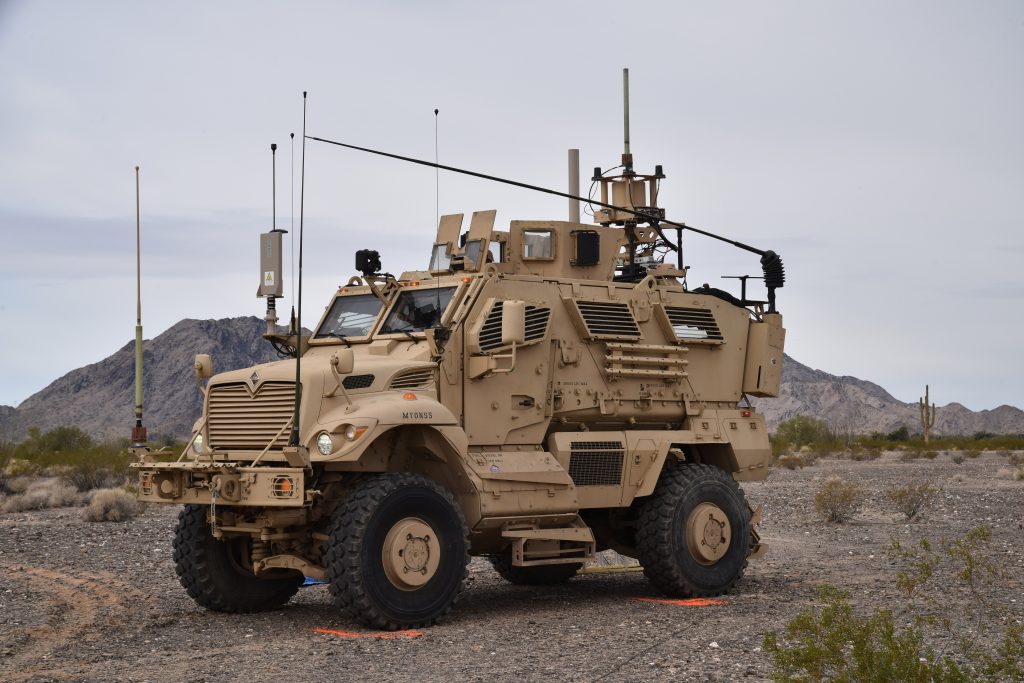
This fall, Army Forces Command will get “several” armored trucks packed with radio jamming gear to test new tactics and, if necessary, deploy overseas in a crisis.
While the Army put out a press release Aug. 2, and officials answered some of my follow-up questions, they were understandably unwilling to detail the capabilities or even the exact number of the Electronic Warfare Tactical Vehicles (EWTVs). What is clear, though, is that the EWTVs are a small but significant step towards rebuilding the Army’s disbanded capability to attack enemy communications, the electronic linchpin of modern warfare.
The Army’s high-priority Rapid Equipping Force (REF) coordinates the effort with Army Cyber Command (ARCYBER), Army Test & Evaluation Command (ATEC), Training & Doctrine Command (TRADOC) capability managers (who write official requirements), and multiple program offices. (The EWTV effort precedes the Army’s creation of Cross-Functional Teams to streamline acquisition, but the coordinated approach is similar). REF officials told me the lead contractor for the EW gear is SRC Inc. and the “base system” installed on the vehicle is SRC Inc.’s CREW Duke, with unspecified modifications.

Monday, July 9, 2018

Electronic warfare

China ‘Quietly' Conducts Electronic Warfare Tests in South China Sea

Chinese dredging vessels are purportedly seen in the waters around Mischief Reef in the disputed Spratly Islands in the South China Sea.file photo
Weeks after delivering military equipment to the South China Sea's disputed Spratly Islands, China has begun to conduct tests on its tech-jamming weaponry, it was revealed Thursday.
Sources aware of the tests told CNBC that recent intelligence assessments of the region detailed the "first known use of the equipment" since the technology was initially deployed to the area earlier this year. The report noted that Beijing is now "quietly testing" its assets.
This comes after a US Navy pilot told GMA News that their EA-18G Growler had encountered Chinese jamming technology when traveling through the South China Sea in April.