Страницы

Showing posts with label Wildlife trafficking. Show all posts

Sunday, November 6, 2016

Wildlife trafficking

Giant rats sniff out wildlife traffickers
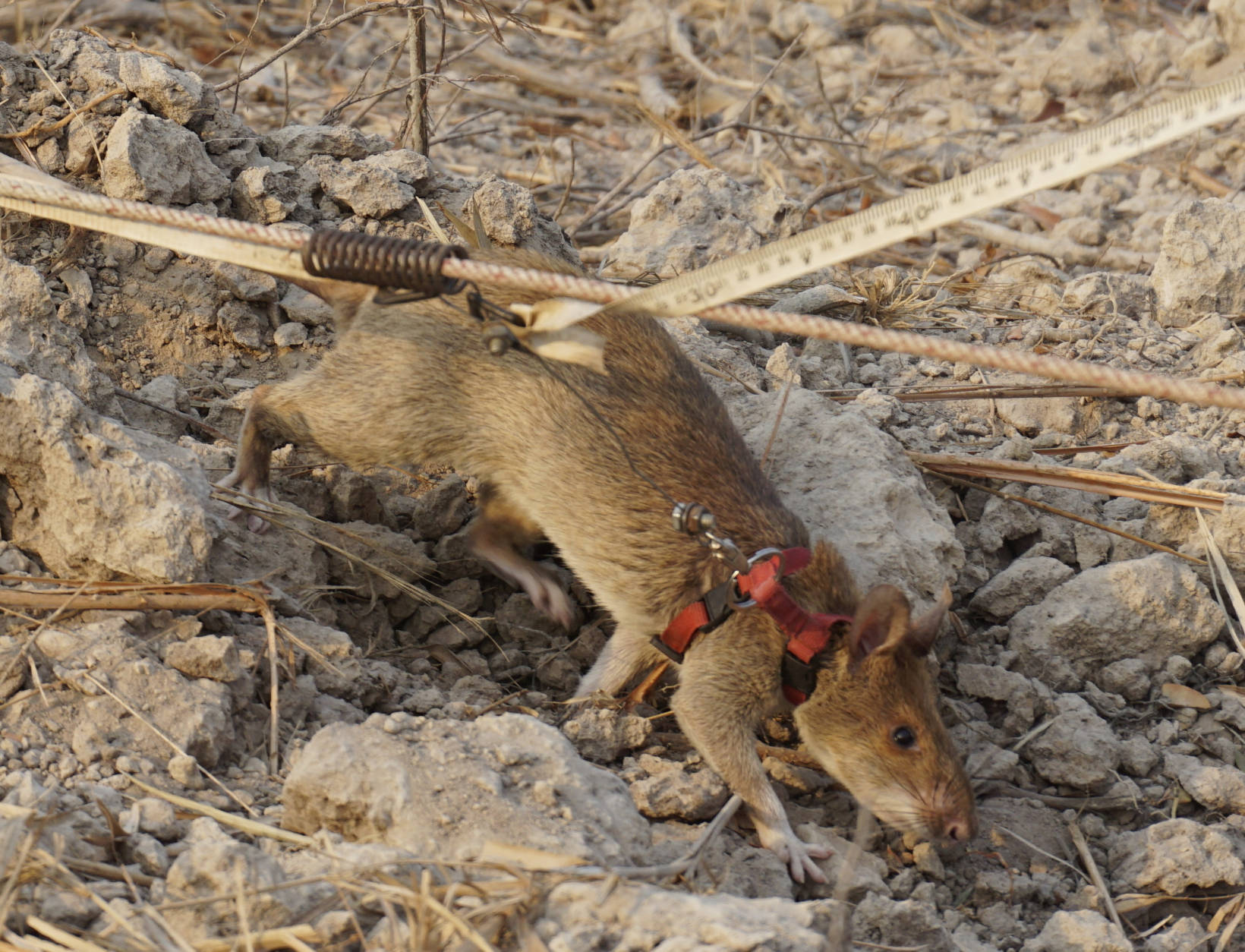

Police dogs have been used to sniff out bombs and drugs. Now, rats could be the latest weapon in the battle against wildlife trafficking.
“They have a very, very sensitive sense of smell,” said  Daphne Carlson-Bremer, programming officer for combating wildlife trafficking at the U.S. Fish and Wildlife Service International Affairs.
The African giant pouched rat has successfully sniffed out land mines and tuberculosis, but now the rodents are being tested to fight against wildlife trafficking, which is a multi-billion dollar industry.
Carlson-Bremer said these rats are being tested to detect pangolins, one of the most trafficked mammals in the world.
Pangolins, Carlson-Bremer said, are scaly mammals that look like a cross between an anteater and an armadillo. The animals come from Africa and Asia. They are poached for their scales and meat. Their scales are used for medicinal purposes, and their meat is seen as a delicacy in some parts of the world.

Monday, September 26, 2016

Wildlife trafficking

Revealed: the criminals making millions from illegal wildlife trafficking

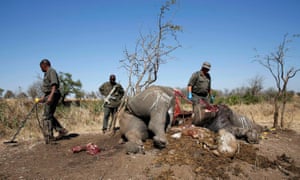
A ranger looks on after performing a post-mortem on a rhino killed for its horn in South Africa’s Kruger national park.
A major investigation into global wildlife crime today names for the first time key traffickers and links their illegal trade to corrupt officials at the highest levels of one Asian country.
The investigation, published by the Guardian, exposes the central role of international organised crime groups in mutilating and killing tens of thousands of animals and threatening to eliminate endangered species including tigers, elephants and rhinos.
The in-depth reporting identifies suspected traders across several continents, from South Africa to Thailand and in the markets of China, where animal parts are used in traditional medicines.

Friday, September 16, 2016

Wildlife trafficking

Senate passes bill to combat wildlife trafficking


FILE - In this Nov. 18, 2014 file photo, Sen. Chris Coons, D-Del. walks on Capitol Hill in Washington. The Senate has approved a bill to boost efforts to combat illegal wildlife poaching and trafficking, a growing worldwide problem with an estimated cost of up to $10 billion a year. The measure, sponsored by Coons and Sen. Jeff Flake, R-Ariz., was approved unanimously late Thursday, Sept. 15, 2016. The senators have traveled together to a host of African countries and have pushed for the bill since last year.  (AP Photo/J. Scott Applewhite, File)The Senate has approved a bill to boost efforts to combat illegal wildlife poaching and trafficking, a growing problem worldwide with an estimated cost of up to $10 billion a year.
The measure is aimed at protecting a variety of animals, from lions, elephants and rhinos to exotic birds and sharks. It supports ongoing work of a presidential task force on wildlife trafficking and directs U.S. agencies to work with countries affected by wildlife crime, such as the 2015 killing of Cecil the lion by an American during an illegal hunt in Zimbabwe. It also gives prosecutors more tools to go after individuals involved in trophy hunting and other crimes.
The measure, sponsored by Sens. Chris Coons, D-Del., and Jeff Flake, R-Ariz., was approved unanimously late Thursday. The senators have traveled together to several African countries and have pushed for the bill since last year.
Coons said he was disturbed by news reports that African elephant population has shrunk by 30 percent since 2007, primarily due to poaching.

Sunday, August 21, 2016

Wildlife trafficking

Large ivory seizures in Singapore make it a smuggling hub of 'primary concern'

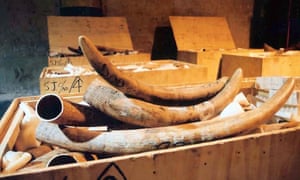
Ivory from a 2002 seizure; after this there appeared to be little smuggling activity until 2013.
Large-scale seizures of ivory in Singapore over the last three years make the south-east Asian city-state one of the world’s premier ivory smuggling hubs for organised crime, say conservation watchdogs. 
Data from seizures, collected by the UN’s wildlife trade monitor Traffic and the Environmental Investigation Agency (EIA) and shared with the Guardian, reveals how the gangsters operate. Shipping containers carrying thousands of tusks are labelled as carrying anything from tea to waste paper or avocados. They leave Africa from a few ports well-known for high levels of corruption.
Customs officials in China and Hong Kong – where most ivory ends up – target containers which have come from those ports. In order to get around this, according to EIA director of campaigns Julian Newman and traffic wildlife trade expert Tom Milliken, ivory shipments are being dropped off in transit ports, such as Singapore or Port Klang in Malaysia, where they can sit for months before being loaded on to a new vessel with paperwork listing a new port of origin.