Страницы

Showing posts with label Business security. Show all posts

Thursday, June 11, 2020

Business security

Why Empathy Is One of the Most Overlooked Skills in Business

Why Empathy Is One of the Most Overlooked Skills in Business
Empathy — the capacity to recognize and understand other people’s feelings, to “put oneself in someone else’s shoes” is a critical leadership skill.  tells us that it’s a basic human quality most founders would have in their arsenal, but in fact, it’s one that many leaders often get wrong.
In a commencement speech on June 15, 2014, American business magnate and philanthropist, , stood before an audience of Stanford grads and spoke of channeling optimism into a conviction to make things better.
“If we have optimism, but we don’t have empathy,” he said, “then it doesn’t matter how much we master the secrets of science. We’re not really solving problems; we’re just working on puzzles.”
This has been true to my experience as the CEO of my company . We started with one goal: Create a drag-and-drop tool that enabled people to quickly build forms, even if they didn’t know how to code. As a software engineer, I’ll be the first one to say I’m the biggest nerd I know. I enjoy taking a complex issue and making it easy and accessible.


Thursday, May 7, 2020

Business security

Governance, Risk, Compliance and Security: Together or Apart?


Image: Olivier LeMoal - stock.adobe.comThe interconnected nature of modern business necessitates a holistic approach to risk. When an organization's governance, risk, compliance (GRC) and security functions are siloed, it's difficult to deal effectively with the total scope and potentially cascading effects of that which can harm the company, its customers and partners. As the pace of business accelerates and operations become increasingly digital, more organizations are forming enterprise risk management (ERM) groups or committees. Not surprisingly, new platforms are helping to facilitate the shift.
"Digital transformation requires a very tightly knit coordination between all of these functions," said Forrester Research Analyst Alla Valente. "We're seeing the growth of an enterprise risk management function and they're taking on responsibility for operational risk, for financial risks, in many cases compliance, and business continuity as well."
Why the various risk functions are fragmented
Company structures tend to differ based on the industry in which they operate, their size and their organizational philosophy. Many businesses have expanded the C-suite over the past couple of decades to include some combination of chief security officer (CSO)/chief information security officer (CISO) chief privacy officer (CPO) and chief risk officer (CRO).

Friday, November 8, 2019

Business security

China to scrap business limits on foreign finance firms

The State Council, China's cabinet, put forward 20 opinions in expanding opening-up, including the removal of all business restrictions on foreign banks, brokerages and fund management firms on Thursday, as part of its effort to strictly implement its pledges to safeguard a more "fair, transparent and predictable" business environment for foreign-invested companies.
China will continue to reduce the negative list for foreign investment across the nation and regions beyond pilot free trade zones, and eliminate restrictions that are not on the negative list, in a bid to open more sectors to foreign investors, said the State Council in a statement on its website.
To accelerate the opening of the financial industry, the State Council said all restrictions should be removed on the scope of business for foreign banks, securities companies and fund management companies.
The notice also called for the removal of requirements on total assets for the establishment of foreign-funded banks.
The quantitative entry conditions will be reduced for foreign investors in banking and insurance industries. The requirements for total assets and operating history will be removed for foreign insurance brokers, enabling expansion in China, according to the opinions.

Monday, October 14, 2019

Business security

5 things security executives need to know about insider threat

Tom Miller
Insider threat is, unfortunately, an issue that has not yet received sufficient priority. According to the 2018 Deloitte-NASCIO Cybersecurity Study, CISOs’ top challenges remain “budget, talent and increasing cyber threats,” and to some, insider threat doesn’t even make the list of top-ten priorities.
Considering what’s at stake – and our 21st-century ability to see signs of, and ultimately prevent, insider threat – this is a phenomenon security executives can no longer afford to ignore. Specifically, leaders need to know these five things about insider threat:

1. Don’t underestimate the business threats that stem from within

Cybercrime is becoming increasingly common and expensive – the average number of breaches that occurred in 2018 (145) increased 11% from 2017, costing an average $13.3 million. And, according to Verizon’s 2019 Data Breach Investigation Report, more than one third of breaches that took place during November 2017-October 2018 involved internal actors.


Sunday, September 8, 2019

Business security

How I survived grenades, bullets and gangsters: Ex KGB colonel turned banker ALEXANDER LEBEDEV on making billions in Putin's wild west Russia


The former KGB colonel bought and ran the National Reserve Bank which made serious money on the foreign exchange markets but he said he insisted the business acted with integrity. He is pictured right with President Putin in 2001
A particular deposit made at the bank I owned in Moscow one August night in 1996 was unexpected, unwelcome and life threatening.
It was a hand grenade, which smashed through the window and exploded, seriously injuring one of the security guards. Plastic explosive was also discovered laid at the corner of the building.
Then I arrived at my office one day to find a hole in the window, a spent bullet on the floor and a mark where it had struck the wall — at the level my head would have been if I’d been sitting at my desk.
Someone — a gangster or a fraudster or someone put up to it by the authorities — was obviously trying to intimidate me, though who and precisely why was unclear.
The police went through the formalities, made cursory investigations and even tried to falsely implicate our own security guards before, surprise, surprise, walking away from the case. I’d get no protection from them.

Friday, February 1, 2019

Business security

Managing When the Future Is Unclear


It’s one of the few facts in business everyone agrees on: Without a clear and compelling strategy, your business will fail. From MBA programs, to business book jackets, to the last keynote you attended, you’ve heard it repeated again and again.

Despite this, we frequently find ourselves managing in situations of strategic ambiguity—when it isn’t clear where you’re going or how you’ll get there. Why does this happen? Market conditions shift rapidly. Customers have more choices than ever. Resources are constrained. Executives leave, interims are appointed, and searches drag on. The list continues, and even if your company is nimble enough to set strategy effectively at the top, keeping the entire organization strategically aligned is an entirely different challenge. Your company might have a clear strategic imperative, but your unit or team might not.

In my consulting practice, I work with leaders all over the world on strategy and execution, and they shift uncomfortably in their chairs every time I broach this topic. Strategic uncertainty can feel like slogging through mud. Leaders avoid investments. Decisions are deferred. Resources are frozen. Fear, uncertainty, and doubt drive bad behavior and personal agendas. Even so, companies often succeed or fail based on their managers’ ability to move the organization forward precisely at times when the path ahead is hazy.

Tuesday, July 31, 2018

Business security

Incorporating CSR Into Due Diligence Programs

Business people shaking hands, finishing up a meetingModern technology allows people to disseminate allegations of corporate irresponsibility easily. Those accusations may be unfair or inaccurate, but companies ignore such attacks at their peril. Any perceived association with unethical third parties can leave a company’s leadership scrambling to defuse a reputation crisis, and those responses often require dramatic action to “prove” the company takes the allegations seriously.
This concern surrounding REPUTATION RISK has contributed to the rise of corporate social responsibility (CSR) factors as something corporations should consider while governing business conduct. How a company treats its own employees; which suppliers and other third parties it engages; even where to expand or what new products to launch — all those decisions must now acknowledge CSR as an influencing factor.
All those forces speak to the need for more due diligence — broader due diligence, that assesses third parties for risks well beyond the usual anti-corruption or data security criteria.

Monday, July 30, 2018

Business security

China Is Still Stealing America’s Business Secrets, U.S. Officials Say

Patrick Tucker
The Chinese theft of U.S. intellectual property remains a “critical” threat, with perpetrators who have adapted to evade the strictures of a three-year-old ban on such hacking, according to a top-secret report intelligence officials sent j to Congress this week..

It wasn’t supposed to be this way. In 2015, the U.S. and China signed an agreement to curb Chinese economic espionage over the Internet. That produced a “lull” in Chinese cyber theft, but did not stop it, William Evanina, the director of the National Counterintelligence and Security Center, told reporters Thursday. As the digital ecosystem continues to expand so does the threat posed by Chinese industrial cyber theft to America’s long-term economic power.

Evanina’s office made a shorter, unclassified version of the report available to journalists and to the public. It lists a variety of known cases of recent Chinese economic espionage, as well as other prepetrators of cyber economic espionage. But officials both during their briefing and in their report highlighted China.

Sunday, March 4, 2018

Business security

Why People Dislike Really Smart Leaders

Why People Dislike Really Smart Leaders
Intelligence makes for better leaders—from undergraduates to executives to presidents—according to multiple studies. It certainly makes sense that handling a market shift or legislative logjam requires cognitive oomph. But new research on leadership suggests that, at a certain point, having a higher IQ can be viewed as harmful.
Although previous research has shown that groups with smarter leaders perform better by objective measures, some studies have hinted that followers might subjectively view leaders with stratospheric intellect as less effective. Decades ago Dean Simonton, a psychologist the University of California, Davis, proposed that brilliant leaders' words may simply go over people's heads, their solutions could be more complicated to implement and followers might find it harder to relate to them. Now Simonton and two colleagues have finally tested that idea, publishing their results in the July 2017 issue of the Journal of Applied Psychology.

Sunday, December 24, 2017

Business security

Russia’s Top 4 Business Risks in 2018 (Op-ed)

Hopes were high a year ago that U.S. President-elect Donald Trump would reverse deteriorating ties between Moscow and Washington.

European leaders would follow suit, analysts and politicians in Moscow hoped, and Russia’s status as a friendly business environment — which ruptured after 2014 and Western sanctions — would be restored.

In 2017, these aspirations were dashed and the prospects for Russia’s business climate next year are uncertain at best.

Here are the main obstacles looming over Russia’s business landscape in 2018:
1. The U.S. could expand sanctions on Russia

This is probably the most serious risk for foreign businesses. It will be increasingly difficult for them to comply with international law if their Russian partners are hit with new sanctions slated for early 2018.

Partnering with any one of hundreds of Russians close to the Kremlin who are included on a special list expected to be released by the U.S. administration in early February, will place foreign companies in a “grey zone.” Those companies would then be working with entities singled out as targets for sanctions, even while they are technically operating within the framework of sanctions laws...

Wednesday, March 1, 2017

Business security

Former FBI agent says this is the best way to start any negotiation


FBI Hostage negotiator
Whether you're renegotiating your rent, asking for a raise, or deliberating with your partner, you want to start every negotiation the same way: "With a good opening question," says Chris Voss, former lead international kidnapping negotiator for the FBI.
You want to ask calibrated, open-ended questions, Voss explains in his book, "Never Split the Difference," since "they allow you to introduce ideas and requests without sounding overbearing or pushy."
"Calibrated questions avoid verbs or words like 'can,' 'is,' 'are,' 'do,' or 'does,'" he continues. "These are closed-ended questions that can be answered with a simple 'yes' or a 'no.'"

Wednesday, February 22, 2017

Business security

The Big ‘Brexit’ Winners? Lobbyists and Lawyers

While Brexit may have sent the pound sterling into free fall and spread tremors through the business world, there have been some winners — most conspicuous among them the big consulting agencies, such as KPMG and PricewaterhouseCoopers. And lawyers, trade experts, lobbyists and public relations firms are all lining up to coach businesses and the British government throughout what promises to be a complex, multiyear negotiation whose outcome remains uncertain.

Those advisory firms, in turn, have hired a flock of people who, like Mr. Stephenson and his partner, Ameet Gill — who was a top aide to Britain’s former prime minister, David Cameron — worked in the Leave and Remain campaigns.

Thursday, January 12, 2017

Business security

Greatest risks to global business do not include Brexit or Trump - WEF

Greatest risks to global business do not include Brexit or Trump - WEF
The biggest risks to doing business worldwide do not involve Brexit, terrorism or populism, according to the latest report released by the World Economic Forum (WEF).

The Global Risks Report 2017 says the greatest threats are posed by unemployment or underemployment, energy price shock, deflation, fiscal crises and asset bubbles in the main economies.

“This year’s findings are testament to five key challenges the world now faces. The first two are in the economic category, in line with the fact that rising income and wealth disparity is rated by respondents to the Global Risks Perception Survey as the most important trend in determining global developments over the next 10 years,” the report reads.

Failure of the major financial institutions, unmanageable inflation, and the shortfall in critical infrastructure are among the most significant concerns, according to the WEF.

Thursday, December 22, 2016

Business security

Trump Names Carl Icahn as Adviser on Regulatory Overhaul


Businessmen Donald Trump and Carl Icahn attended a 1988 boxing match between Mike Tyson and  Michael Spinks in Atlantic City, N.J.
Billionaire investor Carl Icahn on Wednesday was named special adviser to the president on overhauling federal regulations.
Mr. Icahn, who has spent the past four decades battling big companies as an activist investor, already has been wielding influence in President-elect Donald Trump’s transition team. He is playing a central role in selecting the next chairman of the Securities and Exchange Commission, people familiar with the matter said. Interested candidates have reached out to him, and he is interviewing others at the request of Mr. Trump, the people said.

Wednesday, October 26, 2016

Business security

National security brain drain


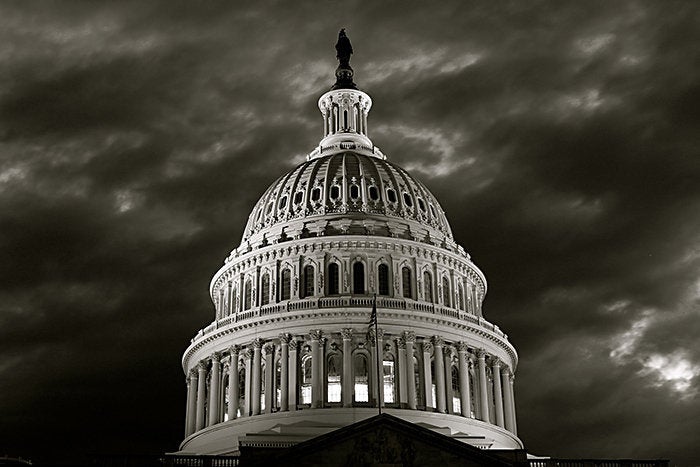
capitol dome congress
The past few years there have been numerous senior U.S. government officials in the national security and cyber space depart for opportunities within the private sector. This is not surprising since prior to presidential elections there’s a mass exodus and numerous transitions. However, what is unique is that instead of joining government contractors, nearly all of them have chosen either large public companies, innovative privately held companies, or are consulting/advising these companies. By way of background, I have personally advised over 50 of these experts and have seen this trend firsthand.

Former defense, intelligence and national security senior officials who were charged with protecting our country’s secrets, classified networks and technical assets are in high demand. Corporate America is now facing many of the same threats and challenges; these battle-tested leaders possess the needed expertise, insight and best practices. They know the threats, adversaries, and weakness in our systems as well as anyone.

Thursday, August 25, 2016

Business security

Practice Note: How to handle real estate compliance risks

In the prior post, we talked about anti-corruption enforcement actions and investigations involving real estate. Now let's look at real estate-related compliance.
A strong compliance program can help an investor detect and avoid a high-risk transaction, or at a minimum ensure that the investor avoids liability for conduct of a rogue third party.
Two examples we’ve seen in practice are described below: 
  • During the due diligence process, a global real estate investor learned that a proposed property manager in India expedited the environmental approval process for a different property by paying small amounts of cash to local government officials.  By identifying the situation prior to engagement, the investor was able to proceed with the acquisition but engaged a different property manager.

Monday, August 22, 2016

Business security

Brexit Boosting Cross Border M&A

A taxi driver holds a Union flag, as he celebrates following the result of the EU referendum, in central London, Britain June 24, 2016.Immediately following the monumental UK vote to leave the European Union, many in the dealmaking community thought activity involving UK-targeted firms would slow. But sometimes, distress can be a buying opportunity. Post-Brexit, the UK has witnessed 54 inbound deals worth $38b, which shows that the UK is becoming a more attractive target for overseas investors.

The pound declined sharply after Brexit, leading to two major — and opportunistic — deals involving UK-based companies: SoftBank’s acquisition of Britain’s ARM Holdings Plc and AMC Theatres’ (AMC) acquisition of Odeon & UCI Cinemas Group. In the case of ARM, only a small percentage of its revenue comes from the UK, making it all the more advantageous. Overall, UK inbound deal value stood at $37b in July 2016, which is more than four times the value registered in July 2015 ($9b) and significantly higher than the average July value ($12b) seen for UK inbound deals over the last 10 years.

Thursday, August 11, 2016

Business security

U.S. Intelligence to Help Companies Avert Supply-Chain Hacking

Container Yard 1
U.S. intelligence officials are planning to provide information including classified threat reports to companies about the risks of hacking and other crimes tied to the supplies and services they buy.
The effort is part of a new campaign by the National Counterintelligence and Security Center to raise awareness that vulnerable supply chains give China, Russia and other governments -- as well as criminals, hackers and disgruntled employees -- the opportunity to steal sensitive information or disrupt operations.
"You’d be shocked to find out how many people really don’t know where their stuff comes from," William Evanina, the nation’s top counterintelligence official and director of the center, said in an interview. "The supply chain threat is one that’s the least talked about but is the easiest to manipulate for all aspects of our daily lives."

Wednesday, June 22, 2016

Business security

Con Men, Criminals, and Compliance


Michael VolkovWhat does it take (or not take) to be a con artist and/or a white collar criminal? Do not kid yourself — white collar criminals can be “dangerous,” in that they usually suffer from significant personality disorders. Many are narcissists and sociopaths and are constantly engaging in manipulation, financial schemes, and inflicting harm to victims.
We all the know the legendary white collar scandals – Lay and Skilling at Enron; Bernie Ebbers at WorldCom; Jack Abramoff; Bernie Madoff. The list goes on and on with infamous criminals.
The term “Con Man” has been coined through the years to describe individuals who can convince an innocent person to invest in fraudulent schemes or manipulate people to trust the con artist.
Just like any issue in life, however, there are degrees and differences among the con artists or the criminals. Some are worse than others and it is easy to lump everyone together in the white collar crime bucket.

Tuesday, June 21, 2016

Business security

UK: Bringing Sexist Dress Codes To Heel…


Applying dress codes in a gender neutral manner looks sensible, leading to better employee engagement as well as a more diverse workforce, with the added benefit of avoiding any allegations of discrimination based on sex or sexual orientation.  It is also worth remembering that it is unlawful for a person to be treated less favourably because of their gender reassignment.
Employers will need to bear in mind that with all the recent focus on sexist dress codes, religious dress can also be a factor for employers to consider.  Employees may turn up wearing clothes or accessories linked to their religion, which conflict with the employer's dress code and employers will need to consider whether their potentially indirectly discriminatory requirements can be objectively justified.  When a BA employee wanted to wear a two inch cross on a necklace, BA initially objected but the European Court of Human Rights held that the interference to the employee's rights to manifest her religious rights could not be justified.  However a nurse failed in a similar claim because the hospital could justify its objection to the necklace on health and safety grounds.  Similarly asking a teaching assistant not to wear a niqab veiling her face was justified as it prevented effective communication with her pupils.  Remember that there are specific legal exemptions to enable Sikhs to wear a turban instead of a safety helmet in all workplaces.