Страницы

Showing posts with label Intel oversight. Show all posts

Saturday, March 17, 2018

Intel oversight

Congressional Oversight of the Intelligence Community Is Broken
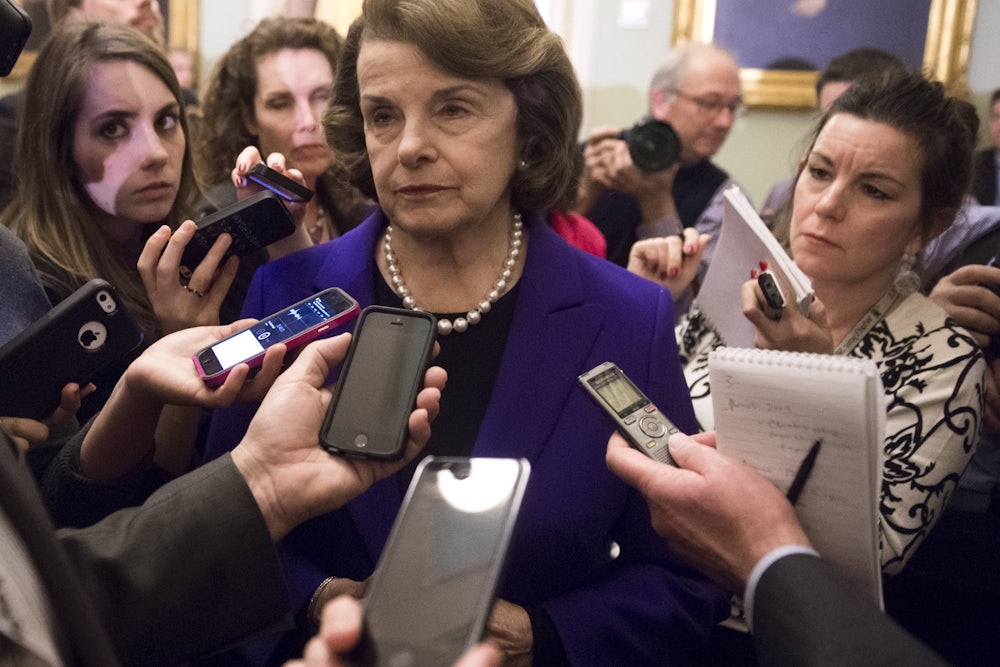

Some cover-ups are more equal than other cover-ups.
That’s the lesson that might be gleaned from a series of dizzying events putting the intelligence community and its congressional overseers at odds this week. It began with a Republican report on Russia’s interference in the 2016 election, which led to an outcry from critics over how partisan lawmakers were participating in a cover-up. It was followed by President Donald Trump’s nomination of Gina Haspel, who oversaw the torture of terrorism suspects under the Bush administration, to lead the CIA—and suddenly those critics were singing a different tune, seemingly content to allow a different cover-up to go unaddressed.
These two incidents, coming back to back, aren’t just evidence of hypocrisy. They are symptoms of the same, longstanding problem, which is that congressional oversight of the intelligence community is thoroughly broken.

Thursday, February 1, 2018

Intel oversight

Who will watch the watchers in our intelligence agencies? Liberals aren't interested in that job

I’m just old enough to remember when liberals and major media organizations believed America’s national security apparatus had to be closely monitored to protect our civil liberties.

The liberals and journalists brought to light the horrific abuses of power that J. Edgar Hoover’s FBI and the National Security Agency undertook in the 1960’s against Martin Luther King and others. A couple years ago they were shocked at revelations that shoddy forensic analysis by the FBI crime lab had contributed to more than one-quarter of 329 DNA-exoneration cases since 1989.

In the 1970s, liberal crusaders such as the late Sen. Frank Church, D-Idaho, exposed controversial CIA covert actions against foreign leaders and U.S. citizens. More recently, while many liberals deplored Edward Snowden’s leaks revealing how extensive U.S. government snooping has become, they also agreed that information he revealed showed the need for reforms.

But all of that was forgotten this week as Washington liberals rushed to microphones to demand that the “Nunes memo” – from Rep. Devin Nunes, R-Calif. – be kept from the American people. Their sympathetic friends in the media were quick to give their complaints blanket and largely unskeptical coverage.

Friday, October 6, 2017

Intel oversight

National Security Agencies Are Evading Congressional Oversight

Last week, federal officials from several spy agencies engaged in a full court press in Washington, spinning facts before media outlets, flooding Capitol Hill with lobbyists, and bringing lawmakers to the National Security Agency's (NSA) Ft. Meade headquarters to feed them selective information about their unconstitutional mass surveillance activities. Predictably omitted from these conversations are the many Americans from across the political spectrum who have raised concerns, ranging from constitutional and commercial to security-related, that have rightfully dogged federal mass surveillance efforts since their revelations—not in official proceedings, but rather by whistleblowers—in 2005 and 2013.
Rather than embrace bipartisan calls for long overdue and constitutionally necessary limits, executive officials have instead chosen to shoot the proverbial messengers, vilifyingwhistleblowers and building new programs to prevent others from ever coming forward. Last week’s meetings included claims that particular examples of mass surveillance proved useful, ignoring its repeated failures. 

Thursday, September 14, 2017

Intel oversight

War on Transparency: How the CIA Successfully Fought to Remain Unaccountable

This April 13, 2016 file photo shows the seal of the Central Intelligence Agency at CIA headquarters in Langley, Virginia.Almost ever since its creation, the US Central Intelligence Agency has fought hard to keep its activities a secret from the public, and even elected leaders. Declassified documents offer an insight into just one front in this war - the organization's battles with the Government Accountability Office.
Declassified files provide a troubling insight into the US Government Accountability Office's ill-fated efforts to audit the Central Intelligence Agency, with even the most routine queries batted away with claims relevant information was classified as protected as an intelligence source or method.
Such was the CIA's bluster and evasion, by 2001, the GAO had effectively given upon attempting to audit the Agency as it lacked proper Congressional support, or the legal ability to compel CIA to cooperate. Instead, the GAO limited requests to general reviews or analysis.

Thursday, August 31, 2017

Intel oversight

UK surveillance and spying watchdog begins work

People work on laptops at the British Library in London
An expanded watchdog charged with regulating the intelligence services and surveillance by state agencies has officially begun work.
The role of the first investigatory powers commissioner, Lord Justice Fulford, combines the work of three former oversight bodies and will provide judicial checks on some investigations. His office, the IPCO, will employ about 70 staff, including 15 serving and retired judges.
Inspectors will check that the interception of phone calls, and the handling of agents, surveillance and powers permitting bulk collection of communications data are carried out within the law.
Among organisations overseen by the IPCO are the government’s monitoring agency GCHQ, MI5, MI6, the National Crime Agency, all police forces, the Serious Fraud Office, HM Revenue and Customs, local authorities, prisons and government departments.

Saturday, June 24, 2017

Intel oversight

The Liberal approach to national security


Ralph Goodale, Minister of Public Safety and Emergency Preparedness, make a national security-related announcement at the National Press Theatre in Ottawa on Tuesday, June 20, 2017.The federal Liberal government is creating a new "super" civilian watchdog to review security and intelligence agencies across government and extending new powers to Canada's electronic spy agency.
The proposed changes were unveiled this week as part of a massive legislative overhaul of Canada's anti-terrorism regime.
After tabling the 139-page bill in the House of Commons, Public Safety Minister Ralph Goodale said it aims to strike a better balance between strengthening security in a fast-changing threat environment, and safeguarding the charter and privacy rights of Canadians.

Saturday, June 3, 2017

Intel oversight

The White House, the CIA and the Pike Committee, 1975


The Ford administration came close to igniting a constitutional showdown with Congress more than 40 years ago over demands by a House panel known as the Pike Committee for evidence of possible abuses by the Central Intelligence Agency (CIA). At the height of congressional pushback against the “imperial presidency” in the mid-1970s, Representative Otis G. Pike’s investigation, which paralleled Senator Frank Church’s simultaneous inquiry, raised fears at the CIA and the White House about secret activities coming to light but also about setting precedents for Congress’s right of access to Executive Branch information.

Wednesday, May 31, 2017

Intel oversight

House Intelligence Committee sends subpoenas to intel agencies

Three of the nation’s intelligence agencies received subpoenas Wednesday afternoon issued by the House Intelligence Committee, Fox News has confirmed, with each of the three demands for documents explicitly naming three top officials of the Obama administration: Susan Rice, who served as President Obama’s White House national security adviser; former CIA Director John Brennan; and former U.N. ambassador Samantha Power.
The three subpoenas, among a total of seven signed by panel chairman Rep. Devin Nunes (R-CA), were served on the Federal Bureau of Investigation, the Central Intelligence Agency, and the National Security Agency, and all three explicitly referenced “unmasking” – a signal that the House panel is intensifying its investigation into allegations that Obama-era aides improperly demanded the “unmasking” of names of associates of President Trump that had appeared, in coded form, in classified intelligence reports, then leaked the data to news media organizations
.

Thursday, January 26, 2017

Intel oversight

Improving Congress's oversight of the intelligence community


Improving Congress's oversight of the intelligence community
The federal government spent more than $70 billion last year on the Intelligence Community. Are these dollars well spent? Hard to tell. With the pervasive secrecy surrounding its operations, it is difficult to determine the extent to which the money was spent protecting our national security or invading our privacy.
The reality is that we must look to Congress for the answer—a Congress whose intelligence oversight budget is a pittance, and whose intelligence committees are so disjointed that the 9/11 Commission called for wholesale reform. As the first branch of government, Congress is responsible for legislation and oversight, powers that have been largely relinquished to an over-powerful and under-responsive Executive Branch.

Monday, November 14, 2016

Intel oversight

Counter-terrorism overseas: Adebolajo report makes uncomfortable reading for MI6 – Marina Wheeler QC


Image result for MI6
Oversight of the Intelligence Services is a matter of enormous public importance, as counter-terrorism powers are enhanced to combat a pernicious and persistent threat.
A recent Report by the Intelligence Services Commissioner, Sir Mark Waller, assisted by Oliver Sanders of these Chambers, dispels some misconceptions about contact between the intelligence services and Michael Adebolajo, one of 2 men convicted of murdering Fusilier Lee Rigby[1]. It also shines a light on how HMG applies its policy on the treatment of detainees held overseas – in Adebolajo’s case, by a Kenyan partner counter-terrorism unit in 2010. Not all of the Report’s findings make comfortable reading for the Intelligence Services.

Thursday, September 15, 2016

Intel oversight

Goodale to host UK terror watchdog, national security committee

Amanda ConnollyPublic Safety Minister Ralph Goodale will host the U.K.’s terrorism legislation watchdog and members of its Intelligence and Security Committee (ISC) next week in Ottawa for a meeting that will include discussion about the government’s new national security committee of parliamentarians.
The meeting will come as Parliament resumes from its summer sitting and is expected to dive into debate on Bill C-22, which was tabled on June 16 and announced the framework for the government’s nine-member committee of appointed parliamentarians who will “review and scrutinize” the activities of national security agencies.
The committee brings Canada more in-line with other G7 countries’ democratic review and oversight bodies, including congressional intelligence committees in the US, and while a government official speaking on background said it likely will not be debated next week, the goal is to do so sooner rather than later and have the bill sent to committee for examination before the end of the fall sitting.

Tuesday, July 12, 2016

Intel oversight

We must learn from British debacle on spy oversight


Protesters wearing a former British Prime Minister Tony Blair mask, left, and former U.S. President George W. Bush mask pose for the media outside the Queen Elizabeth II Conference Centre in London, shortly before the publication of the Chilcot report into the Iraq war, last Wednesday. "If Chilcot has taught us anything it’s this: a tiny parliamentary committee modeled after the British committee isn’t going to keep Canada’s spies in check," writes Andrew Mitrovica.
The damning verdict has been rendered.
Last week, after years of snail-paced study, a card-carrying member of the British establishment finally made public an encyclopedia-sized autopsy of how the British political, military, diplomatic and intelligence establishment essentially concocted a case to launch an illegal war in Iraq.
As Sir John Chilcot makes plain, central to making that now discredited case, were the largely anonymous inhabitants of the British “intelligence community.” What Chilcot makes also plain is just how breathtakingly inept that so-called “community” was in assisting the now equally discredited Prime Minister Tony Blair in fashioning his case for war since we now know, beyond any doubt, that all of it was founded on comical dribs and drabs of worthless intelligence.
Of course, there is nothing even remotely funny about the human consequences of a case for war built on sand castlelike “intelligence.” The scale and nature of the suffering Iraqis have had to endure, and continue to endure, is almost incomprehensible. But the architects of this calamitous war, including British spies, remain rather comfortably around, still immune from any meaningful accountability for their shockingly disastrous performance.

Friday, June 17, 2016

Intel oversight

Obama nominates CIA watchdog to fill long vacancy


President Obama on Thursday nominated a former CIA officer and longtime lawyer who examined missteps in U.S. intelligence to be the spy agency’s next inspector general, hoping to fill a position at the watchdog office that’s been vacant for more than a year.
If confirmed by the Senate, Shirley Woodward would fill the role left empty since David Buckley stepped down in January 2015, on the heels of a landmark determination that CIA officials hadgained unauthorized access to Senate computer files. Lawmakers called the episode a potential violation of constitutional separation of powers, and the spat led to one of the bitterest moments in relations between the spy agency and its congressional overseers in recent history.
In Buckley’s absence, the spy agency watchdog has been helmed by Deputy Inspector General Christopher Sharpley, who has filled the role on an acting basis.


Thursday, June 16, 2016

Intel oversight

New spy watchdog will have power to examine ‘any activity, any operation’: Goodale


Public Safety Minister Ralph Goodale: “They are going to have the ability to look at any issue, any activity, any operation, any document in the government of Canada that relates to security and intelligence matters.”
Sweeping powers to scrutinize “any issue, any activity, any operation” will be granted to a new committee of parliamentarians to watch over federal spying and other clandestine security and intelligence activities, the government has announced.
The long-promised Bill C-22, tabled in the Commons Thursday, proposes creation of an unprecedented “national security and intelligence committee of parliamentarians” to hold to greater account the nation’s two chief spy services and at least 15 other departments and agencies with national security responsibilities.
The move fulfils a major Liberal election promise to increase parliamentary scrutiny of national security operations to offset the expansive and controversial counterterrorism powers under the Anti-terrorism Act of 2015, formerly Bill C-51, to investigate, detain, arrest, silence or otherwise thwart individuals suspected as threats to the security of Canada.

Thursday, May 19, 2016

Intel oversight

German Intelligence: Operation Chaos

Cover for 

Global Intelligence Oversight


Editor's Note: Zachary Goldman and Samuel Rascoff recently released Global Intelligence Oversight: Governing Security in the Twenty-First Century. The edited volume “is a comparative investigation of intelligence oversight systems in democratic countries, which focuses on some of the new dynamics shaping and constraining intelligence services, and the range of purposes a holistic approach to oversight should serve.” This week, Lawfare is hosting a mini-forum where contributing authors discuss their chapters.

Thursday, June 4, 2015

Intel oversight

Watching the Watchers: Intelligence Oversight in South America


Since transitioning from authoritarianism to democracy, civilian governments in Argentina, Chile, Peru and Colombia have made great strides in curtailing the autonomy of the armed forces in terms of accountability for past abuses, budgeting, promotion and operations. But in all these countries, the military and intelligence services have retained a degree of autonomy over specific missions and their operations, referred to as “reserved domains” in the Latin American democracy transition literature of the 1990s. Recent events have demonstrated how far the region still has to go in improving transparency and civilian control over the intelligence services.