Страницы

Showing posts with label Weapons. Show all posts

Monday, September 7, 2020

Weapons

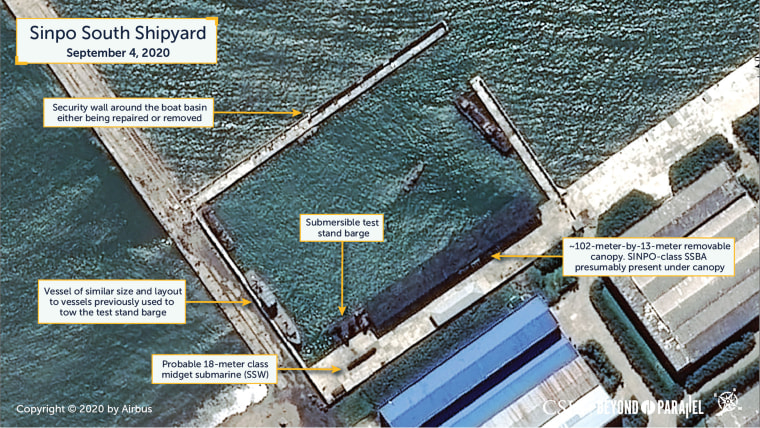
North Korea may be prepping submarine-launched ballistic missile test, U.S. weapons experts warn

Image: Sinpo
U.S. weapons experts say they believe North Korea may be preparing to test a new strategic weapon system that would vastly expand Kim Jong Un’s arsenal and defy President Donald Trump’s threshold requirements for continued engagement with the U.S.
The experts, led by Dr. Victor Cha of the Center for Strategic and International Studies “Beyond Parallel” website, have posted new and unusually clear satellite images taken Friday that show North Korea may be preparing its first submarine-launched ballistic missile test, potentially a major new development for the North.
The experts say the pictures show a submersible test stand barge at the Sinpo South Shipyard.


Saturday, September 5, 2020

Weapons

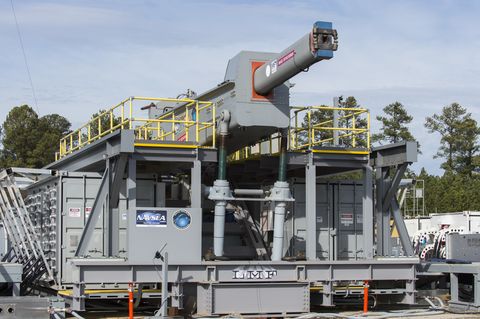
Railguns: Everything You Always Wanted To Know

While the concept of “directed-energy weapons” originated on the pages of pulp novels in the late nineteenth century, another weapon technology that seems straight out of science fiction was first theorized by a French inventor during World War I.

The concept of the railgun, a technology that could utilize a large circuit to launch a projectile far further than one launched via the use of a chemical reaction, was developed by Andre Louis Octave Fauchon-Villeplee. He created a simple electric cannon, which caught the attention of the French military—who were seeking a weapon that could rival such long-range cannons as Germany’s so-called “Paris Gun.”

Under the direction of the Director of Inventions at the French Ministry of Armaments in 1918, Fauchon-Villeplee was charged with developing a thirty to fifty millimeter electricannon based on his simple design. While it might seem revolutionary today for the French military to be so forward-thinking, it should be remembered that at the start of the war its uniforms and tactics were little changed from that of a generation earlier.

But France also saw the need to modernize and underwent a number of wartime reforms. This included the use of the first infantry combat helmet, but France soon follow its British ally’s lead to develop tanks. Likewise, Germany developed zeppelins to bomb England and later developed some of the earliest heavy bombers. Therefore it is almost surprising that one of the countries didn’t somehow develop a successful railgun, but the simple fact is that the war ended before Fauchon-Villeplee’s experiments were able to progress very far.
Thursday, July 23, 2020

Weapons

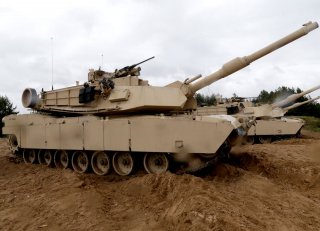
Soldiers in Texas are the first to get the newest version of the Army's Abrams tank

Army Abrams tank
Troopers with 3rd Battalion, 8th Cavalry Regiment, 3rd Armored Brigade Combat Team, 1st Cavalry Division, are first to receive the Army's newest version of the M1 Abrams Tank, the M1A2C (SEP v.3), Fort Hood, Texas, July 20, 2020.
The overall modernization of the Greywolf brigade marks a milestone in armed forces history and makes 3ABCT the most lethal and agile brigade in the world. The new addition of the M1A2C (SEP v.3) allows the brigade, and Army, to meet new limits when fighting adversaries and engaging in large-scale ground combat operations.
"This is the first time we have fielded a new tank in about 16 years," said Lt. Col. Nicholas C. Sinclair, commander of 3rd Batt. 8th Cav. Reg. "We will be the first ones trained on this so it's really special to us to make sure we're doing it right."
Weapons

Is the U.S. Army Building a New "Big 10" Set of Futuristic Weapons?


https://www.reutersconnect.com/all?id=tag%3Areuters.com%2C2016%3Anewsml_S1AETJHGXVAA&share=true
The Big Five consisted of the Abrams tank, Apache attack helicopter, Black Hawk helicopter, the Bradley infantry vehicle and the Patriot missile. All five have all withstood the test of time in many respects and, it is safe to say, defined an era in modern warfare. Significantly, each of these platforms is entirely different than they were at their inception. 
For instance, the Patriot has new guidance, software and radar technology. Additionally, the Apache is almost entirely new with a high-tech, more-efficient 701D engine, next-generation countermeasures, composite rotor blades, new weapons and longer-range, high-fidelity targeting sensors. The Bradley, while believed by Army developers to be pretty “maxed out,” has received new reactive armor, thermal sensors, ammo storage and band tracks. Furthermore, the Black Hawk “M” model has new vibration controls, rotor blades and advanced sensors. And, finally, the Abrams tank, perhaps of greatest combat significance, is almost entirely new. It now operates with new ammunition, auxiliary power units, advanced weapons sights, high-tech Forward-Looking Infrared high-resolution sensors, active protection, underbody protection and a new generation of computing. 

Wednesday, May 20, 2020

Weapons

This Russian Howitzer Had a Bigger Gun Than Iowa-Class Battleships

During the early years of the Cold War, American and Soviet strategic thinking firmly believed that the opening hours of the next major European war would involve incredibly devastating salvos of nuclear weapons. This assumption dominated strategic thinking in the 1950s, and planners developed a wild array of prototype tanks, turboprops, and jets that would be able to survive these crucial first hours by either avoiding nuclear explosions all together, or by being impervious to nuclear weapons thanks to excellent armor protection.

During the early Cold War years, the primary means of delivering nuclear payload was via the air from bombers, or from land—by artillery. And not just any artillery, massively large artillery. The 2B1 Oka is a prime example of huge nuclear-capable artillery that thankfully never made it past the prototype stage.

2B1 Oka

The Oka gets its name from the Oka River, in central Russia. It was a self-propelled howitzer, essentially an armored tank hull without a turret that had an artillery piece mated to the top. The Oka used a T-10 heavy tank hull as a chassis. The T-10 was equipped with a diesel engine with a respectable 750 horsepower output. Since the Oka used an actual tank hull for movement rather than a specially-built hull, it had better protection, at a higher weight cost. This higher weight combined with the impossibly large cannon on top severely hindered mobility.

Saturday, May 16, 2020

Weapons

The Army's Next-Generation Squad Weapon is a big hit with special operators


Army Next Generation Squad Weapon
The 75th Ranger Regiment, Green Berets and other US special operations ground forces will be equipped with the conventional Army's Next Generation Squad Weapons.
"We are an enthusiastic supporter of the Army's 6.8 mm Next Generation Squad Weapons," Col. Joel Babbitt, of Program Executive Officer Special Operations Forces Warrior, told Military.com recently. "We expect there will be Next Generation Squad Weapons in our formations as soon as we can receive them via fielding."
The Army is in the final phase of evaluating NGSW prototypes from General Dynamics Ordnance and Tactical Systems Inc., Textron Systems and Sig Sauer Inc. to replace the 5.56 mm M4A1 carbine and the M249 squad automatic weapon in infantry and other close-combat units.
If all goes as planned, Army modernization officials will select the final design for the rifle and automatic rifle variants from a single firm in the first quarter of 2022 and begin fielding them a year later.
Weapons

New artillery round uses ramjet for extra range


The XM1155 round is compatible with all 155 mm artillery
Raytheon Missiles & Defense is developing a ramjet-propelled shell that will double the range of US military artillery to over 100 km (62 mi). Working under a US$7.9 million US Army contract, the tactical 155mm XM1155 Extended-Range Artillery Projectile is designed to combine increased range with precision targeting technology.
An artillery piece is about as simple a device as it's possible to imagine. Basically, it's a tube sealed at one end containing a propellant sitting behind a projectile. When the propellant is ignited, it produces hot gases that blow the projectile out of the tube to land a long distance away.
However, though this technology has been around for over 500 years, artillery is still a major component of the world's armies and navies, and there is still a lot of room for improvement to make such weapons more accurate and with a longer effective reach.

Wednesday, May 13, 2020

Weapons

Raytheon Is Developing A Ramjet Artillery Round For The Army's New Super Howitzers

The U.S. Army has hired Raytheon, working in partnership with the Netherlands Organization for Applied Scientific Research, to begin developing a new 155mm ramjet-powered long-range artillery round able to hit targets more than 60 miles away. This is one of a number of novel ammunition types that the service is now exploring as companions for its future long-range 155mm howitzers.

Raytheon announced it had received $7.9 million from the Army to get started on the ramjet artillery shell, also referred to as the XM1155, on May 11, 2020. The Netherlands Organization for Applied Scientific Research, better known by the Dutch acronym TNO, will be responsible for developing the ramjet engine. Raytheon will then integrate that into the rest of the projectile, which it will design and build.

Tuesday, May 12, 2020

Weapons

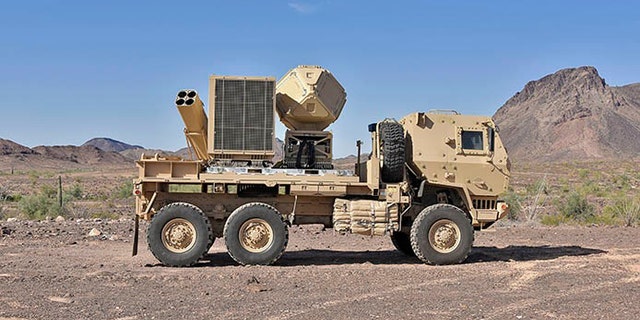
Army flying explosive gets new warhead and radar to destroy drones

The Army and Raytheon are now accelerating development and deployment of an upgraded counter-drone weapons system designed specifically to address close-in small drone threats. The integrated counter-drone system uses a Ku band mobile, 360-degree ground radar called KuRFS -- in conjunction with a suite of specific countermeasures, called effectors. KuRFS can provide threat information for ground commanders who can then opt to use laser countermeasures, EW, High-Powered Microwave weapons or a kinetic energy interceptor missile-drone called Coyote Block 2. However, before any threat can be destroyed, it must first be identified or “seen.”
KuRFS began as an Urgent Operational Need request from the Pentagon to address an immediate and pressing need to counter enemy drones, rockets, mortars and other airborne threats -- including lower flying helicopters, Raytheon developers said.
“A complete c-UAS (Counter UAS) solution needs to be able to automatically detect the intrusion of potentially multiple UASs, identify their type and possible payload, and track their movement consistently inside the monitored area. We have a holistic end to end kill chain which includes early warning,” James McGovern, Vice President, Business Development, Mission Systems & Sensors, Raytheon Integrated Defense, told Warrior.

Friday, May 8, 2020

Weapons

Thanks To The War On Terror, Micro Missiles Are Here To Stay

The need for a better UAV munition drove the development of the first micro munitions. One of the very early ones was the GBU-44/B Viper Strike, an adapted version of the Brilliant Anti-Tank submunition. The Brilliant Anti-Tank was originally meant to be carried by a missile and dropped over formations of Soviet armor to destroy them, while ignoring “lower” priority targets such as trucks. As such, it already had advanced sensors and guidance on board, making it easily adapted for the micro munition role.

To make a BAT submunition into a GBU-44/B Viper Strike, the original BAT seeker was removed and the Alternate Semi-Active Laser (ASAL) seeker was installed in its place, which made it fully laser-guided as opposed to the IR seeker on the BAT. GPS capability was also later added to the seeker, which allowed the GBU-44/B to be fired from increased standoff to glide to the target. The directional microphones on the BAT wingtips were also removed and replaced by simple rods. Finally, the “precursor” warhead of the BAT was removed, as the GBU-44/B was not designed to strike heavy armor.
Weapons

New Army artillery changes course to hit targets under bridges

M109A6, Paladin, Howitzer, Artillery, Mobile, Attack
Enemies of the U.S. Army are now deliberately hiding targets behind mountain ridges, under bridges, in rocky crevices and other locations intended to elude state-of-the art GPS-guided artillery round attacks -- complicating U.S. efforts to pinpoint and destroy targets
Existing guided artillery rounds, often using GPS, Inertial Measurement Systems and advanced seeker technology, have been effective in combat for years, giving ground attack commanders expanded attack options. A precision-guided 155m artillery round, called Excalibur, first emerged in warfare in 2007.
The advent of these kinds of guided rounds brought artillery into the modern warfare era; historically, artillery was used as an “area weapon” to blanket enemy locations with incoming fire, enabling forces to maneuver. Excalibur, which was used with great success in Iraq and Afghanistan, introduced a new level of precision attack into ground combat. This not only allowed for greater stand-off distance but offered new tactical advantages to commanders seeking to eliminate targets in otherwise congested, dangerous or complicated environments.

Thursday, May 7, 2020

Weapons

Lockheed-Raytheon’s deadlier F-Model Javelin anti-tank missile rolls into production


Raytheon and Lockheed Martin’s joint venture for the Javelin has completed production of its first F-Model of the shoulder-fired anti-tank weapon, meant to be more lethal against advanced armor and soft targets, the companies announced Wednesday.
Though there’s no contract for international customers yet, Poland could be in line to be the first. The European country recently completed negotiations with the U.S. to buy 180 Javelin missiles and 60 launchers for its paramilitary Territorial Defence Forces, launched in 2016 amid tensions with Russia.
“I believe that the Poland case actually hasn’t been determined which way it’s going to go yet, so they could make the F-Model available to them, or they could take the E-Models out of stock,” said Javelin Joint Venture Vice President Dave Pantano. “That would be up to the government-to-government process to make that determination.”
The weapon’s final assembly takes place in Troy, Alabama, with 511 in the first lot and deliveries to U.S. government set for this fall.
Weapons

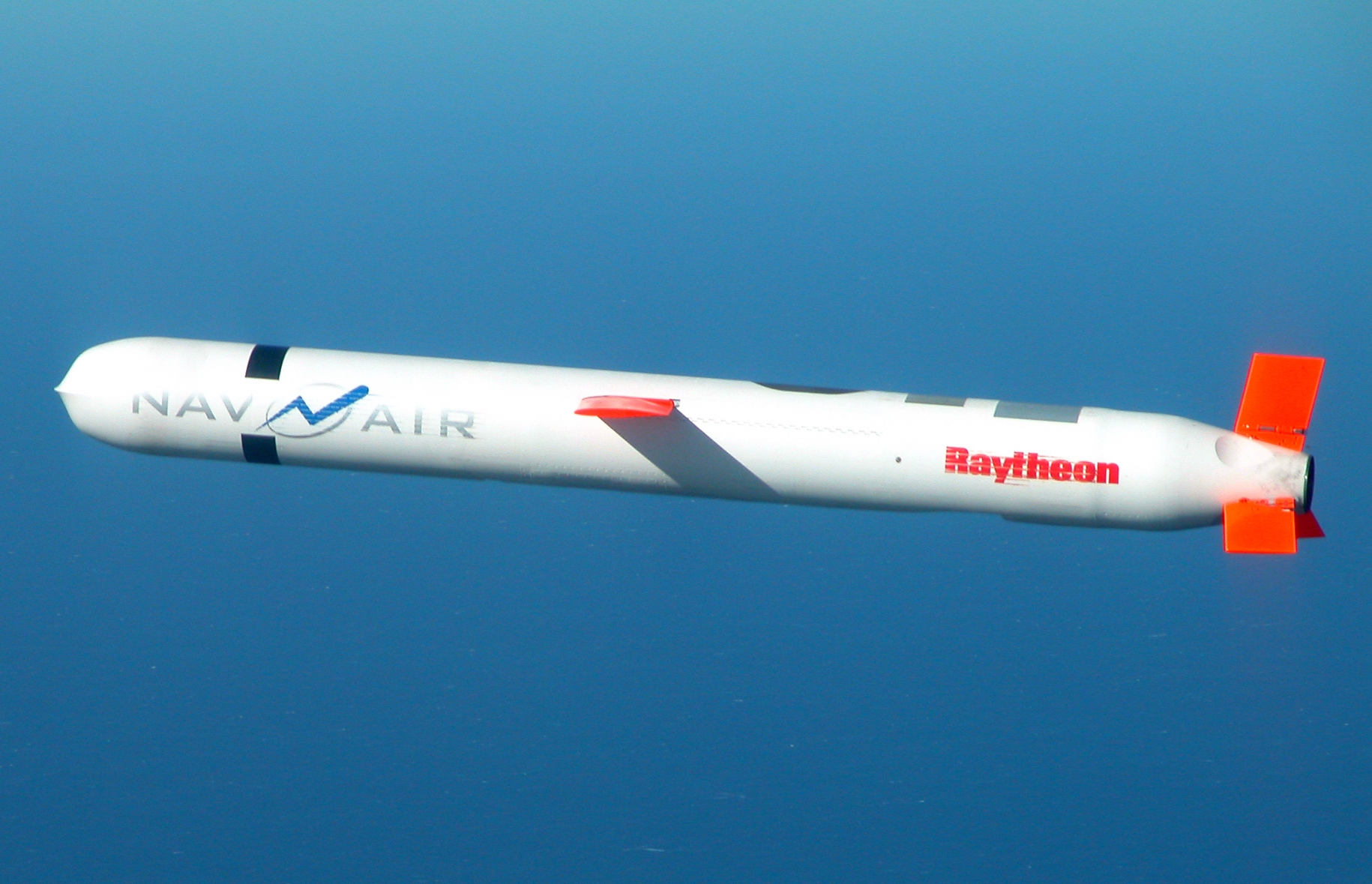
Special Report: U.S. rearms to nullify China's missile supremacy

Томагавк (ракета) — Википедия
As Washington and Beijing trade barbs over the coronavirus pandemic, a longer-term struggle between the two Pacific powers is at a turning point, as the United States rolls out new weapons and strategy in a bid to close a wide missile gap with China.

The United States has largely stood by in recent decades as China dramatically expanded its military firepower. Now, having shed the constraints of a Cold War-era arms control treaty, the Trump administration is planning to deploy long-range, ground-launched cruise missiles in the Asia-Pacific region.

The Pentagon intends to arm its Marines with versions of the Tomahawk cruise missile now carried on U.S. warships, according to the White House budget requests for 2021 and Congressional testimony in March of senior U.S. military commanders. It is also accelerating deliveries of its first new long-range anti-ship missiles in decades.

In a statement to Reuters about the latest U.S. moves, Beijing urged Washington to “be cautious in word and deed,” to “stop moving chess pieces around” the region, and to “stop flexing its military muscles around China.”

Wednesday, May 6, 2020

Weapons

Will China Develop a Deadly Railgun Before America (And Should Anyone Care)?


Last month the United States Navy scaled back its efforts to develop and electromagnetic railgun (EMRG), a weapon that wouldn't be out of place in a futuristic science fiction movie or video game. To date the U.S. Navy has spent some $500 in RYD efforts. The Navy's EMRG project was first conceived in 2003.

Across the Pacific, Chinese efforts to develop a ship-mounted EMRG is still moving forward, and last year it was reported that such a weapon could be "capable of striking a target 124 miles away of speeds of up to 1.6 miles per second."

EMRG is unlike traditional artillery-based weapons in that it utilizes no gunpowder. It is essentially a large electric circuit that is made of three parts including a power supply, a pair of parallel rails and a moving armature. Electrical currents generate magnetic fields that can accelerate a projectile along two rails. The power supply is actually rather basic and is just the source of electric current – and in this case is in the millions of amps.
Weapons

Army's New Missile Prototype Strikes 50-Mile Test Target in Just 91 Seconds


Army's New Missile Prototype Strikes 50-Mile Test Target in Just 91 Seconds
The U.S. Army's experimental long-range missile just completed its latest test to show it's just as effective at attacking enemy targets much closer than its maximum range of 310 miles.
The service's new Precision Strike Missile (PrSM) quickly closed the 85 kilometers, or 52 miles, and struck its target during an April 30 test at White Sands Missile Range, New Mexico, according to a recent Army news release.
The test was "the shortest and most challenging yet," Brig. Gen. John Rafferty, director of the Army's Long Range Precision Fires Cross-Functional Team, said in the release.
At shorter ranges, the PrSM must expend more energy to adjust its angle of attack in a short period of time, Rafferty said in the release.
"It has to start tipping as soon as it comes out of the launcher," he said. "It was a pretty exciting 91 seconds or so."

Sunday, May 3, 2020

Weapons

Special Operations Community Embraces ‘Wildcat’ Calibers


One phenomenon that has emerged from the U.S. special operations community over the last 10 to 12 years involves exploration and acquisition of small arms in new ballistic calibers.
Rather than the better known weapon designs in 5.56 mm, 7.62 mm, .50 caliber, and even the U.S. Army’s emerging 6.8 mm Next Generation Squad Weapon, the community has embraced calibers like the .300 AAC (Advanced Armament Corporation) Blackout (.300 BLK), 6.5 Creedmoor, .300 PRC (Precision Rifle Cartridge), and both .300 and .338 Norma Magnum.
Often created as so-called “wildcat” rounds, prior to their broader acceptance and expanded production availability, these new caliber cartridges each provide a staggering array of design and performance specifics, experts said.
Recent requests for information released by U.S. Special Operations Command have identified specific command interest in a compact personal defense weapon chambered in .300 BLK.
“We’re dealing in whole different types of mission sets,” explained C.J. Dugan, vice president of business development at Maxim Defense, which has developed its own personal defense weapon designs. “The old way was, if you were doing ‘low vis’ close target reconnaissance or protection, you really only had an MP5 [9x19 mm Parabellum], which is hard to deal with these days because of parts. The only other answers you had were a pistol or a Mk18 [M4A1 (5.56x45 mm NATO) with a Close Quarters Battle Receiver variant with 10.3-inch barrel].

Thursday, April 30, 2020

Weapons

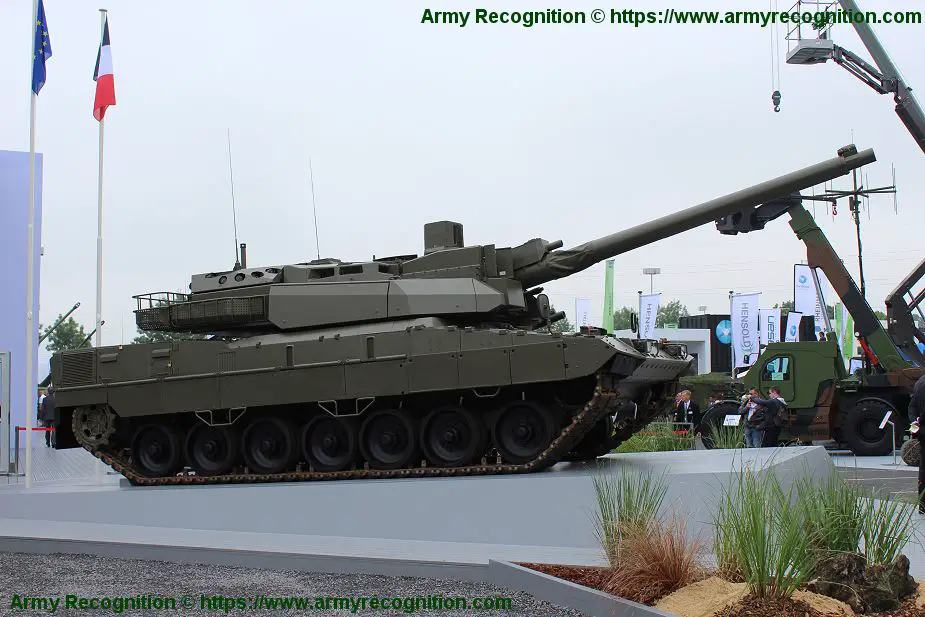
France and Germany agree on new Main Ground Combat System (MGCS) MBT


Happy new year 2020 and our best wishes for friends readers customers and family 925 001On April 28, Germany and France at last signed a framework agreement defining the project organization and management structures of the heavy land combat system’s architecture. “The MGCS project to be implemented under German leadership is to replace the German Leopard 2 and the French Leclerc from the mid-2030s. With this project, Germany and France are sending an important signal for European cooperation in defense policy,” the German Defense Ministry said.
“Defence Minister Annegret Kramp-Karrenbauer and her French counterpart Florence Parly have signed a Framework Agreement, in which project organization and management structures are laid down. Due to the Corona situation, the ministers were unable to meet for joint signing,” the German Defense Ministry said. 
“Both countries should benefit equally from the cooperation, which is why the contracts to be concluded are based on a 50% financing between Germany and France. In addition, both nations are to receive sufficient intellectual property rights for the intended future use of the work results,” writes the Ministries of Defense regarding the contents of the agreement. 

Wednesday, April 29, 2020

Weapons

The U.S. Navy’s Railgun Is Nearly Dead in the Water


The U.S. Navy’s $500 million electromagnetic railgun—capable of slinging projectiles at hypersonic speeds—lacks funding and has no coherent plan to deploy on warships. The Navy is instead pursuing an offshoot of the railgun, a hypervelocity projectile it can fire from existing gun systems.

The electromagnetic railgun (EMRG) is a weapon that uses electricity instead of gunpowder to send projectiles downrange. Railguns use magnetic fields created by high electrical currents to accelerate a projectile to Mach 6, or 5,400 miles an hour. The velocity is sufficient to give the EMRG an effective range of 110 nautical miles, or 126 miles on land.

The Office of Naval Research began development of the gun in 2005, and by 2012 a technology demonstrator was firing projectiles at Naval Surface Warfare Center Dahlgren Division in Virginia. In 2015, the program was apparently doing so well the Navy announced plans to test the weapon from the USNS Trenton, an Expeditionary Fast Transport. In 2017, the Navy released a video of the Dahlgren gun firing multi-shot salvos.

Thursday, April 16, 2020

Weapons

Russian Army gets one of world’s most powerful self-propelled guns after upgrade

2S7M ‘Malka’ 203mm self-propelled artillery gun Rostec Press Office/TASS
The Russian Army has received the first 2S7M ‘Malka’ 203mm self-propelled artillery gun, the press office of the state hi-tech corporation Rostec reported on Thursday.
"Uraltransmash (part of Uralvagonzavod Group within the state hi-tech corporation Rostec) has delivered the first 2S7M ‘Malka’ upgraded self-propelled artillery gun to the Defense Ministry of Russia. The upgraded weapon has received new running gear and electronics, which have significantly enhanced its performance characteristics," the press office said in a statement.
Following the upgrade, the Malka underwent a full cycle of trials, including running and firing tests, which checked the characteristics of its mobility, the chassis, powerplant and transmission durability, and also the reliability of its loading and fire control mechanisms and the strength of the 2A44 gun, Rostec said.
"This is one of the world’s most powerful self-propelled guns designated to strike vital enemy targets and facilities in the tactical depth of defense behind the front line. Now the delivery of upgraded guns has begun for the Defense Ministry. Uraltransmash faces a serious task of implementing the serial upgrade of this weapon under the 2020-2022 defense procurement plan," Uraltransmash CEO Dmitry Semizorov was quoted by the press office as saying.

Wednesday, April 15, 2020

Weapons

Russia tests anti-satellite missile, US general says


H/O: USAF Gen Jay RaymondRussia tested a missile capable of knocking out satellites in orbit, the top U.S. space general said on Wednesday.
The Russian anti-satellite missile (also known as “ASAT”) is capable of destroying satellites in low Earth orbit, according to U.S. Space Command, which is tracking the test.
“Yet another example that the threats to U.S. and allied space systems are real, serious and growing,” Gen. John Raymond, commander of U.S. Space Command and chief of U.S. Space Force Operations, said in a statement. “This test is further proof of Russia’s hypocritical advocacy of outer space arms control proposals designed to restrict the capabilities of the United States while clearly having no intention of halting their counterspace weapons programs.