Страницы

Showing posts with label Airport security. Show all posts

Thursday, April 30, 2020

Airport security

Passengers Must Wear Masks On Major Airlines To Cut Spread Of Coronavirus

The three largest U.S. airlines will begin to require passengers to wear face coverings or masks on flights to help prevent the spread of the coronavirus.

American, Delta and United Airlines join JetBlue and Frontier in taking the action amid growing pressure from Congress and their own employees.

Flight attendants having been calling on their airlines and the federal government to require face coverings or masks on passengers since the pandemic began, and in recent weeks, some Democratic lawmakers have been urging the same, ramping up pressure on the Trump administration and the airlines to do more to protect travelers and employees from COVID-19.

The Federal Aviation Administration has said it expects airlines to follow CDC recommendations that everyone wear face coverings when in public, but the regulatory agency has stopped short of requiring them.

Friday, March 13, 2020

Airport security

Stop putting your phone, wallet, and keys into the bins at airports. Here's what the TSA is now telling passengers to do when traveling during the coronavirus outbreak.

TSA
The coronavirus is continuing to spread across the US, and the World Health Organization just declared it a pandemic.

But people are still traveling, so if you're flying soon in the US, here are some tips and reminders from the TSA about what to do — and not to do — during screening procedures, as well as what you can bring through security.

The TSA is telling travelers not to place certain personal items in bins.

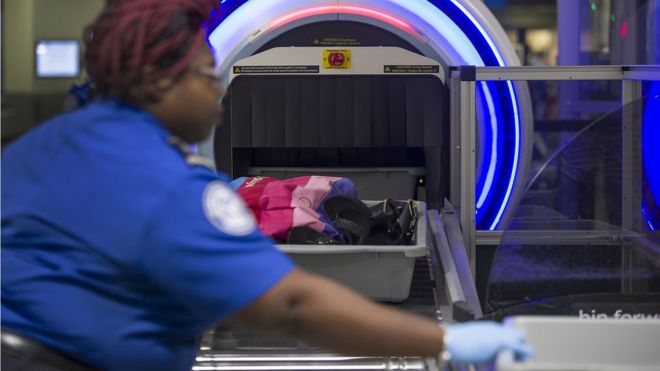
"Bins in use in the security checkpoint are like any other piece of public property and should be treated as such. With hundreds of travelers coming through an airport security checkpoint each hour, the bins are a common use item," the agency said. "Do not place personal items such as wallets, keys or phone in a bin. Instead, secure them in carry-on property to be screened through the X-ray system."

Sunday, March 8, 2020

Airport security

TSA agents catch odd assortment of weaponry at airport checkpoints

Shuriken, Throwing Star, Ninja Star, Knife, Weapon
Throwing star. Belt buckle knife. Freddy Krueger-style razor glove.

Those are just a few of the strange weapons people have brought to America's airports only to be discovered by Transportation Security Administration agents.

Every day, the TSA checks for explosives and other dangerous items in 5.5 million carry-on bags and 1.4 million checked bags at nearly 440 airports.

Since 2013, the agency has been posting on Instagram photos of some of the strangest weaponry travelers have shown up with at TSA checkpoints.

Here are some of the more exotic items:

Throwing star

A traveler with a throwing star in a carry-on was stopped by TSA agents at Greater Rochester International Airport in New York on Feb. 7. "Throwing stars are just not allowed in your carry-on bag," the TSA said. "But if it must fly…consider checking it in instead..."

Sunday, January 26, 2020

Airport security

On the Way to Shorter Security Scanning Lines?

airport security scanning
A new research offers safer and more effective airport security scanning that could work to decrease waiting times. The research follows the alarming results of an internal investigation led by the TSA (US Transportation Security Administration) in 2015, that demonstrated that in 95% of trials, undercover investigators could sneak in mock explosives or banned weapons via the tested security checkpoints.
The research initiated by Queen’s University in Belfast, Northern Ireland offers a solution for safer and faster airport security scanners that will reduce the security scan time from 10 seconds to less than a tenth of a second, by cutting data processing time. The research will employ ground-breaking radar technology, image processing algorithms and deep learning schemes, according to airport-technology.com.
The research received the £1m Leverhulme Research Leadership Award. The team leader, Dr Okan Yurduseven, from the School of Electronics, Electrical Engineering and Computer Science, stated that the award “will allow us to create technology that is fully electronic, rather than manually operated, and this will allow the scanners to process the images in real-time. We think the entire scan process should be completed in less than a tenth of a second.”

Wednesday, January 15, 2020

Airport security

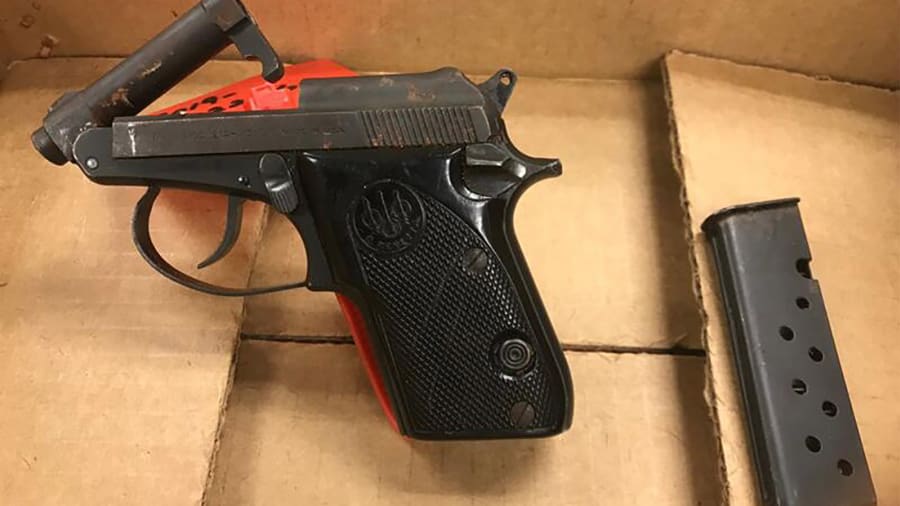
Record number of guns seized at US airports last year

01 tsa banned items
More guns were seized at airports across the United States last year than ever before in the Transportation Security Administration's 18-year history, the agency reported Wednesday.
The 4,432 firearms detected in carry-on and checked bags at TSA airport checkpoints represent an approximately 5% increase over the 4,239 found in 2018 -- and 87% of the firearms found last year were loaded.
"The continued increase in the number of firearms that travelers bring to airport checkpoints is deeply troubling," said David Pekoske, the TSA's administrator, in a press release.
"There is a proper way to travel safely with a firearm. First and foremost, it should be unloaded. Then it should be packed in a hard-sided locked case, taken to the airline check-in counter to be declared, and checked."
The TSA detected the most firearms -- 323 -- at Hartsfield-Jackson Atlanta International Airport, followed by Dallas/Fort Worth International (217); Denver International (140); George Bush Intercontinental in Houston (138); and Phoenix Sky Harbor International (132). Firearms were found at 278 airport checkpoints nationwide.

Wednesday, January 1, 2020

Airport security

20 Things To Avoid Doing In Front Of Airport Security

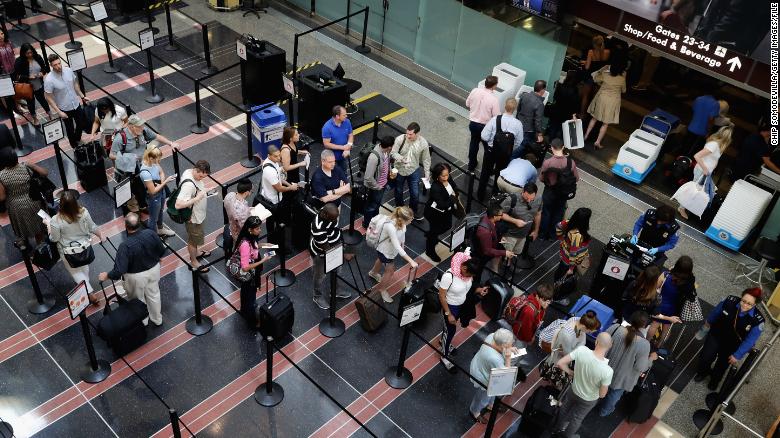
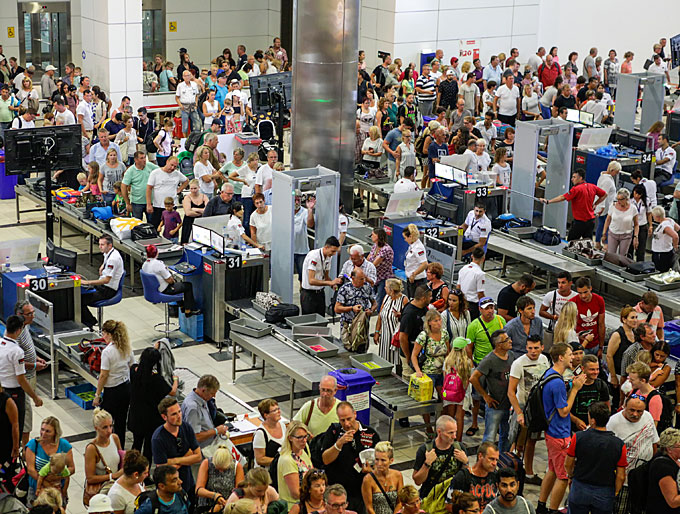
Going through airport security is no picnic. There's the uncomfortable ritual of taking off your shoes, piling all your belongings on the X-ray machine belt, and standing around awkwardly while transportation security administration (TSA) staff paw through your stuff.

In short, it's not fun. But what's worse is getting pulled out of line to be searched more thoroughly, or have all your stuff unceremoniously dumped out of your luggage. That hazardous beeping noise also means you'll likely have to be scanned up close and personal. It's even worse when you miss a connecting flight or get to your gate late due to TSA hangups.

So, how can you avoid a bottleneck at TSA and make the process less painful? You can start by not doing these 20 things in front of airport security.

Saturday, December 21, 2019

Airport security

CNN Exclusive: Whistleblower says US airports becoming unsafe as TSA relaxes security measures in favor of speeding up lines


Watchdog raises concerns that some TSA screening equipment is not keeping pace with current threats
A whistleblower with the Transportation Security Administration is sounding the alarm about loosened security at US airports, charging that top TSA officials have prioritized speed over security by reducing the sensitivity of metal detectors, disabling technology on some X-ray machines, issuing orders to keep the baggage conveyor belts moving in certain circumstances and ordering policy changes that result in fewer pat-downs.
Jay Brainard, the highest-ranking TSA official in Kansas, has notified the highest reaches of the TSA as well as outside federal regulatory bodies about the matter, but says little is being done. He believes the relaxed security rules that have occurred over the past couple of years are putting US passengers at risk.
"My biggest fear is having something happen that costs American lives, and I didn't step up and put a stop to it," Brainard told CNN this week. "It's not a question of if, it's a question of when. We are long overdue for an attack."

Wednesday, December 11, 2019

Airport security

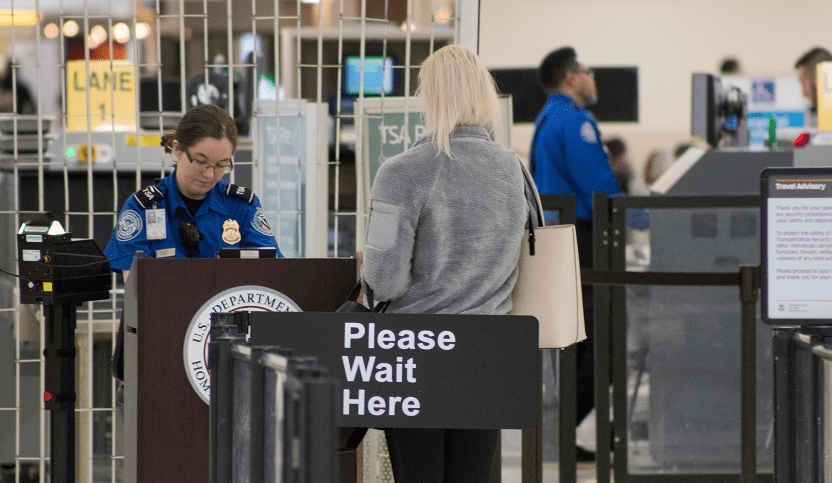
Why You're Always 'Randomly Selected' For Additional Airport Screening


Do you know how the TSA works? Before you fly, you should.
No matter how prepared you are, airport delays are inevitable. If your bag’s overweight, expect to take a few minutes just to unpack, redistribute your things, and re-pack again to appease an airline attendant. If there’s a line just to check-in, well, that could take an extra 30 minutes with the family of 12 ahead of you and several strollers in tow. And then, of course, there’s the security line.
Over on a recent Reddit thread, u/pooldoost described their frustration with so-called “random selections” for additional security screening. “Every time I travel domestically or internationally, I am ‘randomly selected’ around 70-80% of the time,” they write. “... I would love to hear what TSA/Airport Security agents think, as well as any tips to stop getting selected [because] it has literally become a joke.”
So what is this “enhanced security” process? Who gets chosen, and why? And how can you stop getting chosen, if you’re consistently targeted?Illustration for article titled Why Youre Always Randomly Selected For Additional Airport Screening
Illustration for article titled Why Youre Always Randomly Selected For Additional Airport ScreeningIllustration for article titled Why Youre Always Randomly Selected For Additional Airport Screening

Saturday, November 30, 2019

Airport security

Good News for Airport Passengers

airport security
Airport passengers often complain about the long security lines and the security check-ups that they are obliged to go through, mainly having to take off their shoes. New technologies being tested by the US Transportation Security Administration (TSA) could speed up screenings and shorten waiting time at the security lines.
Researchers from  the University of Rhode Island are working on new ways to detect and stop explosives popular with terrorists. In collaboration with the Department of Homeland Security (DHS), they are developing a sensor – called a “digital dog nose” – that will soon be the size of cell phone. Able to be mounted on a drone, it could can detect homemade explosives as well or better than a bomb-sniffing dog.
An additional technology developed is a gel that can surround an explosive or chemical agent and flash-freeze it so it can be safely removed from a transit hub.
Jose Bonilla, the director of TSA’s Innovation Task Force, told cbsnews.com that they are trying to make the security process a more seamless process for the traveling public, without  giving up on security capability.
At a new airport “Innovation Checkpoint” in Las Vegas, together for the first time with real passengers, the TSA is testing future technologies. Among other technologies being tested, new scanners can more easily see through all the clutter in bags. New walk-by body scanners display a generic male or female form and flag an area of the body where there may be a concern. The technology is also better at spotting non-metallic threats that a metal detector might miss. The improvement is that the passengers don’t have to take their shoes off. 

Sunday, November 17, 2019

Airport security

Self-Screening at Security Checkpoints

Self-Screening at Security
As technology develops and becomes more automated and user friendly, more and more self-service technologies have been installed. Whether it be self service banks or self service counters at your local grocery store, self service increases convenience towards the customer. Now it turns out that the United States Department of Homeland Security believes that airport security can benefit from similar technology.
The Department of Homeland Security has recently published a request for information for systems that would allow travelers to conduct their own security screening at airports. The department hopes that self screening would cut line times at airports and therefore speed up the security process and improve air passenger’s overall experience while traveling.
“Many patrons prefer an experience that they can complete all by themselves, at their own pace,” DHS officials stated. “The objective would be to create a passenger friendly, intuitive screening process while improving security, accelerating passenger throughput and reducing pat-down rates.”
The technology would likely be available for travelers that are already enrolled in the Transportation Security Administration’s PreCheck program. Nextgov.com mentions that TSA would have to finalize specifics in the program, all though there are already over 9 million people enrolled in the program. So even if a fraction of the people enrolled in the PreCheck program are capable of self-screening, wait times at airports will be reduced.

Friday, November 15, 2019

Airport security

These fairly normal behaviors are considered TSA red flags


What do you have to do to catch TSA's attention? Surprisingly little. Here are 12 behaviors that might cause TSA to tab you as a terrorist threat:
  1. "Excessive yawning" is a TSA warning behavior. So watch it, baby.
  2. "Appears to be in disguise" will earn you three points.
  3. Benjamin Franklin would have been subjected to additional search because the TSA lists almanacs as a suspicious item.
  4. Arriving late or close to departure time and not knowing where to find your gate will earn you four points. Which seems fairly ridiculous considering no one who is late for their flight is composed or completely oriented.
  5. "Widely open staring eyes" are a potential mark of a terrorist.
  6. "Gazing down" could land you in hot water, so gaze forward into the middle distance at all times. But not with wide, staring eyes. That'll get you in trouble.
  7. Calm down, kitty. "Exaggerated or repetitive grooming gestures" are considered possible terrorist signals.
  8. Nothing shouts your guilt like "excessive throat clearing."
  9. Beware of men with pale, shaved faces (as in, you recently shaved off your terrorist beard).
  10. For those of us who go from warm locales to cold ones, make sure you come to the airport in your down jacket. "Wearing improper attire for location" is a warning sign for TSA.
  11. It might not be the worst thing to remove people who make "excessive complaints about the screening process" from the TSA line. At least it will momentarily separate you from your whiny aunt.
  12. "Whistling as the individual approaches the screening process."


Sunday, October 20, 2019

Airport security

Smiths Detection Showcases Biometric Checkpoint Solutions

2019 'ASTORS' Finalist Smiths Detection, is opening new doors with integrated checkpoints using unique biometric identifiers to deliver risk-based screening at departure, transit and arrival airports to streamline the checkpoint journey to make it even safer and more efficient.
Smiths Detection, a global threat detection and security technologies company, and new competitor in the 2019 ‘ASTORS’ Homeland Security Awards Program, is showcasing an integrated checkpoint solution at inter airport Europe 2019, which harnesses biometric technology to enable risk-based screening practices.
With air passenger growth predicted to double by 2037, the aviation industry will be challenged to support this capacity growth whilst providing operational efficiencies and meeting shifting passenger expectations of the airport experience.
To cope with this growth, biometric technology is being increasingly adopted at airport Border Control gates, bag drop and boarding gates.
As a leader in providing checkpoint solutions to airports across the world, Smiths Detection has partnered with experts in the field of biometry to, for the first time, create a proof of concept which integrates biometric identity management solutions with class-leading screening solutions.

Wednesday, September 25, 2019

Airport security

Airport Security Might Switch To CT Checkpoint Technology

X-Ray Scan
Airport security first came to the public eye on September 11, 2001, when 4 airplanes were hijacked and crashed into U.S targets, killing almost 3,000 people and injuring thousands more. After the attacks, the Homeland Security Department was formed in order to answer HLS threats, and the HLS House Committee started to address the issue as well.  
At a recent Homeland Security Committee hearing, Chairman Mike McCaul suggested the Transportation Security Agency (TSA) switch as soon as possible from X-ray scanners to computed tomography (CT) technology at airport checkpoints.
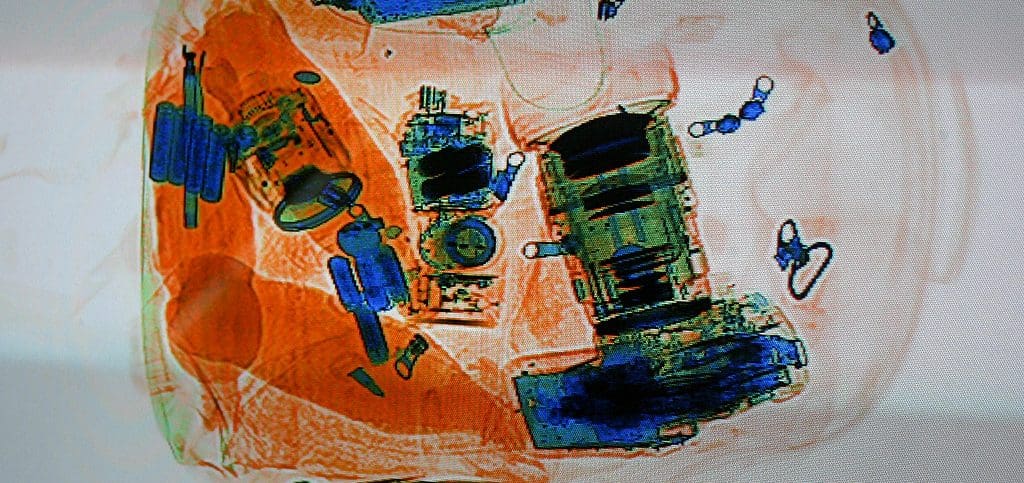
The benefits of such a switch would undoubtedly allow screeners at passenger checkpoints to better scan bags and packages while moving traffic through security at a faster rate. In simple terms, it turns what was a two-dimensional X-ray image into a 3-D image for screeners, allowing a better view of everything in carry-on baggage.
The next-generation system called ConneCT is made by Analogic, and making its way through the approval process and is designed to eventually eliminate time-consuming steps of emptying carry-on bags at security checkpoints. It will also improve screeners’ abilities to better separate threats from harmless items in luggage, according to Mark Laustra, vice president for Global Business Development and Government Relations at Analogic.

Friday, September 20, 2019

Airport security

Two Muslim men from Texas claim they were racially profiled on American Airlines flight


Самолет
Two Muslim men from the Dallas area claimed Thursday they were racially profiled and forced off an Alabama-to-Texas flight from because one of them was deemed suspicious for using a bathroom — and flushing twice — before takeoff.
Issam Abdallah and Abderraoof Alkhawaldeh were aboard American Airlines Flight 5886 in Birmingham on Saturday morning to fly home to Dallas when the crew suddenly had all passengers get off the regional jetliner, the two men told reporters at a press conference in Dallas on Thursday.
The men said they were initially told it was a general security concern before an FBI agent specifically informed them that Abdallah had raised concern by using the toilet on the plane.

Monday, August 26, 2019

Airport security

Airport security: 3D baggage scanners could end liquid restrictions


File image of an airport security worker helping travellers place their bags through the 3D scanner at the Miami International Airport in May 2019
All major UK airports must introduce 3D baggage screening equipment before the end of 2022, the government says.
Ministers say the technology will boost security, speed up pre-boarding checks, and could end the restrictions on travelling with liquids and laptops.
The equipment, similar to CT scanners used in hospitals, is already being installed at London's Heathrow Airport.
It provides a clearer picture of a bag's contents, which staff can zoom in to and rotate for inspection.
Currently, passengers taking liquid in their cabin baggage are restricted to containers holding no more than 100ml, which must be shown to security staff in a single, transparent, resealable plastic bag of about 20cm (8in) x 20cm.
The limits have been in place since November 2006. Their introduction ended a ban on liquids in the cabin imposed three months earlier, when British police said they had foiled a plot to blow up as many as 10 planes using explosives hidden in drinks bottles.

Saturday, May 11, 2019

Airport security

JFK Airport T1 & Vision-Box to Roll Out Facial Recognition Boarding

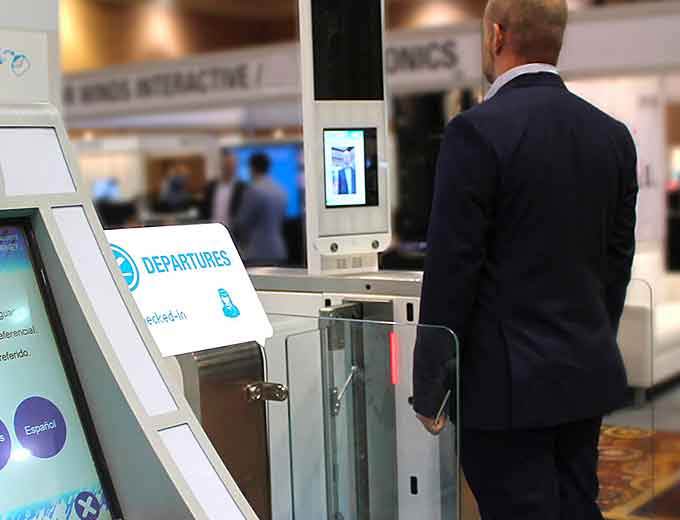
Using biometric eGates, which will recognize international travelers by their face, the platform will allow them to board their aircraft in seconds, matching the live faces with previously enrolled and stored images, with no need for them to present either passports or boarding passes at the gate. (Courtesy of Vision-Box)A self-service biometric boarding solution will be implemented in Terminal 1 to offer a more convenient, faster boarding process.
International Travelers will be allowed to board their aircraft in just a few seconds using biometric eGates, which will recognize them by their face.
The platform will match the live faces with previously enrolled and stored ones, so passengers will not need to present their passport or boarding pass at the gate.
“Biometric self-boarding is one of our top priorities – improving the passenger experience and enhancing security and safety for all those who travel at JFK Terminal One,” explained Steve Rowland, TOGA Executive Director.

Monday, April 22, 2019

Airport security

This new US airport screening camera would see too much

New TSA screening has privacy issues
A new system being tested to screen passengers at US airports appears to be exposing more than it should.

Officials at the Transportation Security Administration (TSA), the Department of Homeland Security division that keeps the nation’s airports safe, have discovered that the technology the equipment uses to render images poses “privacy risks,” according to a recent federal contracting document reviewed by Quartz. Its manufacturer is now working on “enhanced privacy software” to fix the issue, according to the document, though it doesn’t provide further details.

The screening system is an essential part of TSA’s “Future Lane Experience,” or “FLEx,” an initiative designed to speed up screening at airports.

The name of the equipment vendor is redacted in the document, but is identified in a separate government database as ThruVision of Ashburn, Virginia. The system the TSA purchased, called “TAC,” is described by ThruVision as a “people-screening camera that sees any type of item—including metal, plastic, ceramic, gel, liquid, powder and paper—hidden in peoples’ clothing at distances of 3 to 10m,” or about 10 to 32 feet.

Friday, April 19, 2019

Airport security

TSA finds gun wrapped in aluminum inside hollow DVD player


A gun that was confiscated that was wrapped in aluminum foil and concealing inside a DVD player
A Queens man was busted at John F. Kennedy International Airport after surprised TSA officers spotted an ineptly concealed handgun in a checked bag, officials said Thursday.
Officers were alerted something was up when the suitcase carrying the gun triggered an alarm as it passed through a luggage scanner on Saturday. Once they checked the bag, the weapon wasn’t hard to find — it was wrapped in tinfoil inside a hollowed-out DVD player, according to the TSA.
The concept of wrapping a gun in aluminum had TSA employees scratching their heads.
“I don’t know why he thought that would be a good idea,” said TSA spokesperson Lisa Farbstein.
The amateurish attempt to conceal the unloaded 9 mm handgun soon became a punchline on her Twitter account.
“Want to travel with a gun? I can assure you that wrapping it in aluminum foil and then concealing it inside a DVD player isn’t the way to go about it. Queens man was arrested after @TSA officers at @JFKairport detected the artfully concealed weapon in his DVD player. C’mon man!,” wrote Farbstein.

Saturday, March 9, 2019

Airport security

US embassy staff member attempts to bring bomb with fuse to Moscow airport - Ministry

Moscow’s Sheremetyevo airportA US embassy staff member attempted to enter Moscow’s Sheremetyevo airport on Saturday morning carrying a bomb with a fuse but with no explosives in his luggage, a source in the Russian Foreign Ministry told TASS.
"On the morning of March 9, personnel scanning the luggage of a US embassy staff member detected an item that looked like a mortar bomb," the source said. "They called bomb technicians who confirmed it was indeed a bomb with a fuse but without explosives, though there were traces of explosives inside the bomb’s body," he added.
According to the Russian Foreign Ministry, "the airport police immediately informed the US embassy about the incident." "We expect the embassy to explain the staff member’s behavior," the ministry source noted.
At the same time, he said that the ministry considered the incident to be a deliberate provocation.
"Since the 2001 terrorist attacks, the United States has been paying the closest attention to aviation security so he could not but understand that a bomb in his luggage was serious. It means he did it consciously," the source said.

Thursday, January 3, 2019

Airport security

10 Strange Items the TSA Found in People's Luggage in 2018

iStock.com/AzmanLEvery year, the TSA screens about 700 million travelers across nearly 450 airports. That’s more than 2 million passengers each day. And while most people pass through security checkpoints without incident, a handful of travelers are stopped every day—sometimes for attempting to lug some truly bizarre items to their departing gate.
Thanks to the TSA’s Webby-winning Instagram account—made famous by the agency’s late social media guru Bob Burns, who passed away in October—officials have kept track of the wackier things airport security agents saw in 2018.
...2. A FAKE BOMB
It might resemble something Wile E. Coyote would have concocted—and it may be 100 percent fake—but it’s still not allowed through security at Chicago O’Hare International Airport. Anything that remotely resembles a weapon will cause intense security checks. (In this case, the security checkpoint was closed for 19 minutes, inconveniencing countless passengers.)