Страницы

Showing posts with label Research results. Show all posts

Thursday, September 8, 2016

Research results

Research examines global security and surveillance technologies


Cover ImageAs governments around the world scramble to better respond to security threats, they are increasingly monitoring everyday things used to commit crime, like cell phones and automobiles. This novel approach to fighting crime forms the backdrop of recent research published by Keith Guzik, a sociologist at the University of Colorado Denver.
In his new book "Making Things Stick: Surveillance Technologies and Mexico's War on Crime" Guzik examines Mexico, one of a number of countries around the globe beset by criminal networks, in order to understand how surveillance technologies impact security policy around the world.
Using documents, survey data and interviews with government officials and Mexican citizens, Guzik followed a trio of federal programs featuring cutting-edge information systems designed to fight . These included a national cell phone registry devised to help authorities respond to kidnappings and extortion calls; a national identity card featuring biometric data to protect people from identity theft and fraud; and a national automobile registry with radio-frequency identification (RFID) tags to fight car thefts, kidnappings, and drug trafficking.

Monday, March 28, 2016

Research results

Who Will Become a Terrorist? Research Yields Few Clues

The brothers who carried out suicide bombings inBrussels last week had long, violent criminal records and had been regarded internationally as potential terrorists. But in San Bernardino, Calif., last year, one of the attackers was a county health inspector who lived a life of apparent suburban normality.

And then there are the dozens of other young American men and women who have been arrested over the past year for trying to help the Islamic State. Their backgrounds are so diverse that they defy a single profile.

What turns people toward violence — and whether they can be steered away from it — are questions that have bedeviled governments around the world for generations. Those questions have taken on fresh urgency with the rise of the Islamic State and the string of attacks in Europe and the United States. Despite millions of dollars of government-sponsored research, and a much-publicized White House pledge to find answers, there is still nothing close to a consensus on why someone becomes a terrorist.

Saturday, March 26, 2016

Research results

What Research Says about Defeating Terrorism

Terrorism is as old as history and almost certainly older. In 68 B.C., for instance, the Roman city of Ostia, a vital port for one of the world's earliest superpowers, was set on fire by a band of thugs. They destroyed the consular war fleet and, rather embarrassingly, kidnapped two leading senators. Panic ensued—the same panic that has now been recapitulated down the centuries, courtesy of such terror groups as the Irish Republican Army, the Palestine Liberation Organization, the African National Congress, the Liberation Tigers of Tamil Eelam, al Qaeda and, most recently, ISIS. At the time of writing this article, the world had witnessed three major terrorist attacks within a period of 20 days—Beirut, Paris, San Bernardino—which were quickly followed by additional atrocities in Istanbul, Kabul, Dikwa, Nigeria, and elsewhere, each committed by Islamic extremists. 

Wednesday, February 10, 2016

Research results

Poll: Terrorism fading as most important issue for voters


In the wake of the deadly attacks in Paris and San Bernardino, terrorism was most important issue to many voters in our December NBC News|SurveyMonkey election polling. Given the importance of economic issues to voters, and with the primary season in full swing, we revisited whether terrorism is still the most important issue to most voters, or whether the importance of the economy has rebounded. The answer depends upon voters' partisanship.
Results from the most recent NBC News|SurveyMonkey Weekly Election Tracking Poll conducted online from February 1 to February 7 suggest that the importance of terrorism has fallen considerably. Nearly a third -- 32 percent -- of voters now state that jobs and the economy is the issue most important to them, compared to the 15 percent who say terrorism.

Thursday, February 4, 2016

Research results

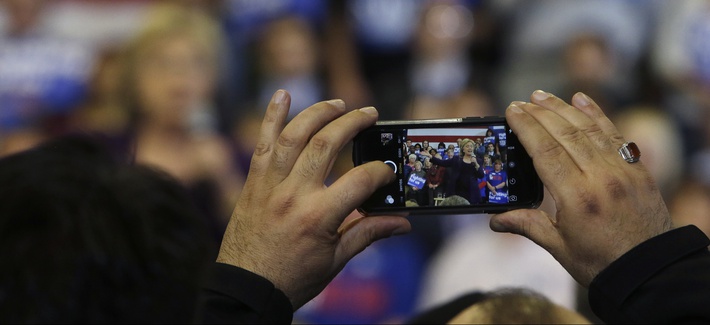
Spy on Me All You Like, More Americans Say


A potential voter takes a photo as Democratic presidential candidate Hillary Clinton speaks at a campaign event, Tuesday, Feb. 2, 2016, in Nashua, N.H.
The most recent Allstate/National Journal Heartland Monitor poll found that Americans still feel as negatively towards the collection and use of their personal data as they did in 2013. A majority of respondents (53 percent) thought that the collection and use of their data by businesses, law enforcement, individuals, and other groups violated their personal privacy, safety, financial security, and individual liberties. Only 38 percent thought that the collection and use of their data was a positive development.

Danielle McMahan, 23, from Tampa, Florida, told me that while she acknowledges the potential usefulness of data collection, current surveillance tactics are flawed, and too hidden. “You don’t know exactly what’s being collected or when it’s being collected.”

Monday, February 1, 2016

Research results

Are Professors Disproportionately Gay?


Male professor teaching in college science lab
Gay men and lesbian women are disproportionately represented in academia, and are more likely to be professors than to enter many other occupations.
That's according to a recent study published in the journal Administrative Science Quarterly by a team of researchers investigating occupational segregation. Out of a list of 15 occupations in which both the proportion of gay men among male workers and the proportion of lesbians among female workers are above average, the researchers found postsecondary teacher ranks ninth.
Gay men and lesbians, the researchers hypothesize, tend to be concentrated in occupations that provide a "high degree of task independence" or require a "high level of social perceptiveness" – or, as is the case in academia, both.

Sunday, January 17, 2016

Research results

How Americans balance privacy concerns with sharing personal information: 5 key findings

Most Americans see privacy issues in commercial settings as contingent and context-dependent. A new Pew Research Center study based on a survey of 461 U.S. adults and nine online focus groups of 80 people finds that there are a variety of circumstances under which many Americans would share personal information or permit surveillance in return for getting something of perceived value. For instance, a majority of Americans think it would be acceptable (by a 54% to 24% margin) for employers to install monitoring cameras following a series of workplace thefts. Nearly half (47%) say the basic bargain offered by retail loyalty cards – namely, that stores track their purchases in exchange for occasional discounts – is acceptable to them, even as a third (32%) call it unacceptable.

Saturday, January 2, 2016

Research results

Americans conflicted about sharing personal information with companies

People had different feelings on sharing personal info with companies
A significant minority of American adults have felt confused, discouraged or impatient when trying to make decisions about sharing their personal information with companies. When asked if they felt confident they understood what would be done with their personal information as they were deciding whether or not to share it, 50% said they felt confident they understood – but 47% said they were not confident.
These new findings are from a Pew Research Center survey in early 2015 in which people were asked about their feelings as they considered sharing personal information with companies in the “last month” of when the survey was conducted.

Friday, December 25, 2015

Research results

Views of Government’s Handling of Terrorism Fall to Post-9/11 Low

For first time since 9/11, government’s job rating on terrorism turns negative Following the terrorist attacks in Paris and San Bernardino, Calif., the public’s concerns about terrorism have surged and positive ratings of the government’s handling of terrorism have plummeted. But other attitudes relating to terrorism and security, as well as perceptions of whether Islam is more likely than other religions to encourage violence, have shown far less change.The latest national survey by Pew Research Center, conducted Dec. 8-13 among 1,500 adults, finds that since the start of this year, the share of Americans who say the government is doing well in reducing the threat of terrorism has fallen by 26 percentage points – from 72% to 46% – and now stands at its lowest point in the post-9/11 era.

Saturday, August 8, 2015

Research results

United States Slips To 16th Best Country In The World To Live In


United States Best CountryJust a couple of decades ago, it could be argued based on objective data that the United States was the best country in the world to live in. However, according to a recent study published by the Social Science Research Network, America is not what it used to be. In fact, based on the 2015 Social Progress Index (a measure of 52 social indicators), the U.S. is now just the 16th best country in the world to live in, behind countries such as Iceland, Japan and Finland.

Tuesday, May 26, 2015

Research results

America slouches toward plutocracy


Presidential ElectionOver the last few years, political scientists have warned about a worrying trend in American democracy: Voter preferences don’t have much sway over presidents’ policy choices. New research suggests their worries are well founded.In a new book, political scientists James Druckman and Lawrence Jacobs examine data on internal polling from U.S. presidential archives and other existing research to determine how presidents use their knowledge of public opinion to craft policies. What they found is disturbing: Presidents tend to focus on the opinions of the wealthy and well-connected insiders, ignoring the views of most of the electorate.