Страницы

Showing posts with label National security laws. Show all posts

Sunday, February 18, 2018

National security laws

Canada’s Intelligence Reform: A Closer Look at Pending National Security Legislation

Canada is undertaking the most substantial reforms to its national security law since 1984, when its first civilian intelligence agency, the , was created. Like other democracies attempting to lawfully use emerging technologies, Canada is seeking to codify once-murky intelligence practices into statute.
The 150-page bill being , known as , responds to issues that have become common among democracies in the digital era: What roles should intelligence services play in disrupting threats and not simply collecting information on them? How can information be shared within the government and internationally while addressing concerns about privacy and potential misuse? How broad a remit should intelligence services have to compile troves of data in which to detect threats? And how can a liberal democracy best structure its oversight and review institutions to guard against improper conduct by security and intelligence services—and to assess their efficacy?

Sunday, December 17, 2017

National security laws

Now is the perfect time to push through national security law


Until last Friday, Carrie Lam Cheng Yuet-ngor was offering the same take on universal suffrage and national security legislation. Then, after meeting President Xi Jinping during a visit to Beijing, the chief executive completely changed her tune.
Since her election campaign, she had been saying she would wait for a favourable environment before reviving plans to enact political reform and Article 23, the section of the Basic Law that requires local legislation against treason, secession, sedition and subversion. The implication is that she would stall on the political front and instead focus on social and livelihood issues, which primarily mean housing.
Now, all that has changed.
“As Chief Executive … I have a responsibility to create favourable conditions [for legislation of Article 23],” she told reporters after the Friday meeting with Xi.
In the past few months, mainland honchos have been expressing impatience at the lack of progress on the national security law in Hong Kong. Now, Beijing seems to have instructed Lam in no uncertain terms to get it done.

Monday, September 18, 2017

National security laws

Happy Birthday, National Security Act of 1947!

Matthew KahnToday marks 70 years since the National Security Act took effect, restructuring the American national security apparatus toward what it looks like today. The septuagenarian law forms the basis of much of the Lawfare’s regular content. To mark our appreciation for it, this piece highlights four key institutions whose modern incarnations originated in the National Security Act: the NSC, the CIA, the predecessor to the Defense Department, and the Joint Chiefs of Staff.


Tuesday, September 12, 2017

National security laws

Senate Intel slips sentence into bill that could lead to spying on US citizens

A Senate panel may be stealthily trying to give federal law enforcement a new tool to go after the anti-secrecy group WikiLeaks and its U.S. collaborators.
A one-sentence “Sense of Congress” clause was tacked onto the end of a massive 11,700-word bill that was approved by the Senate Intelligence Committee and is likely to come before the full Senate later this month.
The clause says that WikiLeaks “resembles a non-state hostile intelligence service” and that the U.S. government “should treat it as such.”
The intended target might not be Julian Assange, the Australian-born founder of WikiLeaks who has been holed up at the Ecuadorean Embassy in London since 2012. Federal law enforcement, experts say, is likely targeting anyone collaborating with his organization.

Tuesday, July 25, 2017

National security laws

How the New Russia Sanctions Bill Shows How Far the U.S. Has Come

President Trump Delivers Statement On Healthcare At The White House
In defiance of President Donald Trump’s wishes, the Republican-led Congress has decided not to wait until Russia or another foreign power has altered or nullified the outcome of an American election before acting. The sanctions bill, which the House is expected to vote on Tuesday, won’t solve the problem, but the strong bipartisan support for it sends an important signal concerning our resolve to protect democratic values. This unusual bipartisanship in Congress happens to coincide with the anniversary of the most important piece of national security legislation ever passed, which also depended on bipartisan cooperation.

Seventy years ago, Democratic President Harry S. Truman signed into law the National Security Act, passed by a Republican Congress. No legislation in U.S. history more fundamentally altered the way security policy is made and executed. It established the Department of Defense, the Air Force as a separate service, the National Security Council, and the Central Intelligence Agency, and it gave permanent standing to the Joint Chiefs of Staff.

Monday, July 24, 2017

National security laws

Dems block passage of intelligence bill

House Democrats on Monday blocked passage of a non-controversial intelligence policy bill, saying that Republicans were rushing to pass it without extensive debate.
The vote was 241 to 163 against passing the intelligence authorization bill, which supports critical national security programs, including those addressing counterterrorism and cyberattacks.
Minority Leader Nancy Pelosi of California said she had no problem with the bill itself, but rather the expedited procedure for approving it. In a letter Pelosi wrote: "This is unacceptable when critical intelligence decisions are being made that impact America's national security and while the House and Senate intelligence committees are leading investigations into Russia's continued efforts to undermine our democracy."

Saturday, June 24, 2017

National security laws

Giving Japan a Military


Japanese Ground Self-Defense Force soldiers take part in  an annual training session near Mount Fuji at Higashifuji training field in Gotemba, west of Tokyo, August 25, 2016After 70 years, Japan may finally be on the cusp of acquiring its own military. Legally, that is. Last month, Prime Minister Shinzo Abe indicated his desire to change the Constitution by 2020 to include a clause to give legal standing to the Self-Defense Forces. The revision, while historically controversial domestically, is long overdue.
Written in 1946 by the United States after Japan's devastating defeat in World War II, the Constitution legally prohibits Japan from waging war and obtaining “war potential.” Article 9—often referred to as the peace clause—renounces war as a sovereign right and the threat or use of force as means of settling international disputes. In order to accomplish this aim, the article specifies that “land, sea, and air forces, as well as other war potential, will never be maintained.”


Thursday, June 22, 2017

National security laws

Germany expands surveillance of encrypted message services


German investigators will now be able to insert into users' cellphones and computers spy software (or a "Trojan horse"Germany on Thursday passed a controversial new law that expands the power of authorities to spy on the content of encrypted message services such as WhatsApp and Skype.
Amid the wave of jihadist attacks in Europe, German lawmakers voted in favour of the law designed "to reinforce the effectiveness of criminal procedures".
German investigators will now be able to insert into users' cellphones and computers spy software (or a "Trojan horse") to access data in encrypted message services such as popular applications WhatsApp and Skype, including as part of criminal investigations.
Up to now, such surveillance tools were not authorised by the German Constitutional Court as part of the anti-terrorism fight.
The new law is seen as a significant change for a country that usually is very protective of private information, given the burden of Germany's past dictatorships, the Nazi regime in the 1930s-40s and the communist government in the east of the country after the war.


Tuesday, June 20, 2017

National security laws


Canada proposes overhaul to its national security laws


Canada's Public Safety Minister Ralph Goodale takes takes part in a news conference with Justice Minister Jody Wilson-Raybould in Ottawa
Canada has introduced extensive security legislation that includes the creation of a "super" national security review body.
The Liberals says its proposed overhaul of national security laws will shed light and oversight on the activities of the country's spy agencies.
It says the changes will balance both rights and security.
Critics say that does not go far enough in keeping people safe or protecting the privacy of Canadians.
The national security overhaul dates back to a 2015 general election promise by the Liberals.
The party committed to repealing what they called "problematic elements" of controversial sweeping anti-terrorism legislation passed by the former Conservative government.

Monday, June 19, 2017

National security laws

Russian govt approves European convention against terrorism financing


© Natalia Seliverstova
The Russian government has approved the Council of Europe Convention on Laundering, Search, Seizure and Confiscation of the Proceeds from Crime and on the Financing of Terrorism and recommended the document for ratification by the parliament.
The government statement that recommends President Vladimir Putin submit the convention to the State Duma for ratification was published on the cabinet’s website on Friday. The bill on ratification of the convention has been prepared jointly by the Russian Foreign Ministry and the Russian State Agency for Financial Monitoring.
The Council of Europe Convention on Laundering, Search, Seizure and Confiscation of the Proceeds from Crime and on the Financing of Terrorism was introduced in May 2005 and signed by Russia in January 2009. The explanatory note published by the government as an attachment to the bill on the ratification of the convention reads that, once ratified, the document would boost the effectiveness of cooperation between Russian and foreign agencies targeting terrorism and money laundering.

Thursday, June 15, 2017

National security laws

China's Network Security Law Comes Into Effect: What It Means For Your Company


For most companies with operations in China, the relevant focuses of the law are for two specific categories of entities: critical information infrastructure operators (CII Operators) and owners and managers of networks and the network service providers (Network Operators). Both categories have significant obligations and related liability under the law, but the scope of focus for Network Operators mostly falls to security measures that are likely already implemented at many multinationals that follow any of the leading data security frameworks. CII Operators, however, have more significant obligations, notably including the requirement to store within China any personal information and important business data that has been "collected and generated in the operation" of the CII Operator within China.
Under the law, the concept of Network Operators falls within a very broad definition of any "owner or manager" of any networks or the network service providers in China, where a "network" is defined as systems of computers and relevant equipment that collect, store, transmit, exchange and process information. CII Operators is a more narrowly defined term in this law, and is primarily given an effects-based test for key industries in which there may be harm to national security, people's livelihood or public interests if there is damage, function loss or data leakage in the network. The specific definition and scope of a CII Operator will be further defined and clarified by the government.

Tuesday, December 6, 2016

National security laws

China Finalizes New Cyber Security Law


China has finalized a broad new Cyber Security Law, its first comprehensive data privacy and security regulation.  It addresses specific privacy rights previously adopted in the European Union and elsewhere such as access, data retention, breach notification, mobile privacy, online fraud and protection of minors.
There is plenty in the new law to irritate international businesses operating in China.  It requires in general that Chinese citizens' data be stored only in China, for starters, possibly requiring global corporations to maintain separate IT systems for Chinese data.  Most of the privacy enhancements benefiting citizens align with those required in the European Union, but it is unclear how the Chinese will expect compliance, particularly since, as with many Chinese laws, its language is vague as to its scope, application and details.  This vagueness leaves interpretation to the State Council, the chief administrative authority in China, headed by Premier Li Keqiang.
The law expands Chinese authorities' power to investigate even within a corporation's Chinese data systems, and provides for draconian penalties for non-compliance by business entities or responsible individuals  include warnings, rectification orders, fines, confiscation of illegal gains, suspension of business operations or the revocation of the entity's business license.

Thursday, November 10, 2016

National security laws

China’s new cybersecurity law is bad news for business


The Chinese government has passed new cybersecurity regulations Nov. 7 that will put stringent new requirements on technology companies operating in the country. The proposed Cybersecurity Law comes with data localization, surveillance, and real-name requirements.
The regulation would require instant messaging services and other internet companies to require users to register with their real names and personal information, and to censor content that is “prohibited.” Real name policies restrict anonymity and can encourage self-censorship for online communication.
The law also includes a requirement for data localization, which would force “critical information infrastructure operators” to store data within China’s borders. According to Human Rights Watch, an advocacy organization that is opposing the legislation, the law does not include a clear definition of infrastructure operators, and many businesses could be lumped into the definition.

Thursday, October 13, 2016

National security laws

Scandinavian Security Forces Step Up Surveillance

HelsinkiA Finnish working group has proposed amendments to the Constitution in order to drastically widen the scope of Finland's Security Intelligence Service (Supo). Accordingly, Supo's intelligence-gathering power is to be expanded both domestically and abroad.

At present, Supo is already authorized to track people, tap phones and monitor other communications on suspicions of terrorism, espionage and treason. According to the suggestions by the civilian working group, Supo should be granted the right to conduct intelligence without requiring any suspicion of crime. Accordingly, Supo will be allowed to secretly intervene in citizens' post and communications to obtain information about clandestine military activities or anything that "seriously threatens public safety."


National security laws

Russia to offer additional state protection to participants in counter-terrorist operations


The exercise of the Interior Ministry's tactical and counter-terrorism units. © Grigoriy Sisoev
The Russian government has drafted a set of amendments extending state protection programs to military servicemen and police who take part in counter-terrorist operations, as well as intelligence agents who protect the interests of the country.
The bill, which was published on the government’s website on Thursday, proposes changing the current norm under which state protection can only be offered at the written request or written consent of those eligible for such protection – witnesses, judges, jury members, and other participants in criminal law proceedings. The new document contains provisions allowing the protection measures to be extended to those who cannot file such requests or give consent when state authorities possess information showing that their life or health is in danger.
The bill authorizes investigations into such reports and sets the terms under which these probes must be completed. It empowers the authorities to take urgent measures to protect the persons in extraordinary cases.

Sunday, September 25, 2016

National security laws

Swiss spy law seen passing with voters on security concerns

Swiss voters on Sunday were seen backing a law extending the national spy service's authority to monitor internet traffic, deploy drones and hack foreign computer systems, early returns published on Swiss state television showed.

The measure cleared Swiss Parliament a year ago, but privacy advocates and left-leaning political parties collected more than 50,000 signatures to put the measure on the ballot, customary in Switzerland's system of direct democracy.

The Swiss government had contended the nation's outdated intelligence laws had left Switzerland ill-equipped to tackle threats 
that have intensified as militants deploy new technology in a tight-knit global network.

Thursday, August 11, 2016

National security laws

German minister proposes tougher security laws after attacks

German minister proposes tougher security laws after attacksGermany’s interior minister on Thursday proposed stripping dual nationals who fight for extremist groups abroad of their German citizenship, and said he wants to make it easier to deport foreigners deemed to be dangerous.
Minister Thomas de Maiziere’s list of proposals aimed at beefing up security in Germany following a recent string of attacks also included making “promoting terrorism” a criminal offense, and considering further reinforcements for security forces.
In addition, Germany will consider joining other countries in screening the public social media profiles of people being admitted to the country under humanitarian resettlement programs. And de Maiziere wants to strengthen German authorities’ ability to probe the darknet, an area of cyberspace invisible on the open internet...

Friday, July 22, 2016

National security laws

Pentagon revises law of war manual after criticism of press treatment

The Pentagon on Friday updated its law of war manual after a previous version came under fire for appearing to allow commanders to treat journalists as belligerents or spies.
The U.S. Department of Defense manual, the first and most comprehensive of its kind, was first released last June. It compared some of the tasks of journalism to spying or other hostile actions by an enemy.
The manual said some journalists may be considered "unprivileged belligerents" -- a legal category with fewer protections than combatants, such as prisoner-of-war status.
"Reporting on military operations can be very similar to collecting intelligence or even spying," one passage of the manual said.

Tuesday, July 12, 2016

National security laws

What the Chilcot Report Teaches Us About National Security Lawyering

Law & OrderThe Chilcot report has sent shock waves through the British political establishment, which is still recovering from the unexpected Brexit vote. The report, everyone agrees, offers adevastating critique of former Prime Minister Tony Blair, who famously told then-President George W. Bush that he would be with him through “whatever.” But what has been less widely noticed is the equally disturbing insight the report offers into the national security lawyering in the UK and the US during the lead-in to the war.
One of the most remarkable documents in the published evidence is a more than 200-page transcript of Lord Peter Goldsmith’s testimony before the Committee. In it, he details his initial resistance to — and eventual acquiescence in — the view that the use of military force against Iraq could be legally justified.
That view has now been widely (though not universally) repudiated. Most of theinternational law submissions to the Chilcot Inquiry are highly critical of Lord Goldsmith’s conclusion that the 2003 invasion of Iraq was legal. (It is important to note, however, that the report itself does not reach a decision one way or the other — a decision that has itself come under scrutiny.)

Sunday, July 10, 2016

National security laws

Putin signs controversial new anti-terror bill into law


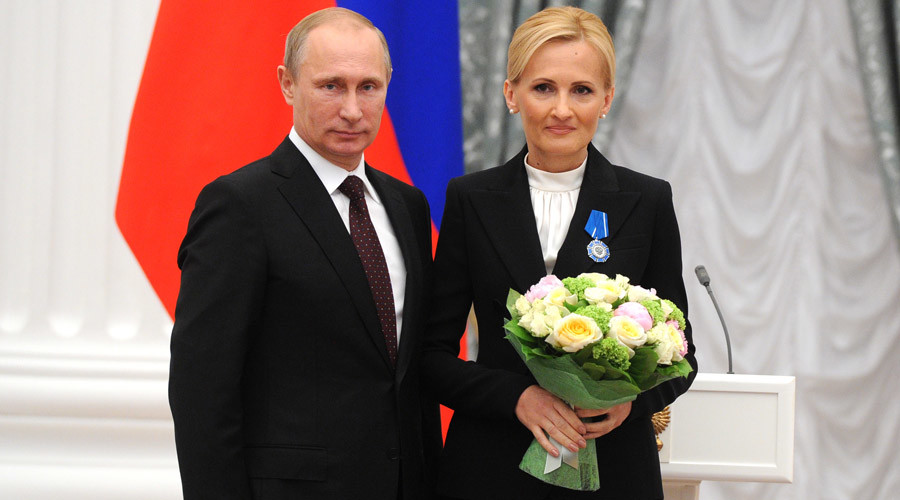
Russian President Vladimir Putin and Irina Yarovaya, Chairperson of the State Duma Committee on Security and Countering Corruption © Michael Klimentyev
President Vladimir Putin has signed into law a controversial Russian anti-terrorist bill in the face of objections from internet companies and the business community, but has ordered measures to be taken so that the financial risks of the law will be minimal.
The anti-terrorist package of bills was drafted in April 2016 by a group of lower house lawmakers, who described it as a response to the bombing of an A-231 jet liner in Egypt in October 2015 and the terrorist attacks in Paris in November of that year.
The document contains a separate criminal article that orders up to 10 years in prison for anyone engaging in international terrorism, and up to 15 years behind bars for anyone found guilty of financing terrorist groups. Attracting new recruits to a terrorist organization was also criminalized, and will be punished with prison terms of between five and 10 years.
The new bill also lowers the age threshold for terrorist crimes, such as terrorist attacks and hostage taking, to 14 years from the current 16. Presently the age of minors in Russia is 16, with exceptions made for such crimes as murder, rape, kidnapping and several others. For these, criminals are deemed to be responsible from the age of 14...