Страницы

Showing posts with label Privacy security. Show all posts

Monday, September 7, 2020

Privacy security

Court overseeing national security surveillance finds FBI routinely doesn't observe rules
The top federal court that oversees national security surveillance found the FBI routinely failed to observe rules meant to protect the privacy of Americans while searching through emails that were gathered without a warrant, according to a December ruling declassified Friday.
Despite identifying "widespread violations" by analysts conducting these searches, a judge still approved the warrantless surveillance program for another year, the ruling also stated.
The ruling, which was outlined in a heavily-redacted 83-page document, was part of the regular certification process for the use of surveillance techniques enabled by Section 702 of the Foreign Intelligence Surveillance Act (FISA), including the warrantless surveillance program that allows the US government to collect emails and phone calls from non-citizens abroad even when they are communicating with Americans.
    The redacted ruling was posted Friday to a website run by the Office of the Director of National Intelligence. The New York Times first reported the contents of the ruling.
    The work of the Foreign Intelligence Surveillance Court is mostly secret because most of the subject matter it deals with is highly classified.
    While Judge James Boasberg, who is the presiding judge on the surveillance court, again signed off on the program, he also issued a scathing rebuke of the FBI, writing that "there still appear to be widespread violations of the querying standard."


    Thursday, September 3, 2020

    Privacy security

    Property tech companies are helping landlords spy on residents, collect their data, and even evict them. Critics are calling it an invasion of privacy that could reinforce inequality.


    Landlord Tech
    Imagine returning home after work and being required to get your face scanned in order to enter your apartment building. For some renters, the prospect might seem harmless, even convenient — like Apple using Face ID to grant access to your phone.
    But if you're a person of color, woman, undocumented immigrant, or simply someone struggling to make ends meet during the pandemic, that scenario suddenly becomes much more worrisome.
    Will the scan actually recognize you, given the well-documented racial and gender biases that tend to be baked into facial recognition technology? Will your data be shared with law enforcement agencies, which are now buying it from private companies in lieu of obtaining warrants? Will it even be used to predict whether you'll make rent?
    While these scenarios may sound slightly dystopian, more landlords are turning to facial recognition and other forms of property tech, or "proptech," not just to surveil residents, but to keep out "undesirable" ones in the first place, according to researchers who study the intersection of technology and housing.

    Thursday, July 30, 2020

    Privacy security

    How to Tell If Your Apps Are Spying on You


    phone spying
    If you've Zoomed at all over the last four-plus months, you're certainly familiar with that pop-up box that requests permission to use your device's microphone or camera. How else are you supposed to see or hear the person on the other line?

    But there can be a more sinister side to these permissions: Some apps don't bother asking for your consent at all, turning your device into a pocket spy, loaded with cameras and microphones at the ready.

    Back in 2018, for example, over 250 apps across the App Store and Google Play market were listening in for background audio through smartphone microphones, allowing the apps to figure out what you watch or listen to in order to serve up better targeted advertisements. And then, of course, there's the long-standing conspiracy theory that our smartphones are actively eavesdropping on us.

    The good news: You can take a few simple precautions to always maintain your privacy and ward off any watchful apps. The following tips just take a few seconds to complete.

    Thursday, May 7, 2020

    Privacy security

    These zodiac signs are most likely to spy on their partners - which one are you?

    The signs most likely to spy on their partnersMany couples who are spending lockdown together, have their relationships put to the test. Especially if this is the first time living together.

    In fact, a study by OnBuy.com has revealed that 41 per cent of women and 60 per cent of men are unhappy with their sex lives in quarantine.

    This can push some into seeking excitement from someone else, or others into believing their partners are not attracted to them anymore, which can lead to trust issues.

    With that in mind, the experts at PsychicWorld.com were curious to find out which zodiac signs are most likely to mistrust their partners.

    To find that out, they asked 2,112 people if they ever go through their partners’ phones and computers in order to find something incriminatory.

    Tuesday, January 28, 2020

    Privacy security

    Bipartisan legislation could curtail long-running National Security Agency data collection efforts.

    A bipartisan cadre of lawmakers in the House and Senate have introduced legislation that would reform the 9/11-era authorities used by the intelligence community to access Americans’ phone records and other domestic communications.

    The Safeguarding Americans’ Private Records Act would narrow Section 215 of the Patriot Act, which provided the National Security Agency and sister intelligence agencies sweeping information-gathering authorities following the terrorist attacks of Sept. 11, 2001. According to lawmakers, the bill would end the phone surveillance program that would ensnare Americans’ phone records and prohibit the warrantless collection of location data. The bill would reform the Foreign Intelligence Surveillance Act, adding transparency to secretive court processes that decide whether to surveil individuals.

    While previous presidential administrations and Congresses have continually renewed the authorities, privacy advocates have voiced increasing opposition to the authorities, which allow for records and data to be vacuumed up without a warrant. The program was first exposed by former intelligence contractor Edward Snowden.

    Tuesday, November 19, 2019

    Privacy security

    Are you being spied on? These DIY counter-surveillance tools can help protect privacy

    One of the simplest ways is to turn off the lights and scan the room with a flashlight.It is not paranoid to take precautions. A lot of spy gear is detectable if you know what to look for, said Charles Patterson, president of Exec Security, a firm in Tarrytown, New York, that specializes in corporate counterespionage.

    Look for anything in your surroundings that appears disturbed, out of place or odd. Surveillance can be done by more than clunky nanny cams. It can be conducted with wireless microdevices, some as small as a postage stamp, that can be stashed in hard-to-spot ...
    Another low-cost way to spot surveillance equipment is turning off the lights and using a flashlight to scan a room to see if the lens of a camera shines back at you. If you don’t have a flashlight, look around using the front-facing camera on your smartphone (the side you use for video chats), which may allow you to see the otherwise invisible infrared light that spy cameras emit.

    A quick way to see if your phone’s camera detects infrared light is to look at your television remote through the viewfinder. If you can see a light flash on the tip of the remote when you press its buttons, you’re good to go.

    You can also download the Fing app on your smartphone, which when activated will show you all the devices connected to your Wi-Fi network. Anything that includes the name of a camera manufacturer — like Nest, Arlo or Wyze — or that the app flags as a possible came ..


    Thursday, October 31, 2019

    Privacy security

    Edward Snowden says Facebook is just as untrustworthy as the NSA


    A stack of Edward Snowden’s new book “Permanent Record.”
    American whistleblower Edward Snowden is living a life of exile in Russia because he shared thousands of top-secret government documents with journalists. But six years after he exposed how the US government surveils the digital lives of everyday Americans, Snowden is not just worried about the powers of government agencies like the National Security Agency (NSA), he’s concerned about big technology companies, too.
    In an upcoming interview with Recode’s Kara Swisher on the Recode Decode podcast, Snowden said he thinks it’s a “mistake” to see the NSA as a bigger threat to privacy than tech companies.
    “Facebook’s internal purpose, whether they state it publicly or not, is to compile perfect records of private lives to the maximum extent of their capability, and then exploit that for their own corporate enrichment. And damn the consequences,” Snowden told Swisher. “This is actually precisely the same as what the NSA does. Google ... has a very similar model. They go, ‘Oh, we’re connecting people.’ They go, ‘Oh, we’re organizing data.’” Although, Snowden said, these companies still don’t know as much as the government, which can gather information from all of the many tech platforms.

    Monday, August 26, 2019

    Privacy security

    The spy in your wallet: Credit cards have a privacy problem

    I recently used my credit card to buy a banana. Then I tried to figure out how my credit card let companies buy me.
    You might think my 29-cent swipe at Target would be just between me and my bank. Heavens, no. My banana generated data that’s probably worth more than the banana itself. It ended up with marketers, Target, Amazon, Google and hedge funds, to name a few.
    Oh, the places a banana will go in the sprawling card-data economy. Despite a federal privacy law covering cards, I found that six types of businesses could mine and share elements of my purchase, multiplied untold times by other companies they might have passed it to. Credit cards are a spy in your wallet — and it’s time that we add privacy, alongside rewards and rates, to how we evaluate them.

    Saturday, April 20, 2019

    Privacy security

    Defense against the Darknet, or how to accessorize to defeat video surveillance


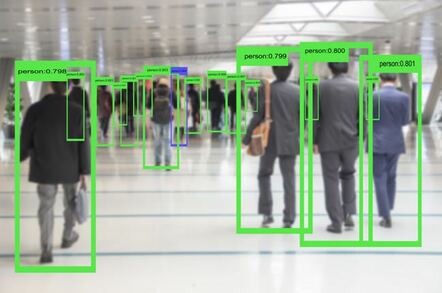
    Person recognition systemA trio of Belgium-based boffins have created a ward that renders wearers unrecognizable to software trained to detect people.
    In a research paper distributed through ArXiv in advance of its presentation at computer vision workshop CV-COPS 2019, Simen Thys, Wiebe Van Ranst and Toon Goedeme from KU Leuven describe how some colorful abstract signage can defend against Darknet, an open source neural network framework that supports You Only Look Once (YOLO) object detection.
    The paper is titled "Fooling automated surveillance cameras: adversarial patches to attack person detection."
    Adversarial images that dupe machine learning systems have been the subject of considerable research in recent years. While there have been many examples of specially crafted objects that trip up computer vision systems, like stickers that can render stop signs unrecognizable, the KU Leuven boffins contend no previous work has explored adversarial images that mask a class of things as diverse as people.
    "The idea behind this work is to be able to circumvent security systems that use a person detector to generate an alarm when a person enters the view of a camera," explained Wiebe Van Ranst, a PhD researcher at KU Leuven, in an email to The Register. "Our idea is to generate an occlusion pattern that can be worn by a possible intruder to conceal the intruder from for the detector."

    Thursday, April 11, 2019

    Privacy security

    Your car is watching you. Who owns the data?

    Картинки по запросу Your car is watching you. Who owns the data?If you’re driving a late model car or truck, chances are that the vehicle is mostly computers on wheels, collecting and wirelessly transmitting vast quantities of data to the car manufacturer not just on vehicle performance but personal information, too, such as your weight, the restaurants you visit, your music tastes and places you go.
    A car can generate about 25 gigabytes of data every hour and as much as 4,000 gigabytes a day, according to some estimates. The data trove in the hands of car makers could be worth as much as $750 billion by 2030, the consulting firm McKinsey has estimated. But consumer groups, aftermarket repair shops and privacy advocates say the data belongs to the car’s owners and the information should be subject to data privacy laws.
    Yet Congress has yet to pass comprehensive federal data privacy legislation. And although Sen. Roger Wicker of Mississippi, chairman of the Senate Committee on Commerce, Science, and Transportation, has said he would like to see federal privacy legislation passed by the end of the year, it is unclear if that goal can be met.

    Sunday, April 7, 2019

    Privacy security

    Should we be searching for hidden spy cameras in Airbnbs and hotels?

    The Barker family found a hidden camera in an Airbnb in Ireland.
    Airbnbs have changed the way we vacation, offering accommodation that adds a whole new dimension to travel.
    Sometimes that extra dimension is delightful -- a unique place to crash in a cool neighborhood, or the chance to experience life like a local.
    But lately, there have been a few incidents where the extra dimension is downright creepy.
    In the most recent, a family from New Zealand discovered a hidden camera livestreamingfrom a property they were renting in Cork, Ireland. That follows claims of several other secret camera discoveries, which were reported last month by The Atlantic magazine.
    Of course, these are likely isolated incidents and Airbnb says it has taken action, investigated and apologized where appropriate. Airbnb insists negative experiences during stays are extremely rare.

    Sunday, March 17, 2019

    Privacy security

    HOW CAMBRIDGE ANALYTICA SPARKED THE GREAT PRIVACY AWAKENING
    Cambridge Analytica had purchased Facebook data on tens of millions of Americans without their knowledge to build a “psychological warfare tool,” which it unleashed on US voters to help elect Donald Trump as president. Just before the news broke, Facebook banned Wylie, Cambridge Analytica, its parent company SCL, and Aleksandr Kogan, the researcher who collected the data, from the platform. But those moves came years too late and couldn't stem the outrage of users, lawmakers, privacy advocates, and media pundits. Immediately, Facebook’s stock price fell and boycotts began. Zuckerberg was called to testify before Congress, and a year of contentious international debates about the privacy rights of consumers online commenced. On Friday, Kogan filed a defamation lawsuit against Facebook.

    Friday, March 15, 2019

    Privacy security

    How to 'disappear' from surveillance without breaking any laws: Bitcoin evangelist reveals 15 extreme steps for masking your identity (but it'll cost you $30,000)


    Jameson Lopp, CTO at Bitcoin security company Casa, has discovered how to get off the grid. Lopp developed an exhaustive, albeit extremely complicated, strategy that cost him $30,000
    In today's all-connected world, it can seem impossible to remain truly anonymous and insulated from being tracked, watched or indexed by the internet or other means.
    But Jameson Lopp, CTO at Bitcoin security company Casa, has discovered how to get off the grid. 
    Lopp devised an exhaustive, albeit extremely complicated, list of 15 steps to 'escape the all-seeing eyes of corporate America and the government,' according to the New York Times. 
    Among the solutions Lopp recommends are to create an LLC to shield your identity, use cash as much as possible, quit using a smartphone GPS for directions and even move to a new home. 
    The goal was to completely remove himself from databases that host our personal information and sell it to third parties, the New York Times reported. 
    His concerns aren't unlike the recent attention that's been given to the shadowy underworld of 'data brokers' and online surveillance systems that profit off the sale of users' data - often without their knowledge or consent. 
    Many organizations, ranging from telecommunications firms and hotels to the likes of Silicon Valley giants have been criticized for extensively collecting and sharing users' data. 
    Privacy security

    ‘Delete Facebook NOW’: WhatsApp co-founder accuses Mark Zuckerberg of trading privacy for revenue after allowing ads on the platform


    Brian Acton, pictured right with his WhatsApp co-founder Jan Koum, has called on everyone to 'delete' their Facebook in an address to students at Stanford. In 2014, Acton sold the instant messaging service to the company for $19 billion (£15bn) and left in 2017
    WhatsApp co-founder Brian Acton urged people to 'delete' their Facebook accounts now, during an address made to students.
    Mr Acton, now the head of non-profit WhatsApp rival Signal, blasted Facebook CEO Mark Zuckerberg for trading privacy for revenue by allowing ads on his platform.   
    He has now called for people to 'reject' Facebook by deleting its family of apps from their smartphones and other devices.
    It comes after the world's largest social network has been beset by a string of privacy scandals.
    Mr Acton has been openly critical of Silicon Valley firms like Facebook and Google in the past for their seemingly profit-driven approach at the expense of people's data.
    It is the second time that Mr Acton has made the comment publicly. Last year he posted on Twitter 'It is time. #delete facebook' following Facebook's failings involving a political consultancy firm.

    Tuesday, January 1, 2019

    Privacy security

    Google wins lawsuit, can continue to use facial recognition tech on users without consent


    Google wins lawsuit, can continue to use facial recognition tech on users without consent
    A federal judge has thrown out a lawsuit that alleged Google’s nonconsensual use of facial recognition technology violated users’ privacy rights, allowing the tech giant to continue to scan and store their biometric data.
    The lawsuit, filed in 2016, alleged that Google violated Illinois state law by collecting biometric data – as biologically unique to users as fingerprints – without their consent. The data was harvested from their pictures stored on Google Photos.
    The plaintiffs wanted more than $5 million in damages for “hundreds of thousands” of users affected, arguing that the unauthorized scanning of their faces was a violation of the Illinois Biometric Information Privacy Act, which completely outlaws the gathering of biometric information without consent.

    Tuesday, September 25, 2018

    Privacy security

    UK intelligence agencies illegally spied on privacy organisation


    The data was collected as part of two programmes called Bulk Communications Data and Bulk Personal Datasets [Daniel Becerril/Reuters]
    UK intelligence agencies MI5, MI6 and GCHQ violated the law by collecting and examining data of human rights group Privacy International, a court said on Tuesday.
    The data was collected as part of two mass surveillance programmes called Bulk Communications Data and Bulk Personal Datasets, the Investigatory Powers Tribunal said.
    "We do not know why MI5 reviewed Privacy International's data, but the fact that it happened at all should raise serious questions for all of us," Caroline Wilson Palow, general counsel of Privacy International, said in a statement.

    Sunday, July 29, 2018

    Privacy security

    UK Tribunal Says GCHQ Engaged In Illegal Telco Collection Program For More Than A Decade


    Картинки по запросу GCHQUK's NSA -- GCHQ -- has lost legal battle after legal battle in recent years, most of those triggered by the Snowden leaks. The UK Appeals Court ruled its bulk collection of internet communications metadata illegal earlier this year. This followed a 2015 loss in lawsuit filed over the interception of privileged communications, resulting in a destruction order targeting everything collected by GCHQ that fell under that heading.
    Some battles are still ongoing, with several of them spearheaded by Privacy International. PI's work -- and multiple lawsuits -- have led to the exposure of GCHQ's oversight as completely toothless and a declaration that the agency's surveillance agreement with the NSA was illegal… at least up to 2014's codification of illegal spy practices. (This codification was ultimately ruled illegal earlier this year.)
    Thanks to another PI legal challenge, the Investigatory Powers Tribunal has found GCHQ engaged in even more illegal spying... for more than a decade. The expansion of surveillance powers following the September 11, 2001 terrorist attacks gave GCHQ more ways to collect data from telcos. This was supposed to be directed and overseen by the UK Foreign Secretary, but the lawsuit showed the oversight did nearly nothing and there were virtually no limits to what could be collected from phone companies.

    Thursday, May 3, 2018

    Privacy security

    How Countries “Outsource” Electronic Surveillance And Threaten Privacy


    One might assume that countries like the United States and United Kingdom simply collect data on citizens through their own mass surveillance systems. Many governments around the world, however, work in concert to maintain intelligence sharing partnerships that allow them to pool their mined electronic communications. In a new report titled “Secret Global Surveillance Networks: Intelligence Sharing Between Governments and the Need for Safeguards,” Privacy International describes these partnerships as the outsourcing of surveillance. In “allowing governments to bypass domestic constraints on their surveillance activities,” the watchdog group says that the partnerships can “contribute to, or facilitate, serious human rights abuses, such as unlawful arrest or detention, or torture and other cruel, inhuman or degrading treatment.”

    Depending on the countries’ specific intelligence sharing arrangements, most anything can be shared, says Edin Omanovic, Privacy International’s State Surveillance Programme Lead. The system’s trove includes information like raw internet and phone data, intelligence reports about individuals, watchlists, information about intelligence gathering techniques, information about encryption and decryption techniques, and more.

    Friday, March 30, 2018

    Privacy security

    Never mind Facebook, Google is the all-seeing ‘big brother’ you should know about


    Never mind Facebook, Google is the all-seeing ‘big brother’ you should know about
    The Cambridge Analytica scandal put Facebook through the wringer in recent weeks, losing the company $100 billion in stock value and prompting a global debate on internet privacy.
    The social media giant was forced to apologize and overhaul its privacy and data sharing practices, but it still remains in the media spotlight and in the crosshairs of the Federal Trade Commission, which says it may be liable for hundreds of millions of dollars worth of fines.
    But amid all the furor, one monolithic entity has continued to harvest data from billions of people worldwide. The data gathered includes a precise log of your every move and every internet search you’ve ever made, every email you’ve ever sent, your workout routine, your favourite food, and every photo you’ve ever taken. And you have allowed it to happen to yourself, for the sake of better service and more relevant advertising.
    Google is a ‘Big Brother’ with capabilities beyond George Orwell’s wildest nightmares. These capabilities are all the more chilling after Google’s parent company, Alphabet Inc., cut its famous “don’t be evil” line from its code of conduct in 2015.
    Everything you’ve ever searched for on any of your devices is recorded and stored by Google. It’s done to better predict your future searches and speed up and streamline your browsing. You can clear your search history, but it only works for that particular device. Google still keeps a record of everything. Click here to see everything you’ve ever searched on a Google device.

    Monday, March 26, 2018

    Privacy security

    The Guardian view on surveillance: make your number unobtainable


    Person looking at Facebook logo on mobile phoneOne of the strangest features of the current debates about privacy on the internet is the way in which private advertising companies are able to get away with practices that no democratic government could. The security services and police are restricted in their surveillance of private citizens on the web by the Investigatory Powers Act 2016. Around 130,000 people signed a petition against it, largely because of the provision requiring internet providers to keep for up to a year records of all the websites that their users visited. One campaigner described it as “one of the most extreme surveillance laws ever passed in a democracy”.
    Yet the material collected in this way can only be accessed under a system of legal and political oversight: the Home Office might like more powers, but the European court of justice ruled in December 2016 that independent judicial authorisation was needed for the “general and indiscriminate retention” of personal data. All that fuss over a year’s worth of websites, when it turns out that Facebook has been storing all the contact details, the instant messages, and the phone calls of millions of its users for as long as 10 years without anyone outside the firm realising what their apparently innocuous consent implied.