Страницы

Showing posts with label Directed energy. Show all posts

Friday, March 6, 2020

Directed energy

The US Military Is Getting Serious About Laser Weapons
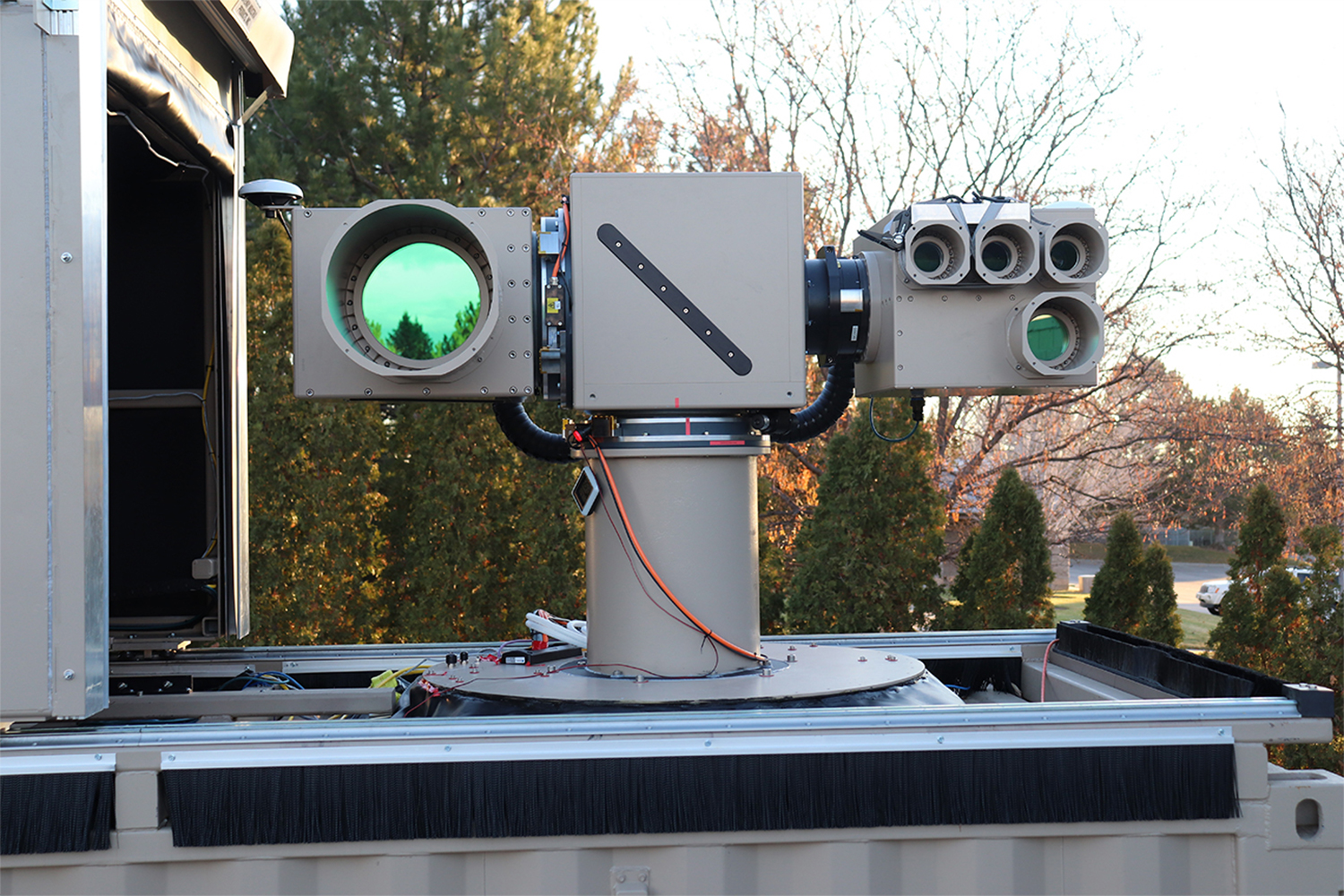

U.S. Air Force HADES directed energy weapon
Let’s be honest, Space Force, the newest branch of the U.S. military, sounds more like a plot line cut from Spaceballs than Star Wars. If you want the scoop on the real futuristic developments in our armed forces, ones that mirror higher-quality science fiction, look no further than the directed energy department. 
What is “directed energy”? In short: lasers. Yes, the U.S. military has been developing weaponized lasers. And as The Economist explains in a new feature on the technology, what previously seemed like an unattainable dream popularized by George Lucas and H.G. Wells has already been green-lit for use in the field, and more powerful versions are on their way.
“For my entire career we have been working on directed energy,” Kelly Hammett, who runs the Directed Energy Directorate at the Air Force Research Laboratory, told The Economist. “We’re finally at the point at which we’re going to see systems that will make a more substantive difference on the battlefield.”

Wednesday, January 15, 2020

Directed energy


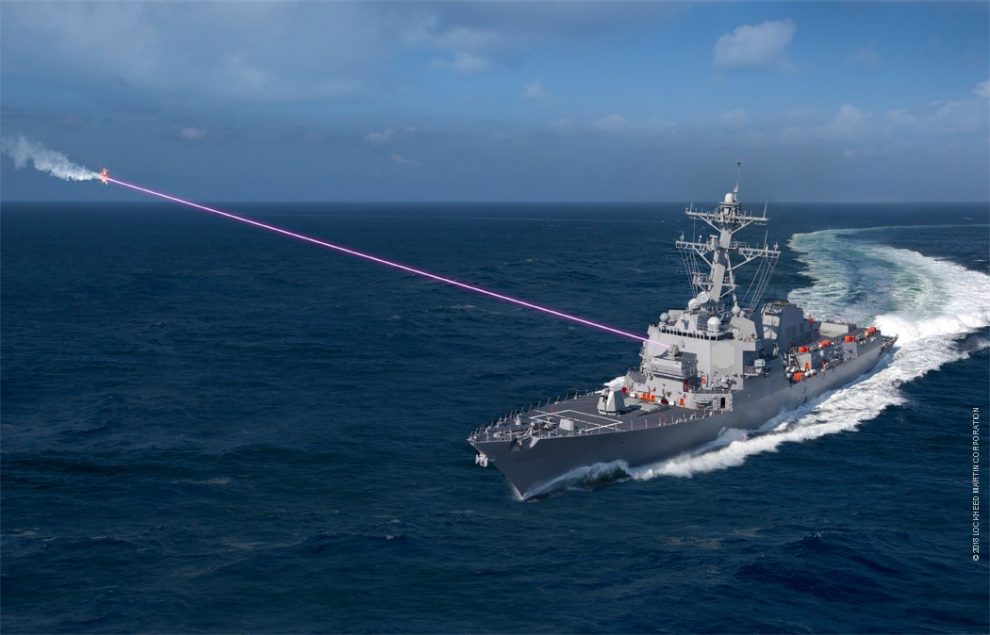
How Laser Weapons are Changing the Defense Equation

DE-1In 2017, a U.S. military ally detected an unusual threat: a small quadcopter drone—the kind anyone can buy online for $200—was approaching. A $3 million Patriot missile was fired to take it down, eliminating the threat, but at a disproportionate cost. The incident highlights an issue armed forces worldwide face today: What is the best defense against a new generation of weapons?
With rapidly changing technology, warfare is evolving along similar lines around the globe. Today’s threats are technologically advanced, relatively low-cost, small-scale and lethal. Responding to several hundred inexpensive drones with our costliest missiles is not a sustainable strategy. New defensive measures leverage artificial intelligence to help decision-makers respond to potential threats at tactical speed, using data and predictive analytics and swarms of UAVs.
Directed energy and laser weapon systems are a proven solution that effectively addresses tech-driven threats with more accurate, flexible and affordable performance than offered by traditional ballistics. “They’re designed to be precise, to yield minimal collateral damage and, in essence, offer an endless magazine,” said Dr. Rob Afzal, Lockheed Martin senior fellow, Laser and Sensor Systems. “As long as you have power, you can shoot—that’s a critical capability when you have to take on a large number of low-cost distributed threats such as a swarm of drones, each carrying a small explosive.”

Monday, October 14, 2019

Directed energy

Air Force researchers to test high-power microwave weapon to destroy or disable swarms of unmanned aircraft


Swarm Killer 14 Oct 2019
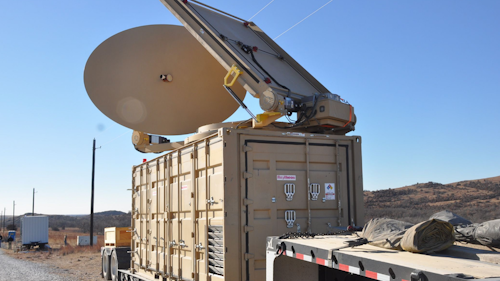
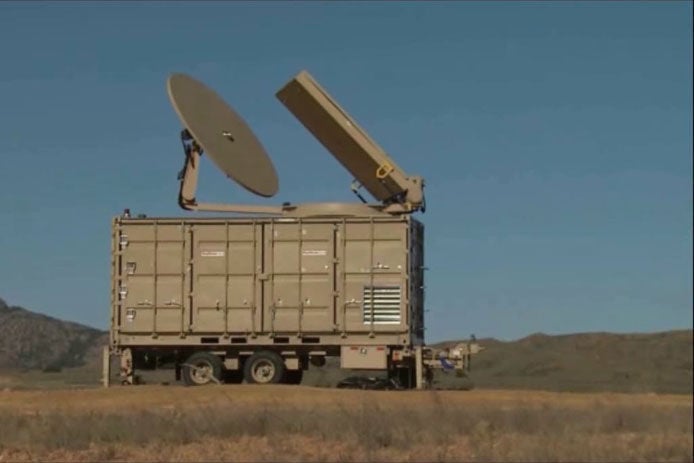
The testing phase will span over 12 months in which the Phaser will engage simulated and real unmanned aerial vehicle (UAV) threats. The evaluation will explore the effectiveness of Phaser’s counter-drone engagement without disrupting the necessary installation operations.
The effectiveness of Phaser against drone swarms already has been demonstrated at the Army MFIX exercise in 2018, when the system eliminated 33 drones, two to three at a time. Currently mounted on a shipping container-like box, Raytheon plans to reduce the size significantly in future versions.
AFRL already evaluates two other high-power microwave systems -- the Tactical High-Power Operational Responder (THOR), that deploys as a means to provide base defense against drones, and ‘Counter-Electronic High-Power Microwave Extended-Range Air Base Air Defense’ system, or CHIMERA, designed to engage multiple targets over a larger area.


Sunday, October 6, 2019

Directed energy

China May Blind U.S. Satellites in Future Conflicts

China blind satellite
The United States Space Command is concerned that China would likely target American spy satellites in future conflicts. It is very likely that China is developing lasers designed to blind the United States’ eyes in space.
In response to these concerns, the United States Space Command is developing tactics with the National Reconnaissance Office to protect and defend America’s spy satellites. 
“We’re pretty comfortable [in asserting] that they are developing directed energy weapons – probably building lasers to blind our satellites,” said the commander of SPACECOM and the United States Air Force Command, General John Raymond.
If war was to ever occur, ground-based Chinese lasers could be able to blind the sensors onboard American KH-11 spy satellites, thus making them useless. Such satellites orbit Earth at an altitude of about 200 miles. So a ground-based laser would have to be very powerful to reach the satellites while penetrating through the atmosphere and clouds. However, as Popularmechanics.com states, “a ground-based laser could be built as big as the operator wanted it to be,” meaning that if the Chinese wanted a ground-based anti-satellite system, then they will have it. 

Saturday, September 7, 2019

Directed energy

Pentagon Shifts Focus on Directed Energy Weapons Technology

The Department of Defense is focusing its directed energy weapons research on technologies ready to field now, placing on the backburner plans to create more complex space-based technology, the Pentagon’s head of research said on Wednesday.

Exploring the usefulness of directed energy, specifically figuring out how to increase the wattage of these weapons, is the Pentagon’s focus now, Michael Griffin, the undersecretary of defense for research and engineering, said during a keynote address at the 2019 Defense News conference. In practical terms, this means the Pentagon wants technologies ready to deploy in the near-term and is shelving plans to develop systems that are years away from initial testing.

“We’re looking at high powered microwaves,” Griffin said. “We’re deferring work on neutral particle beams indefinitely. It’s just not near-enough term.”

Griffin’s comments Wednesday signal a narrowing focus for the Pentagon’s directed energy development. In March, the Pentagon was fully behind developing a space-based neutral particle beam, a directed energy project that has its roots in the 1980s.

Friday, September 6, 2019

Directed energy
An artist's rendering of a neutral particle beam. Pentagon Shelves Neutral Particle Beam Research


Defense officials are taking a step back from one of its most ambitious research goals: launching a massive neutral-particle-beam generator, essentially a ray gun, into space to fry the electronics of enemy missiles. The funds will go instead toward more fundamental research aimed at making lasers more powerful, according to Michael Griffin, defense undersecretary for research and engineering.

It marks a return to Earth for one of the biggest ideas that the Department has broached in recent years. Griffin first publicly floated the idea of a neutral particle beam in space in March 2018, while highlighting potential directed-energy weapons beyond high-powered lasers.

“High-powered microwave approaches can affect an electronics kill. The same with the neutral particle beam systems we explored briefly in the 1990s,” he said.

In March, Defense and military officials announced their intention to test a neutral particle beam in space in 2023, and requested $34 million to develop it in the 2020 budget.

Saturday, March 23, 2019

Directed energy

The Pentagon Wants to Test a Space-Based 'Particle Beam' by 2023


ULA launches WGS-10 satellite at Cape Canaveral Air Force Station
The U.S. Department of Defense wants to test a directed energy weapon in space, one that it hopes will someday destroy ballistic missiles moments after launch. The weapon, a so-called neutral particle beam, would be boosted into space and tested from orbit in 2023.

Neutral particle beams don’t get as much attention as lasers but are attractive in their own right. The weapons work by accelerating particles without an electric charge—particularly neutrons—to speeds close to the speed of light and directing them against a target. The neutrons knock protons out of the nuclei of other particles they encounter, generating heat on the target object.

Particle beams are effectively the “heat rays” or even “death rays” of science fiction. Unlike lasers, which burn the surface of a target, particle beams penetrate beyond the surface to affect its interior. This makes particle beams immune to measures that can deflect lasers, like brightly polished, mirror-like surfaces. A sufficiently powerful beam could generate enough heat to burn a target, igniting its fuel supply, melting it and rendering it aerodynamically unstable, or frying a missile’s onboard electronics.


Thursday, March 21, 2019

Directed energy

Laser Weapons: A Blueprint for Adding Them to the Force

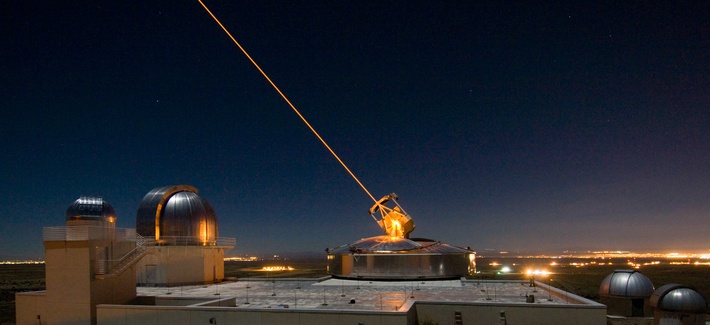
The Sodium Guidestar at the Air Force Research Laboratory Directed Energy Directorate's Starfire Optical Range.
The country that is first to develop and field battlefield lasers will have a distinct military advantage. Directed energy weapons promise to complement kinetic weapons and help fight off various emerging threats, such as swarms of drones, fast attack boats, and cruise missiles. And the recently released Missile Defense Review calls for studying the potential of space-based lasers to intercept ballistic missiles.

But to achieve that advantage, the United States must develop lasers and other directed energy weapons sooner rather than later, and do so at scale to put them into the hands of our warfighters in a meaningful way. This week’s Directed Energy Summit, the first major gathering of its kind since the release of the Missile Defense Review, offers a forum where top national security leaders and policymakers can seize the momentum.

The question is, how? Here’s a 10-point blueprint designed to get us going in the right direction.
The Defense Department must scale up laser power and improve beam quality development. The pace of maturing these capabilities is not technology-limited – it is funding-limited. Therefore, we should increase directed energy funding to between $2 billion to $3 billion per year.
We should also take further action to reduce the size, power, weight, and cost requirements of these weapons...

Sunday, April 1, 2018

Directed energy

Tucson Tech: Pentagon, Raytheon re-energize directed-energy weapons push

High-powered microwave
Raytheon is amping up development of its directed-energy weapon systems as the Pentagon looks to electromagnetic pulse devices and weaponized lasers to defeat drones and other airborne threats.
The defense contractor recently announced it scored 45 drone kills in an Army demonstration, using an advanced high-power microwave and a laser weapon mounted on an all-terrain vehicle.
The microwave system, made by a division of Tucson-based Raytheon Missile Systems based in Albuquerque, knocked down 33 small drones — two and three at a time — in a December test at the U.S. Army Fires Center of Excellence at Fort Sill, Oklahoma.
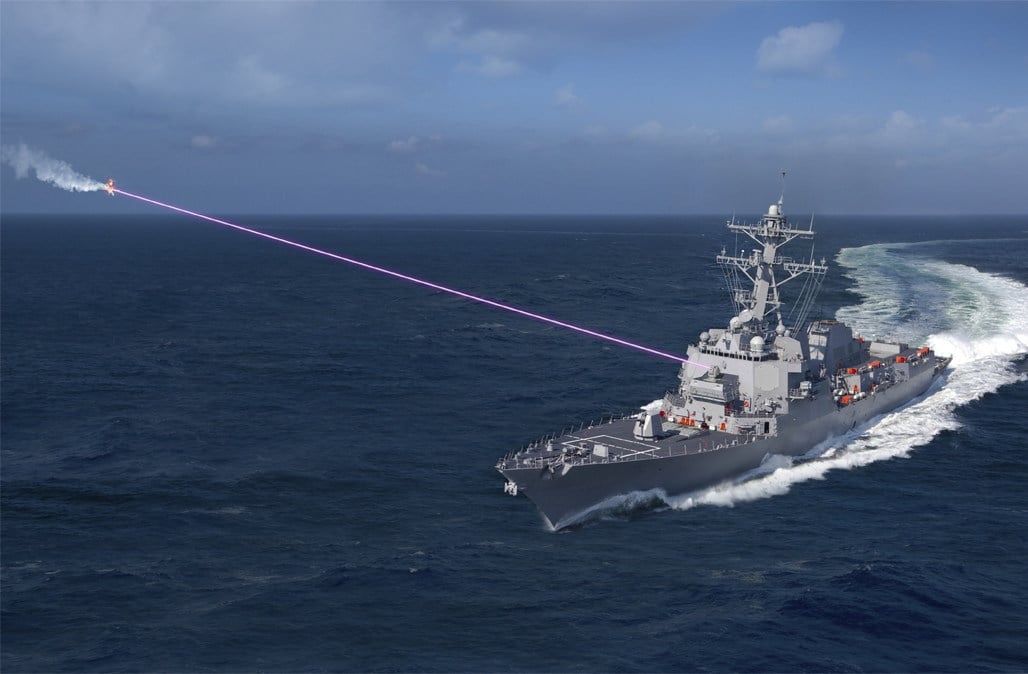
In the same test, a high-powered laser mounted on a Polaris MRZR ATV shot down 12 airborne, maneuvering small and medium-sized unmanned aircraft, and destroyed six stationary mortar projectiles. The laser system was developed by Texas-based Raytheon Space and Airborne Systems.


Tuesday, March 27, 2018

Directed energy

R&D Focus Areas for Directed Energy Weapons (DEW) Market


Directed energy weapons could have numerous important advantages over conformist armaments direct energy weapons can be utilized unobtrusively as energy above and below the noticeable spectrum is imperceptible and does not produce sound. Light is very slightly changed by gravity, giving it an approximately flat path. It is also nearly resistant (in anything similar to normal environmental conditions) together Coriolis force and windage. This makes plan much more specific and expands the range to line-of-sight, incomplete only by ray diffraction and spread by overriding distinctive contents.

In recent years, the series of advanced odious and self-protective abilities offered by smart arms has made them an essential part of any military force. This has formed an increased popularity for directed energy arms from different regions such as the Middle East, Asia Pacific and North America. This, as a result, has augmented R&D spending for the expansion of directed energy arms. The directed energy weapons market is an extremely active and has high expansion potential for numerous reasons such as the varying geopolitical dynamics of the financial system as well as the growing incidences of weapons conflicts, violent behavior, and terrorism.


Wednesday, March 21, 2018

Directed energy

Report to Congress on Army Directed Energy Weapons

The U.S. military has a long and complicated history in developing directed energy (DE) weapons. Many past efforts have failed for a variety of reasons and not all failures were attributed to scientific or technological challenges associated with weaponizing DE. At present, a number of U.S. military DE weapons-related programs are beginning to show promise, such as the Navy’s Laser Weapon System (LaWs), the first ever Department of Defense (DOD) laser weapon to be deployed and approved for operational use, according to the Navy. With a number of U.S. Army weapons-related DE programs showing promise during concept demonstrations and their potential relevance in addressing a number of current and emerging threats to U.S. ground forces, some believe the Army is making progress to field viable DE weapon systems designed to counter rockets, artillery, and mortars (C-RAM) and address certain types of short-range air defense (SHORAD) threats.

While DE weapons offer a variety of advantages over conventional kinetic weapons including precision, low cost per shot, and scalable effects, there are also some basic constraints, such as beam attenuation, limited range, and an inability to be employed against non-line-of-sight targets, that will need to be addressed in order to make these weapons effective across the entire spectrum of combat operations.

DE weapon system development raises a number of national security and international relations implications associated with DE weapons as well as international law concerns that must also be taken into account. By no means does the United States enjoy a monopoly on DE weapons development, and potential adversaries such as Russia and China, as well as allies such as Israel, have well-established DE weapons programs that, in some cases, might be on par with or even surpass current U.S. DE weapons development programs, presenting additional national security concerns to U.S. policymakers.
Directed energy

Raytheon Demonstrates Directed Energy Weapons at Army Exercise


Raytheon recently took down 45 drones during an exercise using a high energy laser and a high-power microwave, company executives said March 20.
The company showed off its technology in early December at the U.S. Army Fires Center of Excellence’s Maneuver Fires Integrated Experiment, or MFIX, in Fort Sill, Oklahoma.
“Already our adversaries, including our low-tech adversaries, have found ways to take advantage of these drone systems and modify them to be a significant threat to the warfighter and our coalition forces abroad,” said Evan Hunt, high-energy laser business development lead at Raytheon’s space and airborne systems division.
So far, the U.S. military has struggled to find a cost-effective way to neutralize these threats, he said during a briefing with reporters in Arlington, Virginia. However, directed energy platforms may be the key to solving that challenge.
During the demonstration, Raytheon displayed two separate technologies — a high energy laser atop a dune buggy and a high-power microwave — that when used in tandem could provide the military with an affordable and effective counter-drone capability, he said.
Directed energy

New Pentagon R&E Chief Gung-Ho About Directed Energy


The Defense Department’s new undersecretary for research and engineering wants to put renewed emphasis on several types of directed energy weapons as the United States seeks to stay ahead of peer competitors.

Michael Griffin, who was installed in his position just a few weeks ago, worked on these technologies earlier in his career including when he was part of the strategic defense initiative during the Cold War. SDI envisioned using space-based lasers and other capabilities to shoot down enemy intercontinental ballistic missiles.

Reenergizing directed energy efforts is a top priority, Griffin said. However, he isn’t just interested in “big lasers.”

“In the heyday of directed energy we were working on high-power microwaves, we were working on several flavors of lasers … and we were working on neutral particle beam weapons,” he noted March 21 during a speech at the annual Directed Energy Summit in Washington, D.C., which was hosted by Booz Allen Hamilton and the Center for Strategic and Budgetary Assessments.

Each of these capabilities has its own advantages and disadvantages, he said. For example, high-power microwaves can effect an electronic kill. These systems and neutral particle beams have the advantage of being non-attributable and they don’t leave behind debris, he said.