Страницы

Showing posts with label Missile defense. Show all posts

Monday, August 17, 2020

Missile defense

US sensor plan to stop hypersonic attack – 'You can't shoot what you don't see'
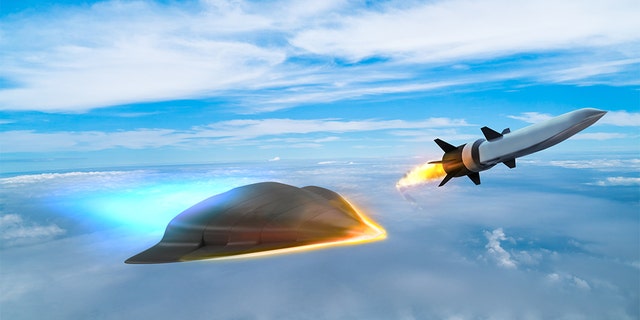
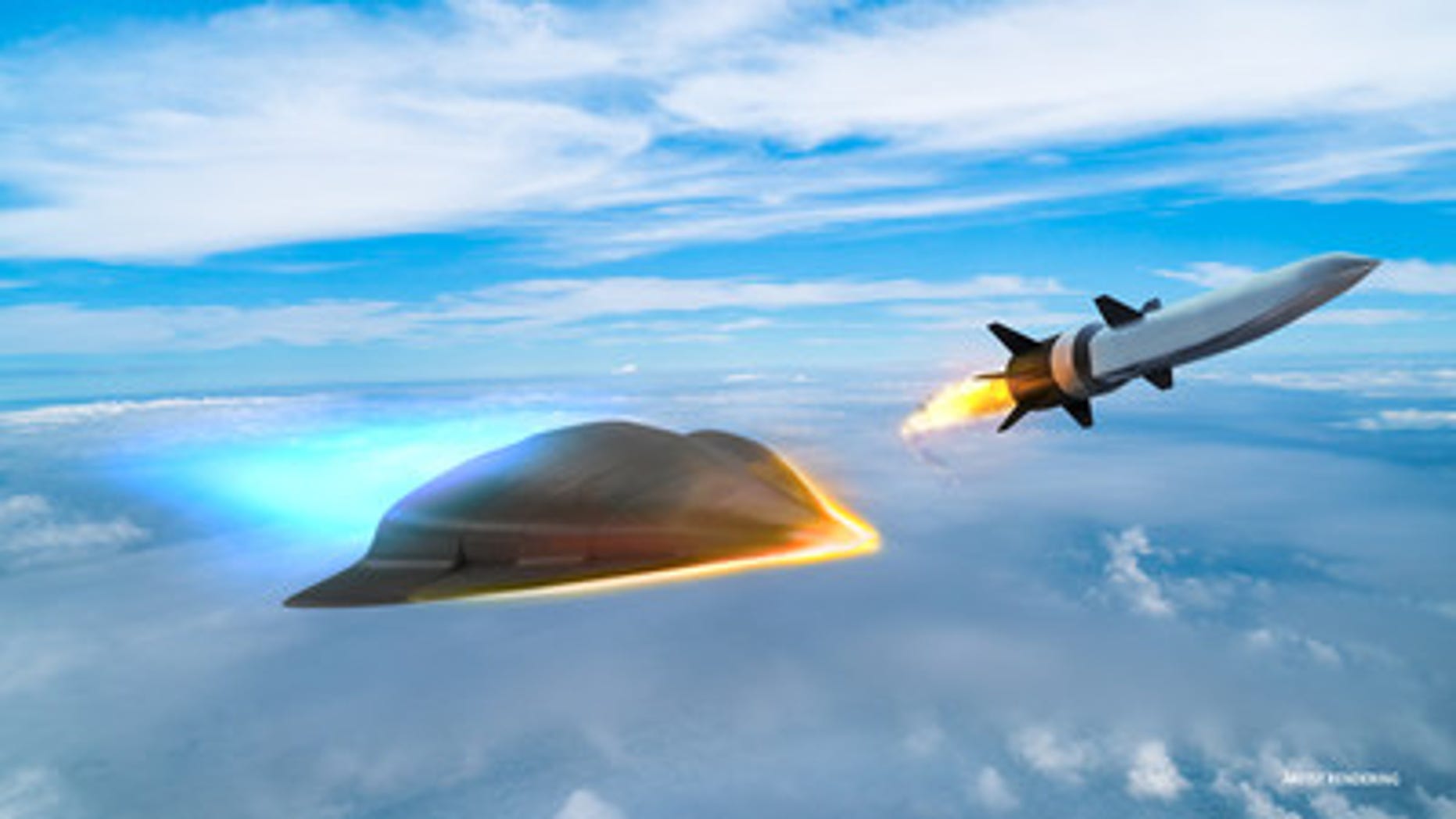
Artist's impression of hypersonic technology.The prospect of long-range hypersonic attacks, new precision-guidance ballistic missiles and even next-generation ICBMs has inspired the Pentagon’s Missile Defense Agency to pursue new space-based sensors to track and destroy faster, more lethal incoming missile attacks traveling beyond the earth’s atmosphere.
The initiative is based on the concept that faster, more precise enemy attacks, especially those traveling through space, will need a new-generation of space-integrated sensors and faster, more precise interceptors.
"You can't shoot what you don't see. Providing that sight are sensors and radars aboard ships, on the ground and in space.” Missile Defense Agency director Vice Adm. Jon Hill said at the Space and Missile Defense Symposium in Washington D.C., according to a Pentagon report.

Tuesday, August 4, 2020

Missile defense

Raytheon Partners With Israel's Rafael to Build Iron Dome Missile Defense for U.S.


Black and white photo of a missile battery
For nearly a decade, Raytheon Technologies (NYSE:RTX) has been assisting Israeli defense company Rafael with development and marketing of the latter's Iron Dome missile defense system, used to intercept and destroy incoming drones, cruise missiles, rockets, and mortar and artillery shells. Now, Raytheon will get a chance to help build Iron Dome missiles as well.
On Monday, Raytheon and Rafael announced they're taking their collaboration on Iron Dome to a new level. Forming a new joint venture in the U.S., the two defense companies will jointly produce Iron Dome missiles in the U.S., for sale to the U.S. military and potential foreign allies.  
Iron Dome is famed as the missile defense system that Israel used during Hamas attacks against it in conflicts in last 2012, and subsequently. Out of 500-plus hostile missiles launched at Israel from Gaza between Nov. 14 and Nov. 21, 2012, that posed a threat to Israeli population centers, Iron Dome missiles reportedly destroyed 85% of their assigned targets -- meaning the missile defense system could be as much as twice as effective as Raytheon's own Patriot missile system, built in cooperation with Lockheed Martin.

Sunday, July 12, 2020

Missile defense

China grasps S-350 Vityaz air defense missile system, shown at military parade in Moscow


On June 24, a grand military parade was held on Red Square in Moscow. The audience was surprised by a large number of the latest samples of air and ground equipment. But the main attention was focused on the S-350 Vityaz anti-aircraft missile system, which first entered the cobblestones of Red Square. It took 28 years to develop this type of weapon in Russia. Its appearance will make it possible to move to a new technological level. The S-350, like its predecessor, the S-300, has unique characteristics that have become the focus of close attention of the whole world.
New generation with improved performance
As the threat of American cruise and ballistic missiles and bombers was counteracted over the past century, the S-300 anti-aircraft missile system began to become obsolete, in connection with which Russia decided to create a high-performance advanced air defense system. As a result, after many years of development, the new S-350 complex was born. Vityaz has won the favor of the Russian military due to its superior performance.
The system should gradually replace the existing S-300 anti-aircraft missile system, which will increase the efficiency of intercepting cruise missiles up to 2.5 times. This new medium and short-range anti-aircraft missile system was developed by the well-known Russian military-space defense concern Almaz-Antey.

Monday, July 6, 2020

Missile defense

IBCS: Army Launches Massive Army Missile Defense Test

Over seven hundred troops, technical experts, and supporting personnel have come together in the New Mexico desert to field-test the Army’s new IBCS command network for missile defense. At the same time, the massive gathering is an equally crucial test for the Army’s defense against COVID-19, which is spiking in the southwest.

After weeks of rehearsals, the director for missile defense modernization, Army Futures Command’s Brig. Gen. Brian Gibson says, “we’re go for starting on the seventh.” That’s tomorrow, seven weeks after the originally scheduled May 15th, which the Army pushed back because of COVID-19. The Army has put in place elaborate precautions against the pandemic, precautions Gibson compared to those the NBA is using as it restarts the basketball season at Disney World.The first principle, Gibson told me in an interview last week, is to reduce the number of people physically present at the sprawling White Sands Missile Range to the absolute minimum required. Many Army and contractor experts monitoring the test can do their job just fine long-distance, as long as they have access to the detailed data being collected on the range. Yes, they may have to go to a secure facility to get that access, since much of the data is classified and can’t be shared over the usual work-from-home systems, but that’s still safer than traveling to White Sands and congregating there with people from all over the country.

Tuesday, June 16, 2020

Missile defense

Japan halts deployment of Aegis Ashore missile defence system

Taro Kono 201510.jpg
Japanese Defence Minister Taro Kono said on Monday that he had suspended plans to deploy two U.S.-made Aegis Ashore air defence radar stations designed to detect and counter North Korean ballistic missiles.

Kono told reporters that Japan was halting the deployment due to technical issues as well as cost. The two proposed Lockheed Martin Co radar sites, one in the northern prefecture of Akita and the other in Yamaguchi prefecture in southern Japan, had also faced opposition from local residents.

With radars more powerful than the ship-based version of Aegis that Japan already operates, the planned stations were meant to help counter recent missile advances by North Korea and relieve pressure on Japan’s stretched navy.

Friday, May 8, 2020

Missile defense

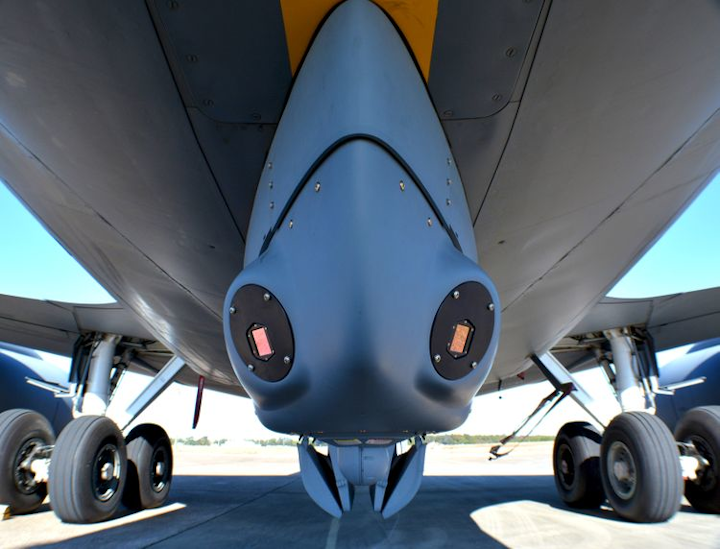
Northrop Grumman to install LAIRCM laser missile defense systems aboard U.S. large military aircraft

Laircm 6 May 2020
Missile-defense experts at Northrop Grumman Corp. will install LAIRCM laser-based missile-defense systems for large military aircraft under terms of a $123.5 million U.S. Navy order announced on Friday.
Officials of the Naval Air Systems Command at Patuxent River Naval Air Station, Md., are asking engineers at the Northrop Grumman Mission Systems segment in Rolling Meadows, Ill., to provide the electro-optical Large Aircraft Infrared Counter Measures (LAIRCM) for a variety of U.S. military aircraft.
LAIRCM automatically detects a missile launch, determines if it is a threat, and activates a high-intensity laser-based countermeasure system to track and defeat the missile, Northrop Grumman officials say.

Thursday, March 26, 2020

Missile defense

Navy ships seek to stop missile, drone and surface attacks -- all at once

PACIFIC OCEAN (July 30, 2009) During exercise Stellar Avenger, the Aegis-class destroyer USS Hopper (DDG 70) launches a standard missile (SM) 3 Blk IA, successfully intercepting a sub-scale short range ballistic missile, launched from the Kauai Test Facility, Pacific Missile Range Facility (PMRF), Barking Sans, Kauai - file photo. (U.S. Navy photo/Released)Multiple-track sensing and detection is expected to bring the desired radar detection strategy, as SPY-6 radars combine air-warfare and ballistic missile defense into a single system. When it comes to application, the SPY-6 radar systems streamline otherwise disparate fire-control and detection technologies; the SPY-6 can cue short-range, closer-in interceptors as well as longer-range ballistic missile interceptors such as an SM-3. This shortens sensor-to-shooter time and offers war commanders a longer window with which to make decisions about which countermeasure is needed. This integration is precisely the kind of defense needed to counter a multi-pronged, coordinated enemy attack potentially combining ballistic missiles with cruise missiles, drone attacks ... and other threats.
The SPY-6 family moves beyond existing AN/SPY-1 ship-integrated radar system and, according to an interesting essay in “Microwave Journal,” “handles 30 times more targets and has 30-times greater sensitivity than the SPY-1D(V).” (“Radar and Phased Array Breakthroughs,” Eli Booker).

Tuesday, March 24, 2020

Missile defense

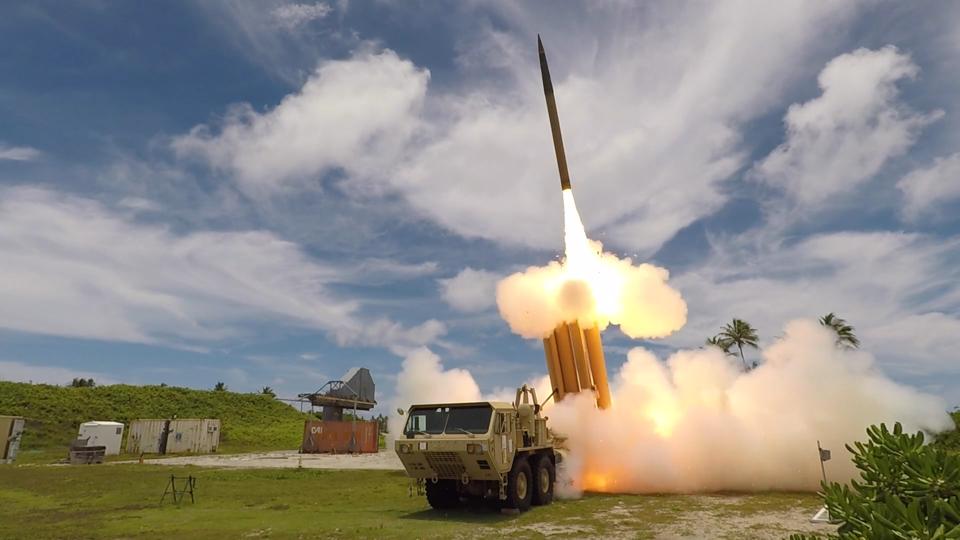
Why The Pentagon’s THAAD Missile Defense System Is Becoming Critical To Protection Of The U.S. Homeland

Missile, THAAD, launchThe coronavirus crisis is a reminder that catastrophes sometimes befall civilization with little or no warning. U.S. policymakers can be forgiven for not realizing how quickly the virus would spread, but they have had plenty of warning about other dangers that could cause widespread suffering.
Foremost among these is the threat of nuclear attack. A single nuclear warhead aimed at a major U.S. city could kill more Americans than all 675,000 men, women and children lost during the Spanish flu outbreak of 1918 (the worst pandemic on record).
Recognizing the danger, Washington is modernizing every part of its strategic arsenal to assure deterrence of nuclear aggression by Russia or China. However, other nuclear actors such as North Korea are emerging that may not be deterred by the threat of massive retaliation.

Wednesday, March 18, 2020

Missile defense

Israel’s Iron Dome Has Cracked


...The U.S. Army is revitalizing its air defense systems – which have languished since the Cold War – in light of threats from Russian and Chinese ballistic missiles as well as drones fielded by numerous nations. Key to this effort is an integrated approach that combines air defense weapons, sensors and command systems. If Iron Dome can’t be linked to other U.S. defense systems, then its utility is limited.
Iron Dome – partly funded by American military aid to Israel -- was conceived in the early 2000s as a way to protect Israeli towns from Hezbollah and Hamas rockets. Israeli manufacturer Rafael partnered with American defense contractor Raytheon to sell it to the U.S. military.
However, American and Israeli critics have questioned whether Iron Dome is as effective as Israel claims. But the Pentagon also worries that Iron Dome might not function so well outside Israel. “Iron Dome’s a good system,” U.S. Army acquisition chief Bruce Jette said at a recent conference. “It’s designed really well to do what it does – which is [to counter] rockets, artillery, and mortars, in a particular configuration, in a particular environment.”

Friday, March 6, 2020

Missile defense

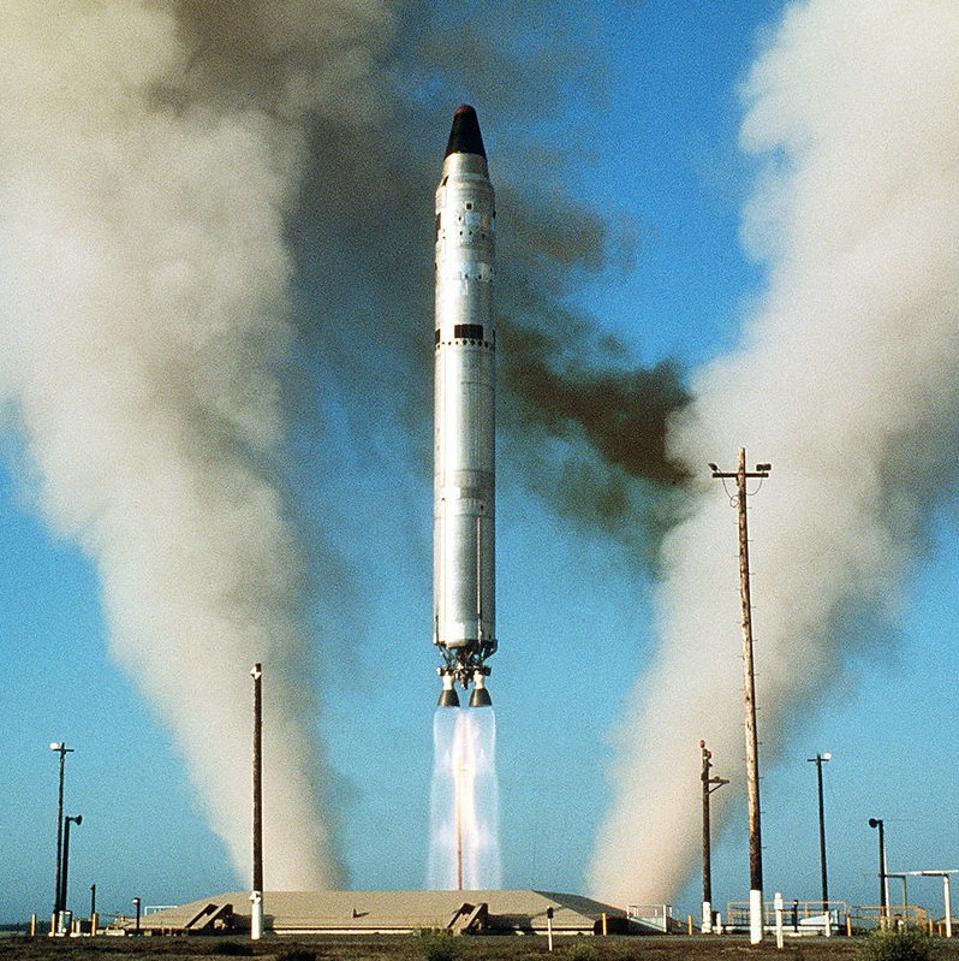
Nuclear Threats Are Growing. How Should U.S. Missile Defenses Be Upgraded?

Missile, launch
That is where most of the $50 billion spent on homeland defense over the last two decades has gone. GMD is the only system in the U.S. arsenal capable of intercepting intercontinental ballistic missiles headed for America.
The good news about the Ground-based Midcourse Defense is that it defends the entire U.S., so it can blunt a small attack coming from any direction—including, for example, an accidental missile launch by Russia.
The bad news is that it wouldn’t be hard for an enemy like North Korea to overwhelm GMD. At present there are only 44 interceptor missiles sitting in silos, and two to four of them might be needed to stop a single incoming nuclear warhead.
U.S. intelligence figures that the time is fast approaching when 44 interceptors won’t be enough to defeat a determined North Korean attack. Congress has already directed that the number of interceptors be increased by 20, and that the new interceptors be in their silos by 2022.

Friday, February 7, 2020

Missile defense

America’s missile defense cannot afford a decade-long gap


America is facing a decision point with regard to our national ballistic missile defense capability. Do we chose protection today, protection tomorrow, or try to cover both? We cannot afford to forget the future, nor can we go naked into the briar patch today. We have to adequately protect both. In this threat environment, we cannot have a gap in our defenses.
The Pentagon recently made a prudent decision to invest in our future protection. This decision can be seen as placing our proverbial missile defense eggs in one basket we called Next Generation Interceptor, or NGI. That project is on target to be combat-ready at the earliest by the year 2030. Alone, however, it is not sufficient.
The threats Americans face on the global stage are real and constantly changing, but one thing remains constant: The most likely threat to our assets abroad and in the homeland will depend on the use of short- and longer-range ballistic missiles.
Traditional foes like Russia and China are investing heavily in hypersonic weaponry. North Korea is just as volatile as it has ever been, and an evermore aggressive Iran keeps us all aware of just how precarious the situation is in the Middle East. The hatred motivating Iran and its numerous proxies led to them recently launching over a dozen missiles at bases in the Middle East.

Friday, January 31, 2020

Missile defense

New Air Force technology aims to stop nuclear attacks faster

In this photo provided by the Missile Defense Agency, the lead ground-based Interceptor is launched from Vandenberg Air Force Base, Calif., in a "salvo" engagement test of an unarmed missile target Monday, March 25, 2019 - file photo.
The Air Force and industry are taking new technical steps to quickly alert commanders in the event that the U.S. comes under nuclear attack, by increasing the time window with which decision-makers have to both defend and potentially retaliate.

This includes using emerging software and hardware technologies and new architecture to, among other things, migrate time-sensitive targeting data to the cloud, increase network resiliency and better connect space, air and ground nodes into a fast, seamless integrated threat analysis system. The current work, which includes new technical methods of engineering communications nodes within a broad network, is part of an overall Pentagon strategy to improve missile warning systems as quickly as new technology emerges.

Part of this effort involves a recent $197 million deal between the Air Force and Raytheon to advance an emerging system called FORGE (Future Operationally Resilient Ground Enterprise). The Raytheon system helps architect the technical apparatus to gather, store, safeguard and network missile-attack related sensor information. It involves synchronizing fixed ground terminals with other nodes such as air and space assets; it also leverages cloud technology. In effect, when Spaced-Based Infrared sensors (SBIR) detect the heat and light signature of an enemy missile launch, the data is then networked to key ground sites and passed to the appropriate decision-makers - such as the President.

Tuesday, December 17, 2019

Missile defense

Pentagon advances new technology to destroy hypersonic missile attacks

Artist's impression of hypersonic weapons.Carrier strike groups, mechanized armored columns of ground vehicles and sensitive ground sites can all be destroyed in a matter of several minutes by fast, maneuverable hypersonic weapons traveling at five-times the speed of sound.
Now - the Pentagon wants to stop them with new space sensor layer technology designed to give U.S. commanders a chance to knock hypersonic missiles straight out of the sky.
The U.S. Missile Defense Agency is now entering Phase IIa of an emerging sensor technology specifically engineered to establish a continuous “track” on approaching hypersonic missiles. It’s called Hypersonic Ballistic Missile Tracking Space Sensor (HBTSS).
“HBTSS will become a primary part of a hybrid tracking layer within the National Defense Space Architecture, which consists of systems in different orbits that provide the capability to detect and track both conventional ballistic missiles and emerging threats,” Missile Defense Agency spokeswoman Maria Njoku, told Warrior in a statement.

Friday, November 8, 2019

Missile defense

New Pentagon technology can detect enemy nuclear attacks faster

An unarmed U.S. Air Force Minuteman III intercontinental ballistic missile launches during an operational test May 3, 2017, at Vandenberg Air Force Base, Calif. - file photo.The Pentagon and industry are taking new technical steps to quickly alert commanders in the event that the U.S. comes under nuclear attack by increasing the time window with which decision-makers have to both defend and potentially retaliate.

This includes using emerging software and hardware technologies and new architecture to, among other things, migrate time-sensitive targeting data to the cloud, increase network resiliency and better connect space, air and ground nodes into a fast, seamless integrated threat analysis system.

The current work, which includes new technical methods of engineering communications nodes within a broad network, is part of an overall Pentagon strategy to improve missile warning systems as quickly as new technology emerges. The effort, according to Missile Defense Agency officials, can be described as ongoing improvement of its Command and Control, Battle Management and Communications System.

Tuesday, October 29, 2019

Missile defense

US ballistic missile defenses, 2019

Похожее изображениеMissile defense systems can have a significant effect on nuclear weapons postures, the strategy for their potential use, and crisis stability and international security. The defenses don’t even have to work very well; the uncertainty that they might work, or could become more capable in the future, are enough to trigger the effect. Advocates argue that missile defenses don’t threaten anyone and can help deter adversaries, but those adversaries are unlikely to simply give up; they are more likely to be stimulated to try to beat the defenses to ensure their own deterrent forces remain effective and credible. This dynamic is clear from many cases during the Cold War and remains evident today. On balance, it is difficult to see what real national security benefits the United States has achieved from decades of missile defense research and development. While defense of a forward base of a limited size may be possible, the promise of a credible defense of the homeland remains doubtful. Instead of assured security, missile defenses have helped to harden adversarial perceptions of US intentions and fueled development of more capable offensive capabilities directed against the United States and its allies. In response to actual or suspected missile defense capabilities, the nuclear-armed states undertook substantial modernization programs during the Cold War.

Thursday, October 10, 2019

Missile defense

The data challenge of space-based hypersonics defense


Managing data is the biggest challenge to developing a new space-based sensor layer that would help detect hypersonic weapons, the director of the Missile Defense Agency said Oct. 7.
The agency is working toward building the Hypersonic and Ballistic Tracking Space Sensor, a layer of sensors on orbit that would be capable of detecting and tracking hypersonic weapons that the nation’s current missile defense architecture was not designed to handle. The new system will be built into the Space Development Agency’s constellation of low earth orbit satellites.
For Vice Adm. Jon Hill, the director of the agency, designing the sensors for the system is a surmountable engineering issue and evolving commercial launch capabilities mean it will be easy to get the technology to space once its ready. The real challenge is “the passing of track data between different space vehicles and maintaining track and dealing with clutter.”
Hypersonic weapons are dimmer than traditional ballistic missiles, making them harder to detect. The sensors will have to be able to remove that clutter, detect the threat and then pass their data to the next LEO sensor, which will pick up the object as it travels around the globe at hypersonic speed. 

Saturday, October 5, 2019

Missile defense

Putin Says Russia Is Helping China Build Missile Warning System


Картинки по запросу putin
President Vladimir Putin said Russia is helping China to develop an anti-missile early warning system, as he criticized the U.S. for abandoning a key nuclear treaty.
“We are now helping our Chinese partners to create a missile-warning system, a missile-attack warning system,” Putin said at the Valdai Club conference of foreign-policy experts in Russia’s Sochi on Thursday. “This is a very serious thing that will dramatically increase China’s defense capability, because only the U.S. and Russia have such a system now.”
Putin said U.S. President Donald Trump’s decision earlier this year to quit the 1987 Intermediate-Range Nuclear Forces Treaty had weakened international strategic stability. The U.S. has accused Russia of breaching the treaty, a charge Moscow denies, while also saying that new or renewed nuclear accords should include China’s expanding arsenal. China has rejected that suggestion.

Sunday, September 8, 2019

Missile defense

Pentagon Issues Classified RFP For New Missile Interceptor


The Missile Defense Agency has developed a classified draft request for proposals as it tries to rapidly restart a stalled ballistic missile interceptor program designed to knock down North Korean missiles in space.

Dubbed the Next Generation Interceptor, the program will replace the Redesigned Kill Vehicle which was cancelled last month after Pentagon leadership came to the conclusion that the multi-billion dollar program just wouldn’t work.

The draft RFP was handed out to defense industry reps — on CDs — at an industry day on August 29, about two weeks after the RKV was terminated by Mike Griffin, the Pentagon’s research and engineering chief.

The RKV program was part of an ambitious technology effort helmed by Boeing — though Raytheon was building the Kill Vehicles — to replace the current Exo-Atmospheric Kill Vehicle. Both are ground-based interceptors designed to defend the US mainland against long-range ballistic missile attacks.

Thursday, April 25, 2019

Missile defense

Army reworking enduring plans for indirect fires protection system


 The Army has been on a path to incrementally develop an Indirect Fires Protection Capability to defend against rockets, artillery and mortars and also cruise missiles and unmanned aircraft systems, but it’s taking this year to experiment with the makeup of an enduring system to decide what direction it will head, according to the service’s project manager for cruise missile defense systems with the Program Executive Office Missiles and Space.
There have been many efforts to develop certain capabilities within the greater system, such as qualifying interceptors and internally developing a Multi-Mission Launcher, but the Army has decided to take a breath to evaluate its direction, Col. Chuck Worshim told Defense News in a recent interview.
The Army is already having to shift its pots of funding around within the IFPC program to pay for two Iron Dome systems — manufactured by Israeli-based Rafael and Raytheon — to fill an urgent capability gap for cruise missile defense on an interim basis. Congress mandated the Army deploy two batteries by fiscal year 2020 in its FY19 budget.

Friday, April 12, 2019

Missile defense

Aegis not enough? US to deploy THAAD missile defense systems to eastern Europe


Aegis not enough? US to deploy THAAD missile defense systems to eastern Europe
The US will send its THAAD systems to Romania this summer, where another massive missile defense site is undergoing modernization. This is the first time the systems have been deployed so close to Russian borders.
Fort Hood-based Terminal High Altitude Area Defense (THAAD) systems will arrive in Romania in the coming months at NATO’s request, according to the US European Command (EUCOM). The “preplanned and temporary” deployment will add to the existing Aegis Ashore missile defense compound built in the Romanian neighborhood of Deveselu.
THAAD is said to have been mobilized to allow NATO to perform some “regular updates” at the controversial Aegis Ashore site. EUCOM has notably said that the modernization “will not add any offensive capabilities to the Aegis Ashore Missile Defense System.”
Russia, which has long opposed building ballistic missile facilities in eastern Europe, maintains that the Aegis Ashore could be used to launch offensive missiles – contrary to Western claims that this is a defensive weapon.