Страницы

Showing posts with label Innovations & technologies. Show all posts

Monday, September 14, 2020

Innovations & technologies

Air Force Unveils New 'E-Series' Designation for Advanced Aircraft and Weapons


Two Boeing T-X trainers.
The U.S. Air Force will designate any aircraft, weapon or satellite manufactured using digital engineering with an "e-" prefix in an effort to showcase how innovative processes are part of design and development of the future arsenal, the service's top civilian announced Monday.
"To inspire companies to embrace the possibilities presented by digital engineering, today the Department of the Air Force is announcing a new weapons system designator--the 'e' series," Air Force Secretary Barbara Barrett said during the 2020 virtual Air, Space and Cyber conference, hosted by the Air Force Association.
"For 73 years, the entire history of the Air Force, X-planes have represented technological innovation," she said, highlighting the experimental aircraft and rockets in the late 1940s that led to the first iteration of supersonic flight. "Today, the e-plane and e-sat will join them in making history and ensuring Airmen and space professionals have modern tools to protect our nation."

Saturday, September 5, 2020

Innovations & technologies

Instead of Saying IDF Say Israel Robot Army: Far-Reaching Vision or Realistic Forecast?

According to American evaluations, within 20 years most of the ground warfare at the battlefield will be fully autonomous. Experts say that instead of soldiers – we will send an army of drones and unmanned systems to the battlefield. Shuki Yehuda from Elbit Systems explains that although this forecast is a bit optimistic however the question is certainly not if, but rather when. “It may take another decade, but it will arrive. Exactly as the autonomous vehicle.”
Dr. Landau from RAFAEL explains: “The mass of information at the future battlefield is beyond the capabilities of the human brain. Real-time operational decisions will be made automatically. The systems will direct the various UAVs and drones almost without any human interference. Eventually, the human factor will have to make decisions based on all the data streamed by UAVs.”
Regarding Israel’s role in this game, Shuki Yehuda, Elbit’s EVP, CTO & R&D, asserts that Israel needs this major capability. “While it doesn’t have the vertical capability to manufacture fighter aircraft, Israel has a full vertical capability at the close-to-ground altitude. This capability is a major force multiplier at the battlefield, both against terrorist threats and powerful states threats. Israel has the opportunity to lead this revolution globally. With Israel’s capabilities, it can be the global spearhead in this field.”

Tuesday, August 11, 2020

Innovations & technologies

AI, swarming drones and electric battlefields: changes in the chain of technology command for defence logistics in 2020


In an industry where gaining advantage can be the difference between mission success and failure, standing still has never been an option for military organisations and defence in-service support providers, and least of all during the next 12 months. Why? Because from an asset and equipment perspective, military organisations have found themselves at an interesting crossroads: Budgets have to be balanced between keeping older, but still vital, assets in service and the attraction of shiny new investment in next-generation equipment; but this is set against a backdrop of a real shortage of personnel, particularly from a maintenance engineering standpoint.
As a result, the spotlight will fall directly on to military logistics and supply chain technology as an enabler to deal with these issues in 2020.

Friday, July 24, 2020

Innovations & technologies

Intelligence community rolls out guidelines for ethical use of artificial intelligence


Intelligence community rolls out guidelines for ethical use of artificial intelligence
The U.S. intelligence community (IC) on Thursday rolled out an “ethics guide” and framework for how intelligence agencies can responsibly develop and use artificial intelligence (AI) technologies.
Among the key ethical requirements were shoring up security, respecting human dignity through complying with existing civil rights and privacy laws, rooting out bias to ensure AI use is “objective and equitable,” and ensuring human judgement is incorporated into AI development and use. 
The IC wrote in the framework, which digs into the details of the ethics guide, that it was intended to ensure that use of AI technologies matches “the Intelligence Community’s unique mission purposes, authorities, and responsibilities for collecting and using data and AI outputs.”
“The IC leads in developing and using technology crucial to our national security mission, and we cannot do so without recognizing and acting on its ethical implications,” Director of National Intelligence John Ratcliffesaid in a statement Thursday. “These principles and their accompanying framework will help guide our mission leads and data scientists as they implement technology to solve intelligence problems.”

Sunday, July 5, 2020

Innovations & technologies

New Super Material Is a Game Changer for Firefighters, Soldiers


nanofiber material
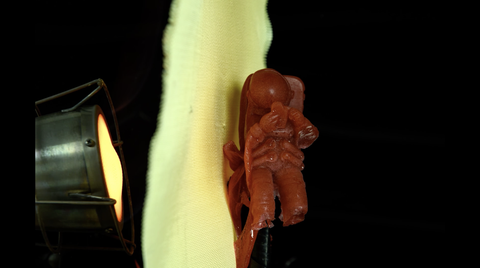
Scientists have a new material they say is as strong as Kevlar and way more insulating. The resulting fiber structure could protect first responders and military personnel who are in danger from heat and cold along with ballistic risks.

The existing problem is simple: To keep workers who require extreme protection safe, scientists must layer until they’ve covered all their bases. Why not protect two birds with one stony vest? The scientists write in their paper:

“Currently, protection against both thermal and ballistic threats requires the combination of multiple high-performance materials that increases equipment weight and complexity. Here, we hypothesized we could achieve simultaneous protection by manufacturing a porous network of aligned fibers, combining the mechanical properties of continuous fibers with the thermal properties of porous aerogels.”

Thursday, June 11, 2020

Innovations & technologies

‘The threats are becoming higher’ — L3Harris CEO says tech is driving the future of warfare

Technology is playing a greater role in U.S. defense as the country shifts its focus from counter-insurgency to near-peer competition, L3Harris Technologies CEO Bill Brown told CNBC Thursday.
“The competition of the future, the war fight of the future, is going to be based on new technology,” Brown said in a “Mad Money” interview with Jim Cramer. “We’re aggressively leaning into this because technology is really, really going to drive the future.”
L3Harris, the aerospace and defense giant that formed via a merger between Harris Corporation and L3 Technologies about a year ago, is spending roughly 4% of its revenue on research and development in order to capitalize on the space, Brown explained. L3Harris has about $18 billion in annual revenue. 

Monday, May 18, 2020

Innovations & technologies

Dynetics joins DARPA’s unmanned dogfighting effort


Dynetics will help DARPA scale up its artificial intelligence air-to-air combat effort, the company said May 6, potentially enabling a pilot to control a fleet of unmanned platforms in a dogfight.

Dynetics said it has been awarded a phase 1 contract as part of DARPA’s Air Combat Evolution (ACE) program, an effort to develop artificial intelligence for aerial combat. Among other features, ACE seeks to automate some combat functions, freeing up the human pilot for other tasks in a dogfight.

“The overarching goal of ACE is to use aerial dogfighting as sort of the crucible scenario because of its challenges and its ability to increase the complexity in order to get implementations of artificial intelligence that will help increase and help us understand how to increase trust and combat autonomy with with pilots,” explained Tim Keeter, ACE program manager for Dynetics.

"DARPA has disaggregated the program itself into four technical areas of importance, and each technical area has its own performer,” he said.

The first technical area will develop the actual dogfighting algorithms. The second will determine how to build and measure trust between pilots, the algorithms and unmanned platforms and the fourth will integrate the manned and unmanned systems together.

Saturday, May 16, 2020

Innovations & technologies

Super Steel Defies Everything We Know About the Alloy


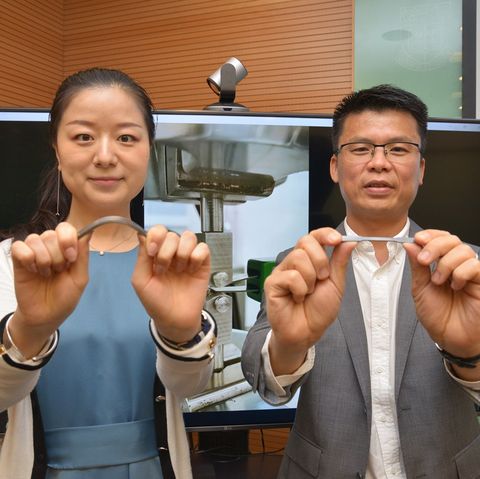
two scientists stand side by side, each holding up a sample of a silvery metal
Researchers say they’ve made a new “super steel” that challenges conventional wisdom about new steel alloys. Instead of the usual fine-tuned balance of tradeoffs, scientists at the University of Hong Kong and Lawrence Berkeley National Labs say their super steel mitigates the catch-22s in many previous alloys. The secret is in how the molecular structure of the steel works to absorb and nullify stress damage.

These researchers have introduced delamination toughening into their steel. Let’s break down a complex idea piece by piece—or layer by layer, more appropriately.

Many kinds of steel (and materials in general!) are laminated, in the sense of the word invoked by layered flaky pastries like croissants or baklava. Even the mechanisms are surprisingly similar: Steel can be milled by heating and then rolling it to desired thickness, and those layers accumulate by rolling or folding.
Innovations & technologies

The end of plastic? New plant-based bottles will degrade in a year


A worker sorts through plastic bottles at the recycling plant near Bangkok in Thailand.
Beer and soft drinks could soon be sipped from “all-plant” bottles under new plans to turn sustainably grown crops into plastic in partnership with major beverage makers.
A biochemicals company in the Netherlands hopes to kickstart investment in a pioneering project that hopes to make plastics from plant sugars rather than fossil fuels.
The plans, devised by renewable chemicals company Avantium, have already won the support of beer-maker Carlsberg, which hopes to sell its pilsner in a cardboard bottle lined with an inner layer of plant plastic.
Avantium’s chief executive, Tom van Aken, says he hopes to greenlight a major investment in the world-leading bioplastics plant in the Netherlands by the end of the year. The project, which remains on track despite the coronavirus lockdown, is set to reveal partnerships with other food and drink companies later in the summer.

Sunday, May 10, 2020

Innovations & technologies

New Factor in Counter-IED Warfare

Besides deploying specially armored vehicles and using defensive equipment such as jamming devices, mine roller attachments, armed forces have to regularly check routes for explosive devices. If one is discovered it should be neutralized without detonating as far as possible in order to avoid collateral damage.
Germany’s armed forces awarded a multi-year production deal to Rheinmetall for the supply of four Route Clearance Systems.
Rheinmetall has developed a number of subsystems for integration into different vehicles which enable reliable detection, verification and clearing of explosive devices. In the process, great emphasis has been placed on making them easy to use, even in difficult operating environments and high-stress situations.
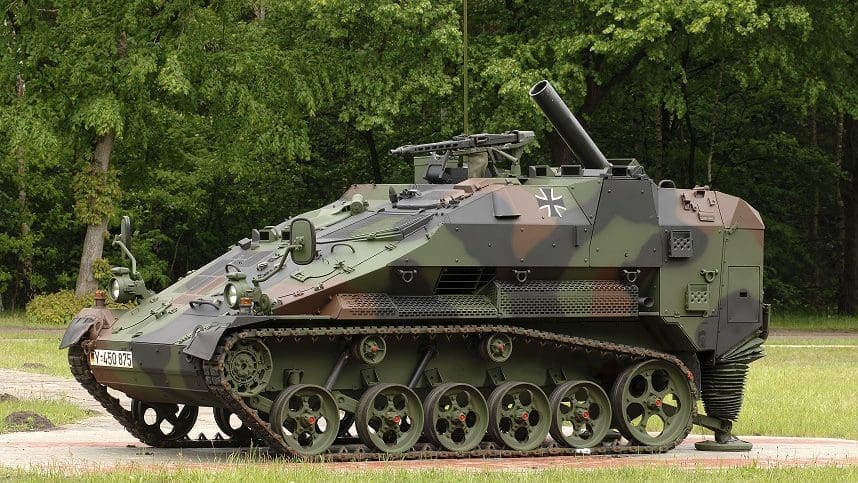
Under the contract signed in December 2019, the company will be turning five Fuchs/Fox 1A8 wheeled armored transport vehicles into operator team vehicles, and converting four Wiesel/Weasel 1 airmobile weapons carriers into tracked detector platforms. The scope of delivery also encompasses seven reserve dual sensors with transport and storage racks, together with logistical support. The dual sensor, a key component of the Route Clearance System, is a new version purged of obsolescent elements.
According to the company’s announcement, the remotely controlled Wiesel/Weasel features a newly developed, integrated dual sensor with ground-penetrating radar as well as a metal detector. Its task in the so-called DEU Route Clearance System is to detect landmines and IEDs on sections of road as well as in off-road terrain.
Equipped with operator consoles for controlling the vehicles and systems for evaluating the dual sensor signals, the Fuchs/Fox 1A8 armoured transport vehicle serves as a mobile, highly protected command post.

Thursday, May 7, 2020

Innovations & technologies

UK spies will need artificial intelligence - Rusi report


An aerial shot of GCHQ in Cheltenham, with its distinctive donut shape
UK spies will need to use artificial intelligence (AI) to counter a range of threats, an intelligence report says.
Adversaries are likely to use the technology for attacks in cyberspace and on the political system, and AI will be needed to detect and stop them.
But AI is unlikely to predict who might be about to be involved in serious crimes, such as terrorism - and will not replace human judgement, it says.
The report is based on unprecedented access to British intelligence.
The Royal United Services Institute (Rusi) think tank also argues that the use of AI could give rise to new privacy and human-rights considerations, which will require new guidance.
The UK's adversaries "will undoubtedly seek to use AI to attack the UK", Rusi says in the report - and this may include not just states, but also criminals.

Wednesday, May 6, 2020

Innovations & technologies

Chinese scientists harness fourth state of matter to create ‘air plasma’ jet engine that runs on electricity alone


Chinese scientists harness fourth state of matter to create ‘air plasma’ jet engine that runs on electricity alone
Scientists in Wuhan, China claim to have created a carbon-neutral prototype jet engine which could one day allow for a new era in fossil-fuel free manned flight.
Their prototype engine compresses air and ionizes it with microwaves thus generating plasma which it expels out the back of the engine to generate thrust. Plasma is the fourth state of matter which usually only exists in the laboratory, the surface of the Sun or for brief instances during lightning strikes. 
The proposed system differs from previous attempts at creating plasma jet thrusters as they relied on xenon plasma which cannot withstand the friction inherent in the Earth’s atmosphere. Simply put, they were not powerful enough. 
Their proof-of-concept prototype launched a one-kilogram (2.2lb) steel ball 24mm (almost an inch) into the air. While not particularly impressive on face value, when scaled up, this would equal the same amount of thrust produced by a conventional, commercial jet engine. 

Sunday, May 3, 2020

Innovations & technologies

Technologies That will Manage Social Distancing

social distancingThe reopening of shopping malls is now under consideration in Israel and the world, with various safety limitations, after a prolonged closure as a result of the COVID-19 pandemic. The transition to a new routine characterized by social distancing will be based on the use of innovative technologies, including applications that will supply real-time data.
A smartphone app developed by US-based SocialSmart for both the iPhone and Android operating systems uses anonymous bluetooth technology to monitor the social distancing habits of its users and, via a unique algorithm, inform users of their social distancing success by measuring the quantity and quality of each user’s social interactions, according to aithority.com.
The app, which will be free of charge to download, adds a layer of social distancing data so individuals, families and communities can make more intelligent social distancing decisions. The app can accurately track how many people a user socializes with during the day (inside a distance of 10 feet) as well as the duration of the interaction.
It then compiles a real-time user score based on his or her interactions, giving the user a simple touchpoint to either maintain or improve their social distancing habits.

Sunday, April 12, 2020

Innovations & technologies

Quickly-grown graphite film blocks electromagnetic radiation


quenching of nickel
Graphite films can shield electronic devices from electromagnetic (EM) radiation, but current techniques for manufacturing them take several hours and require processing temperatures of around 3000°C. A team of researchers from the Shenyang National Laboratory for Materials Science at the Chinese Academy of Sciences has now demonstrated an alternative way of making high-quality graphite films in just a few seconds by quenching hot strips of nickel foil in ethanol. The growth rate for these films is more than two orders of magnitude higher than in existing methods, and the films’ electrical conductivity and mechanical strength are on par with those of films made using chemical vapour deposition (CVD).

All electronic devices produce some EM radiation. As devices become ever smaller and operate at higher and higher frequencies, the potential for electromagnetic interference (EMI) grows, and can adversely affect the performance of the device as well as that of nearby electronic systems.

Graphite, an allotrope of carbon built from layers of graphene held together by van der Waals forces, has a number of remarkable electrical, thermal and mechanical properties that make it an effective shield against EMI. However, it needs to be in the form of a very thin film for it to have a high electrical conductivity, which is important for practical EMI applications because it means the material can reflect and absorb EM waves as they interact with the charge carriers inside it.

Monday, April 6, 2020

Innovations & technologies

How new technology is transforming Vietnam's economy


DBW from the air. The roof is fitted out with solar panels and a garden, and is painted with light-reflecting paint.
In 1975, Vietnam emerged from its 20-year-long war as one of the poorest nations in the world.
Since then, its economy has been transformed -- largely thanks to a package of economic and political reforms, designed to engineer growth, that was launched by the government in 1986.
More than 45 million people were lifted out of poverty between 2002 and 2018 as the country developed industries that span textiles, agriculture, furniture, plastics, paper, tourism and telecommunications.
Vietnam is now undergoing another transformation -- thanks to technology.
New infrastructure has given Vietnamese citizens easy access to the internet -- and propelled their country across the digital divide.
A 2018 report by Google and Singaporean investment company Temasek described Vietnam's digital economy -- which is growing at more than 40% a year -- as "a dragon being unleashed."
It's not all plain sailing. Vietnam's government has been widely criticized for its surveillance of citizens and restrictions on freedom of speech. And like the rest of the world, it's impossible to predict how the coronavirus will impact the country's economy.

Saturday, March 28, 2020

Innovations & technologies

Robust Parts for Battlefield Conditions Produced by Unique Technology

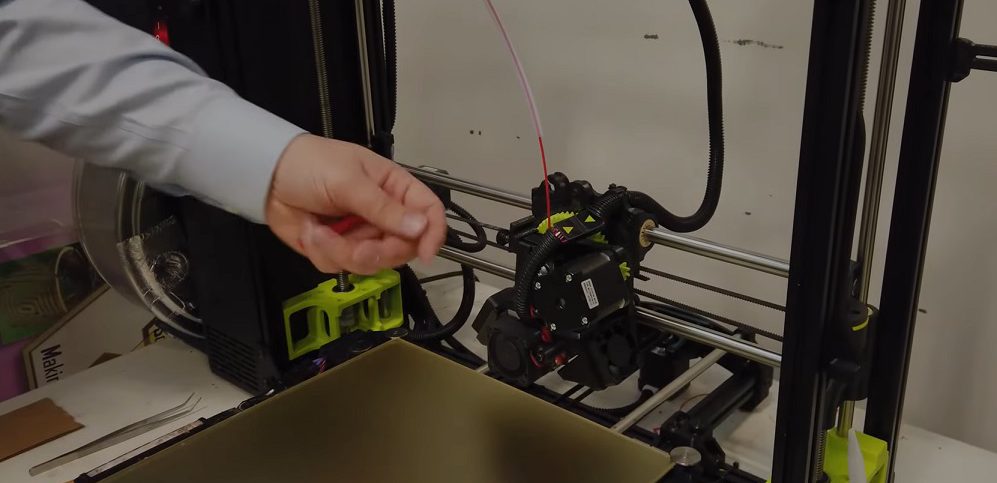
3d printing tech for battlefieldReplacement parts for military systems are usually ordered from warehouses thousands of miles away from the troops, only to wait weeks for them to arrive. 3D printing technology, also known as additive-manufacturing, has become an efficient way to produce the missing spare parts. However, the parts should not only be cost-effective and rapid to produce but also accurate geometrically and have mechanical properties that are sufficiently robust to survive conditions in battle.
U.S. Army scientists have developed a new 3D printing technology to help soldiers quickly swap out broken plastic components with durable replacement parts. 
The team from the U.S. Army Combat Capabilities Development Command Army Research Laboratory (ARL) developed 3D printing method for dual-polymer parts, allowing soldiers to swap out broken pieces and head back to the fight within hours.
For the first time, this cutting-edge filament is capable of being used in off-the-shelf, low-cost 3D printers to produce mechanically strong, battlefield-ready parts.
Dr. Eric Wetzel, ARL’s research area leader for soldier materials said: “We’re crossing a threshold where low-cost, easy-to-operate and maintain printers will be proliferated on the battlefield — and able to produce engineering parts of very good quality with short turn-around times.”

Thursday, March 5, 2020

Innovations & technologies

This wearable device camouflages its wearer no matter the weatherThis wearable device camouflages its wearer no matter the weather


Researchers at the University of California San Diego developed a wearable technology that can hide its wearer from heat-detecting sensors such as night vision goggles, even when the ambient temperature changes—a feat that current state of the art technology cannot match. The technology can adapt to temperature changes in just a few minutes, while keeping the wearer comfortable.

The device, which is at the proof-of-concept stage, has a surface that quickly cools down or heats up to match ambient temperatures, camouflaging the wearer's body heat. The surface can go from 10 to 38 degrees Celsius (50 to 100.5 degrees Fahrenheit) in less than a minute. Meanwhile, the inside remains at the same temperature as human skin, making it comfortable for the wearer. The wireless device can be embedded into fabric, such as an armband. A more advanced version could be worn as a jacket.

Tuesday, March 3, 2020

Innovations & technologies

Snapshot: New Water Cannon Technology a Breakthrough for Bomb Squads


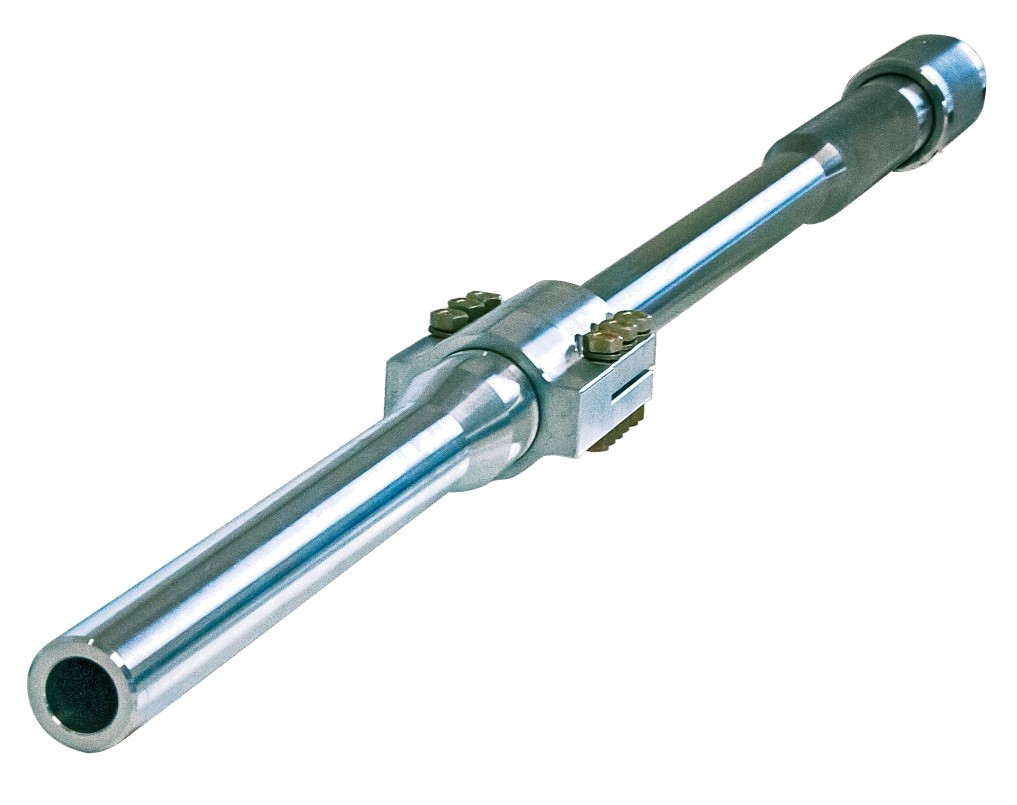
Reverse Velocity Jet Tamper (ReVJeT)
Improvised explosive devices (IEDs) are a constant and ever-changing threat to the security of our nation. Their extreme destructive potential demands innovative solutions. That’s where the Reverse Velocity Jet Tamper (ReVJeT) comes in.
The Department of Homeland Security (DHS) Science and Technology Directorate (S&T), in partnership with the Federal Bureau of Investigation (FBI), has fully transitioned this versatile tool to each and every one of the hundreds of state and local bomb squads across the country through the FBI’s Hazardous Device School. In the span of about two years, the concept was discovered, specifications were developed, prototypes were built and field-tested, and the final product was delivered directly into the hands of first responders.
“It was one of those eureka moments,” said FBI Supervisory Special Agent Dr. Ian Vabnick, who accidentally discovered the technology behind ReVJeT while testing something else. “This is probably the biggest advancement in water cannon technology in the last 50 years. There have been other improvements, but when it comes to firing fluid jets, ReVJeT is the most significant advancement in stabilizing that jet.”
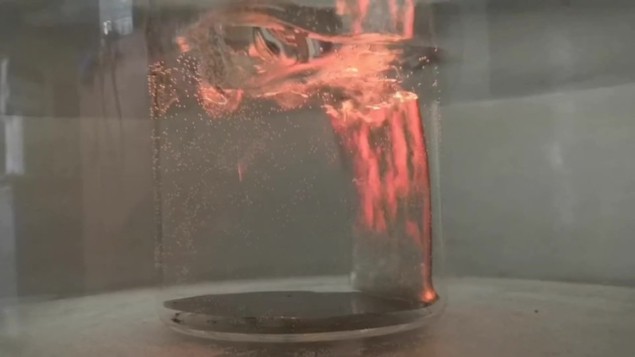
ReVJeT breaks apart IEDs by targeting a stream of high-velocity liquid, such as water. It does not detonate the device, but rather disarms it from a distance and allows bomb technicians do their jobs faster, safer, and more effectively. ReVJeT improves upon existing platforms by a conservative 300% and can enhance any propellant-driven disrupter system, making it capable of neutralizing various IEDs.

Sunday, March 1, 2020

Innovations & technologies

One Step Closer to a Batsuit for Soldiers

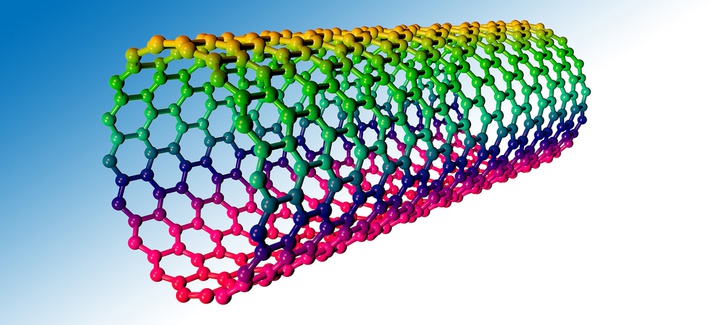
An artist's illustration of a carbon nanotube, which is several times stronger than steal but one sixth the weight.
In Christopher Nolan’s Batman Begins, there’s a scene where inventor Lucius Fox, played by Morgan Freeman, explains that Wayne Enterprises has created a prototype body armor for the U.S. infantry that’s as light as Kevlar but bullet- and knife-proof. Bruce Wayne asks why it never went into production. “The bean counters figured a soldier’s life wasn’t worth the 300 grand,” Fox replies.

In real life, and with Defense Department money, researchers from Florida Atlantic University, or FAU, are using advanced polymers and carbon nanotubes to engineer a new type of body fabric that could prove 300 percent as strong as today’s state of the art, but just as light.

Hassan Mahfuz, the lead investigator on the project at FAU, says, “The whole idea is to absorb the energy and be able to dissipate very quickly so it doesn’t concentrate” and pierce the fabric and the person inside of it.

How do you do that? As Mahfuz and colleagues from other institutions point out in this paper, you need to create an entirely new type of treatment for nylon fabric, a hybrid mixture of a polymer that Mahfuz describes as similar to ultra-high-molecular-weight polyethylene and carbon nanotubes. The former has been around since the 1950s, the latter was only discovered in 1991. They’re hollow cylinders of carbon molecules, a product of nanotechnology, or the manipulation of objects at a billionth of a meter in size.

Wednesday, February 26, 2020

Innovations & technologies


10 Breakthrough Technologies 2020

Here is our annual list of technological advances that we believe will make a real difference in solving important problems. How do we pick? We avoid the one-off tricks, the overhyped new gadgets. Instead we look for those breakthroughs that will truly change how we live and work.

  1. Unhackable internet
  2. Hyper-personalized medicine
  3. Digital money
  4. Anti-aging drugs
  5. AI-discovered molecules
  6. Satellite mega-constellations
  7. Quantum supremacy
  8. Tiny AI
  9. Differential privacy
  10. Climate change attribution