Страницы

Showing posts with label Scam. Show all posts

Monday, September 14, 2020

Scam

Don’t fall prey to these 3 common money laundering scams

Money laundering (also known as “money mule”) scams have been around for a long time, but have been gaining in frequency during the Covid-19 pandemic. That’s because many of us are quarantined at home, spending more time online, where many of these scammers prey.

Three of the most-popular money mule scams involve online love interests, work-from-home jobs, or lottery or prize winnings. Consider any offers or invitations to send or receive money in these scenarios suspect until thoroughly vetted. Any of these scams can result in you inadvertently laundering or passing on stolen money – and possibly facing financial or legal consequences.

cam #1: The foreign lover
You meet someone online who lives at a distance (maybe even another country), but they seem wonderful, and the two of you hit it off really quickly. Soon, this person starts asking you to wire them money, or receive money in your bank account or by wire transfer. They may even ask you to send money elsewhere. The excuses or reasons they give you for needing money may sound reasonable – such as needing money for plane travel, visas, or medical expenses. These aren’t real, however, and you soon start suspecting so.

Thursday, August 20, 2020

Scam


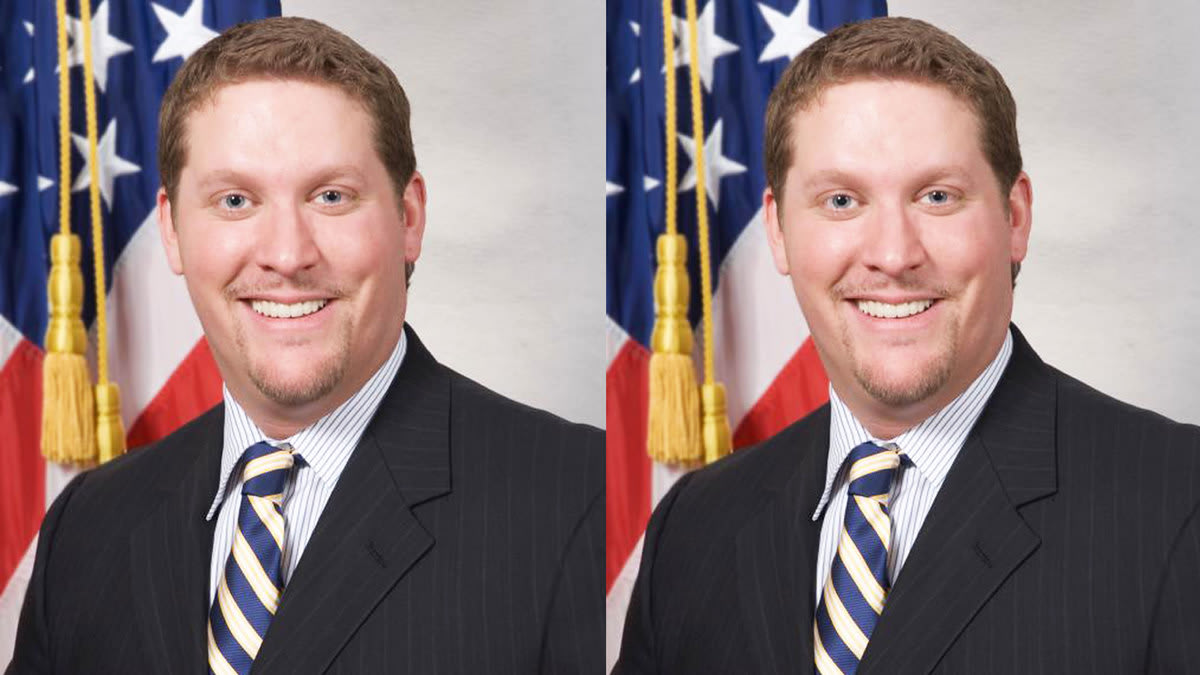
How a Fake CIA Spy Fooled Everyone and Swindled Millions


Garrison Courtney talked a great game.

In his real life, he was a middle-aged former government flack with a broken marriage and a pile of unpaid bills. But when he tried to work his smooth-talk magic on an unsuspecting company executive, he was someone else altogether.

Then, he was a Gulf War veteran with hundreds of kills under his belt who could vividly recall choking on the thick black smoke of Iraq’s oil fields. He was a CIA operative who might just let you in on the secret that a foreign government had tried to poison him.

He was a patriot who needed help. He wanted these companies to put him on their payroll and give him “cover,” so he would look like an ordinary citizen and not a globe-trotting spy. The companies, of course, would be rewarded for their help, with fat government contracts.

He couldn’t give them too much information about his work; it was highly classified, after all. But there were secret task forces with shadowy sounding names—Alpha-214 and FirstNet—that were maybe supporting special ops in Africa.

Monday, July 27, 2020

Scam

Profiting from panic: the bizarre bogus cures and scams of the coronavirus era


As the world awaits a scientifically proven treatment for COVID-19 alternative and evidence-free remedies such as pure vodka in Fiji or dried fish in Egypt have been circulating online. Since March, we have been cataloguing the various misinformation narratives around the coronavirus pandemic and have found more than 243 distinct storylines about false cures, preventative measures, and diagnostic procedures. This misinformation involves promoting existing drugs, alternative medicinal practices, and everyday food items as treatments for coronavirus. In many cases, companies or individuals have even tried to profit off of naïve individuals by selling bogus cures and making exaggerated claims about their products.
Old drugs new uses. One of the most common threads of misinformation around coronavirus treatments and preventative measures involves the repurposing of existing medical treatments—whether for malaria, bacterial infections, or pain relief. Common drugs such as aspirin as well as prescription drugs such as chloroquine, hydroxychloroquine, and azithromycin have been touted without evidence or with limited evidence as effective against COVID-19.

Thursday, June 11, 2020

Scam

Ex-DEA public affairs chief pleads guilty to brazen scam


CIA headquarters in Langley, Virginia.
A former head of public affairs for the Drug Enforcement Administration who later worked as a producer for TMZ has admitted to a fraud scheme that involved posing as an undercover CIA operative in order to swindle government contractors out of over $4 million.
Details of the complex scam carried out by Garrison Courtney, 44, became public Thursday morning as he pleaded guilty to a felony wire fraud charge in Alexandria, Va., before U.S. District Judge Liam O’Grady.
In the scheme, Courtney informed various businesses that the CIA or other agencies needed to place individuals on the companies’ payroll as part of an undercover operation — an arrangement sometimes referred to as commercial cover — O’Grady explained as he read from an agreed statement of facts in the case.

Wednesday, April 15, 2020

Scam

Global police agencies issue alerts on Covid-related cyber-crime

Police, Use, Police Usage, Control, Police Car
Europol and Interpol have joined the list of cross-border law enforcement organisatinos who have set out to tackle Covid-19 scams and misinformation campaigns.

“With a huge number of people teleworking from home, often with outdated security systems, cyber-criminals prey on the opportunity to take advantage of this surreal situation and focus even more on cyber-criminal activities,” Europol executive director Catherine De Bolle wrote in the organisation's latest security advisory.

The announcement comes a week after Europol published a detailed report on how criminals modified their strategies to make the most of the pandemic scare, based on information it received from EU member states.

The report, published on 27 March, listed six factors that prompted changes in Covid-related crime and terrorism: high demand for certain goods, protective gear and pharmaceutical products; citizens increasingly teleworking, relying on digital solutions; increased anxiety and fear that may create vulnerability to exploitation; decreased mobility and flow of people across and into the EU; limitations to public life, making some criminal activities less visible and displacing them to home or online settings; decreased supply of certain illicit goods in the EU.

Friday, April 10, 2020

Scam

Beware of ‘thank you for your service’ money scams, NCIS warns sailors and Marines


The Naval Criminal Investigative Service is seeing an uptick in reports from sailors and Marines who have been duped in a card-cracking scam on social media — in some cases after being promised money as a gesture of gratitude for their military service.

The scammers are reaching out to service members through several different ways, NCIS warned.

In some cases, service members are receiving friend requests on Facebook from someone with mutual friends. The scammer then tells the service members they would like to offer them grant money to thank them for their service, or offer them money for their “debt relief.”

Another trend NCIS has witnessed is scammers connecting with service members on social media through either posts or messages, all under the guise of being a debt consolidator or business owner.

Regardless of initial contact, scammers then ask service members to share their bank login information, along with some of the security question prompts that appear on their online bank account.

Wednesday, May 8, 2019

Scam

Argentine man sentenced in witchcraft extortion scheme

u s department of homeland security u s immigration and customs enforcement
Ariel Boiteux, a 31-year-old Argentine national who masterminded an international extortion scheme against hundreds of people seeking romance through witchcraft and magic spells, was sentenced in federal court Monday to the maximum sentence - two years in prison.
The sentencing is the result of a yearlong investigation conducted by special agents from ICE Homeland Security Investigations in San Diego. In addition to the maximum prison term, Boiteux was ordered to pay a $250,00 fine.
According to court documents, targets of the scheme were directed to record themselves performing sexually explicit rituals to be used in casting love spells. Boiteux instead threatened to post the embarrassing videos on social media unless the clients paid large sums of money.

Thursday, August 9, 2018

Scam

Italian police bust bone-breaking insurance fraud gangs

Italian police bust bone-breaking insurance fraud gangs
Italian authorities have busted two Sicilian gangs who used body-building weights to smash the bones of victims in order to commit insurance fraud, police said on Wednesday.
Eleven people from the Sicilian capital Palermo have been arrested, police said.
They include a hospital nurse who would procure painkillers for the victims in order to lessen their screams as their bones were broken.
"The two criminal associations broken up as a result of police investigations demonstrated a particular cruelty in the way they hurled cast iron discs like those used in gyms at the victims' limbs," police said in a
statement.
A police spokesman in Palermo told AFP that the gangs, operating separately in the city, smashed the bones of the victims, often drug addicts, alcoholics or people in severe economic difficulty, in order to stage fake road crashes and cash in on insurance payouts.

Friday, March 9, 2018

Scam

Scam Alert: Millennials Lose Money To Financial Scams More Than Seniors

In a new Federal Trade Commission report on fraud, identity theft and related consumer protection topics released last week, Millennials reported losing money to financial scams more than any other age group.
Here's what you need to know and what to do about it.
The Statistics: Overview
Here are some of the key statistics at a glance:

  1. Total Reports: 2.7 million
  2. Total Fraud Reports: 1.1 million
  3. Total Fraud Losses: $905 million
  4. Median Dollar Loss From Fraud: $429
While overall fraud reports declined slightly since 2016, total dollar losses from fraud increased $63 million year-over-year to $905 million.

Thursday, March 8, 2018

Scam

Britain's Massive Charity Scam


In a secularized West, charitable organizations are the modern-day saints granting us our expiatory rites. Many humanitarian NGOs even seem to cater to Western consciences filled with guilt.
Since these NGOs say they work on behalf of "humanity" and for a "better world", while possibly assuming that states and governments act only for the sake of social efficiency or their own self-preserving interests. Yet, often these NGOs risk becoming bureaucracies as much as states do, sometimes even with similar sexual and financial scandals. At times these NGOs also can look like just a "mammoth machinery" with more employees than services; a steep, often unaccountable budget, and an ideology promoting the worst "Western stereotyping". The weekly magazine The Spectator called them "the bad charity".
Lately, not a single week has passed without a negative story in the press about British NGOs. Now Oxfam, one of the wealthiest and most important of them, is sinking from a series of scandals in Africa and Haiti. It used, it seems, taxpayers' money, intended for the earthquake victims, to pay for "Caligula-style orgies". It also fired the actresses Kristin Davis and Scarlett Johansson, who volunteered as Oxfam "ambassadors," after they appeared in advertisements for Israeli companies. Oxfam accused the women of rhetorically "oppressing" the Palestinians; meanwhile Oxfam's staff was physically oppressing the Haitians.

Monday, August 21, 2017

Scam

FBI warns of spreading W-2 email theft scheme

The IRS is warning businesses about a sharp increase in email phishing scams involving employees' W-2 forms — scams that can put workers’ Social Security numbers and other crucial information in the hands of thieves.
The government said 200 businesses, public schools, universities, Native American governments and nonprofits were victimized by these scams during this year's tax filing season, resulting in the theft of several hundred thousand employees' data. That's up from 50 in 2016, when the scam first appeared.
Cyberthieves perpetrate the scams by sending emails that appear to come from executives inside the targeted organizations. The emails ask payroll or human resources departments to reply with a list of all employees and their W-2 forms. Some emails also ask companies to transfer money to a specified bank account.
Companies should be on alert for anyone asking for employees' W-2 forms or for wire transfers of money.

Tuesday, December 20, 2016

Scam

Scammers impersonating law enforcement, targeting public with ‘jury duty’ scam


phone_scamThe FBI Atlanta Division and its Savannah Resident Agency are warning the public to be on alert for a phone scam wherein the caller impersonates law enforcement or judicial officers and informs the targeted individuals that they have failed to respond to jury duty and are now required to pay associated fines/fees for their failure to appear for those duties.
These scams often involve the “spoofing” of names and telephone numbers of actual law enforcement/judicial officers appearing on the recipient’s caller ID. The individual is instructed that they can pay these fines and fees via Green Dot Money Pak cards.

Wednesday, December 7, 2016

Scam

Sextortion: The U.S. military's dirty little secret is a growing national security concern

Sextortion illustrationYou're scrolling through Facebook like any other day when a friend request pops up from a pretty girl. You accept, and she sends you a naughty picture. You send one back, just to be polite, or maybe because she asked nicely. Maybe you move the conversation onto Skype for a live show. But then she demands money, hundreds of dollars, and threatens to send your naked photo to your friends, your family and — worst of all — your employer. 

Because when your employer is the U.S. government, the fallout can be severe. 

Law enforcement officials have dubbed the scam "sextortion," and it happens all over the world. But American military personnel are particularly vulnerable, authorities say, because they have a steady income and their conduct is closely regulated. Hundreds of service members every year are falling into this trap, and many are handing over thousands of dollars with hopes the problem will go away — often to no avail. And now U.S. officials fear that foreign enemies could exploit the same tricks to obtain sensitive information and compromise national security. 

Wednesday, July 6, 2016

Scam

Tech support scams target victims via their ISP


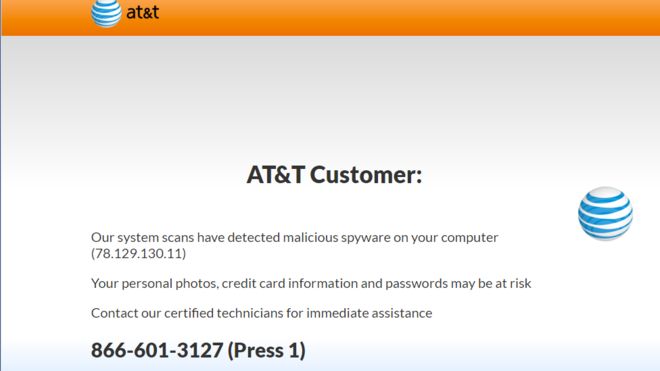
Screengrab of fake pop-up
A new scam, in which fraudsters pose as legitimate internet service providers to offer bogus tech support, either via the phone or on the net, is on the rise, the BBC has found.
It is a twist on an old trick which involved cold-calling a victim - often claiming to represent Microsoft - and charging for fake tech support.
The new variants have been spotted in the UK and US.
BT said that it was investigating the issue.
The online version of the scam involves a realistic pop-up that interrupts a victim's normal browsing session with a message that appears to be legitimate and seems to come from the victim's real ISP.

Sunday, May 15, 2016

Scam

FBI: $2.3 Billion Lost to CEO Email Scams

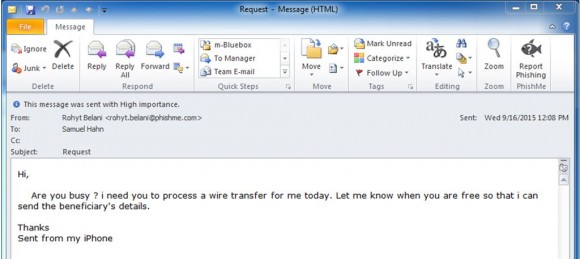
A typical CEO fraud attack. Image: PhishmeThe U.S. Federal Bureau of Investigation (FBI) this week warned about a “dramatic” increase in so-called “CEO fraud,” e-mail scams in which the attacker spoofs a message from the boss and tricks someone at the organization into wiring funds to the fraudsters. The FBI estimates these scams have cost organizations more than $2.3 billion in losses over the past three years.
In an alert posted to its site, the FBI said that since January 2015, the agency has seen a 270 percent increase in identified victims and exposed losses from CEO scams. The alert noted that law enforcement globally has received complaints from victims in every U.S. state, and in at least 79 countries.
...But CEO fraud attacks succeed because they rely almost entirely on tricking employees into ignoring or sidestepping some very basic security precautions. Educating employees so that they are less likely to fall for these scams won’t block all social engineering attacks, but it should help. Remember, the attackers are constantly testing users’ security awareness. Organizations might as well be doing the same, using periodic tests to identify problematic users and to place additional security controls on those individuals.

Thursday, May 12, 2016

Scam

British police seize $22 million in suspected Russian gang scam

Intercontinental Exchange, Inc. (ICE)
British police seized cheques for $22 million related to a suspected Russian organised crime scam that used the London futures market to launder cash through two Russian companies, a Swiss firm and a British Virgin Islands investment group.
After a four-month investigation by police and exchanges operator Intercontinental Exchange Inc (ICE), City of London Police said they had seized four cheques six weeks after the arrest of a Russian broker on suspicion of money laundering.
"Our investigation points towards a suspected Russian organised crime group using London's futures market to launder millions of dollars worth of criminal revenue," said Detective Inspector Craig Mullish from the City of London Police's Money Laundering Unit.
The unnamed Russian broker was arrested in London on March 23 on suspicion of fraud and has been released on bail until July, the police said in a statement on their website.


Tuesday, May 10, 2016

Scam

THE ORIGINS OF NIGERIA'S NOTORIOUS 419 SCAMS

Nigeria anti-corruption poster
Nigerian scammers are generally regarded as pioneers in the sending of mass letters, messages and emails seeking to defraud any recipient foolish and greedy enough to fall for their tricks, although all the signs are that the practice has now spread worldwide. Nigerians call scams like these “Four One Nine,” so called by reference to Article 419 of the country’s criminal code, which concerns fraud.

Yet Nigeria's 419 scammers have a far longer pedigree than most people realise. The first properly documented 419 letter dates from 1920 and was written by one P. Crentsil to a contact in the British colony of the Gold Coast, today’s Ghana. Crentsil launched into a long description of the magical powers that were in his possession and that could, on payment of a fee, be used to the benefit of his correspondent.

Tuesday, April 12, 2016

Scam

FBI warns of tax season phone scams

phoneA 20-year-old University of Georgia student last week received a disturbing phone call from someone purporting to be from the federal government who told the student there was a warrant for his arrest due to an unspecified problem with the income tax return he had filed.
When the student wired nearly $2,000 to have the so-called warrant quashed, he became the victim of a phone scam.
According to a recent FBI advisory, a recent uptick in such scams is coinciding with income tax season, with the April 18 deadline for filing tax returns approaching. The traditional April 15 deadline was extended this year due to a little-known Washington, D.C., holiday.
In the scam to which the UGA student recently fell victim, the caller said he was “with the IRS and affiliated with the FBI,” according to an Athens-Clarke County police report.

Wednesday, April 6, 2016

Scam

21 Probed in Illegal Fundraising of Over $5.2 Billion after Collapse of Shanghai Financial Services Giant


Some 21 people with links to a Shanghai-based investment company, Zhongjin Capital Management Co., have been detained on suspicion of illegal fundraising, the Shanghai Police said on April 6, 2016.

An investigation was launched when several public members complained of being cheated after investing in some schemes offered by the investment company. The police did not release details of the complaints, but said in a statement that the company “defrauded investors with non-existent programs and is involved in illegal fundraising”.

The company’s office building was closed down on Tuesday, while upset investors claiming to be the victims gathered outside of the company in hope of regaining their missingmoney
.