Страницы

Showing posts with label Finacial safety. Show all posts

Monday, September 3, 2018

Finacial safety

$21 trillion lost: Largest theft in history buried under guise of US national security – Lee Camp

$21 trillion lost: Largest theft in history buried under guise of US national security – Lee Camp
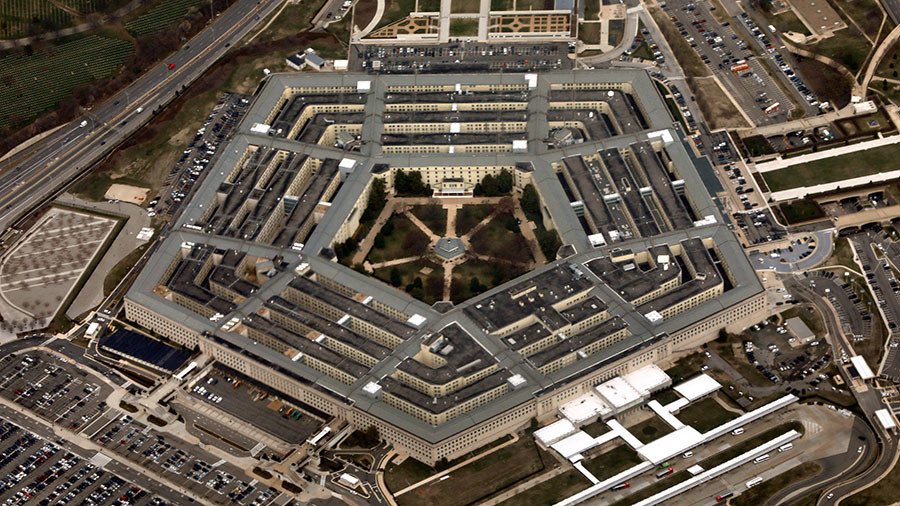
Comedian Lee Camp on his show Redacted Tonight recalls the first-ever audit of the Pentagon, which is taking 2,400 auditors to do the job, trying to understand where $21 trillion in unsupported adjustments went.
In his show, Camp recalled that a couple of years ago professor Mark Skidmore of Michigan State University heardCatherine Austin Fitts, former Assistant Secretary in the Department of Housing and Urban Development, say that the Department of Defense Inspector General had found $6.5 trillion worth of unaccounted for spending by the Army in 2015.
Skidmore, being an economics professor, thought “she meant $6.5 billion and not $6.5 trillion”, because “trillion would mean the Pentagon misplaced more money than the Gross Domestic Product of the whole of the United Kingdom” (UK's GDP $2.62 trillion), Camp said. “So he looked into the Inspector General’s report and he found something interesting: it was 6.5 trillion dollars!”

Monday, August 13, 2018

Finacial safety

FBI warns banks about potential ATM hacking scheme

cashbox - ATM1
The FBI is warning financial institutions that their ATMs could be targeted in a hacking attempt.

The threat was reported Sunday by Krebs On Security, a popular cybersecurity blog run by the journalist Brian Krebs.

Krebs reported that the scheme is known as an "ATM cash-out," which means the attackers can hack a bank or payment card processor and use stolen information to withdraw large sums of money at ATMs worldwide. His report cited a confidential alert the FBI shared with banks last Friday.

The FBI did not comment specifically on this potential attack. In a statement to CNN, a spokeswoman said that "in furtherance of public-private partnerships, the FBI routinely advises private industry of various cyber threat indicators observed during the course of our investigations."

Wednesday, June 20, 2018

Finacial safety

Bitcoin Could Break the Internet, Central Bank Overseer Says

The Bank for International Settlements just told the cryptocurrency world it’s not ready for prime time -- and as far as mainstream financial services go, may never be. 
In a withering 24-page article released Sunday as part of its annual economic report, the BIS said Bitcoin and its ilk suffered from “a range of shortcomings” that would prevent cryptocurrencies from ever fulfilling the lofty expectations that prompted an explosion of interest -- and investment -- in the would-be asset class. 
The BIS, an 88-year-old institution in Basel, Switzerland, that serves as a central bank for other central banks, said cryptocurrencies are too unstable, consume too much electricity, and are subject to too much manipulation and fraud to ever serve as bona fide mediums of exchange in the global economy. It cited the decentralized nature of cryptocurrencies -- Bitcoin and its imitators are created, transacted, and accounted for on a distributed network of computers -- as a fundamental flaw rather than a key strength.

Saturday, March 24, 2018

Finacial safety

Bank of America 'systematically' misled clients about stock trades

Картинки по запросу bank of americaBank of America Merrill Lynch doctored paperwork on 16 million orders to fool institutional clients into thinking stock trades were taking place in-house when they were not, according to New York's Attorney General.

The bank admitted on Friday to "systematically misleading clients" between 2008 and 2013 about how orders were handled for more than 4 billion shares of stock.
New York Attorney General Eric Schneiderman said Bank of America (BAC) agreed to pay a record $42 million penalty for the "masking" scheme and violations of New York securities law.

Finacial safety

London's stock market is the world's worst this year


The benchmark FTSE 100 has dropped 11% so far this year, making it the world's worst performing major index.

International fund managers are more pessimistic than ever before about UK stocks, according to a survey by Bank of America Merrill Lynch. The investment managers, who control a combined $514 billion, said the UK was their main "big short."

Stocks have been hit this year by tensions over global trade, but here are three other factors driving the FTSE 100's dismal performance:

1. The pound

The FTSE 100 has a pattern: When the pound dips, stocks go up. When the currency strengthens, shares drop.

The pound has gained 4.4% against the US dollar in 2018, pushing it to $1.41. That's a major swing from the months following the Brexit vote in June 2016, when the currency traded as low as $1.20.

Lukas Daalder, chief investment officer at asset manager Robeco, said the pound's strength was the "most important, direct reason" for the FTSE 100's dismal performance.

The index is comprised of 100 large companies like banks, miners and oil companies that do lots of business outside the United Kingdom. The profits they earn abroad are translated back into pounds...

Sunday, October 8, 2017

Finacial safety

US Intelligence Unit Accused Of Illegally Spying On Americans’ Financial Records


The intelligence division at the Treasury Department has repeatedly and systematically violated domestic surveillance laws by snooping on the private financial records of US citizens and companies, according to government sources.
Over the past year, at least a dozen employees in another branch of the Treasury Department, the Financial Crimes Enforcement Network, have warned officials and Congress that US citizens’ and residents’ banking and financial data has been illegally searched and stored. And the breach, some sources said, extended to other intelligence agencies, such as the National Security Agency, whose officers used the Treasury’s intelligence division as an illegal back door to gain access to American citizens’ financial records. The NSA said that any allegations that it “is operating outside of its authorities and knowingly violating U.S. persons’ privacy and civil liberties is categorically false.”

Saturday, August 27, 2016

Finacial safety

In fight against money laundering and terror finance, 'the emperor wears no clothes'


When I was a boy, I loved the fairytale, "The Emperor Wears No Clothes."
Unfortunately, the metaphor could well be used to describe our efforts against international money laundering.  The overwhelming majority of observers are unwilling to see what is obvious: our anti-money laundering efforts are just a percentage point away from total failure.
But, this is no fairytale.  The worldwide failure to combat money laundering has a dramatic impact.  Why?  Because outside of crimes of passion—for example, murder committed in a jealous rage—criminals, kleptocrats, and some unscrupulous companies are motivated by greed. 
In today’s interconnected world, the manifestations of unfettered avarice impact us all.  We see it in our communities: the opioid, meth, and cocaine epidemics are devastating. Human trafficking, fraud in government programs, and identity theft can affect our daily lives.  Of course, money laundering and terror finance also impact national security.