Страницы

Showing posts with label Maritime security. Show all posts

Sunday, March 1, 2020

Maritime security

The U.S. Navy’s Future Fleet May Run Aground In Heavy Weathe
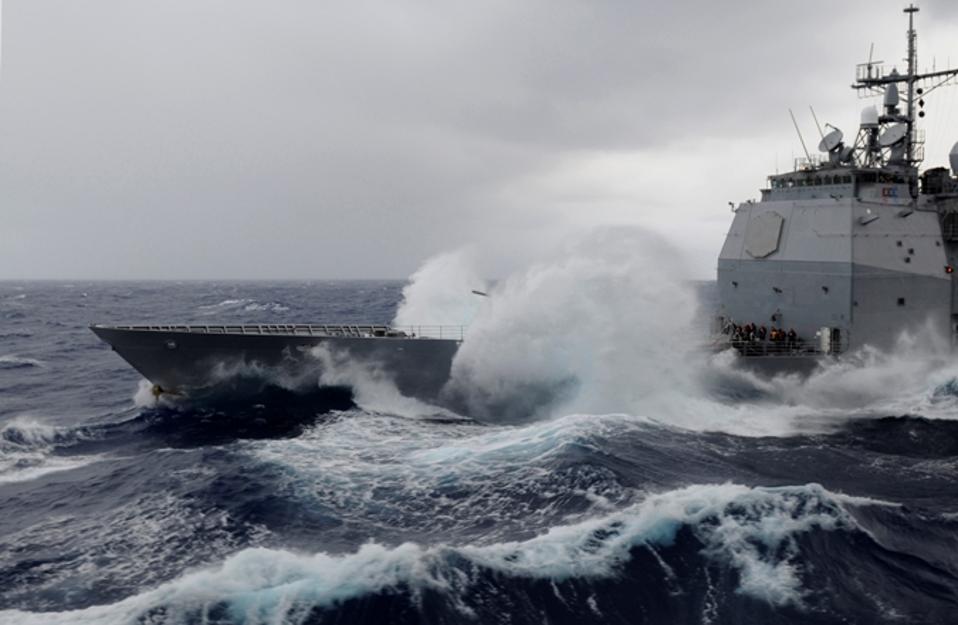

U.S. Navy in high seas
Up until a little more than 18 months ago, almost an entire generation of U.S. sailors lacked experience sailing in the rough seas north of the Arctic Circle. In late 2018, Carrier Strike Group Eight was the first U.S. aircraft carrier battle group to operate in the Norwegian Sea in 27 years. The experience—along with several others—showed that the Navy had lost a lot of old operational secrets and practices needed to project power in stormy weather.
The same can be said for design. Back in the Cold War, naval designers grew surface combatants to, in part, better prosecute combat in the high seas. The enormous displacement of an old Cold War mainstay, the Spruance class destroyer, was controversial. At over 8,000 tons, the Spruance was twice that of America’s previous front-line destroyer, the Charles F. Adams class.
But back in the early 1980’s, when the U.S. Navy was a bit more concerned about the impact of storms and high seas upon the operational capability of U.S. Navy ships, studies cautioned that even the Spruance Class destroyers were only fully operable 80 percent of the time at Sea State 5 and barely operable 20 percent of the time at Sea State 6

Saturday, January 4, 2020

Maritime security

Iran could disrupt shipping through the Strait of Hormuz. Here's why that matters

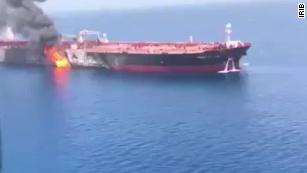
Oil prices surge after tanker attack in Gulf of OmanCould conflict in the Middle East disrupt global oil supplies? That risk is back in focus after a US strike in Baghdad killed Qasem Soleimani, a top Iranian general.
Tehran has promised to retaliate, and one place is particularly vulnerable: the Strait of Hormuz, off Iran's southern coast.
The channel, which is only 21 miles wide at its narrowest point, is the only way to move oil from the Persian Gulf to the world's oceans.
    Last year, attacks on two ships — one carrying oil and the other transporting a cargo of chemicals — in the nearby Gulf of Oman caused a temporary surge in oil prices.
    Analysts at the Eurasia Group said Iran's response to the killing of Soleimani is likely to include attempts to disrupt shipping in the Persian Gulf.
    "Iran will also likely resume harassment of commercial shipping in the Gulf and may launch military exercises to temporarily disrupt shipping," the analysts said in a research note.

    Thursday, December 26, 2019

    Maritime security

    Japan to send warship, aircraft to Middle East to protect vessels


    A helicopter-equipped destroyer and two P-3C patrol planes will be dispatched to ensure safe passage for Japanese vessels through the region [File: Jason Reed/AFP]
    Japan will send a warship and patrol planes to protect Japanese ships in the Middle East as the situation in the region, from which it sources nearly 90 percent of its crude oil imports, remains volatile, a document approved by the cabinet showed on Friday.
    Under the plan, a helicopter-equipped destroyer and two P-3C patrol planes will be dispatched for information-gathering aimed at ensuring safe passage for Japanese vessels through the region.

    If there are any emergencies, a special order would be issued by the Japanese defence minister to allow the forces to use weapons to protect ships in danger.

    Friction between Iran and the United States has increased since last year, when US President Donald Trump pulled the US out of a 2015 international nuclear deal with Iran and re-imposed sanctions on it, crippling its economy.
    In May and June, there were several attacks on international merchant vessels, including the Japanese-owned tanker Kokuka Courageous, in the region, which the US blamed on Iran.

    Monday, August 26, 2019

    Maritime security

    The Robot Ship Set to Cross the Atlantic and Change the World

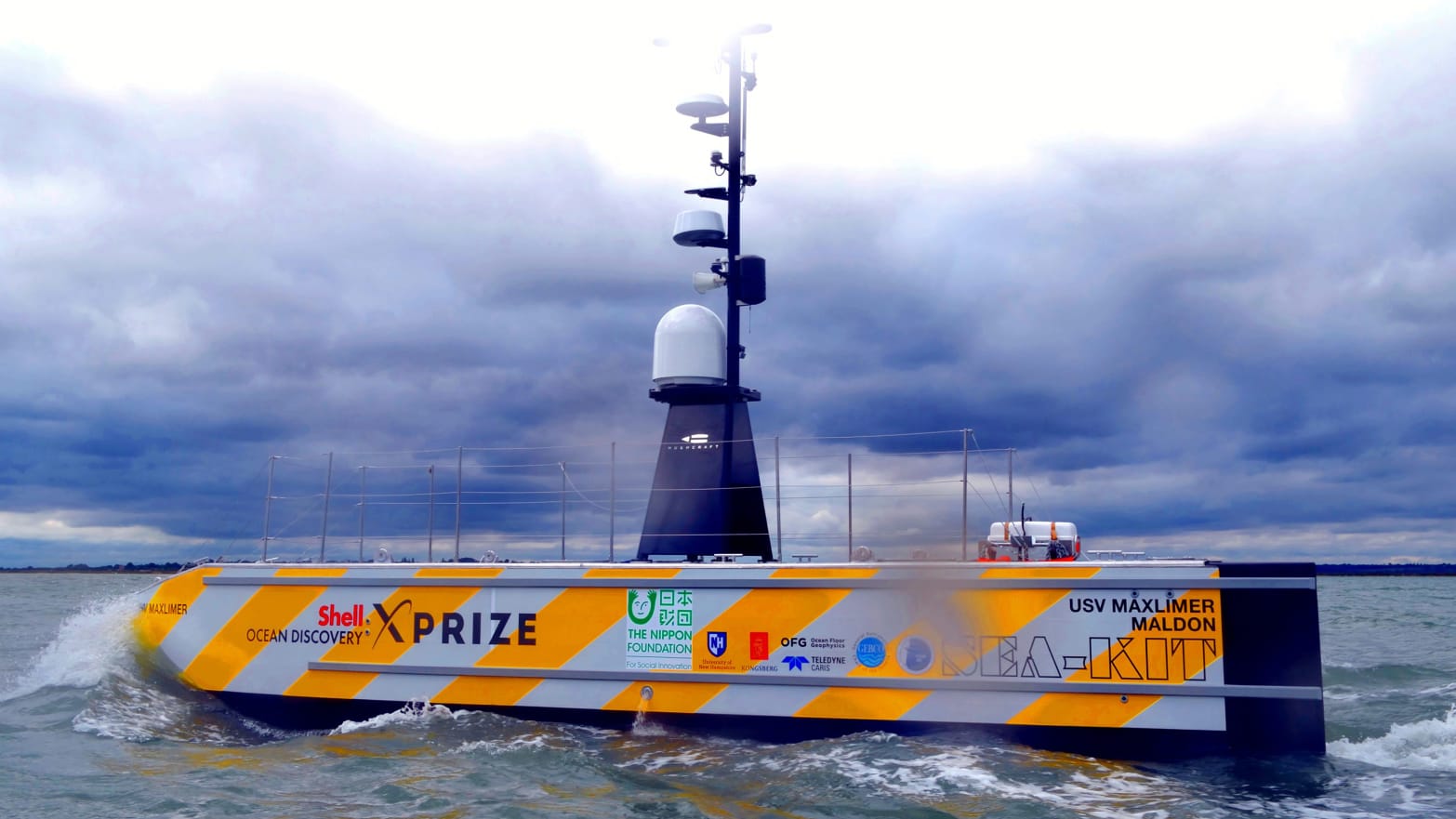
    The blocky, 36-foot-long, yellow- and white-striped vessel bobbing off the coast of the United Kingdom sure doesn’t look like much. But Maxlimer just might be the most important ship in the world right now.

    Maxlimer is totally robotic. And it’s poised to be the first unmanned surface vessel, or USV, to cross the Atlantic. The journey could prove the case for a host of new oceangoing drones: crewless cargo ships; unmanned oil tankers; robotic work boats.

    But don’t hold your breath. Widespread adoption could take years or even decades.

    Maxlimer is a product of SEA-KIT, a maritime tech company based in southeast England. Eyeing potentially lucrative contracts supporting offshore oil and gas drilling, SEA-KIT aimed to produce a flexible ship that’s cheaper and safer than manned ships are.

    Sunday, March 24, 2019

    Maritime security

    Cruise ship in distress for over 15 hours off Norway’s coast, 900+ still waiting to be evacuated


    Cruise ship in distress for over 15 hours off Norway’s coast, 900+ still waiting to be evacuated
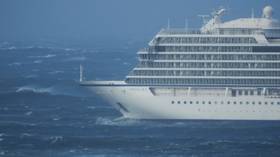
    More than 900 people and crew are still aboard the Viking Sky cruise ship over 15 hours since it sent out a mayday signal following engine failure off Norway’s rocky western coast. Passengers posted dramatic photos from inside.
    Officials said on Sunday morning that 440 people have been evacuated from the cruise liner after its engines failed, local media report. Three helicopters are airlifting passengers from the vessel anchored in Hustadvika Bay, according to the authorities.The liner initially had 1,373 passengers and crew on board, 915 of which were passengers from the UK and US.
    Some people sustained injuries, and three of them are serious. Sixteen people have been hospitalized, according to local authorities. They also say that the crew managed to restart three of the vessel’s four engines, adding that the ship is likely to be towed to the port city of Molde later on Sunday.
    One passenger tweeted that people are still waiting to be evacuated.

    Monday, October 8, 2018

    Maritime security

    US Admiral Warns of Russia's Submarine Capabilities


    Admiral James Foggo heads U.S. Naval Forces Europe and other key commands. (AFP photo/Thomas Watkins)
    Russia is bolstering its underwater battle capabilities in a direct challenge to U.S. forces in the Atlantic and Mediterranean, a top U.S. admiral warned Friday.
    Admiral James Foggo, who heads NATO's Allied Joint Force Command in Naples, said Russia is investing heavily in its submarine fleet and wants to build an "asymmetric" threat to the U.S. and NATO.
    While the Russian navy knows it cannot compete on the level of aircraft carriers and larger surface vessels, "they have continued to do research and development and recapitalize the undersea domain," Foggo told Pentagon reporters.
    "They see it as one (in) which there is a challenge, and that challenge is the United States Navy and the United States submarine force."
    Foggo said the Russians currently have six Kilo-class diesel-electric attack submarines in the Black Sea and Eastern Mediterranean.

    Tuesday, July 31, 2018

    Maritime security

    Russia to bar foreign countries from transporting oil and gas via Northern Sea Route

    Vice Prime Minister Yuriy Borisov said that the right to transport hydrocarbons along the Northern Sea Route can only be granted to ships sailing under the Russian flag.

    The official said at the International Maritime Show that the Russian government was working to grant Russian ships a unique right to transport and store hydrocarbons within the Northern Sea Route.

    Borisov drew attention to the fact that the Russian Federation pays a lot of attention to the development and "replenishment" of the civilian fleet, especially when it comes to vessels intended for the transportation of liquid bulk cargo.

    The Arctic region is known for its enormous deposits of hydrocarbons. The Russian shelf measures 4.1 million square kilometres - the territory is as large as the territories of all EU countries combined.

    Monday, May 28, 2018

    Maritime security

    The Navy's Biggest Fear: 2 Ways That Guarantee You Will Sink an Aircraft Carrier


    Two deadly collisions involving U.S. Navy destroyers in June and August 2017 may have cost the lives of up to sixteen sailors, leading the Navy to declare a day-long operational pause to reflect upon its safety culture. That such similar accidents took place in such close proximity reflects stresses and failings common to the maritime fighting branch.
    Indeed, the recent spate of collisions echoes a succession of even more catastrophic accidents aboard U.S. aircraft carriers between 1966 and 1968 that between them claimed the lives of more than two hundred sailors. These incidents were the result of a Navy taxed by the enormous demands of the Vietnam War. In their wake came major reforms addressing the inherent dangers of operating ships packed full of explosive munitions, fuel and jet planes. This three-part series will examine why each of the accidents occurred, how the crew responded and the lessons that were drawn from the tragedies.

    Saturday, May 19, 2018

    Maritime security

    Underwater Mines Detection Becomes Easier Task

    underwater mines
    The KATFISH-M, a ruggedized version of KATFISH Towed Synthetic Aperture Sonar Platform for real-time, detection and classification against underwater mine threats, has successfully completed military standard certification testing. The technology, developed by Kraken Robotic Systems, incorporates an advanced Synthetic Aperture Sonar (SAS) in a compact, lightweight and hydro-dynamically stable towed body.
    The KATFISH-M is a natural evolution of the KATFISH 180 system. Designed to provide ultra high-resolution seabed imagery with a constant resolution to full range, the KATFISH-M towed body is equipped with the Miniature Synthetic Aperture Sonar and a very intelligent control system to ensure hydro-dynamic stability. The additional information provided by KATFISH-M delivers a detection and classification capability that cannot be achieved with conventional sidescan sonar technology, according to the company announcement.

    Friday, February 23, 2018

    Maritime security

    ‘More Insecurity Than Security’ in Maritime Domains as ‘Sea Blindness’ Reigns, Warns Admiral

    The former commander in chief of the German Fleet said that maritime security needs to be viewed with the same complexity and interconnectedness as one would view the world wide web, which “makes it really urgent to really look into these huge domains from a regional perspective.”
    “In my experience, the maritime domain has changed a lot, but a lot of people are still looking into the maritime domain with a different, if I may say so, old-fashioned perspective,” retired Vice Adm. Lutz Feldt, onetime commander in chief of Germany’s naval staff, told a Center for International Maritime Security Sea Control podcast posted this week.
    “If something is happening in the North Sea, this has influences on other regions immediately. And we have some examples for that. If something is happening in the South China Sea, the impact is eight to ten days later in Europe as well. If we are knowing that, perhaps we can think about it, and perhaps we can create some kind of awareness, and we will not always be surprised with that,” Feldt said. “Therefore, I think that to think globally but act regionally is of utmost importance again.”
    The admiral, who served as president of the German Maritime Institute in Bonn, said “sea blindness” is a major challenge with limited understanding among the general public and politicians about maritime issues and implications.

    Monday, December 25, 2017

    Maritime security

    HMS St Albans: Russian warship escorted by UK frigate in North Sea


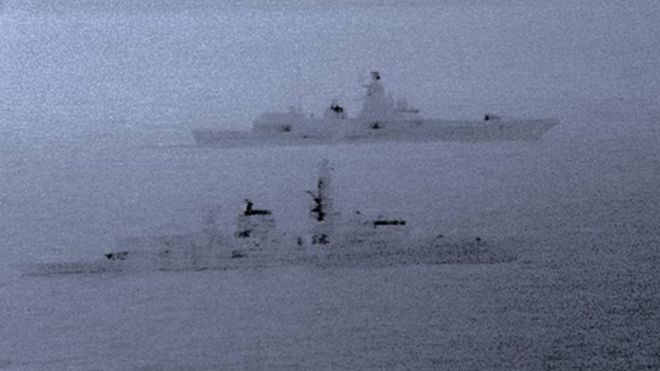
    HMS St Albans (foreground) escorts the Russian vessel through the North Sea. Photo: 25 December 2017
    It said HMS St Albans monitored the Admiral Gorshkov's "activity in areas of national interest".
    Russia has not commented on the issue.
    The Royal Navy said there had been a recent "upsurge in Russian units transiting UK waters". Britain recently warned of a new threat posed by Russia to internet cables under the sea.
    Air Chief Marshal Sir Stuart Peach, the chief of the defence staff, said earlier this month that Britain and Nato needed to prioritise protecting the lines of communication.
    He said it would "immediately and potentially catastrophically" hit the economy if they were cut or disrupted.

    Friday, November 17, 2017

    Maritime security

    The Navy wants to know if a drone can detect nautical mines

    If the Navy wants to detect nautical mines from the sky, the job often requires an MH-60 helicopter and an on-board countermeasure system.
    This arrangement lets operators learn about these mines and do so from a safe distance. Now the service wants something more nimble.
    One solution could be a small quadcopter sporting an ultra-sensitive magnetometer sensor system. This setup would allow the instrument to detect mines and then relay the information almost immediately to a handheld Android device.
    While the Navy hasn’t committed to a platform yet, early trials have involved the Physical Sciences Instant Eye, which weighs less than five pounds and sports a diminutive 12-inch wingspan.
    Existing solutions “tend to be large, expensive, or relatively slow,” said Dr. Rosemarie Oelrich, a scientist at Naval Surface Warfare Center, Carderock Division Combatant Craft Division. “We are looking for a quick exploratory search capability.”
    Oelrich and her colleagues are testing what’s formally known as a Mine Warfare Rapid Assessment Capability (MIW RAC) system, a product of the Office of Naval Research’s (ONR) TechSolutions program.

    Saturday, September 23, 2017

    Maritime security

    US Navy Too Good at Disguising Itself

    us navyThe Navy is very good at disguising itself at sea, Richardson said. Navy ships are designed to appear as something much smaller when detected on the radar screens of other ships. Even in daylight, Navy ships are painted Haze Grey to make it very difficult for crews on enemy ships to make visual contact.
    “We design our warships to have a lower radar cross-section. Some are designed to be very low,” Richardson said. “That degree of stealth makes us more effective from a warfighting standpoint.”
    But this stealth also imposes a burden on Navy crews to understand non-threatening marine traffic will have difficulty recognizing the size, location, and speed of Navy ships, Richardson added.
    To fix the problem, Richardson said, the surface fleet will use its automatic identification system – AIS – when in high traffic areas.
    “AIS is primarily and foremost a navigation tool for collision avoidance,” according to Coast Guard instructions. “The AIS corroborates and provides identification and position of vessels not always possible through voice radio communication or radar alone.”

    Monday, September 11, 2017

    Maritime security

    Exclusive: US Navy ships in deadly collisions had dismal training records

    Congress grills Navy on ship collisions
    The two US Navy destroyers involved in deadly collisions in the Pacific this summer both had lengthy records of failure to fulfill key training requirements, according to Government Accountability Office data provided to Congress and obtained by CNN.
    The USS Fitzgerald had expired training certification for 10 out of 10 key warfare mission areas in June, and the USS John S. McCain had let its certifications lapse in six out of the 10 mission areas, the data show.
      The dismal training record for the two ships sheds new light on one factor that may have contributed to the two collisions with commercial ships in June and August, which killed 17 sailors.
      The training records of the McCain and Fitzgerald were worse than the average warship in the Pacific, but they weren't the only ones with training problems. GAO testimony released last week revealed that expired training certifications for the Navy's 11 cruisers and destroyers based in Japan had skyrocketed five-fold from 7% in January 2015 to 37% in June. Two-thirds of the certifications had been expired for at least five months.

      Tuesday, February 23, 2016

      Maritime security

      Navy Focuses on Maritime Superiority in Complex World 


      The U.S. Navy is juggling many missions around the globe. It is challenging the Islamic State in the Middle East and is increasing its presence in the Asia-Pacific region as China continues to intimidate its neighbors. At the same time, other nations — such as Iran and North Korea — remain concerns.

      To maintain its global dominance, Navy leadership released in January a strategy called, “A Design for Maintaining Maritime Superiority,” that is intended to guide the sea service as the world grows more complex, said Chief of Naval Operations Adm. John Richardson.

      “The character of the entire game has changed,” he said during a speech in January. “In particular, the pace of things has become so accelerated. … If we do not respond to those changes, if we do not recognize and adapt to the changing character of the game, we are a Navy that is at risk of falling behind … our competitors.” 

      Friday, November 20, 2015

      Maritime security

      US lifts ban on maritime lethal weapon sales to Vietnam

      209-wpcf_728x410.jpgThe White House said in a statement released on Nov 17 that it had lifted “the ban on sales of maritime-related lethal capabilities to allow development of Vietnam’s maritime capacity and encourage interoperability with other regional forces.”
      Washington is also expanding its maritime assistance to Hanoi by offering US$19.6 million worth of support in fiscal year 2015 to help develop the country’s maritime capabilities, according to the announcement.
      The figure is projected to reach $20.5 million in fiscal 2016, subject to appropriation, the White House said.
      “We are helping Vietnam bolster its maritime Intelligence, Surveillance, and Reconnaissance (ISR) and command and control within Vietnam’s maritime agencies,” the statement reads.

      Tuesday, November 10, 2015

      Maritime security

      Supersonic Anti-Ship Missile Allows China To Threaten U.S. Navy


      South China Sea
      Researchers claim that the YJ-18 submarine-launched missile accelerates to supersonic speed immediately before striking its target, which makes it more difficult for sailors to defend their ship. At the same time defense officials from countries throughout Southeast Asia have warned of the increase in “clutter” in the contested waters of the South China Sea as various nations build more submarines.
      The U.S. has taken it upon itself to challenge China’s claim to large areas of the South China Sea, and a U.S. warship recently made a patrol inside the 12-nautical mile buffer zone that China claims as sovereign territory around the artificial islands that it has been constructing. The USS Lassen was followed closely by two Chinese ships as it passed by the island.


      Wednesday, November 4, 2015

      Maritime security

      Closest Encounter Since 2006: Chinese Submarine Tailed US Aircraft Carrier


      Closest Encounter Since 2006: Chinese Submarine Tailed US Aircraft Carrier
      Over at The Washington Free Beacon Bill Gertz has the scoop that a Chinese submarine shadowed a U.S. nuclear super-carrier, the USS Ronald Reagan, in what Pentagon officials called the closest encounter between a People’s Liberation Army Navy boat and an American aircraft carrier since 2006.
      According to Gertz, the incident occurred on October 24 as the USS Ronald Reagan was on its way from Yokosuka Naval Base in Japan’s Kanagawa Prefecture, sailing around the southern end of Japan to the Sea of Japan. The USS Ronald Reagan is currently the U.S. Navy’s only forward-deployed aircraft carrier in the Asia-Pacific.

      Wednesday, July 29, 2015

      Maritime security

      10 Ways for America to Deal with the South China Sea Challenge


      Maritime tensions in Asia are growing and will persist, and yet relations are likely to remain bounded below the threshold of military conflict. Steering through intensified competition in the South China Sea and beyond requires a realistic U.S. foreign policy founded on deep engagement, comprehensive power, and durable principles.

      Sunday, July 26, 2015

      Maritime security

      New Sonobuoys to Fit On UAVs

      UK defence electronics firm Ultra Electronics is developing a new family of miniature passive sonobuoys that could be eventually deployed from unmanned aerial systems.
      The new 12 inch sonobuoys use the company’s new multi-static technology, which assesses data from other sonobuoys and other energy in the water to provide an increased probability of detection. The sonobouys retain the same standard sonobuoy diameter but are two-thirds shorter than the 36 inch-long sonobuoys used by the US Navy on its P-8 Poseidon and P-3 Orion maritime patrol aircraft.