Страницы

Showing posts with label Climate security. Show all posts

Monday, September 14, 2020

Climate security

A stratospheric Polar Vortex has now emerged above the Arctic Circle. It will influence the Winter 2020/2021 weather along with the incoming La Nina and west QBO
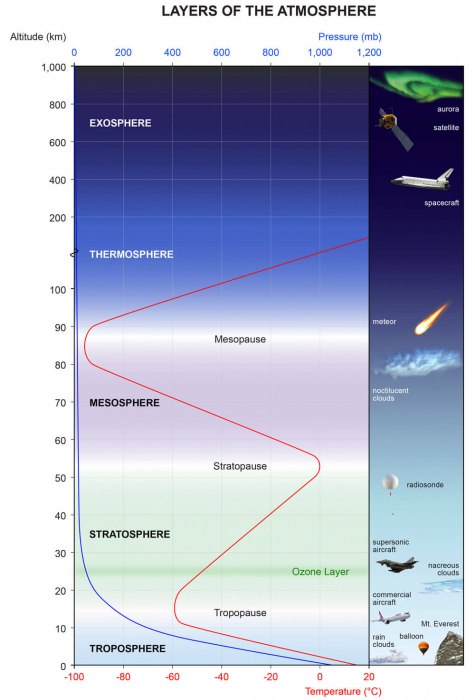


polar-vortex-atmospheric-layers
The road to the next Winter season is always long and it begins well before the temperatures start to drop. One of the major drivers on that road is the stratospheric polar vortex. A new polar vortex has now emerged over the North Pole and will continue to strengthen for the next 4 months.
In our latest long-range article, we discussed the latest Fall forecast 2020. There we mentioned the influence of the ENSO cycles in the tropical Pacific, and what they are.
Now we turn away from the ocean and into the Stratosphere. There, a new polar vortex has emerged and began to grow, to be ready for the upcoming cold season. 
WHAT IS THE POLAR VORTEX?
The atmosphere above us has many different layers. All of the clouds and the weather that we feel are found in the lowest part of the atmosphere called the troposphere. It reaches up to 8 km altitude over the poles and up to 14-16 km altitude over the equator....

Tuesday, July 28, 2020

Climate security

Siberia’s ‘gateway to the underworld’ grows as record heat wave thaws permafrost

On a spring day in 2019, Alexander Kizyakov rappelled down the 60-meter headwall of the Batagay megaslump in eastern Siberia, pausing to chisel out chunks of ice-rich soil that had been frozen for eons. “One of my hobbies is rock climbing,” says Kizyakov, a permafrost scientist at Lomonosov Moscow State University. Colleagues below sampled the most ancient soil along the base of the cliff. Such work is too dangerous in summertime, when the constant crackling of melting ice is punctuated by groans as slabs of permafrost, some as big as cars, shear off the headwall.
Known to locals as the “gateway to the underworld,” Batagay is the largest thaw slump on the planet. Once just a gully on a slope logged in the 1960s, the scar has expanded year by year, as the permafrost thaws and meltwater carries off the sediment. Now more than 900 meters wide, it epitomizes the vulnerability of permafrost in the Arctic, where temperatures have shot up twice as fast as the global average over the past 30 years.
But it is also a time capsule that is seducing scientists with its snapshots of ancient climates and ecosystems. “It’s a mind-blowing place,” says Thomas Opel, a paleoclimatologist at the Alfred Wegener Institute. Dates from ice and soil gathered at Batagay show it holds the oldest exposed permafrost in Eurasia, spanning the past 650,000 years, Opel and colleagues reported in May at the European Geosciences Union’s online general assembly. That record could reveal how permafrost and surface vegetation responded to past warm climates. “It gives us a window into times when permafrost was stable, and times when it was eroding,” Opel says.

Wednesday, July 1, 2020

Climate security

Experts Warn 40°C Summer Temperatures Could Be Common in UK Sooner Than We Thought


main article image
A stark warning about the kind of summer that could become routine in the UK by the end of this century has been issued in a new study by the country's Met Office.
Using temperature data and climate model simulations, the researchers tested the likelihood of UK temperatures exceeding 30°C, 35°C, and 40°C (86 F, 95 F and 104 F) each summer over the next 80 years.
They found that if global greenhouse gas emissions continue to rise, temperatures exceeding 40°C could be reached somewhere in the UK every three-and-a-half years by 2100.
If you live or have travelled in a hot climate, you might know the stifling heat that envelops your body when the thermometer breaks 40°C. But there is a difference between experiencing that kind of heat from a pool or through the window of an air conditioned hotel room, and living in that heat for several days without reprieve.
In England alone, 2,000 people every year already die from heat related illnesses.
While traditionally warmer climes have adapted over time to soaring summer temperatures, the UK is not prepared to handle these kinds of heatwaves.

Wednesday, May 20, 2020

Climate security

Climate change has already made parts of the world too hot for humans

New Scientist Default Image
Global warming has already made parts of the world hotter than the human body can withstand, decades earlier than climate models expected.
Measurements at Jacobabad in Pakistan and Ras al Khaimah in the United Arab Emirates have both repeatedly spent at least 1 or 2 hours over a deadly threshold, an analysis of weather station data has found.
Wet bulb temperature (TW) is a measure of heat and humidity, taken from a thermometer covered in a water-soaked cloth. Beyond a TW threshold of 35°C, the body is unable to cool itself by sweating. Lower levels can also be deadly, as was seen in the 2003 European heatwave, which killed thousands of people without passing a TW of 28°C.
Tom Matthews at Loughborough University, UK, and his colleagues analysed weather station data from around the world, and found that the frequency of wet bulb temperatures exceeding a series of temperature intervals between 27°C and 35°C had all doubled since 1979.
Most frequency increases were in the Gulf, India, Pakistan, the US and Mexico. But at Jacobabad and Ras al Khaimah, a TW of 35°C appears to have been passed, the first time the breach has been reported in scientific literature.

Thursday, April 16, 2020

Climate security

Climate change: US megadrought 'already under way'


drought
A drought, equal to the worst to have hit the western US in recorded history, is already under way, say scientists.
Researchers say the megadrought is a naturally occurring event that started in the year 2000 and is still ongoing.
Climate change, though, is having a major impact with rising temperatures making the drought more severe.
Some researchers are more cautious, saying that it is too early to say if the region really is seeing a true megadrought.
According to the authors of this new paper, a megadrought in North America refers to a multi-decade event, that contains periods of very high severity that last longer than anything observed during the 19th or 20th centuries.

Monday, March 9, 2020

Climate security


Leonardo DiCaprio and Bill Clinton among John Kerry’s all-star ‘World War Zero’ climate coalition


Announcement comes as as diplomats gather in Madrid on Monday for global climate negotiations
John Kerry, the former US secretary of state, has formed a new bipartisan coalition of world leaders, military brass and Hollywood celebrities to push for public action to combat climate change.
The name, World War Zero, is supposed to evoke both the national security threat posed by the earth’s warming and the type of wartime mobilisations that Mr Kerry argued would be needed to stop the rise in carbon emissions before 2050.
The star-studded group is supposed to win over those sceptical of the policies that would be needed to accomplish that.
Former presidents Bill Clinton and Jimmy Carter are part of the effort. Moderate Republican lawmakers like Arnold Schwarzenegger, the former governor of California, and John Kasich, the former governor of Ohio, are also on the list.
Stars like Leonardo DiCaprio, Sting and Ashton Kutcher round out the roster of more than 60 founding members.

Monday, February 24, 2020

Climate security

“All hell breaking loose”: How the Pentagon is planning for climate change


Extreme temperatures. Collapsing countries. Wars on multiple continents. Simultaneous natural disasters. And a US military completely unprepared to deal with it all.
Welcome to all hell breaking loose.
That’s not the plot of some apocalyptic novel — it’s a scenario the Pentagon is deeply concerned could happen in the not-so-distant future due to climate change.
Over the past decade, the Pentagon has consistently, repeatedly cited climate change as a serious threat to America’s national security in official public documents.
A new book, aptly titled All Hell Breaking Loose: The Pentagon’s Perspective on Climate Change, reveals the Pentagon is far more worried about the potential impacts of climate change than most probably realize. The good news is that it’s doing a lot to develop ways of coping with that uncertain future. The bad news is that it still may not be enough.
I called up the book’s author, Michael Klare, to find out more about what the US military is so worried about, what it’s trying to do about it, and whether any of it will be enough to mitigate the coming challenges.
Climate security

Can these giant dams keep Europe from drowning?


The top of a 4.5-m (15-ft) statue, some rooftops and a church spire are all that remains above water in Wieringerwerf, near Amsterdam, during the Wieringermeer flood of 1945.Climate change is real, and it's bad. It's also gradual and impersonal. That's why it's both tempting and easy to stick your head in the sand. Do that long enough, though, and you're likely to drown, as sea level rise (SLR) catches up with you.
Here's something that might shock you into action: A plan for a giant dam to protect 15 European countries from those rising seas. The project's scale is unprecedented. Its cost phenomenal. But it's still cheaper than all the alternatives—including doing nothing. All the alternatives except one: Taking action now against climate change.
Here's how the situation looks today:
  • Current global mean temperature is about 1°C (1.8°F) above pre-industrial levels.
  • Rising temperatures cause rising sea levels, albeit with a lag. Global mean SLR is 18 cm (7 in) since 1880 and it's accelerating.
  • Current policies imply a further global warming of up to 3.1 °C (5.6°F) by 2100, so it's virtually certain SLR will continue well beyond that date....

Wednesday, February 19, 2020

Climate security

What happened to winter? And where's the polar vortex?

Embedded video
If you're wondering what happened to winter, you're not alone.
The first two months of winter – December and January – were the warmest on record across the U.S., the National Oceanic and Atmospheric Administration says.
In fact, dozens of cities east of the Mississippi River were reporting one of their warmest winters to date from Dec. 1 through Feb. 17, according to the Southeast Regional Climate Center.  
And all of the big cities of the Northeast and mid-Atlantic, from Boston to Washington, D.C., have seen less snow than usual.
We can thank an unusually strong polar vortex for our mild winter: It kept the arctic air locked in across the polar regions rather than plunging southward into the U.S., the Weather Channel said.  
The polar vortex – everyone's favorite wintertime whipping boy – is a large area of cold air high up in the atmosphere that normally spins over the North Pole (as its name suggests). The stronger the polar vortex, the milder our winter is. 

Sunday, February 16, 2020

Climate security

Speeding Sea Level Rise Threatens Nuclear Plants


High Water, Rhine, Rhineland Palatinate, People VillageThe latest science shows how the pace of sea level rise is speeding up, fueling fears that not only millions of homes will be under threat, but that vulnerable installations like docks and power plants will be overwhelmed by the waves.
New research using satellite data over a 30-year period shows that around the year 2000 sea level rise was 2mm a year, by 2010 it was 3mm and now it is at 4mm, with the pace of change still increasing.
The calculations were made by a research student, Tadea Veng, at the Technical University of Denmark, which has a special interest in Greenland, where the icecap is melting fast. That, combined with accelerating melting in Antarctica and further warming of the oceans, is raising sea levels across the globe.
The report coincides with a European Environment Agency (EEA) study whose maps show large areas of the shorelines of countries with coastlines on the North Sea will go under water unless heavily defended against sea level rise.
Based on the maps, newspapers like The Guardian in London have predicted that more than half of one key UK east coast provincial port — Hull — will be swamped. Ironically, Hull is the base for making giant wind turbine blades for use in the North Sea.


Friday, February 14, 2020

Climate security

Intelligence community's challenges and opportunities in the face of climate change

The intelligence community might not be on the hook to provide a definitive scientific analysis of climate change and global warming, but intelligence analysts can play a key role in assessing how climate change is already affecting our national security. (Associated Press/File)
In 2014, the Pentagon submitted a report that argued climate change was an “immediate risk” to national security. The Pentagon reiterated many of these concerns in a report five years later.

I am a retired CIA officer and not a scientist, so I’ll leave it to the climatologists for the most authoritative assessment on the pace of climate change. But there is clear evidence that the Earth is warming, sea levels are rising and the Arctic is melting.

Higher temperatures result in more rain and snowfall in some regions and droughts and wildfires in others. Former Defense Secretary James Mattis emphasized that even climate change skeptics should recognize the benefit of an insurance policy.

For the Pentagon, an insurance policy means securing bases and allocating resources to deal with humanitarian disasters and military conflicts.

Rising sea levels can seriously affect military readiness by flooding coastal bases. Opening the Arctic sea lanes has already sparked a competition among great powers for newly accessible resources. The clash will only intensify over time.

Tuesday, February 4, 2020

Climate security

Climate Models Are Running Red Hot, and Scientists Don’t Know Why

undefined
There are dozens of climate models, and for decades they’ve agreed on what it would take to heat the planet by about 3° Celsius. It’s an outcome that would be disastrous—flooded cities, agricultural failures, deadly heat—but there’s been a grim steadiness in the consensus among these complicated climate simulations.
Then last year, unnoticed in plain view, some of the models started running very hot. The scientists who hone these systems used the same assumptions about greenhouse-gas emissions as before and came back with far worse outcomes. Some produced projections in excess of 5°C, a nightmare scenario.
The scientists involved couldn’t agree on why—or if the results should be trusted. Climatologists began “talking to each other like, ‘What’d you get?’, ‘What’d you get?’” said Andrew Gettelman, a senior scientist at the National Center for Atmospheric Research in Boulder, Colorado, which builds a high-profile climate model.

Sunday, January 5, 2020

Climate security


Russia announces plan to ‘use the advantages’ of climate change

Gas boiler chimneys in Moscow, RussiaRussia has published a plan to adapt its economy and population to climate change, aiming to mitigate damage but also “use the advantages” of warmer temperatures.
The document, published on the government’s website on Saturday, outlines a plan of action and acknowledges changes to the climate are having a “prominent and increasing effect” on socioeconomic development, people’s lives, health and industry.
Russia is warming 2.5 times faster than the planet as a whole, on average, and the two-year “first stage” plan is an indication the government officially recognises this as a problem, even though Vladimir Putin denies human activity is the cause.
It lists preventive measures such as dam building or switching to more drought-resistant crops, as well as crisis preparations including emergency vaccinations or evacuations in case of a disaster.

Saturday, January 4, 2020

Climate security

Geoengineering Wouldn't Be Enough to Stop Greenland From Melting

Картинки по запросу arctic
When the Greenland ice sheet went into a record meltdown in the summer of 2019, it raised a very terrifying specter of the future. Here was a 12.5-billion-ton mass of ice—one that’s been melting at a quickening pace since the 1980s—melting in a way scientists didn’t expect to happen for decades.

While the ice sheet won’t completely disappear for centuries, any further increase in its melt will put coastal communities at risk of inundation. There’s an argument to be made that we should do everything possible to save the ice, and a new study explores a very controversial idea to that end: cooling the planet.

The findings, published last month in Earth’s Future, explore what would happen if the world pumped particles high into the atmosphere that would reflect sunlight back into space. This high-altitude air conditioning scheme, known as solar radiation management or SRM, would bring down the global average temperature. The paper’s results show that cooling would help slow—though not stop—the melting of the ice sheet. That could buy coastal regions time but also change the climate in other ways that may end up hurting other regions around the world.Illustration for article titled Geoengineering Wouldnt Be Enough to Stop Greenland From MeltingIllustration for article titled Geoengineering Wouldnt Be Enough to Stop Greenland From Melting

Sunday, December 29, 2019

Climate security

Bank of England chief Mark Carney issues climate change warning


Mark Carney
The world will face irreversible heating unless firms shift their priorities soon, the outgoing head of the Bank of England has told the BBC.
Mark Carney said the financial sector had begun to curb investment in fossil fuels – but far too slowly.
He said leading pension fund analysis "is that if you add up the policies of all of companies out there, they are consistent with warming of 3.7-3.8C".
Mr Carney made the comments in a pre-recorded BBC Radio 4 Today interview.
The interview, by presenter Mishal Husain, is one of several items on the programme which are focusing on climate change, on the day the show is guest edited by environmental campaigner Greta Thunberg.
Mr Carney added that the rise of almost 4C was "far above the 1.5 degrees that the people say they want and governments are demanding”.

Monday, December 23, 2019

Climate security

Climate change contributing to increase in extreme weather events, says expert report


Wildfire
Extreme weather events such as heatwaves, droughts and heavy rainfall are becoming increasingly likely to occur because of human-caused climate change. That is a conclusion of a report by climate experts that was released recently at the annual meeting of the American Geophysical Union in San Francisco.
“Explaining extreme events from a climate perspective” is the eighth report in an annual series published by the Bulletin of the American Meteorological Society (BAMS). Comprising 21 peer-reviewed studies of extreme weather around the world in 2018, the report is based on the research of 121 scientists in 13 countries.
Since the first report in 2011, BAMS editor-in-chief Jeff Rosenfeld says, “it feels like a century, in terms of how the science has changed.” The papers are now are much more adventurous and look to the future as much as to the past. We study extremes, he said, “because they are the way we experience climate.” This year’s paper covers not only temperature extremes, but floods, hailstorms, wildfires, rainfall, drought, and other phenomena.

Tuesday, December 17, 2019

Climate security

Fracking-well blast 60 miles from Pittsburgh leaked more methane than some countries emit in a year


PHOTO: ISTOCKIn 2018, a natural-gas well exploded near Powhatan Point in Ohio, a small town that sits along the Ohio River, just 60 miles from Pittsburgh as the crow flies. The fracking well was owned and operated by a subsidiary of oil giant Exxon.

According to a study published yesterday in the Proceedings of the National Academy of Sciences, this single explosion emitted a gargantuan amount of methane into the atmosphere. Over the 20 days it took for Exxon to plug the well, more than 57,000 metric tons of methane was released, at a rate of about 120 metric tons of methane per hour.

This figure, from one well in less than three weeks, eclipsed the annual amount of methane that is emitted by the oil and gas industries of France, Norway, and the Netherlands combined. The Ohio blast is now the largest known methane leak on record in the U.S. and was twice as large as the previous largest leak that occurred at an oil and gas storage facility in California in 2015.

Wednesday, December 11, 2019

Climate security

Climate change: Methane pulse detected from South Sudan wetlands


Sudd
Scientists think they can now explain at least part of the recent growth in methane (CH4) levels in the atmosphere.
Researchers, led from Edinburgh University, UK, say their studies point to a big jump in emissions coming from just the wetlands of South Sudan.
Satellite data indicates the region received a large surge of water from East African lakes, including Victoria.
This would have boosted CH4 from the wetlands, accounting for a significant part of the rise in global methane.
Perhaps even up to a third of the growth seen in the period 2010-2016, when considered with East Africa as a whole.
"There's not much ground-monitoring in this region that can prove or disprove our results, but the data we have fits together beautifully," said Prof Paul Palmer.
"We have independent lines of evidence to show the Sudd wetlands expanded in size, and you can even see it in aerial imagery - they became greener," he told BBC News.

Friday, November 29, 2019

Climate security

EU declares EMERGENCY for Europe: Parliament issues chilling warning


EU news: Ursula von der Leyen officially takes up her EU Presidency next weekA vote to register the current situation across the continent a “climate emergency” was passed by a large majority. It comes a day after an internal EU docoment revealed climate protection could cost Europe €3trillion. German newspaper Frankfurter Allgemeine Zeitung said the European Commission laid out how €300billion would be spent each year. This is part of Brussels plans for Europe to become the first carbon neutral continent by 2050.
The funds would be coming from the EU budget as well as member states and the private sector, claims the bloc paper.
New EU President Ursula von der Leyen has called for at least half the budget of the bloc to be spent on climate protection.
However, a spokesman for Ms von der Leyen said: "The cited Commission document is not known to her and it could at most be administrative considerations."
Activists praised the move with many seeing it as a rebuke to Donald Trump and his actions against the Paris climate deal.

Wednesday, November 13, 2019

Climate security

How rising temps could cause even more heat casualties at military bases


About 2,800 troops suffered illnesses from dehydration to heat stroke last year. That number is 50 percent higher than it was five years earlier, according to a study published Monday, and will only get worse as global temperatures continue to rise.
The military’s hottest bases clock in at Marine Corps Air Station Yuma, Arizona, MacDill Air Force Base, Florida, and Homestead Air Reserve Base, Florida, according to the Union of Concerned Scientists, and they could be staring down four months a year where the heat index tops 100 degrees.
“The growing number of dangerously hot days could pose a challenge to the military’s efforts to protect service members’ health while also ensuring mission readiness,” Kristy Daul, the study’s lead author, said in a Monday news release.