Nuclear weapons
 During the Cold War, the United States invested heavily in nuclear weapons to compensate for NATO’s conventional inferiority in Europe. Today the tables have turned: America’s conventional strength far outstrips that of Russia, and the Russians have little prospect of changing the status quo.The United States allocates roughly $600 billion for its defense budget, over 10 times what Russia spends. And no amount of spending or technological development by Russia is going to alter the fact that the NATO alliance represents more than 900 million people and spends more than $1 trillion on its defense annually.In the nuclear realm Russia also lags behind the United States. Although the size of Russia’s and America’s nuclear forces are roughly the same, the United States plans to spend $350 billion on its nuclear forces over the next decade. During the same period, Russia will spend roughly $50 billion.
Nuclear weapons
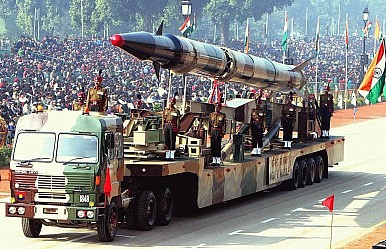
 Do states acquire weapons because of security needs or out of a desire for prestige? Analysts have asked this question about a wide range of weapons, including advanced fighter jets, nuclear submarines, aircraft carriers, battleships, and (perhaps most importantly) nuclear weapons. On the prestige side, nuclear weapons convey modernity, power, and a spot in the “room where it happens”–particularly prestigious because the room only holds a few countries. On the security side, nuclear weapons can provide a last ditch alternative against a superior foe.
The question of weapons and prestige has bedeviled political scientists and the answer seems to be: “Both, but more of one or the other under particular circumstances.” Recent work by Jayita Sarkar (reviewed by Sumit Ganguly) helps contribute to this question, at least in the context of India’s pursuit of nuclear weapons. Sarkar argues that recent documentary evidence supports a security-oriented explanation for the Indian nuclear weapons program. Indian nuclear insecurity, and in particular, the detonation of a Chinese hydrogen device in 1967, convinced India that it could not defend against the PLA without the assistance of nuclear weapons.
 During the Cold War, the United States invested heavily in nuclear weapons to compensate for NATO’s conventional inferiority in Europe. Today the tables have turned: America’s conventional strength far outstrips that of Russia, and the Russians have little prospect of changing the status quo.