Страницы

Sunday, March 6, 2016

Navy

US Navy’s Railgun Could Find Home On Stealth Warship

The US Navy’s experimental railgun – an electromagnetic projectile launcher – has been grabbing headlines and making waves ever since it was revealed that the weapon has left the realm of science fiction.
The railgun is reportedly capable of firing projectiles at seven times the speed of sound, and a fully operational version could soon find a new home on the state-of-the-art Zumwalt-class warship the USS Lyndon B Johnson.
The railgun was scheduled for operational trials this year, with several candidates among the Navy’s fleet, but Admiral Pete Fanta has pushed for skipping sea trials and deploying fully operational versions as soon as 2018.
This weapon, developed by BAE Systems, could provide a low-cost replacement to conventional missiles, according to sources in the US Navy.

Saturday, March 5, 2016

Terror threat

Russia — the Most Likely Target

The Paris attacks last year bought home that ISIL intends to terrorise all those who oppose the group, wherever they may be.  Outside the Syria and Iraq environs, ISIL strives for evermore spectacular attacks with ever more shocking outcomes.  The 130 dead in Paris came just after 228 (mainly Russians) were blown up on an airliner out of Sharm el Sheikh, Egypt and many others, including 38 British citizens, were murdered on a beach in Tunisia. 
Many, especially those who oppose air strikes and ground assault on ISIL, point to the lessons learned in the 2003 invasion of Iraq, which in part was caused by ‘incomplete’ information on the state of Saddam Hussein’s weapons of mass destruction (WMD).  However, having been involved in both Gulf Wars and having been in both Syria and Iraq last year, I see very few similarities—except for the WMD concern. 

Friday, March 4, 2016

Encryption

NSA Is Mysteriously Absent From FBI-Apple Fight

The Federal Bureau of Investigation insisted that it was helpless.
The bureau told a judge in February that Apple has the “exclusive technical means” to try to unlock the contents of San Bernardino shooter Syed Rizwan Farook’s iPhone — and that’s why it should be forced to do so.
But notably missing from the FBI’s argument was any mention of whether it had consulted spies and sleuths from the government’s intelligence community — particularly the National Security Agency.
The Twitterverse exploded with questions. Couldn’t the NSA break open the phone? If it could, why didn’t it?
Electronic warfare

Navy awards BAE next-gen electronic warfare contract
635926060729309510-FSSR.JPG
A BAE-led team has been awarded an $11 million Navy contract to develop next-generation electronic warfare systems.

The contract, with the Office of Naval Research (ONR), calls for BAE to develop the Full-Spectrum Staring Receiver (FSSR). "This technology will enable near-instantaneous battlespace situational awareness, emitter identification and tracking, threat warning and countermeasure and weapon cueing," said a BAE news release.

FSSR is part of ONR’s Electronic Warfare Discovery & Invention Program, which seeks to develop a range of next-generation electronic warfare systems. The BAE team also includes S2 Corporation, University of Colorado Boulder, Montana State University, Purdue University, HRL Laboratories and the Naval Research Laboratory.

Public security

'Islamic State' using water as a weapon

Irak Staudamm in MossulAn abundant water supply means life, but excess water or water scarcity can mean death. Grave concerns have arisen over the dams that the so-called "Islamic State" (IS) has strategically taken in northern Iraq and Syria. IS controls six of the eight large dams on the Euphrates and Tigris rivers and is now continuously attacking a seventh one.
IS is specifically using the natural resource as a weapon, observes the conflict researcher Tobias von Lossow at Berlin's Institute for International and Security Affairs (SWP). "On one hand, IS is damming the river to retain water and dry up certain regions, thereby cutting off the water supply to villages and communities. On the other hand ,it has also flooded areas to drive away their inhabitants and to destroy their livelihoods," said von Lossow in an interview with DW.
Nuclear security

North Korea, on defense after sanctions, makes nuclear threat

Kim Jong Un
North Korean leader Kim Jong-un has ordered his country's nuclear weapons made ready for use at a moment's notice, the country's official state news agency reported Friday.

Kim also said his country will ready its military so it is prepared to carry out preemptive attacks, calling the current situation very precarious, according to the Korean Central News Agency.

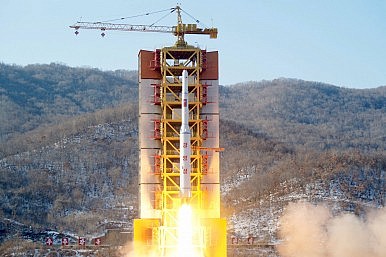
The threats in the statement are part of the authoritarian nation's regular propaganda effort to show strength in the face of what it sees as an effort by its enemies South Korea and the United States to overthrow its leaders; it follows harsh U.N. sanctions over the North's recent nuclear test and long-range rocket launch and comes ahead of joint U.S.-South Korean war games this month that the North claims are invasion preparations.
Nuclear security

The full price of nuclear deterrence


NukeNuclear weapons and nuclear deterrence have once again invaded the public consciousness. In the past few years, startling facts about these civilization-ending machines have come to light. They were not all mothballed when the Cold War ended. Even poor, isolated countries like North Korea can build them. Terrorists are trying to buy or steal them. They have nearly been detonated by accident many times. American nuclear missile operators were caught gambling, drinking, doing drugs, and cheating on their proficiency tests. President Putin of Russia and some of his generals and political cronies have said they would nuke America if necessary. 


Nuclear security

Former covert CIA operations officer Valerie Plame

What became known as the Plame Affair (or sometimes Plame-gate) is intricately woven into the history already being written about the United States’ 2003 invasion of Iraq. At its heart is a simple reality: Though the George W. Bush administration premised the invasion of Iraq largely on an assertion that the Iraqis were pursuing weapons of mass destruction, no significant evidence of continuing WMD programs was found, post-invasion. Plame’s husband, former ambassador and career foreign service officer Joseph C. Wilson, wrote an opinion piece in July 2003 that highlighted the WMD problem in a media venue that could not be ignored, the New York Times. The piece strongly suggested that the Bush administration had gone to war under “false pretenses” by claiming that a supposed Iraqi purchase of uranium “yellowcake” in Africa in the late 1990s showed that Baghdad was pursuing nuclear weapons.1 Wilson had a reason to know the claim, which President Bush put forward in a State of the Union address, was false; in 2002, Wilson had investigated the supposed yellowcake sale for the CIA, and found it simply had not happened.

http://www.tandfonline.com/doi/full/10.1080/00963402.2016.1145902
Whistleblowing

Whistleblower wins $51 million in kickback and bribery case

whistle
A whistleblower will collect a $51 million payday after sounding the alarm about bribes and kickbacks at the medical device company where he worked.
Olympus Corporation of the Americas agreed Tuesday to pay $646 million in fines after it admitting to a pattern of bribery and kickbacks. About half of that fine was a criminal penalty for violating the federal anti-kickback statue, making it the largest amount ever paid for breaking that law. The payment to the whistleblower will be paid out of the company’s fines.
John Slowik, 53, worked for 20 years for Olympus, which is the medical device unit of the Japanese company that also makes cameras. In 2009 he was named the company’s compliance officer. But he said that his complaints about the company’s policy of disguising payments as grants and lavishing expensive trips and entertainment on doctors and hospital administrators in order to sell equipment fell on deaf ears within the company.

Wednesday, March 2, 2016

Counterterrorism

First on CNN: U.S. Special Ops team captures first ISIS operative

U.S. Special Operations forces have captured their first suspected ISIS operative in Northern Iraq as part of a highly secretive targeting team led by the Army's elite Delta Force, CNN has learned.
    The detainee is being interrogated by the U.S. and is expected to be turned over to Iraqi officials in the coming days, two U.S. officials confirmed. They provided details to CNN but asked not to be identified due to the sensitivity of the matter, and they did not identify the location of the interrogation.
    Electoral battles

    Trump owns Super Tuesday, but Cruz and Rubio see glimmers of hope

    Donald Trump rode a powerful tide of voter fury to victories across the country on Tuesday, ending the campaign season’s most momentous day of balloting as the unrivaled favorite for the Republican presidential nomination.
    The billionaire mogul’s Super Tuesday rout extended from New England to the Deep South, but he resoundingly lost the night’s crown jewel, Texas, to home-state Sen. Ted Cruz, who also defeated Trump in Alaska and Oklahoma.
    Tuesday’s results exposed some vulnerabilities for Trump: He lost late­-deciding voters in many states by wide margins to rival Marco Rubio, a sign that the senator from Florida may have had some impact with his withering assault on Trump’s character. Ohio Gov. John Kasich also came close to beating Trump in Vermont.

    Tuesday, March 1, 2016

    Power grid security

    U.S. Spy Chief Expects More Power Grid Attacks Like One In Ukraine

    Картинки по запросу admiral michael rogers
    The head of the U.S. National Security Agency warned that hackers will inevitably attack U.S. infrastructure in an attempt to cause a power failure like the one in Ukraine last year.
    Admiral Michael Rogers told a cybersecurity conference in San Francisco that it is a "matter of when, not if" a foreign state launches a cyberattack on U.S. targets. 
    "An actor penetrated the Ukrainian power grid and brought large segments of it offline in a very well-crafted attack that both focused on knocking the system down but also focused on how was the provider likely to respond to that outage," Rogers said.
    "Seven weeks ago, it was Ukraine. That isn't the last we are going to see of this, and that worries me."
    Criminal investigation

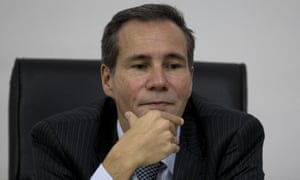
    Alberto Nisman: testimony of ex-spy chief swings case towards murder

    Alberto Nisman, the Argentinian prosecutor who died mysteriously died while investigating the 1994 bombing of a Jewish community centre.
    Dramatic testimony by a former Argentinian spy has shifted the investigation into the mysterious death of prosecutor Alberto Nisman towards the presumption that he was murdered.
    Antonio Stiuso – a senior intelligence official who worked closely with Nisman before his death in January 2015 – returned from self-imposed exile to give a marathon 17-hour court statement on Monday that looks likely to put renewed pressure on former president Cristina Fernández de Kirchner.
    His full testimony remains sealed, but domestic media have published what they say are extracts in which Stiuso accuses a group close to the former government of carrying out the murder and tampering with evidence from the crime scene.

    Information security

    At least 2,079 Clinton emails contain classified material

    Democratic presidential candidate Hillary Clinton is surrounded by security as she poses for a photo with a supporter at a campaign event at the Old South Meeting House, Monday, Feb. 29, 2016, in Boston.
    At least 2,079 emails that Hillary Clinton sent or received contained classified material, according to the State Department’s final update from its review of more than 30,000 emails.
    The State Department released a new batch of 3,871 pages of Clinton’s emails Monday evening in response to a court order. Of those, 261 contain classified information. Most were at the confidential level, which is the lowest level of classification. Twenty-three of them were at the Secret level.
    None of Clinton’s emails was marked as classified during her tenure, State Department officials say, but intelligence officials say some material was clearly classified at the time. Her aides also sent and received classified information.

    Read more here: http://www.mcclatchydc.com/news/politics-government/election/article63218372.html#storylink=cpy
    Electronic warfare

    Revealed: Pentagon’s Plan to Defeat Russian and Chinese Radar With A.I.


    The Pentagon’s Defense Advanced Research Projects Agency (DARPA) is working on a new generation of electronic warfare systems that are based on artificial intelligence (AI). If the program were to prove a success, the new A.I.-driven systems would provide the United States military a way to counter evermore-capable Russian and Chinese radars.
    “One of our programs at DARPA is taking a whole new approach to this problem, this is an effort we refer to as cognitive electronic warfare,” DARPA director, Dr. Arati Prabhakar, told the House Armed Services Committee’s Subcommittee on Emerging Threats and Capabilities on February 24. “We’re using artificial intelligence to learn in real-time what the adversaries’ radar is doing and then on-the-fly create a new jamming profile. That whole process of sensing, learning and adapting is going on continually.”
    M&A security

    Cyber Espionage Fears Stoked by China’s Zoomlion Bid for Terex

    Mistrust of China and wariness about its cyber spying are fueling a public policy campaign to halt a corporate acquisition involving a U.S. defense contractor. 

    The debate surrounding an unsolicited bid by China’s industrial equipment manufacturer Zoomlion to acquire Connecticut-based Terex Corp. has turned into a microcosm of deeper foreign policy and security issues. The potential acquisition is drawing increased attention in Washington and stirring speculation about China using its industrial and financial clout to gain leverage against the United States. 

    Members of Congress have urged the U.S. government to scrutinize the deal because of Zoomlion’s ties to the Chinese government and the People’s Liberation Army. Security concerns aside, opposition to the deal also is motivated by business reasons, as Zoomlion’s offer has disrupted Terex’s merger with Finland’s Konecranes. The European firm was in the midst of merging with Terex before Zoomlion come in with a bid, and talks were suspended as Terex leaders weigh their options.

    http://www.nationaldefensemagazine.org/blog/Lists/Posts/Post.aspx?List=7c996cd7-cbb4-4018-baf8-8825eada7aa2&ID=2105&RootFolder=%2Fblog%2FLists%2FPosts
    Cybersecurity

    Zero-day attacks: How DoD should defend from the unknown

    ISR zero day (2)
    Department of Defense networks are evolving away from signature-based protection to more effective strategies that could stop a potentially devastating damage from a zero-day attack.

    Signature-based protection identifies viruses and malware by comparing them to a database of known signatures. Zero-day threats, however, exploit a previously undisclosed vulnerability in software or hardware — so no registered signature.

    Zero-days are capable of creating serious and complex problems before anyone realizes that something is wrong. Once an exploit has been detected, it requires an immediate response, usually in the form of a software patch that seals the vulnerability before further damage can be inflicted on the network.

    Cyberwars

    CYBERCOM disrupting Islamic State communications, networks, says Carter

    USCYBERCOM Logo.png
    The U.S. military's Cyber Command has begun using cyber attacks to disrupt the Islamic State's ability to operate and communicate over the digital battlefield, saidDefense Secretary Ashton Carter during a Monday press briefing.
    The CYBERCOM-led campaign primarily aims to "cause them to lose confidence in their network, to overload their network so that they can't function and do all of these things that will interrupt their ability to command and control forces there," said Carter.
    The defense secretary said the new cyber capabilities exceed the jamming used in traditional electronic warfare. While the goal is sometimes simply to disrupt, other times it's to disrupt with the goal of pushing the terrorist organization to other communication channels.
    "We're trying to force them to make changes. We're trying to make them – disrupt their communications, and then we can anticipate some of the adaptations they're going to make and be a step ahead of them," said Gen. Joseph Dunford, chairman of the Joint Chiefs of Staff, during the press conference.

    Border security

    Security Lapses Discovered At Border Patrol Facility

    Security issues, including inoperable security cameras, were discovered at multiple remote facilities along the southwest border operated by US Customs and Border Protection (CBP), according to a recent audit report by the Department of Homeland Security’s Office of the Inspector General (DHS OIG).

    DHS OIG investigated seven Forward Operating Bases (FOBs)—permanent facilities established in remote locations to support Border Patrol operations— in the El Paso, Rio Grande Valley and Tucson sectors to assess whether the facilities provide adequate security and living conditions for CBP employees.

    The Inspectors found security concerns at every facility, and determined that CBP does not conduct regular inspections of the facilities. DHS OIG said, “Without regular inspections and timely maintenance and repairs, CBP cannot ensure it will continue to provide adequate security, safety, and living conditions for its personnel working at remote facilities.”
    National security

    The Gorbachev File

    British and CIA Assessments, Presidential Letters and Summit Conversations Illuminate Perestroika and the End of the Cold War


    First and Last President of the Soviet Union Mikhail Sergeyevich Gorbachev Turns 85 Today


    Marking the 85thbirthday of former Soviet leader Mikhail Gorbachev, the National Security Archive at George Washington University (www.nsarchive.org) today posted a series of previously classified British and American documents containing Western assessments of Gorbachev starting before he took office in March 1985, and continuing through the end of the Soviet Union in 1991.
    The documents show that conservative British politicians were ahead of the curve predicting great things for rising Soviet star Gorbachev in 1984 and 1985, but the CIA soon caught on, describing the new Soviet leader only three months into his tenure as “the new broom,” while Ronald Reagan greeted Gorbachev’s ascension with an immediate invitation for a summit. The documents posted today include positive early assessments by Margaret Thatcher and MP John Browne, CIA intelligence reports that bookend Gorbachev’s tenure from 1985 to 1991, the first letters exchanged by Reagan and Gorbachev, the American versions of key conversations with Gorbachev at the Geneva, Reykjavik and Malta summits, German chancellor Helmut Kohl’s credit to Gorbachev in 1989 for the fall of the Berlin Wall and the end of the Cold War, and the U.S. transcript of the G-7 summit in 1990 that turned down Gorbachev’s request for financial aid.
    Nuclear security

    South Korea’s Nuclear Temptation

    South Korea’s Nuclear TemptationIn the last three months, North Korea has tested two rocket technologies and a nuclear weapon. After many previous such tests, it is now increasingly apparent that North Korea has no intention of slowing its buildup, much less denuclearizing. While there are some actions which might help mitigate this buildup – missile defense, further sanctions, coordinated pressure on China, decentralization and civil defense in South Korea – the temptation for South Korea to build its own nuclear weapons is growing. Although this is South Korea’s sovereign right, I will argue here that Southern nuclearization is unnecessary. In any contingency where North Korea actually used a nuclear weapon, the entire world, including China and Russia, would immediately assent to the regime’s elimination. South Korea and the United States would invade North Korea forthwith and eventually win. Therefore, any nuclear strike on North Korea by the South (or the U.S.) would suddenly become unified (South) Korea’s responsibility to clean up.

    National security law

    UK Government Revises Draft Internet Spy Law After Criticism

    The British government says it has amended a proposed Internet surveillance law to strengthen privacy protections after criticism from lawmakers.
    Home Secretary Theresa May published the Investigatory Powers Bill on Tuesday, saying she hoped it would get parliamentary approval and become law by the end of the year.
    The bill gives police and spies broad powers to obtain records of websites, apps and messaging services people have visited, and requires telecommunications companies to keep records of customers' Web histories for up to a year.
    The bill was revised after lawmakers recommended changes to protect privacy and spell out authorities' powers more clearly.
    National security law

    Changes in NZ spy laws on the cards


    Rebecca Kitteridge, Director of the New Zealand Security Intelligence Service.Parliament's Intelligence and Security Committee will meet next Tuesday to decide when the review will be released.
    The review - announced last year - looked at the adequacy of the law governing the Security Intelligence Service, and how the Government Communications Security Agency legislation is working.
    It was carried out by the former Labour deputy prime minister Sir Michael Cullen and the lawyer Dame Patricia Reddy.
    John Key said some changes were now likely, based on the review's recommendations.
    "There's a general perspective that the SIS legislation at the moment is not fit for purpose. I think there are areas where they can see improvement in the way the GCSB and the SIS can work together."
    Electronic survaillance

    Rare glimpse at the secrets of Pine Gap spy base

    The Joint Facility at Pine Gap - the spy station at the centre of fascination and consternation in the Australia-United ...It's the top secret spy base almost everyone knows exists but very few people get to see.
    Now, a group of determined researchers have offered an up-close look at Pine Gap, the humming military citadel in central Australia built to suck data from the skies.
    By using zoom lens digital photography and plotting the position in orbit of spy satellites, the researchers have also for the first time documented what they believe to be the function of the dozens of dishes, radar domes and antennae that bristle across base.
    The findings, released in a report by the Nautilus Institute for Security and Sustainability and led by renowned Australian defence academic Des Ball, chart the expansion of Pine Gap from its Cold War origins to monitor nuclear threats to suspected key role in deadly drone warfare of today.


    Read more: http://www.smh.com.au/federal-politics/political-news/rare-glimpse-at-the-secrets-of-pine-gap-spy-base-20160226-gn51oa.html#ixzz41fgBiYnA 
    Cybersecurity

    US Government Confirms Cyber Attack Against Ukrainian Critical Infrastructure

    US investigators have officially confirmed that the devastating power outages experienced in Ukraine last December, which affected 225,000 customers, were the result of a sophisticated cyber attack, according to an alert posted last week by the Department of Homeland Security’s (DHS) Industrial Control Systems Cyber Emergency Response Team (ICS-CERT).

    According to the February 25 alert, a US interagency team collaborated and shared information with the Ukrainian government to gain more insight into the unscheduled power outages. The team conducted multiple interviews with operations and information technology staff and leadership at six Ukrainian organizations affected by the blackout.

    Based on these discussions and interviews, the team determined that the power outages experienced on December 23, 2015 were caused by external cyber attackers.
    International security

    I fought for Britain and I know how the EU weakens our defences

    Russian Sukhoi Su-34 Fullback tactical bombers, Su-27 Flanker fighters and Mikoyan-Gurevich MiG-29 Fulcrum fighters fly over Red SquareIn a career in the Royal Marines spanning more than three decades, I not only experienced war at first hand, commanding and landing 3 Commando Brigade at San Carlos Water in the Falklands, but also spent years preparing and practising Nato plans for war against the Soviet Union. We now know that the Soviets watched our operations in the South Atlantic keenly and were so impressed by the British performance in that war that it strengthened deterrence for the rest of the Cold War.

    Climate security

    How climate change will affect western groundwater


    How climate change will affect western groundwaterBy 2050 climate change will increase the groundwater deficit even more for four economically important aquifers in the western U.S., reports a University of Arizona-led team of scientists.
    The new report is the first to integrate scientists' knowledge about groundwater in the U.S. West with scientific models that show how climate change will affect the region.
    "We wanted to know, 'What are the expectations for increases and decreases in groundwater as we go forward in this century?'" said lead author Thomas Meixner, a UA professor and associate department head of hydrology and  resources. "In the West, 40 percent of the water comes directly from groundwater."
    Climate models predict that in general, wet regions will become wetter and dry regions will become drier. The Southwest is expected to become drier and hotter.
    Read more at: http://phys.org/news/2016-02-climate-affect-western-groundwater.html#jCp
    Chemical security

    ISIS launches chemical warfare in Iraq, Kurds are target: Report

    ISIS launches chemical warfare in Iraq, Kurds are target: Report
    The Islamic State (IS) group has launched a chemical warfare in Iraq, targeting the Kurds in the north of the country.
    Several rockets believed to contain choking agent chlorine were fired at the Kurdish targets, the express.co.uk reported.
    It further said that Kurdish authorities are probing the suspected chemical attack by ISIS against fighters in northwestern Iraq this week.
    Dozens of Kurdish fighters and civilians were treated for nausea and vomiting after homemade rockets were fired at them in the Sinjar, it said.