Страницы

Sunday, August 12, 2018

Airport security

A stolen plane, a devastated family and a nation questioning airport security gaps


The man who stole a plane said he didn't need much help: 'I've played some video games'
A heist and deadly crash of a passenger plane in the Seattle area has left the family of the airport employee who stole the plane devastated and the nation questioning the vulnerability of airport security.
Richard Russell took off in a stolen plane at Seattle-Tacoma International Airport on Friday night, flew for about an hour with military jets chasing him and crashed the 76-seater Horizon Air plane in a wooded island, authorities said.
Russell was the only person aboard, and did not survive, the Pierce County Sheriff's Department said.
    In a statement, his family said his "intent was not to harm anyone," referring to audio recordings of Russell talking to air traffic control during the flight.
    Opinion

    America Has Stopped Being a Civilized Nation

    On Thursday morning, The Knoxville News Sentinel published a front-page story by Matt Lakin about the imminent execution of Billy Ray Irick. The inmate had been on death row since 1986, a year after he confessed to raping and murdering a 7-year-old child left in his care. The little girl was named Paula Dyer. She called her murderer “Uncle Bill.” The print headline read, “Paula Dyer’s last day on Earth.”
    Thursday was Billy Ray Irick’s last day on Earth. His execution was the first in Tennessee since 2009.
    The physical evidence against him was incontrovertible, and no one is questioning his guilt. But there are big questions about whether Tennessee should have executed him. As Nashville Scene’s Steven Hale has reported in depth, Mr. Irick apparently suffered from severe mental illness. He spent much of his childhood in a home for abused and troubled children. He told people the devil was giving him orders. He chased another little girl down the street with a machete.
    Health security

    Nearly 10K people have gotten cancer from toxic 9/11 dust

    New York Firefighters amid the rubble of the World Trade Centre following the 9/11 attacks.
    The city is approaching a terrible milestone — nearly 10,000 people have suffered cancers linked to the toxic dust and smoke at Ground Zero, The Post has learned.
    With the 17th anniversary of the Sept. 11, 2001 terror attacks a month away, the federal World Trade Center Health Program has counted 9,795 first responders, downtown workers, residents, students and others with cancer deemed 9/11-related.
    In all, more than 1,700 responders and others affected have died, including 420 of those stricken with cancer, officials said.
    “9/11 is still killing,” said John Feal, an advocate for WTC responders. “Sadly, this fragile community of heroes and survivors is shrinking by the day.”

    Communication security

    Terrorists could exploit 5G network, GCHQ chief warns

    Allowing new technology to go ahead unchecked will leave Britain vulnerable to cyber-attacks 
    The roll out of 5G could be hacked by “terrorists and hostile states”, the head of GCHQ has warned. Allowing other forms of new technology, such as artificial intelligence and “the internet of things”, to go ahead unchecked will leave Britain vulnerable to cyber-attacks, Jeremy Fleming said.

    He added that China’s lead in 5G technology could pose a security risk to the UK’s vital infrastructure.

    Writing in The Sundy Times, Mr Fleming said: “We have entered a new technological age, one that will fundamentally change the way we live, work and interact with each other.

    “This new digital landscape will transform lives and economies as data analysis, artificial intelligence, 5G, the internet of things, quantum computing and many other technologies still being developed permeate all areas of human endeavour.”
    Border security

    DOJ: Al-Qaeda Crossing Mexico Border To Enter America


    Al-Qaeda caught entering America via Mexican border
    The Department of Justice has revealed that Al-Qaeda terrorists are taking advantage of weak spots at the US-Mexico border to gain entry into America. 
    According to the DOJ, an Arab man was arrested in Mexico just as he was preparing to sneak six men from a terror cell into the United States.
    Several terror cells have been able to successfully cross the US-Mexico border in the past. In 2014, investigative filmmaker James O’Keefe wore an Osama bin Laden mask and sneaked across the Rio Grande at part of a stunt to expose the lack of security and checks.
    “I’m at the Rio Grande river.”
    “I’m about to cross into the United States just likes thousands of illegal immigrants do every single year,” Mr. O’Keefe said in a video as he walked into the United States dressed the most infamous terrorist in U.S. history.
    Economic security

    Americans are spending like crazy. Can the good times last?

    Walmart Home Office.jpg
    1. Shop until you drop: The economy is booming because unemployment is low and people are spending more of their paychecks at Walmart, Macy's, Home Depot and a bunch of other retailers that report earnings this week.

    Consumer spending accounts for more than two-thirds of the American economy, and there's no better indicator for how much people are shopping than the financial health of stores.

    On Wednesday, the US government will report retail sales for July. The Commerce Department said consumer spending grew at a 4% pace in the second quarter, and May and June were particularly strong. Wall Street analysts expect retail sales remained solid in July, even though consumer sentiment dipped a bit.

    Investors will pay particularly close attention to retailers' outlooks for the rest of the year to gauge how robustly consumers are expected to spend through the holidays. Higher inflation is beginning to eat into people's paychecks. Wage growth has remained tepid, yet gas prices are rising, and tariffs have boosted prices on everything from cars to soda.
    War on terror

    SAS sniper 'kills ISIS commander from nearly 1.5 MILES away' in Afghanistan with one round from a 40-year-old .50 Calibre machine gun


    An SAS sniper mounted a machine gun that is nearly 40 years old on top of a military vehicle and attached a special sight to kill the commander (file photo)
    A British sniper gunned down a jihadi from almost 1.5miles away in what is reportedly the best long-range shot ever in the SAS.
    The sergeant killed the Islamic State commander with a .50 Calibre machine gun,  shooting him in the chest. This feat is believed to be the first time the machine gun has been used for a sniper hit by the SAS.
    The Islamist's arm and shoulder were torn off due to the force of the bullet and he died instantly. The jihadi was on a British and US kill list. 
    A veteran of Iraq and Syria, the sergeant was secretly patrolling a region of northern Afghanistan under Islamic State control, The Daily Star Sunday reports. 
    Cybersecurity

    AI for cybersecurity is a hot new thing—and a dangerous gamble

    When I walked around the exhibition floor at this week’s massive Black Hat cybersecurity conference in Las Vegas, I was struck by the number of companies boasting about how they are using machine learning and artificial intelligence to help make the world a safer place.

    But some experts worry vendors aren’t paying enough attention to the risks associated with relying heavily on these technologies. “What’s happening is a little concerning, and in some cases even dangerous,” warns Raffael Marty of security firm Forcepoint.

    The security industry’s hunger for algorithms is understandable. It’s facing a tsunami of cyberattacks just as the number of devices being hooked up to the internet is exploding. At the same time, there’s a massive shortage of skilled cyber workers (see “Cybersecurity’s insidious new threat: workforce stress”).

    Using machine learning and AI to help automate threat detection and response can ease the burden on employees, and potentially help identify threats more efficiently than other software-driven approaches.
    Spy story

    Like spy, like son: How father of double MI6 agent Kim Philby became tangled up in espionage and betrayal HIMSELF as part of a middle-east propaganda war


    Harold St John Philby pictured before starting on his first journey to Mecca in 1930Kim Philby’s father, a Saudi adviser, was also involved in intelligence and betrayal after being exploited by MI6 to win a propaganda war in the Middle East.
    One of the most notorious double-agents, Kim Philby gave secrets to Russia while working for the British secret service and was part of the Cambridge spy ring discovered in 1963.
    And a new book has now revealed that his father St John Philby also unwittingly became part of the intelligence force.
    The former civil servant, who fell out of favour with the Saudi Arabia monarch, Saud in 1955, after working as an adviser for his predecessor Ibn Saud in the 1920s, was set up by spy John Slade-Baker to unknowingly betray the country.
    Philby was expelled from Riyadh and fled to Beirut where he encountered Slade-Baker, a Sunday Times reporter and also MI6 spy.

    Saturday, August 11, 2018

    Criminal investigation

    Explosion at Military Factory Has No Links to Salisbury Poisoning – Report

    Daffodils are placed by a police cordon backdropped by a tent covering the area where former Russian double agent Sergei Skripal and his daughter were found critically ill following exposure to the Russian-developed nerve agent Novichok in Salisbury, England, Tuesday, March 13, 2018
    An explosion occurred at a military hardware factory in Salisbury on Friday evening, killing at least one person and seriously injuring another.
    Police said that the explosion at Chemring Countermeasures, located in the English city of Salisbury, left one person dead. However, they added that it is not related to the Novichok poisonings in Salisbury and Amesbury, according to a Sky News TV report.
    A 29-year-old man from Southampton died in the blast; while a second man, 26, from Pewsey was injured and was taken to the hospital. His condition is described as serious, but stable, according to the report.

    Terror threat

    Al Qaeda at 30 shows signs of resurgence after ISIS routed

    al qaeda chart
    Thirty years after its founding on Aug. 11, 1988, Al Qaeda is showing signs of a resurgence following ISIS’s near-defeat in Iraq and Syria, experts warn.
    Al Qaeda shares the same long term goals as ISIS, but is pursuing them more slowly and carefully, Jennifer Cafarella, intelligence planner with the Institute for the Study of War, told FoxNews.com.
    “ISIS's shock-and-awe tactics enabled it to mobilize tens of thousands of foreign fighters quickly, but did not enable it to sustain its battlefield successes or the scale of its recruitment,” Cafarella said. “Al Qaeda has been investing in the long game, and may now resurge as the leader of the global jihadist movement.”
    It was on Aug. 11, 1988, in Peshawar, Pakistan, that Usama bin Laden conducted a meeting to discuss "the establishment of a new military group" called Al Qaeda, or the base. Handwritten notes of the meeting's minutes were seized in Bosnia after 9/11. 
    Drug smuggling

    Woman in her 80s caught smuggling $870,000 worth of heroin, border protection says

    AFP AFP_LP3HX I SOI SOI MEX BA
    An older woman with United States citizenship attempted to cross the U.S.-Mexico border on Wednesday with 92 pounds of heroin in her car, according to U.S. Customs and Border Protection.

    The 81-year-old woman attempted to enter the U.S. at the Tecate port of entry — located southeast of San Diego — with the drugs, which have an estimated street value of over $870,000, CBP reports.

    The drugs were hidden inside a 2011 Chrysler 200 and were found by a K-9 team, according to a news release.

    Cartels are known to manipulate people into carrying drugs over the border.

    “CBP officers are aware of the many tactics used by the cartels and remain ever vigilant to stop anyone attempting to smuggle narcotics," the release quotes Pete Flores, CBP director of field operations in San Diego.

    One of those tactics: Drug cartels sometimes deceive elderly people into unknowingly carrying drugs across international borders, luring them with false promises and lies. The growing trend was documented in a 2016 New York Times report.

    Friday, August 10, 2018

    Health security

    Poor Mental Health Costs the Economy Billions -US Study Finds

    Poor Mental Health Days May Cost the Economy Billions of Dollars -US Study FindsPoor mental health ranks as one of the costliest forms of sickness for U.S. workers and may sap billions of dollars from the country's income growth, according to a team of researchers.

    In an analysis of economic and demographic data from 2008 to 2014, the researchers found that a single extra poor mental health day in a month was associated with a 1.84 percent drop in the per capita real income growth rate, resulting in $53 billion less total income each year, said Stephan Goetz, professor of agricultural and regional economics, Penn State, and director of the Northeast Regional Center for Rural Development.

    "This starts to give us an idea of what the gain could be, if we did spend more money to help people with poor mental health," said Goetz, who worked with Meri Davlasheridze, assistant professor and economist, Texas A&M University at Galveston and Yicheol Han, postdoctoral scholar in agricultural economics, sociology and education, Penn State.

    Poor mental health days refer to days when people describe their mental health as not good and could include conditions such as depression, anxiety, stress and problems with emotions, according to the researchers, who report their findings in a current issue of the Review of Regional Studies. The measure does not include diagnosed mental illnesses.

    Thursday, August 9, 2018

    Electronic surveillance

    China’s Aggressive Surveillance Technology Will Spread Beyond Its Borders


    CCTV камерыThe Chinese government has wholeheartedly embraced surveillance technology to exercise control over its citizenry in ways both big and small. It’s facial-scanning passers-by to arrest criminals at train stationsgas pumps, and sports stadiums and broadcasting the names of individual jaywalkers. Government-maintained social credit scores affect Chinese citizens’ rights and privileges if they associate with dissidents. In Tibet and Xinjiang, the government is using facial recognition and big data to surveil the physical movements of ethnic minorities, individually and collectively, to predict and police demonstrations before they even start. China is even using facial recognition to prevent the overuse of toilet paper in some public bathrooms.
    Information security

    RUSSIA SAYS IT WILL KNOW OF U.S. MILITARY PLANS BEFORE THEY HAPPEN


    Сергей Викторович Лавров
    Russia's top diplomat has claimed his country has insider knowledge on the military plans of the U.S. and its Western allies.
    Russia Foreign Minister Sergey Lavrov made the remarks while addressing the Terra Scientia on Klyazma River National Educational Youth Forum, which was set to run from June 26 to August 12. When asked about how Russia has managed to stay up-to-date on modern security challenges, Lavrov said Moscow would be well-informed in the event of any international attempts to undermine the country.
    "Rest assured, we will be provided with information about the schemes harbored by the militaries of both the U.S. and other Western countries against the Russian Federation," Lavrov said, adding that Russia's global military presence was necessary to defend the country's interests, according to the state-run Tass Russian News Agency.
    "No matter what is happening in the world, our security as a state, the security of our citizens and our sovereignty will be duly protected. [Russian] President [Vladimir] Putin repeatedly stated it, and I assure you that it is based on real material changes that are taking place in our country and our army," he added.
    Innovations & technologies

    As China's Military Masters Artificial Intelligence, Why Are We Still Building Aircraft Carriers?


    Future needs are being overwhelmed by past practices, because of what Brose's boss, Armed Services Committee Chairman Sen. John McCain, has called the "military-industrial-congressional complex." Brose calculates that in the Pentagon's initial request for $74 billion in new defense spending in fiscal 2019, only .006 percent was targeted for science and technology. The National Science Foundation estimates that in fiscal 2015, only 18 percent of the Pentagon's research and development budget went for basic, applied and advanced research. Major systems claimed 81 percent.
    Even when the Pentagon tries to push innovation, it often stumbles. When Ashton Carter was defense secretary under President Obama, he created the Defense Innovation Unit -- Experimental, or DIUX, with offices in Silicon Valley, Boston and Austin. That operation thrived initially, negotiating 60 defense contracts with startups. The program has slowed under the Trump administration, despite support from Defense Secretary Jim Mattis, because it lacks funds and bureaucratic support, warned Christopher Kirchhoff, a former DIUX partner. If Mattis can appoint a strong new DIUX leader soon, maybe he can revive this innovation hub.
    Financial safety

    Is Our Government Intentionally Hiding $21 Trillion In Spending?
    In our prior column, Mark and I wrote about $21 trillion in unaccounted government transactions, primarily on defense. The DOD's (Department of Defense) as well as HUD's (Department of Housing and Urban Development) Offices of Inspector General (OIG) reference these transactions as "unsupported journal voucher adjustments." This is polite accounting language for lost, hidden or stolen money. If such "adjustments" were small, it would be one thing. But they totaled some $21 trillion between 1998 and 2015!
    The origin of our column was a report, released some nine months ago, by Mark and Catherine Austin Fitts. Catherine is a former (under Bush 1) Assistant Secretary of that the Department of Housing and Urban Development (HUD).Billions in unaccounted government transactions ($278.5 billion in 2015 alone!) emanating from HUD originally caught Catherine's attention in 2000 in connection with subsequent responsibilities as lead financial advisor to the Federal Housing Administration (FHA). Catherine was unable to secure an explanation for HUD's lost money and became concerned that something terribly inappropriate might be going on at HUD and DOD and in the related financial marketswithout the public's knowledge. She has remained concerned for years and shared her concern with Professor Skidmore more than a year ago. From then till now, Fitts and Skidmore have repeatedly asked the DOD's OIG to explain why it can't account for trillions in apparent irregular if not illegal outlays. They've received no response whatsoever apart from acknowledging the requests. 
    Scam

    Italian police bust bone-breaking insurance fraud gangs

    Italian police bust bone-breaking insurance fraud gangs
    Italian authorities have busted two Sicilian gangs who used body-building weights to smash the bones of victims in order to commit insurance fraud, police said on Wednesday.
    Eleven people from the Sicilian capital Palermo have been arrested, police said.
    They include a hospital nurse who would procure painkillers for the victims in order to lessen their screams as their bones were broken.
    "The two criminal associations broken up as a result of police investigations demonstrated a particular cruelty in the way they hurled cast iron discs like those used in gyms at the victims' limbs," police said in a
    statement.
    A police spokesman in Palermo told AFP that the gangs, operating separately in the city, smashed the bones of the victims, often drug addicts, alcoholics or people in severe economic difficulty, in order to stage fake road crashes and cash in on insurance payouts.
    Terror threat

    ‘Terror Threat Snapshot’ Details U.S. Terrorism Plots


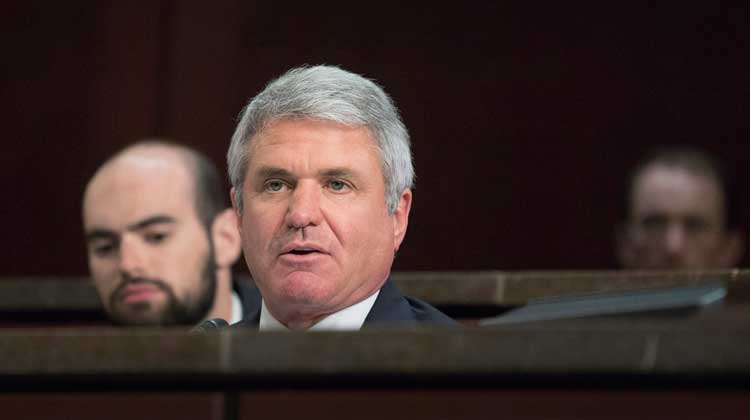
    House Homeland Security Committee Chairman Michael McCaul (R-Texas) has released the “Terror Threat Snapshot” for August, and—as usual—it includes some haunting revelations.
    The monthly “Terror Threat Snapshot” is a comprehensive and informative look at all of the recently reported plots against the United States and its Western allies by the Islamic State of Iraq and Syria (ISIS) and other extremist terrorist groups including Boko Haram, Al-Shabab, and Al Qaeda. The snapshot includes an interactive map which illustrates the number of homegrown jihadist cases in the United States since the 9/11 terror attacks:
    Homegrown Terror Threat In The United States
    The report this month states that there were 157 homegrown terror plots in the United States in 30 separate states since 2013, as well as 163 ISIS-linked plots against the West since 2013. The snapshot highlights some of the most recent developments in America’s counterterrorism efforts in various U.S. cities.
    Climate security

    A Disappointing New Problem With Geo-Engineering


    Over the past few years, I’ve heard dozens of scientists talk about solar geo-engineering, the once outlandish idea that humanity should counteract climate change by releasing special gases into the stratosphere to reflect away sunlight and cool the planet.
    But I’ve never heard it discussed in quite the terms of Jonathan Proctor, an agricultural economist at UC Berkeley.
    “You’re in an arena with a big bear,” he told me. (The bear is climate change.) “And the question is: Should you throw a lion into the arena? You know, maybe they’ll fight and kill each other. Or maybe they’ll just both kill you.”
    That lion is looking worse and worse. Recently, a surge of academic research has revealed that solar geo-engineering will be anything but straightforward. Solar geo-engineering is now taken seriously at the highest echelons of science: It commands its own research center at Harvarda serious book from anEconomist editor, and a private triennial global meeting. Even as some of its most devoted researchers doubt it will succeed, they add that climate change’s severe consequences may make it a necessity.

    Cybersecurity

    Vietnam's New Cybersecurity Law Will Hurt Economic Growth

    As U.S. Ambassador to Vietnam from 2011 to 2014, I would console myself when faced with a diplomatic setback that Vietnam has always achieved progress by taking two steps forward and one step back. However, the passage of a restrictive cybersecurity law by Vietnam’s National Assembly is a giant step back—one that comes at the expense of Vietnam’s small and medium-sized businesses (SMBs) in particular.

    In May 2017, the Vietnamese Government released an ambitious directive to guide the country through the Fourth Industrial Revolution (4IR). Directive 16, as it is officially known, instructed government agencies to improve Vietnam’s competitiveness by leveraging digital and communications technology. It warned against falling behind in the development of digital capabilities and exhorted government agencies to “enable people and enterprises to easily and fairly grasp the opportunities for digital content development.”

    The directive assessed the information and communication technology (ICT) sector’s significant potential contribution to Vietnam’s economy accurately. Vietnam’s GDP growth topped 6.8 percent last year, supported by a buoyant internet economy and foreign direct investment. According to a recent study by Temasek and Google, the internet economy increased from $3.3 billion to $5.7 billion between 2015 and 2017. E-commerce is also a particularly promising sector. The Ministry of Industry and Trade has also reported that Vietnam’s e-commerce retail sales growth in 2016-20 will reach 20 percent per year.
    Nuclear security

    How to Find a Missing H-Bomb

    Mathematical wizardry led to modern sea searches

    How to Find a Missing H-Bomb
    When a routine Cold War operation went terribly wrong, two planes and seven men died, a village got contaminated and a hydrogen bomb disappeared.

    The search and cleanup required 1,400 American and Spanish personnel, a dozen aircraft, 27 U.S. Navy ships and five submarines. It cost more than $120 million and a lot of diplomatic capital.

    And it made an obscure 18th-century mathematical theorem a practical solution to finding veritable needles in haystacks.

    Around 10 A.M. on Jan. 17, 1966, two B-52Gs of the 31st Bomb Squadron based out of North Carolina approached two KC-135 tankers over the Spanish coast southwest of Cartagena.

    The bombers each carried four 1.5-megaton B-28 hydrogen bombs as part of Operation Chrome Dome, a U.S. deterrence mission that placed nuclear-armed bombers on the Soviet Union’s doorsteps.

    Wednesday, August 8, 2018

    Terror threat

    Excessive U.S. sanctions could push Iran “over the brink”: UAE official to U.S. in 1995

    U.S. allies from Europe and the Persian Gulf warned the Clinton administration that it would be “very dangerous” and “pose risks for the entire region” if Iran were isolated from the international community through overly burdensome sanctions, according to declassified cables posted today by the nongovernmental National Security Archive at George Washington University. 
    While most allies agreed that up to a point sanctions could have a positive effect on Iranian behavior, they argued that overly severe measures could cross a threshold that would not only fail to produce a strategic advantage but could backfire by inviting a sharply negative Iranian reaction. 
    A June 1995 cable from the U.S. Embassy in Abu Dhabi to Secretary of State Warren Christopher quotes a UAE official (whose identity is still classified) warning that: “If Iran were pushed over the brink ...  the aftermath could pose risks for the entire region.”  The UAE official believes that current pressure levels are working, the cable reads, but “feels it is neither necessary nor desirable for the U.S. to take additional measures against Iran.”

    Financial safety

    Facebook might be partnering with major US banks

    facebook ceo founder mark zuckerbergFacebook reportedly asked major US banks including Citi, JPMorgan Chase, US Bank, and Wells Fargo to share their customers' financial information, including card transactions and checking account balances, reports The Wall Street Journal , citing people familiar with the matter.
    The tech giant is reportedly developing offerings with banks for Messenger, including access to account balances and fraud alerts, as part of a move to offer new services and boost engagement.
    It's not clear at this point what, if anything, might come out of these partnerships. Since the publication of the WSJ article, Facebook asserted that it might partner with banks so that they can use Messenger specifically for customer support, but said it doesn't have interest in going beyond that, according to Engadget .

    Tuesday, August 7, 2018

    Financial safety

    DEA: Criminal Activities Account for Just 10 Percent of Bitcoin Transactions


    bitcoin drugs dark web cryptocurrency
    Cryptocurrency enthusiasts have long argued that it’s unfair to characterize bitcoin as a haven for drug dealers and money launderers. Now, they have data from the U.S. Drug Enforcement Agency (DEA) to back up that claim.
    Speaking in an interview with Bloomberg, DEA special agent Lilita Infante said that criminal activity accounts for approximately 10 percent of on-chain bitcoin transactions, down from a high of 90 percent in 2013 prior to the U.S. government’s takedown of dark web marketplace Silk Road.
    That’s not to say that fewer criminals are using bitcoin to fund their illicit activities. Infante said that the volume of criminal transactions has “grown tremendously” but that the ratio has rapidly shrunk as cryptocurrency has matured into a more mainstream asset class. Illicit activity, she said, has been replaced by another use case: speculation.
    “The volume has grown tremendously, the amount of transactions and the dollar value has grown tremendously over the years in criminal activity, but the ratio has decreased,” Infante told the publication. “The majority of transactions are used for price speculation.’’
    Climate security

    Climate change: What could be wiped out by temperature rise


    Chocolate, a polar bear and a South Pacific island
    An international team of researchers suggest that global warming will have severe consequences for the planet.
    They paint a picture of boiling hot climates and towering seas in years to come if temperatures rise by just 2C.
    That means it could turn some of the planet's natural forces - that currently protect us - into our enemies.
    Dr Sarah Cornell is an environmental scientist and one of the researchers behind the report for the Stockholm Resilience Centre.
    She's described some of the big changes which could happen with a 2C temperature rise - which is the globally accepted amount, according to the Paris climate agreement.
    Innovations & technologies

    "The Collapse of Moore's Law" --DARPA's Bold Plan to Reinvent Electronics
    Nature-cover-animation“We’re trying to engineer the craft brewing revolution in electronics,” says William Chappell, the head of the DARPA office that manages the ERI program. The agency hopes that the automated design tools will inspire smaller companies without the resources of giant chip makers, just as specialized brewers in the US have innovated alongside the beer industry’s giants.

    Last year, continues Martin Giles in the MIT Technology Review, the Defense Advanced Research Projects Agency (DARPA), which funds a range of blue-sky research efforts relevant to the US military, launched a $1.5 billion, five-year program known as the Electronics Resurgence Initiative (ERI) to support work on advances in chip technology. The agency has just unveiled the first set of research teams selected to explore unproven but potentially powerful approaches that could revolutionize US chip development and manufacturing.
    Hardware innovation has taken something of a back seat to software advances in recent years, and that bothers the US military for several reasons. At the top of the list is that Moore’s Law, which holds that the number of transistors fitted on a chip doubles roughly every two years, is reaching its limits. That could stymie future advances in electronics that the military relies on, unless new architectures and designs can allow progress in chip performance to continue.
    Mass media security

    EVEN THE FBI AGREES: WHEN UNDERCOVER AGENTS POSE AS JOURNALISTS, IT HURTS REAL JOURNALISTS’ WORK


    THE FBI DOESN’T want the public to know more about how its agents pose as journalists during undercover investigations.
    But, in a federal court case, Justice Department lawyers confirmed the most significant criticism of the controversial practice. The government acknowledged in a court filing that FBI agents who pretend to be journalists create a chilling effect, making it harder for real journalists to gain trust and cooperation from sources.
    The astonishing admission came as the FBI attempted to fend off litigation from Reporters Committee for Freedom of the Press, which has filed requests for documents under the Freedom of Information Act.
    The Reporters Committee’s litigation involves documents related to an FBI undercover operation in which agents posed as documentary filmmakers from a fake company called Longbow Productions to investigate Nevada rancher Cliven Bundy and his supporters. In response to the Reporters Committee’s records request, the FBI issued a Glomar response — in which the agency neither confirms nor denies that it possesses records relevant to the FOIA request.

    Environmental security

    Critics outraged over EPA's proposal on asbestos


    Картинки по запросу environmental protection agencyCritics are speaking out against a proposal put forth by the Environmental Protection Agency under President Trump that could allow for new uses of asbestos, which is heavily restricted because of its links to cancer and other diseases.
    In June, the EPA under Scott Pruitt's leadership proposed a Significant New Use Rule (SNUR) "for certain uses of asbestos (including asbestos-containing goods)." The rule would require importers and manufacturers to get approval from the EPA before resuming or starting asbestos manufacturing, importing or processing, according to a June 1 news release from the agency.
    While the EPA framed the proposal in a positive light, calling it "the first such action on asbestos ever proposed" and part of an "important, unprecedented action on asbestos," critics said it fails to recognize the dangers of the fibrous mineral, which has been associated with lung cancer, mesothelioma and asbestosis