Страницы

Wednesday, November 7, 2018

Electronic surveillance

China has a new surveillance tool that identifies citizens by how they walk


Chinese authorities have begun deploying a new surveillance tool designed to identify people by how they walk, or the shapes of their body.
Adding to the already staggering number of surveillance cameras — many of which use bleeding edge optics and facial recognition technologies — China is already using the tool on the streets in its two largest cities, Beijing and Shanghai. It, again, raises concern among privacy advocates about how far the government is willing to go to keep tabs on its citizens.
Huang Yongzhen, CEO of Watrix, the company that designed the system, says it can identify people from up to 50 meters (165 feet), even when their back is turned or their face is covered.
The tool would fill gaps in current surveillance technology, that needs close-up, high resolution images of a person’s face to work. Watrix requires only a clear view of the person walking, even from the back or side.
“You don’t need people’s cooperation for us to be able to recognize their identity,” Huang told the Associated Press. “Gait analysis can’t be fooled by simply limping, walking with splayed feet or hunching over, because we’re analyzing all the features of an entire body.”
Economic security

2018 midterm election: US enters 'longest business cycle' ever, analyst says
Don’t see a recession coming: Portfolio manager
A divided CongressOpens a New Window. is good for U.S. stocks, market strategist Michael Lee said on the heels of the critical midterm electionOpens a New Window..

“Divided government has historically been in the best playing field for stocks,” he said on FOX Business’ “Mornings with Maria” on Wednesday. “We went into this election with a fantastic economy, one that’s only going to improve from here and I don’t think that thesis changed one bit.”

U.S. stock futures rose on Wednesday, as Republicans maintained control of the Senate and Democrats took control of the House.

In Lee’s opinion a Republican House would be too much to manage.

“I think had the Republicans held the House, you would have gotten the chance for additional fiscal stimulus, maybe we get some sort of infrastructure bill,” he said. “I just think there are too many moving parts and there’s too much compromise involved for something like that to happen.”
Politics

Dems to flex muscle with new House majority: Subpoenas, investigations, even possible impeachment talks loom
Adam Schiff pledges to continue Russia investigationThe incoming Democratic majority in the House of Representatives has the power to open a slew of investigations into the White House and President Trump when the new Congress is seated in January, and early indications are that Democrats plan to aggressively take advantage of their new authority.
But the president fired a warning shot early Wednesday morning, declaring he would turn the tables and leverage his party's Senate majority to investigate Democrats if they go that route.
"If the Democrats think they are going to waste Taxpayer Money investigating us at the House level, then we will likewise be forced to consider investigating them for all of the leaks of Classified Information, and much else, at the Senate level. Two can play that game!" Trump tweeted.

Tuesday, November 6, 2018

Economic security

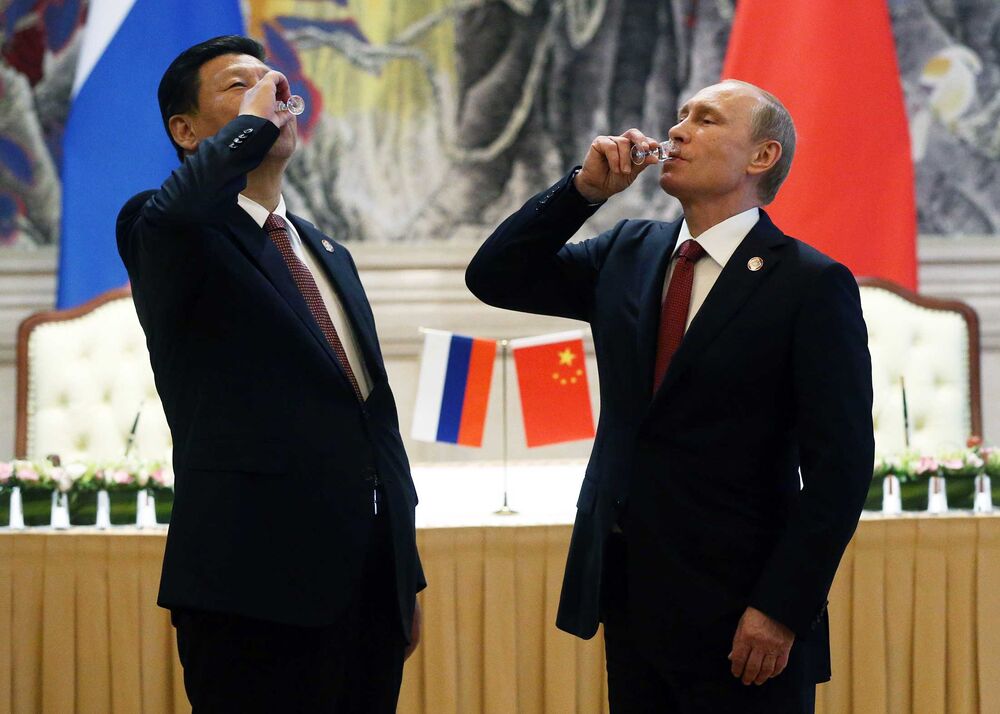
Trump’s Trade War Is Making Russia and China Comrades Again

Fu Ying recalls vividly how, as a young woman, she’d get woken by sirens in the middle of the night for drills to practice for a Soviet invasion. It was the time of China’s traumatic Cultural Revolution and, although the farm she’d been sent to was more than 200 miles from the border, the threat seemed imminent—strong enough, it turned out, to throw Maoist China into the arms of its capitalist nemesis, the U.S.

Today’s world could hardly look more different. The U.S.-China realignment that began with President Richard Nixon’s 1972 visit to Beijing has been reversed in the most consequential geopolitical shift since the fall of the Berlin Wall. China and Russia are now as close as at any time in their 400 years of shared history. The U.S., meanwhile, has targeted both countries with sanctions and China with a trade war.

“There is no sense of threat from Russia. We feel comfortable back-to-back,” says Fu, now chairwoman of the Foreign Affairs Committee of China’s National People’s Congress, over drinks in a hotel bar near the Black Sea resort of Sochi, where she’s attending a conference. The two countries have settled the border dispute that produced a brief war in 1969.!
Immigration security

DHS Secretary Nielsen: Some caravan migrants come from Middle East

Caravan migrants file class-action lawsuit against Trump
Department of Homeland Security Secretary Kirstjen Nielsen told Fox News there is intelligence indicating the caravan of migrants making their way through Mexico includes a limited number of people from outside the region, including the Middle East.
"We absolutely see people from the Middle East, from southeast Asia, from other parts of the world -- not just from Central America," Nielsen said in a wide-ranging interview.
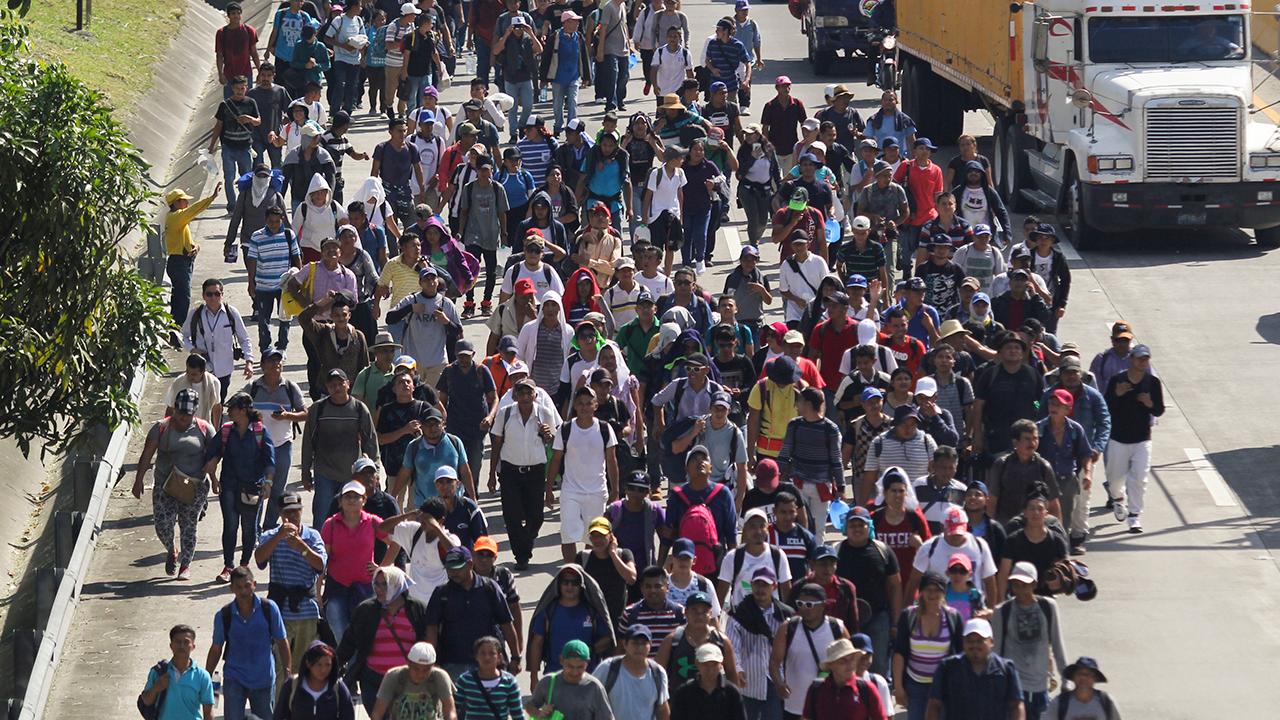
The caravan started in Honduras last month. This week, hundreds of migrants have begun arriving in Mexico City, seven hundred miles from the U.S. border.
President Trump, who has vowed to stop the caravan from entering the United States, tweeted last month that “criminals and unknown Middle Easterners” are among the migrants.


Monday, November 5, 2018

U.S. elections

Democrats Ponder the Unthinkable: What If They Lose?

Nearly two years of organizing, marching, candidate recruitment and unprecedented fundraising has led the Democratic party to a critical moment. On Tuesday, it can either reassert itself politically or fall short, prompting an utter and complete psychological meltdown.

Most in the party believe that the path they will go down will be the former; that they will gain a majority in the House of Representatives for the first time since former President Barack Obama’s first term. But paranoia is part of the Democratic DNA, especially after the shock of the 2016 election. And in the final stretch of the midterm campaign, a scenario in which the party is unable to flip the requisite 23 House seats looms in the dark recesses of the mind.

“It will be paralyzing for a while, it will,” said Neera Tanden, president and CEO of the Center for American Progress. “Candidly, I think there will be a fair amount of soul searching and people will feel back on their heels... We will have to rebuild. But the resistance is built on opposition to [Donald] Trump's extremism. And the more extreme he is, the more we will have.”

Or, as veteran Democratic strategist Paul Begala put it: “After all this work, all these volunteers, it would be absolutely shattering.”

Few midterm elections have taken on as much significance as the current one.
Electronic surveillance

China is Exporting its Cyber Surveillance to African Countries

Ghana's President Nana Akufo-Addo, left, shakes hands with Chinese President Xi Jinping during the Forum on China-Africa Cooperation held at the Great Hall of the People in Beijing, Monday, Sept. 3, 2018.
China has consistently been ranked by digital advocates as the world’s worst abuser of internet freedom. The country, however, isn’t just tightening online controls at home but is becoming more brazen in exporting some of those techniques abroad including in Africa, says a new report from the US-based think tank Freedom House.

Using a mix of official training, providing technological infrastructure to authoritarian regimes, and insisting that international companies accept its content regulations even outside of China, Beijing is becoming adept at controlling information both inside and outside its borders. Together, these trends present “an existential threat to the future of the open internet and prospects for greater democracy around the globe,” the Washington DC-based non-profit said.

The study assessed developments related to internet freedom that took place between June 2017 and May 2018 in 65 countries across the world.
Opinion

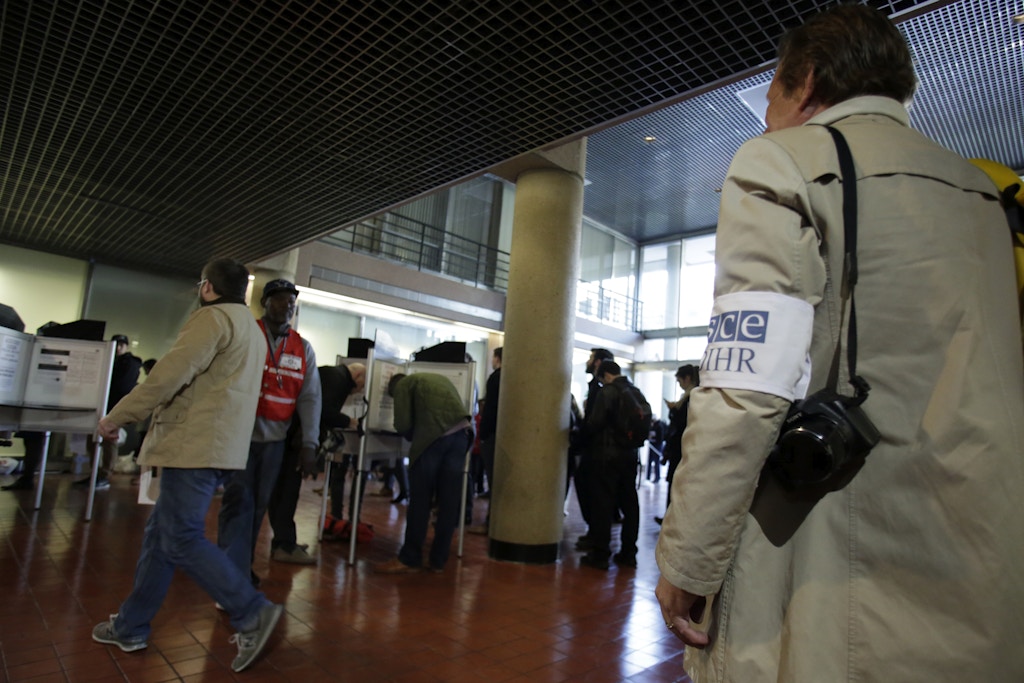
Observers from the Organization for Security and Co-operation in Europe (OSCE) monitor a polling place in Washington, DC during the US presidential election on November 8, 2016. / AFP / YURI GRIPAS        (Photo credit should read YURI GRIPAS/AFP/Getty Images)U.S. Elections Are Neither Free Nor Fair. States Need to Open Their Doors to More Observers.

Gerrymandering. Can Tuesday’s midterms in the United States really be considered free and fair elections?

Perhaps we should consult with the experts. Few Americans have heard of the Organization for Security and Cooperation in Europe, or OSCE; even fewer are aware that OSCE observers have been keeping tabs on U.S. elections since 2002, at the invitation of the U.S. State Department.

On October 26, the OSCE’s Office for Democratic Institutions and Human Rights in Washington, D.C., issued an interim report on the 2018 midterms. It didn’t make for pleasant reading. “The right to vote is subject to many limitations,” warned the report, “with racial minorities disproportionately impacted.”

This isn’t the first time the OSCE has sounded the alarm. In the wake of the 2016 presidential race, OSCE observers praised the U.S. for holding a “highly competitive” election while also criticizing a campaign “characterized by harsh personal attacks, as well as intolerant rhetoric” and changes to election rules that “were often motivated by partisan interests, adding undue obstacles for voters.”

“Suffrage rights,” the 2016 observers concluded, were “not guaranteed for all citizens, leaving sections of the population without the right to vote.”

Sunday, November 4, 2018

Communication security

CIA system HACK as Iran DISMANTLES ENTIRE spy network using Google in ‘nightmare scenario’


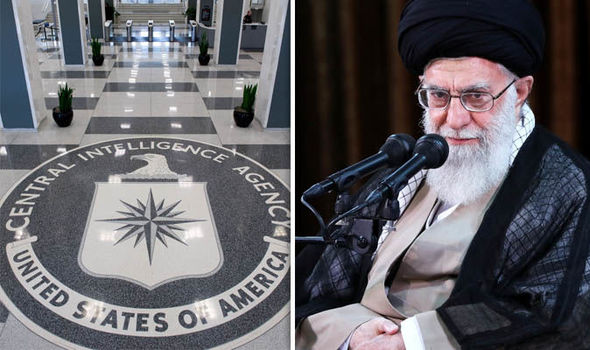
Iran uncovered a secret CIA communications systemIRAN humiliated the CIA in one of the organisations biggest intelligence blunders by uncovering a secret communication system by using only Google.

Several former members of the CIA who were stationed in Iran have said that Iran was able to uncover their secret internet-based communications system that the Agency had used in order to communicate with sources.
However, it is believed that the weakness in the system was discovered prior to Iran.
Defence contractor John Reidy worked for the CIA in Iran and would contact and manage human sources that they had.
In 2008, Mr Reidy says that he warned the CIA about a “massive intelligence failure” related to “communications” with sources.
While the CIA could have avoided this massive intelligence failure if they listened to Mr Reidy’s warning, a year later the very “nightmare scenario” that he had described became a reality.
...The report says that Iran had used Google to find the CIA’s fake websites that they were using to communicate with their sources and used its search engine to find other sites with similar digital signatures.
From there, Tehran just traced anyone who visited these sites and uncovered the network.
US intelligence is still not sure if China and Iran had worked together on this or if they did it on their own.
An official added that both of the systems that had been used in each country were very similar.
Health security

A cure for cancer: how to kill a killer


A transparent tumour tomography showing T-cells attacking a tumour following treatment.
Last month, the Nobel prize in medicine was awarded for two breakthrough scientific discoveries heralded as having “revolutionised cancer treatment”, and “fundamentally changed the way we view how cancer can be managed”. One of them went to a charismatic, harmonica-playing Texan named Jim Allison for his breakthrough advances in cancer immunotherapy. His discovery had resulted in transformative outcomes for cancer patients and a radical new direction for cancer research.
And yet many cancer patients, and even some doctors, have hardly heard of cancer immunotherapy or refuse to believe it. Those who have struggle to make sense of the new menu of options and sort reasonable hope from overblown hype.
Nuclear security

New System Could Protect Nuclear Reactor

nuclear
A scary yet realistic scenario in the digital age could involve the following: attackers, sponsored by a rogue organization or radical state, gain access to the control system of a nuclear reactor, a chemical reactor or a similar critical system.
A question arises: is the reactor system smart enough to know it is attacked? Most experts would answer that if an insider assists attackers, nearly all industrial systems become vulnerable. Worse yet, the system could remain defenseless and sustain physical damage from an attack.
“Security defenses against digital attacks are for the most part based on the concept of erecting walls or fences to stop unauthorized access from outsiders,” said Hany Abdel-Khalik, a Purdue University associate professor of nuclear engineering, who is leading the research team.
Weapons

Chinese Military Develops Mystery Missile

missile
The Chinese military is building a new and mysterious missile that could cripple American air power. The weapon, known as the PL-XX missile is a very-long-range missile designed to strike enemy aircraft.
The goal is to shoot down the tankers, airborne early warning planes, and other support aircraft that military combat jets rely upon during wartime. Stripped of these forces, American air power would operate at a serious disadvantage, shifting the air battle in China’s favor.
The new missile carries the typical “PL” designation common to Chinese air-to-air missiles. At 5.5 meters, PL-XX is thought to have a range exceeding 160 kilometers, the typical maximum range of air-to-air missiles.
China’s new missile most likely would work like this: In a future air battle, a Chengdu J-20 fighter loaded with PL-XX would attempt to fly around U.S. fighters to get behind them and search for a tanker or AWACs plane. If it finds such a target, the J-20 would launch the missile from long range, then disengage. Even if the missile misses, the danger might force U.S. support aircraft to fly farther behind friendly lines, limiting their effectiveness in general.
Warplanes need plenty of support to reach their wartime potential. In that way, tankers, command and control aircraft, and reconnaissance planes are the backbone that let fighters operate at long ranges.


Friday, November 2, 2018

Climate security

Climate goal demands huge boost in Chinese nuclear


The Paris Climate Change Agreement, which entered into force in November 2016, aims to limit the global temperature rise to below 2°C by 2010. The agreement also aims to drive efforts to limit temperature increases to below 1.5°C.
Researchers at China's Energy Research Institute analysed the nuclear power capacity needed in the country by 2050 to realise the 1.5°C target, as well as the feasibility, necessary measures and difficulty. The results were published in Advances in Climate Change Research earlier this year.
China's nuclear power capacity will need to increase from 26 GWe in 2015 to 554 GWe in 2050, the studyconcluded. The share of nuclear power in country's energy mix would increase from 3% to 28% over this period.
The study noted that, up to the end of August 2017, 37 power reactors were in operation in China, with a combined generating capacity of 35,820 MWe. A further 19 reactors with an installed capacity of 22,140 were under construction.
An additional 290 reactors will need to be constructed in order to add a further 361.3 to 433.3 GWe of generating capacity, depending on the size of the reactors built.
Nuclear security

Estimating India’s nuclear weapons-producing capacity


Postage Stamp, Apsara Research Atomic Reactor in Trombay, Mumbai, circa 1965
Using a different set of theoretical assumptions, and what we consider to be very credible mathematical formulas, we found that contrary to previous estimates, India has the capacity to produce many more nuclear weapons than generally assumed. We estimate that India could produce 1,044 nuclear weapons (914 plutonium-based and 130 uranium-based nuclear weapons), if one includes reactor grade materials from non-military programs in India, as well as that from the country’s weapon-grade nuclear material production program.
A new paradigm. To support these findings, we carefully examined every aspect of Indian unsafeguarded nuclear reactors and included important factors such as each reactor’s history, size, and amount of material produced over its working lifetime. We have considered the Reactor-Grade Plutonium (RGp), Weapon-Grade Plutonium (WGp), and Highly Enriched Uranium (HEU) produced by these unsafeguarded facilities.
Economic security

Russia’s gold reserves smash Soviet-era record as part of Moscow's de-dollarization drive


Russia’s gold reserves smash Soviet-era record as part of Moscow's de-dollarization drive
The Central Bank of Russia bought over 92 tons of gold in the three months to the end of September breaking the Soviet peak of 2000 tons in gold reserves seen in 1941, according to a new report by the World Gold Council (WGC).
Russia reportedly purchased more gold than any other country in the world, followed by Turkey, Kazakhstan, and India, which bought 18.5 tons, 13.4 tons and 13.7 tons respectively.
That marks the highest quarterly net purchase since 1993, when the WGC started tracking the country’s data. Russia’s gold stockpile now accounts for 17 percent of the country's overall foreign exchange reserves.
Intel gatheruing

Make GRU GRU again, Putin says as intelligence agency turns 100


Make GRU GRU again, Putin says as intelligence agency turns 100
The Russian president suggested returning the historic name to the military intelligence agency, which is accused in the West of staging coups, tilting US elections and using chemical weapons to get rid of double agents.
On Friday, Russian military intelligence officers were celebrating their professional holiday. This year is a big date for the Main Directorate of the General Staff of the Armed Forces of the Russian Federation. The organization is best known by its Soviet-times name the GRU (Maine Intelligence Directorate), even though the agency has changed its name to simply GU years ago.
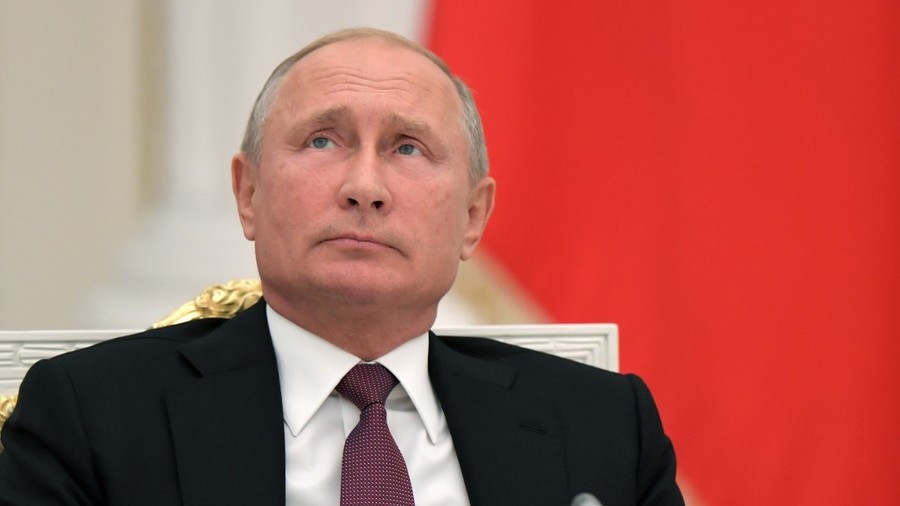
Russian President Vladimir Putin suggested the internationally-recognized old name of the agency should be returned. He was speaking during a celebration held in Moscow’s Theater of the Russian Army.
“It’s not clear where the word ‘intelligence’ disappeared [to]. Why don’t we go back to the Main Intelligence Directorate,”the Russian president suggested.
The holiday was chosen after the date when the freshly-created Red Army was ordered to centralize intelligence-collecting activities under a single department of the general staff. The military intelligence changed its name several times over the years, eventually becoming the GRU in 1953. The latest change came in 2010.
Communication security

CIA’s secret communication network was cracked by Iranians using… Google Search?


CIA’s secret communication network was cracked by Iranians using… Google Search?
The web-based network which was used by the CIA to communicate with its sources was overcome by Iranians using text-book Google queries, a new exposé claims. The agency knew about the vulnerability, but failed to act on it.
Probably the biggest failure of US intelligence since 9/11 has been the compromise of the CIA’s communication network, which it had used to keep in touch with agents and assets in foreign nations. The Chinese busted and executed dozens of US spies because of it. A new exposé by Yahoo News says a similar upheaval happened in Iran and that the Iranians managed to defeat the system relatively easily – because it was never intended for the purpose it was used for.
The internet-based platform was first used for war zones in the Middle East and was not designed for long-term communication or to stand up to any serious counter-intelligence effort. “The issue was that it was working well for too long, with too many people. But it was an elementary system,” one former US intelligence official said.
Election security

DHS Secretary Nielsen: Midterms will be ‘most secure election in the modern era,’ but US will respond if attacked

Картинки по запросу kirstjen nielsen
DHS Secretary Kirstjen Nielsen said Friday she believes the midterm elections will be the “most secure election in the modern era” but told Fox News in an exclusive interview that “everything is on the table” if others try to meddle with the vote.

In New York City for a cyber security event at the Council on Foreign Relations, Nielsen said the government is in a “tremendously different place” than in 2016, when the Russians attempted to interfere in the presidential election.

"I do think it's safe to stay this will be the most secure election in the modern era,” Nielsen said. “We are in a tremendously different place than we were in 2016 in terms of partnerships with state and locals and everything they have done to secure their infrastructure."

Pressed on whether a cyber response is being readied by the United States if attacked, Nielsen said, "Everything is on the table. I think the president has made it very clear if we are attacked we will defend ourselves so every element of power that we have available to us will be considered in terms of our response."
U.S. elections

Checkbox
President Reagan won a landslide election in 1980 when he asked voters a simple question: "Are you better off than you were four years ago?" Voters knew they weren't. Midterm voters should be asking themselves that same question now, before casting their ballots next Tuesday. Only this time, the answer is yes.
The latest evidence: The Labor Department reported this week that private sector wages and salaries rose 3.1% in the third quarter of this year, compared with last year. Total compensation, which includes things like health benefits, climbed 2.9%. Both growth rates are significantly faster than two years ago.

This was just the latest spate of good economic news. But there is plenty more. In fact, by almost any measure, the country is much better off than it was in November 2016.


Immigration security

Mass migration brought down the Roman Empire. Can it bring down the American Empire?


Mass migration brought down the Roman Empire. Can it bring down the American Empire?
The migrant caravan heading north to the US from Central America is further evidence that the old world is dying and the new struggles to be born.
There is much the ancient world can teach us; and one of its most salient lessons is that mass migration – the product of conflict, societal collapse and/or extreme poverty – is capable of destroying the most powerful of empires.
Consider Rome, whose legions bestrode the ancient world like a colossus for a thousand years, and whose great and cruel, and most illustrious names – Caesar, Pompey, Augustus, Nero, Hadrian, Vespasian, Constantine, et al. – still induce awe and wonder despite the passage of millennia.
At its height, it would have been the very acme of insanity to claim that an empire that stretched from the Italian peninsula all the way across Western Europe and down into North Africa and the Middle East, could possibly be erased from the pages of history.

Thursday, November 1, 2018

Health security

What you should know about Dsuvia, the new opioid drug 10 times stronger than fentanyl


An average of 115 Americans die every day from an opioid overdose, according to the Centers for Disease Control and Prevention. Yet, even as the nation experiences an opioid crisis and opioid drugs flood the market — including fentanyl, a major cause of recent overdose deaths — a Food and Drug Administration advisory committee voted in favor of approving a new opioid, called Dsuvia, in early October.
It’s worth noting that the advisory panel’s vote does not mean that the drug has been FDA-approved. The FDA is expected to make its final recommendation on the drug by Nov. 3. However, people on the front lines of the epidemic have been weighing in to oppose the drug, including at least one senator and one member of the advisory board.
If you haven't heard of Dsuvia before, here are some things you should know.
What is Dsuvia?
Dsuvia is a tablet form of sufentanil that’s meant to dissolve under the tongue. It's 10 times stronger than fentanyl, an opioid drug already on that market that is 50 to 100 times more powerful than morphine.
Drug trafficking

Drug cartels test Central America for cocaine production

Различные злоупотребления наркотиками
Cocaine production is beginning to creep into Central America, a development which could bring the supply of the drug closer to the United States and create a new security risk for an already troubled region.

Guatemala made its first official discovery of a field of coca plants this May following the initial find of a plot in Honduras last year. Two more followed in Honduras this year.

“We aspire to have control of our territory, but it’s very difficult to root out these actions,” Jaime Quintanilla, head of the anti-drug trafficking unit in Honduras, told Reuters.


At around 50 hectares in total, the four coca finds were a tiny fraction of the 171,000 hectares under cultivation in Colombia last year, according to Reuters interviews with local officials and official Colombian data.

Honduras and Guatemala, together with El Salvador, are among the poorest and most gang-ravaged countries in the Americas. Mass migration from the region to the United States has created tensions with U.S. President Donald Trump.
Transportation security

Russia, India & Iran want to create alternative trade route to Suez Canal – report


Russia, India & Iran want to create alternative trade route to Suez Canal – report
Officials from India, Iran, and Russia are going to meet next month to negotiate a large joint project aimed at launching a new cargo transport corridor that could become a cheaper and shorter alternative to the Suez Canal.
The new shipment passage, North-South Transport Corridor (INSTC), is set to connect the Indian Ocean with the Persian Gulf through Iran to Russia and Europe, according to Iranian state-owned news outlet Press TV. The 7,200-kilometers long corridor will combine sea and rail routes.
“The INSTC is the shortest multimodal transportation route linking the Indian Ocean and Persian Gulf via Iran to Russia and North Europe,” India’s Ministry of Commerce and Industry said in a statement, adding that trilateral talks between the parties are scheduled on November 23.
The route will make it possible to deliver cargoes from India to the Iranian port of Bandar Abbas. Then, the goods will be transported by land to Bandar Anzali, Iran’s port on the Caspian Sea. After that, goods will be shipped to the Russian southern port of Astrakhan, from where they will move to Europe by rail.
The new transport artery will potentially reduce the time and costs of shipping by up to 40 percent. Transport time between Mumbai and Moscow will reportedly be reduced to 20 days. Annual capacity of the transport artery is expected to reach 30 million tons.
Cybersecurity

New data shows China has “taken the gloves off” in hacking attacks on US

Well, that whole thing clearly worked out well, didn't it?Based on data from incident response companies gathered by the security software vendor Carbon Black, China is now the leading source of cyber-attacks. Of 113 investigations conducted by Carbon Black's incident response partners in the third quarter of 2018, nearly half—47 in total—came from China or Russia.
"What was notable was that we saw a resurgence of Chinese attacks, where they actually surpassed Russian activity," said Carbon Black's chief cybersecurity officer, Tom Kellermann. "And I think that's in direct line with the increasing tension with the South China Sea coupled with the trade war. Essentially, the Chinese have taken the gloves off."
The data backing this analysis, part of a report released this week by Carbon Black, came from 37 incident-response firms that partnered with the company. It's the second quarterly report compiled from incident-response data and an attempt by the intrusion-response community to understand more about the behavior of attackers—and how they manage to spend so much time within networks before they are detected.
Cybersecurity

GCHQ uses Instagram to 'open up world of espionage' to public

The GCHQ ‘doughnut’ base in Cheltenham, Gloucestershire.
After years of secretly hoovering up metadata about millions of citizens, Britain’s spy agency has made its public foray into one of the growing sources for such information by opening its own Instagram account.
GCHQ’s account on the photo-sharing site claims the agency will provide a glimpse into its secret world. Its first post acknowledges GCHQ’s institutional suspicion about openness by including a photograph of the border fence with a “no photography” sign attached.
The account is part of GCHQ’s expanding presence on social media, and comes two years after it opened a Twitter account, which has 75,000 followers.
Such public online socialising is designed to put a friendly gloss over the agency’s more covert activities. Leaks by Edward Snowden, a whistleblower who worked for the GCHQ’s US counterpart, revealed that GCHQ collects and stores vast quantities of data about individuals, including Facebook posts.
The number of Instagram users worldwidetopped a billion this year. This is still less than half that for the parent company, Facebook, but Instagram is more popular among younger people. The Pew Research Center found that 51% of US teenagers use Facebook, compared with 72% who use Instagram.
Criminal investigation

Khashoggi murder: Turkey gives official details of Saudi writer's death


Картинки по запросу Khashoggi
Turkey has given its first official statement on how it believes Saudi writer Jamal Khashoggi was killed, saying he was immediately strangled.
The statement follows weeks of media reports about the murder at the Saudi consulate in Istanbul on 2 October. Turkey has yet to provide evidence.
Chief prosecutor Irfan Fidan said meetings with his Saudi counterpart this week led to "no concrete results".
Saudi Arabia has not commented on the meetings.
The Turkish statement said: "In accordance with plans made in advance, the victim, Jamal Khashoggi, was choked to death immediately after entering the Consulate General of Saudi Arabia."
His body was then dismembered and destroyed "again, in line with advance plans", it added.
Innovations & technologies

This DARPA program will give Army and Marine aviators a robot co-pilot


Army aviators recently ran helicopters through missions with a kind of robot co-pilot for the first time, using technology a company says will be demonstrated in coming months on Black Hawk helicopters.
The pilots directed an “optionally piloted helicopter” through mission scenarios ranging from obstacle avoidance to contour flight, according to a release.
The pilots used the technology to move a modified commercial helicopter, the S-76B Sikorsky, known as Sikorsky Autonomy Research Aircraft or SARA, through the scenarios designed under a Defense Advanced Research Projects Agency program with Lockheed Martin.
The automated capabilities are part of the Army’s larger Future Vertical Lift program, which aims to revolutionize how helicopters are employed by the services.
“Future vertical lift aircraft will require robust autonomous and optimally piloted systems to complete missions and improve safety,” said Chris Van Buiten, vice president of Sikorsky Innovations.
While personnel with the company have been developing and testing the technology for some time and flown more than 300 hours of autonomous flight, the Oct. 29 event at Fort Eustis, Virginia, was the first time non-company pilots operated the aircraft.
Internal security

Homeland Security’ Ignores White Terror, DHS Veterans Say
Five veterans of the Department of Homeland Security told The Daily Beast that DHS, created in the wake of al Qaeda’s 9/11 attacks, has long considered far-right radicalism to be the FBI’s purview. But the FBI has competing priorities. Four bureau veterans interviewed by The Daily Beast gave a range of responses, spanning from either considering it important but less so than fighting jihadist terror to, in the words of one retiree, “the lowest priority.” (The FBI, for its part, insisted to The Daily Beast that its “top priority remains protecting the United States from terrorist attacks, both international and domestic.”)
Under Donald Trump’s presidency, experts say the threat has only grown–and without commensurate efforts to mitigate it. DHS gutted an interagency task force that represents the only federal effort at preventing radicalization for any form of terrorism. White supremacy was among its targets. “What we’ve lost here is the creation of infrastructure to prevent the threats of the future,” said George Selim, a senior Department of Homeland Security official who ran the task force before his retirement in summer 2017.