Страницы

Sunday, December 23, 2018

National security

House of Frauds! Spy chiefs draw up secret lists of peers with dubious connections to Russia and China amid fears they could pose threat to national security


Spy chiefs have drawn up a secret watchlist of lords with dubious connections to Russia or China
Spy chiefs believe the scale of Russian and Chinese influence on Parliament is now a major threat to national security and have drawn up a secret watchlist of lords with dubious connections.
It is understood that more than a dozen are feared to have been compromised by financial interests with foreign powers – with MPs today demanding a tough crackdown.
However, security sources add that concerns within MI5 and the Home Office go beyond commercial ties, with other members of the Upper House suspected of being cultivated by enemy agents. Concern has soared as diplomatic relations between London and Moscow have plunged in the wake of the Salisbury nerve agent outrage.
The stark warning raised at the highest levels in Whitehall comes as an investigation by The Mail on Sunday reveals 30 members of the House of Lords have direct financial links to Russia or China.
Among them are peers with board memberships on Moscow-owned firms or positions with Chinese companies. They include a Russian expert who has written books about the country and executives of Russian banks, mining firms and state-backed shipping conglomerates. 
Fiancial safety

From Parks to Airports, How a Shutdown Would Affect Federal Agencies

Art Del Cueto wants the wall, but he also needs a paycheck.
Border Patrol agents like Mr. Del Cueto — in the crossfire of the government shutdown fight over President Trump’s demand for a border wall — are preparing to work without pay if the government shuts down Friday night.
“It’s nerve-racking,” said Mr. Del Cueto, who is a vice president of the National Border Patrol Council, a union, and works in Arizona. “It sucks, to be honest.”
Federal bureaucrats have become adept at blunting the effect of shutdowns on federal services, and the two shutdowns this year — a 69-hour interruption in January followed by a nine-hour funding lapse in February — had a negligible impact.
Nuclear security

Trump can launch nuclear weapons whenever he wants, with or without Mattis

The abrupt and pointed resignation of Secretary of Defense Jim Mattis on Thursday alarmed official Washington. Sen. Mark R. Warner (D-Va.) called him an “an island of stability amid the chaos of the Trump administration.” Retiring Sen. Jeff Flake (R-Ariz.) told The Washington Post that “having Mattis there gave all of us a great deal more comfort than we have now.”
Mattis’s departure seems to be provoking unease, especially considering how dangerous our nuclear-command arrangements are. The notion that Mattis, a former four-star Marine Corps general, could have blocked or defied a move by Trump to impulsively launch nuclear weapons may have seemed comforting, but it shouldn’t have been. The secretary of defense has no legal position in the nuclear chain of command, and any attempts by a secretary of defense to prevent the president from exercising the authority to use nuclear weapons would be undemocratic and illegal. With or without Mattis, the president has unchecked and complete authority to launch nuclear weapons based on his sole discretion.
Flight security

Exclusive: TSA planning major shift in air marshal operations


PHOTO: A Transportation Security Administration officer stands in the pre-check area at Dulles International Airport in Dulles, Va., Aug. 19, 2015. Federal air marshals are being moved to the back of the plane -- some of them, at least. The undercover agents who are posted randomly to protect U.S. airliners are -- for the first time -- going to be assigned regularly to seats toward the back, sources briefed on the Transportation Security Administration’s plans told ABC News.Until now, the marshals were always assigned seats toward the front of the planes.The new deployments are scheduled to go into effect Dec. 28.Officials at the TSA, which controls the Federal Air Marshal Service, declined to discuss specifics, citing policies that require operational details to be kept secret. They insisted that it’s important for the agency to sometimes change its routine to keep pace with new and emerging threats.

Intel gathering


CIA shatters a glass ceiling with the appointment of a woman to lead its clandestine arm

The logo of the CIA as seen in the lobby of the agency's headquarters in Langley, Virginia.The Central Intelligence Agency (CIA) made groundbreaking news when Director Gina Haspel appointed Elizabeth (Beth) Kimber to serve as the first woman deputy director for Operations. The Directorate of Operations (DO) is the clandestine arm of the CIA responsible for recruiting spies, stealing secrets, and conducting presidentially authorized covert action programs. The DO produces human intelligence (HUMINT), which is the foundation for the CIA’s all-source analysis.
The United States is facing a myriad of complex and significant national security threats. It will be Kimber’s responsibility to ensure that the DO produces the sensitive source reporting on hard targets like Iran, nuclear proliferation, North Korea, Russia, cyber, China and transnational terrorism, upon which our national security relies.
Clandestine officers develop proficiency in foreign languages, learn espionage tradecraft, and deploy overseas, often in harm’s way. Kimber will lead the men and women who, as Director Haspel said in her May 2018 Senate testimony, “are our country’s silent warriors. These dedicated professionals spend much of their careers in difficult, far-flung outposts of the globe, striving to make our fellow Americans more secure at home.”

Friday, December 21, 2018

Fighting corruption

ICC Business Integrity Compendium 2017

Launched for Anti-corruption Day 2017, the ICC Business Integrity Compendium provides essential guidance on responsible business conduct for companies of all sizes.
The 2017 edition gathers all ICC Anti-corruption and Corporate Responsibility tools to date:
  • ICC Anti-corruption Third Party Due Diligence Guide for SMEs
  • ICC Guidelines on Gifts and Hospitality
  • ICC Anti-corruption Clause
  • ICC Rules on Combating Corruption
  • ICC Guidelines on Agents, Intermediaries and Other Third Parties
  • RESIST
  • ICC Guide to Responsible Sourcing
  • ICC Guidelines on Whistleblowing
ICC, the world business organization, has spearheaded the drive for greater  integrity in business transactions as ICC believes that only a corruption-free system will enable all participants to compete on a level-playing field. ICC has also been a pioneer in asserting the business community’s commitment to act responsibly by taking into account human rights, social requirements, and environmental considerations when conducting business.ICC-Business-Integrity-Compendium
Weapons

USAF receives first LRASM missiles


The US Air Force (USAF) has received into service the first Lockheed Martin AGM-158C Long-Range Anti-Ship Missiles (LRASMs), the company announced on 18 December.
The rollout of an undisclosed number of missiles to unspecified operational units coincides with the declaration of early operational capability (EOC). Lockheed Martin told Jane's that EOC is similar to initial operating capability (IOC) in that it is defined by the delivery of a quantity of missiles. The US Navy (USN), which oversees the LRASM programme, had not responded to a request for information at the time of writing.
In USAF service the LRASM will be carried by the Rockwell B-1B Lancer bomber (up to 24 missiles in its internal weapons bay), while the USN is integrating it on board its Boeing F/A-18E/F Super Hornets (eight missiles on its underwing pylons). With the first LRASMs now with the USAF, the USN should begin receiving its missiles in 2019.
The LRASM is a stealthy subsonic cruise missile that is designed to meet the anti-surface warfare (ASuW) needs of both services in contested environments. Armed with a 1,000 lb penetrator and blast-fragmentation warhead, the LRASM utilises a multimode sensor, weapon datalink, and an enhanced digital anti-jam Global Positioning System to detect and destroy specific targets within a group of ships.
 Privatizing the national security

Mattis is out, and Blackwater is back: ‘We are coming’


If Blackwater returns, it would be the return of a private security contractor that was banned from Iraq, but re-branded and never really went away. By 2016 Blackwater had been re-branded several times and was known at the time as Constellis Group, when it was purchased by the Apollo Holdings Group. Reuters reported earlier this year that Apollo had put Constellis up for sale, but in June the sale was put on hold.
Blackwater’s founder and former CEO Erik Prince has courted President Donald Trump’s administration since he took office with the idea that the now 17-year Afghan War will never be won by a traditional military campaign. Prince has also argued that the logistical footprint required to support that now multi-trillion dollar endeavor has become too burdensome. Over the summer and into this fall Prince has engaged heavily with the media to promote the privatization; particularly as the Trump administration’s new South Asia Strategy, which was crafted with Mattis, passed the one-year mark.
Afghanistan

Pentagon withdrawing 7,000 troops from Afghanistan


President Donald Trump has directed the Pentagon to withdraw thousands of U.S. troops from Afghanistan in coming months, with an eye towards ending the 17-year deployment of American forces there, a U.S. official confirmed to Military Times.
The Wall Street Journal first reported that more than 7,000 service members will begin returning from Afghanistan in coming weeks, per a White House order. The move comes just a day after Trump signaled plans to remove all U.S. forces from Syria, declaring that “We have won against ISIS.”
The U.S. official said there is no timeline set for the return of the troops.
The news also comes on the same day as the announced resignation of Defense Secretary Jim Mattis, who said he is leaving the administration so Trump can find a military leader “whose views are better aligned with yours.”
The withdrawal announcement also comes amid news first reported by Military Times that Erik Prince’s former security contractor firm, Blackwater USA, had announced its return. Prince has lobbied the Trump administration since the president took office to privatize the war in Afghanistan.
International security

American Pressure Against “Revisionist” Russia and China

The great achievement of American foreign policy in the last third of the twentieth century was to establish more cooperative and productive relationships with the two largest communist states than either had with the other. Henry Kissinger famously called this “triangular diplomacy.” The United States drove a wedge between the Soviet Union and the People’s Republic of China by cultivating the leaders of each society and offering arms control and trade agreements that tied Moscow and Beijing directly to Washington. As both communist governments reformed, the United States was poised to encourage openness and benefit from it. Détente increased Washington’s global leverage, it weakened communist bonds, and it contributed to the end of the Cold War on largely American terms.
After the Cold War, the United States continued to pursue similar policies, appealing directly to Russian and Chinese leaders for productive bilateral relations. Presidents Bill Clinton and George W. Bush met frequently with their counterparts in Moscow and Beijing. They worked bilaterally to counter terrorist organisations, especially militant Islamist groups in Southeast and Central Asia. They helped incorporate both societies into the World Trade Organization. Washington emphasised economic cooperation, as it shifted military resources to the Middle East.
Russian and Chinese leaders always maintained a mix of suspicion and resentment toward American policies that affirmed Washington’s dominance, and their subordination. By 2008 both Moscow and Beijing were openly challenging American power in Eastern Europe and the South China Sea. Russian President Vladimir Putin used military and cyber-weapons in Georgia, Ukraine, and Syria to push back against US influence. Chinese leaders Hu Jintao and especially Xi Jinping expanded China’s military presence throughout Asia and its economic resources across the globe. Through initiatives like the Asian Infrastructure Investment Bank and “One Belt, One Road,” China is competing to supplant American economic dominance in multiple regions.
Defense

Mattis quits at Pentagon over policy clashes with Trump

Screenshot 2018-12-21 at 01.04.39
Jim Mattis has resigned on principle as Pentagon chief after President Trump decided to slash U.S. troop presence in Syria and Afghanistan, citing in a letter the need for "a Secretary of Defense whose views are better aligned" with the president's.
In his strikingly frank resignation letter, Mattis issued what amounted to a stark rebuke of Trump. He outlined his beliefs in alliances, opposition to Russia and China, being respectful to allies, and standing up to authoritarianism before concluding that Trump differed with him on key principles.
He said, "Because you have the right to have a Secretary of Defense whose views are better aligned with yours on these and other subjects, I believe it is right for me to step down from my position."
Trump announced Wednesday that all U.S. troops would be withdrawn from Syria. There were reports Thursday that he intended to pull out thousands of troops from Afghanistan. Mattis reportedly told the White House early Thursday he needed to speak with Trump. The two met in the Oval Office at 3 p.m., and Mattis tried — and failed — to persuade Trump to keep American forces in Syria. At that point, Mattis decided to quit.
Minutes before Mattis, 68, released his letter, Trump announced via Twitter that Mattis, a former four-star general in the U.S. Marine Corps, would be retiring "with distinction" at the end of February.
International security

Russian-Chinese Security Cooperation and Military-to-Military Relations

Since the establishment of bilateral relations between post-Soviet Russia and China,both sides have made considerable efforts to enhance strategic trust and establish an institutional infrastructure to deepen their cooperation in the military and general security fields. Both sides have similar views on the general international situation, and recently the progress of their military-to-military interactions sped up as  their relations with the US sharply deteriorated.
The latest major development in military cooperation was Chinese participation in the Russian strategic-level exercise Vostok-2018 (East-2018). Previously,only the closest partners of Russia in the Collective Security Treaty Organization (CSTO) had been invited to participate in such activities. Holding joint strategic-level exercises is now expected to be a regular practice and in 2019 the Russian troops are likely to take part in a similar exercise in China.
Currently, Russia and China are each other`s closest partners in the defence and security field among the major countries. The frequency of their joint military activities recalls the relationship between these formal allies. However, both sides are still denying any intention to form an alliance and are maintaining strategic autonomy on a wide range of regional and global policy issues.
The two sides have significantly influenced each other`s strategic cultures in the past, and this mutual influence is still strong. China's military policies were heavily modelled after the Soviet Union's in the 1950s and in the early period of Reform and Openness in the 1980s when the Chinese military was returning to more professional practices after the excesses of the Cultural Revolution.

Saturday, November 24, 2018

Politics

Robert Steele: The Second American Revolution – Reflections on the Near Future


Professor Igor Panarin, a most distinguished Russian intelligence officer and strategic forecaster, is the dean of the Russian school for future diplomats.[1] I salute his work, and particularly admire and wish to support his idea of a joint Russian-American information-analytical anti-crisis centre. Here and now I will focus on his prediction, in 1998, that the United States of America (USA) would disintegrate by 2010, and be Balkanized into five regions as shown below.[2]
Focusing only on the fundamentals – a dysfunctional election system that disenfranchises 70% of the eligible voters;[3] a wanton citizenship system that has granted US citizenship to as many as 5 million Chinese ready to vote as directed in future elections;[4] a dollar that is not backed by anything combined with a criminal banking system; a water, food, and air system that is toxic by design,[5] creating fat stupid people;[6] and an information ecology that is completely controlled by the Deep State and Shadow Government to the point that fake news is now the national standard[7] – Professor Panarin is correct.

Friday, November 23, 2018

Opinion

Is Putin a C.I.A. Agent?

President Trump’s steadfast reluctance to say anything negative about Russia is so striking that a former director of national intelligence, James Clapper, once observed that Vladimir Putin manages Trump as if he we were a Russian intelligence “asset.” He may be. But if I were a Russian citizen, I’d be asking this question: Is Putin a U.S. agent?

Why? Because Putin has undertaken so many actions in recent years that contributed to the weakening of Russia’s economy and human capital base that you have to wonder whether he’s secretly on the C.I.A.’s payroll.

Beginning around 2007 or 2008, Putin appears to have decided that rebuilding Russia by nurturing its tremendous human talent and strengthening the rule of law was just too hard — it would have required sharing power, holding real, competitive elections and building a truly diverse, innovation-based economy.

Instead, Putin decided to look for dignity for Russia in all the wrong places: by tapping his oil and gas wells, not his people; by strengthening the Russian military, instead of the rule of law; and by enriching himself and his circle of oligarchs while wrapping himself in a cloak of Russian Orthodoxy and Russian nationalism that appealed to his base.

Friday, November 16, 2018

Intel gathering

CIA concludes Saudi crown prince ordered Jamal Khashoggi’s assassination

The CIA has concluded that Saudi Crown Prince Mohammed bin Salman ordered the assassination of journalist Jamal Khashoggi in Istanbul last month, contradicting the Saudi government’s claims that he was not involved in the killing, according to people familiar with the matter.
The CIA’s assessment, in which officials have said they have high confidence, is the most definitive to date linking Mohammed to the operation and complicates the Trump administration’s efforts to preserve its relationship with a close ally. A team of 15 Saudi agents flew to Istanbul on government aircraft in October and killed Khashoggi inside the Saudi consulate, where he had come to pick up documents that he needed for his planned marriage to a Turkish woman.
In reaching its conclusions, the CIA examined multiple sources of intelligence, including a phone call that the prince’s brother Khalid bin Salman, the Saudi ambassador to the United States, had with Khashoggi, according to the people familiar with the matter who spoke on the condition of anonymity to discuss the intelligence.

Thursday, November 15, 2018

Cybersecurity

The Case Against Quantum Computing

imgQuantum computing is all the rage. It seems like hardly a day goes by without some news outlet describing the extraordinary things this technology promises. Most commentators forget, or just gloss over, the fact that people have been working on quantum computing for decades—and without any practical results to show for it.
We’ve been told that quantum computers could “provide breakthroughs in many disciplines, including materials and drug discovery, the optimization of complex manmade systems, and artificial intelligence.” We’ve been assuredthat quantum computers will “forever alter our economic, industrial, academic, and societal landscape.” We’ve even been told that “the encryption that protects the world’s most sensitive data may soon be broken” by quantum computers. It has gotten to the point where many researchers in various fields of physics feel obliged to justify whatever work they are doing by claiming that it has some relevance to quantum computing.
Meanwhile, government research agencies, academic departments (many of them funded by government agencies), and corporate laboratories are spending billions of dollars a year developing quantum computers. On Wall Street, Morgan Stanley and other financial giants expect quantum computing to mature soon and are keen to figure out how this technology can help them.

Wednesday, November 14, 2018

Weapons

Bullets that don't miss, weaponized insects and more: Innovations from DARPA, America’s secret lab

Some of DARPA’s most incredible military research centers on the deadliest of weapons: the human mind.
Under Justin Sanchez, head of the Biological Technologies Office at DARPA, the organization has funded human experiments at Wake Forest, the University of Southern California, and the University of Pennsylvania, with the aim of giving individuals a memory “boost.”
Researchers implanted electrodes into one person’s brain to record mental activity associated with recognizing patterns and memorizing word lists.
Then they reinforced that person’s memory by playing back the recorded brain activity through the circuits, significantly improving their memory.
However, many people have questioned these findings, including former DARPA program manager Doug Weber.
He explained to The Atlantic that when scientists put electrodes in the brain, those devices eventually fail—after a few months or a few years, mainly because of blood leakage.
Nuclear security

Pairing AI and nukes will lead to our autonomous Doomsday


Eventually the Soviets deployed a modified, nearly automatic system where a small group of lower-ranking duty officers deep underground would make that decision, relying on data that the Kremlin leadership had been wiped out in a U.S. nuclear strike.
The plan was not meant to deter a U.S. strike by assuring the U.S. that if they attacked first, even with a limited strike against the Soviet leadership, that there would be a guaranteed nuclear response. The Soviets kept the plan secret from the United States. It was meant to ensure an all out, nearly automatic nuclear response, which would have existential consequences.
As AI develops and confidence in machine learning increases, the U.S. needs to be leading the effort diplomatically by reinvigorating strategic stability talks with both China and Russia, which should include this issue and ensure that this type of nuclear planning does not make its way back into the thinking of our nuclear adversaries or our own, whether secretly or as a form of deterrence.
While concerns have been raised in Congress about having the decision to use nuclear weapons solely in the hands of the commander in chief, an even more ominous, impending threat is having that command and control in the hands of AI.
The potential application for this developing, powerful technology in increasing stability and the effectiveness of arms control in areas such as early warning, predictive decision-making by bad actors, tracking and stopping the spread of nuclear weapons, and empowering verification for further reductions is as yet unknown.

Tuesday, November 13, 2018

Nuclear security

U.S. Refuses to Adopt a Nuclear Weapon No First Use Pledge – Daniel Ellsberg on RAI (7/8)


The major purpose of nuclear weapons, from almost the time we began planning in the late ’40s, was against Russians, against Soviets, in the event of a ground conflict in Europe. And that implied- that was a time when we had a monopoly of nuclear weapons, until 1949. By ’49 and ’50, ’51, we had hundreds of nuclear weapons targeted on Soviet cities, which would have been only a first strike. There’s no possibility of a second strike.
Then with NATO, from the beginning of NATO, its assurance to our allies that there would be no war was based on the notion that if there was, we would initiate nuclear war on Soviets even though they could respond. They were now a nuclear weapon state. If they did, that would assure the annihilation of Europe. So it was a suicide pact, as far as Europe was concerned. At the first they weren’t able to attack us, so we were able to say, we’ll do it. You can count on our doing it, and the Russians can count on our doing it, even though you’re destroyed. Even though our allies are destroyed.
Mind control

Mind control using sound waves? We ask a scientist how it works


At the moment, non-invasive neuromodulation – changing brain activity without the use of surgery – looks poised to usher in a new era of healthcare. Breakthroughs could include the better management of Parkinson’s and Alzheimer’s disease, reducing the pain of migraines or even reversing cognitive disorders caused by brain injury
But what happens if this technique for altering our brain waves escapes regulation and falls into the wrong hands? Imagine a dictatorial regime with access to the tricks and tools to change the way its citizens think or behave.
That’s the ethical battleground that Antoine Jerusalem, a professor of engineering science at Oxford University, finds himself in as he researches the potential of ultrasound technology to tackle neurological diseases and disorders.
In this interview, conducted as part of the World Economic Forum's annual gathering in the Middle East of scientists, government and business, he tells us more about this growing field of research.
Controlling the brain with sound waves: how does it work?
Well, to get straight to the science, the principle of non-invasive neuromodulation is to focus ultrasound waves into a region in the brain so that they all gather in a small spot. Then hopefully, given the right set of parameters, this can change the activity of the neurons.

Friday, November 9, 2018

Economic security

China Is Beating the US in the Rare-Earths Game

An industrial plant pollutes the air and produces hazardous waste in Baotou, Inner Mongolia, China.
Overall, Reuters reports, “Chinese exports typically supply around 80 percent of the globe’s rare earth needs, about 156,000 tonnes annually.”

Reuters noted that “the U.S. military is worried about China’s dominance of the rare earths market, calling it a ‘significant and growing risk,’ according to the Pentagon’s recently released industrial-base study.

But there appears to be little concern evinced — at least in public — by the White House, the Departments of Energy or Commerce, or Congress. Instead, U.S. policy makers appear to be counting on a quick ramp-up of private mining operations to cover the absence of Chinese rare earth concentrates and oxides. Regrettably, mining cannot solve the problem. To start with, mine permitting and development typically takes 7 to 10 years in the United States, according to one industry-backed study. Moreover, no one is rushing to fund new rare earth mines.

But — and this is what few in the U.S. government appear to understand — China’s grip on the world’s rare earths is not limited to its 80-percent share of raw materials. It also controls almost all of the world’s processing facilities that transform raw concentrates and oxides into useful forms: metals, alloys, magnets, garnets, and the like.
Innovations & technologies

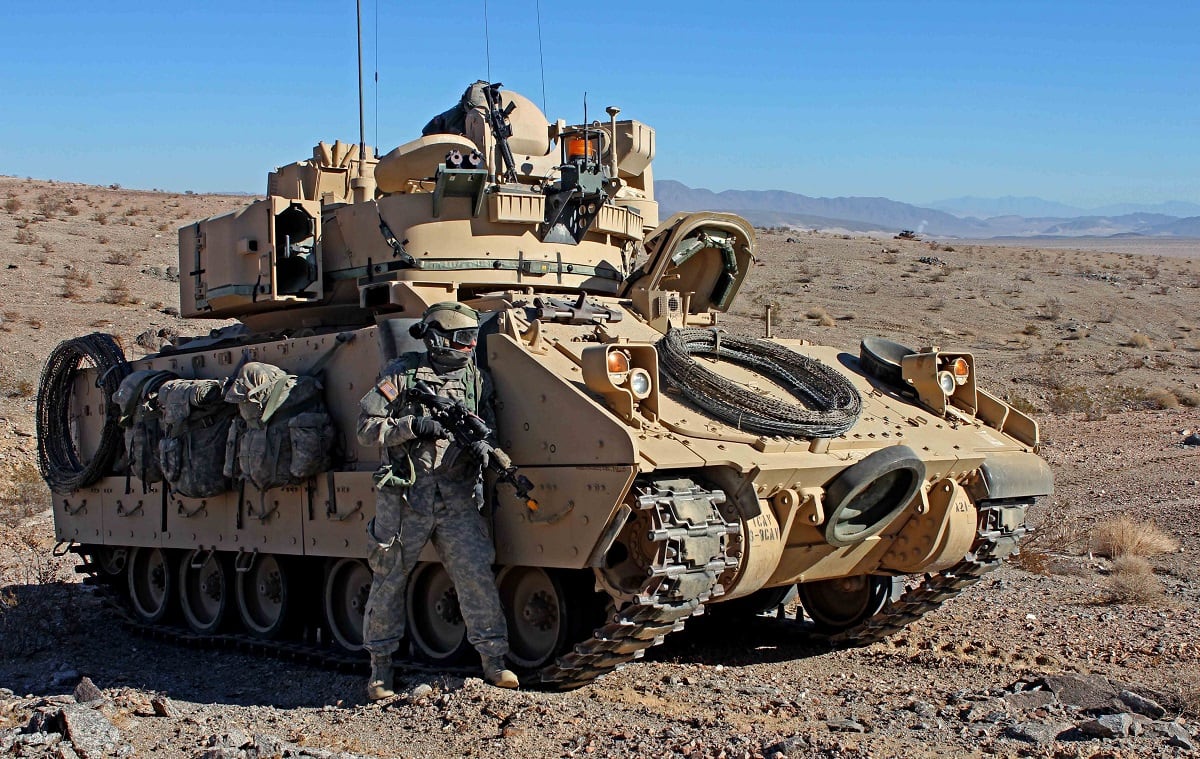
From crowd control to ‘wireless energy beaming,' the Army’s new vehicles must have more power but use less fuel


On the Army wish list are energy weapon systems to counter rockets, missiles and drones, wireless energy beaming to help with running unmanned ground vehicles and aerial drones with remote power, non-lethal energy weapons for crowd disbursement, silent modes for vehicle movement, high-power electronic jamming, electronic armor to deflect electromagnetic spectrum and projectile attacks, and long-range electromagnetic guns for multiple uses.
And the backbone of those capabilities is an open architecture powering system on the next wave of ground vehicles that nearly any system built today or decades from now can plug into, and it will provide the power needed to run.
Part of that, the Next-Generation Combat Vehicle Electrical Power Architecture, has been in development at TARDEC since 2012.
Once implemented, the system is expected to provide fuel efficiency that will reduce fuel consumption by more than 10 percent and provide 20 percent more efficient power generation and energy transfer. That will put less strain on the vehicle systems while using less fuel and providing more power.

Wednesday, November 7, 2018

Mass surveillance

Snowden warns Israelis of dangers of state surveillance


Snowden leaked thousands of classified documents in 2013 which revealed surveillance of private data put in place after the 9/11 attacks [EPA]US  whistle-blower Edward Snowden urged Israelis to be on guard against heavy-handed government and private surveillance in a speech on Tuesday.
Snowden, a former government contractor, blew the lid off the United States' vast surveillance programme in 2013, triggering an international debate on the mass spying by governments.
The US whistleblower highlighted Israel's hi-tech capabilities but warned that accepting too much government surveillance and too easily acceding to the argument that it is needed for security reasons posed serious risks.
"If we can allow ourselves to be terrorised by someone with nothing but a knife, to reorder our societies for the convenience of state power ... we've stopped being citizens and we've started being subjects," said Snowden, who spoke via video link from an undisclosed location in Moscow.