Страницы

Sunday, December 23, 2018

Border security

Israeli military begins sealing off cross-border tunnels from Lebanon

Lebanon's border tense as Israel excavates 'Hezbollah tunnels'
The Israeli military on Thursday began to seal off four tunnels that it said had been dug by the Lebanese armed group Hezbollah under the border from Lebanon.

The work was being carried out on the Israeli side of the frontier demarcation, known as the “Blue Line”, military spokesman Lieutenant-Colonel Jonathan Conricus told reporters.

Israel says Hezbollah dug the tunnels with the aim of launching cross-border attacks with backing from its regional sponsor Iran. Hezbollah has yet to comment.

U.N. peacekeepers in Lebanon have said they had so far confirmed the existence of four tunnels which the Israeli army discovered in recent weeks in the vicinity of the border.

Conricus said the military would “neutralize and destroy” the tunnels. Some were built with concrete components while others were dug directly into rock,” he said.
Middle East

Turkey bolsters military on Syrian border as U.S. readies pull-out

Картинки по запросу A wall along the border between Turkey and Syria is seen in Kilis province
Turkey began reinforcing its positions on both sides of its border with Syria on Sunday, a Reuters witness said, as Ankara and Washington agreed to coordinate a U.S. withdrawal from Syria.
The heightened military activity comes two days after President Tayyip Erdogan said Turkey would postpone a planned military operation on Kurdish YPG militia east of the Euphrates river in northern Syria following the U.S. decision to pull out.

He also said Turkey would take over the fight against Islamic State militants.

The Turkish presidency said Erdogan and U.S. President Donald Trump in a phone call on Sunday agreed to establish military and diplomatic coordination to prevent an authority vacuum from developing as the United States withdraws.
...A Reuters witness saw hundreds of vehicles head to the southern border province of Kilis after leaving Hatay, another border province, around 0030 GMT on Sunday, as citizens sounded their horns to celebrate. The convoy included tanks, howitzers, machine guns and buses carrying commandos, the witness said.
Nuclear security

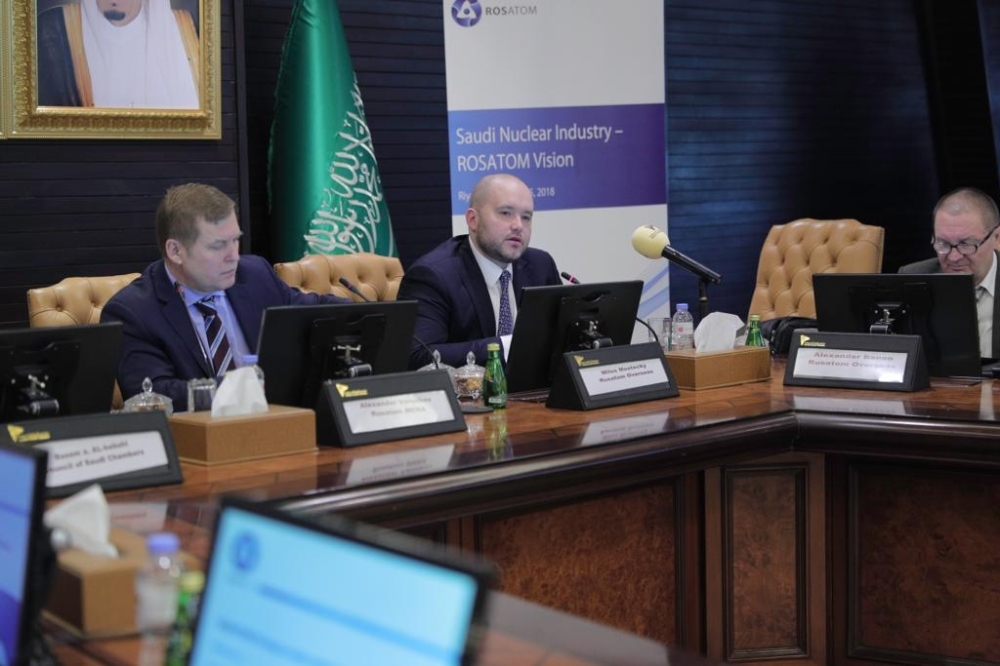
Saudi Arabia ‘on its way to become a nuclear power’

 Saudi Arabia’s population has grown from 4 million in 1960 to over 31 million in 2016. It is the main electricity consumer and producer in the Gulf region, with 345 trillion watts of gross production in 2016, of which 41 percent was produced from oil and 59 percent from gas. The electricity consumption in the country continues to grow substantially — by 8 to 10 percent annually, compared with less than 1 percent in Europe.

Faced with surging energy demand for economic growth, Saudi Arabia is turning to nuclear power to diversify its electricity-generating mix and therefore reduce its reliance on fossil fuels. The Kingdom plans to build two large nuclear power reactors as part of a program of delivering as many as 16 nuclear power plants over the next 20 to 25 years at a cost of more than $80 billion. It has projected 17 gigawatts (GW) of nuclear capacity by 2032 to provide 15 percent of the power then, along with more than 40 GW of solar capacity. Plans for small reactors for desalination are also well advanced.

Hamid Al-Saqqaf, director of independent production projects at Saudi Electricity Company, points out: “Introducing nuclear power into the national energy mix is a sovereign decision in every country, according to its needs. In Saudi Arabia, this decision was already made in advance. The Kingdom has a continuously elevating demand on electricity.
Statecraft

Egypt appoints new military intelligence chief - security sources

Egypt has appointed Major General Khaled Megawer to serve as the head of the country’s military intelligence service, replacing Mohamed al-Shahat, two security sources told Reuters on Sunday.

Egypt’s military and intelligence services play a leading role in top level decision making, taking a more public role since current president Abdel Fattah al-Sisi led the 2013 military overthrow of Egypt’s first freely-elected president, Mohamed Mursi of the Muslim Brotherhood.

The sources did not give a reason for al-Shahat’s dismissal, but Sisi has replaced several high-ranking security officials in the military, interior ministry and the general intelligence service over the last couple of years.

Sisi appointed close ally Major General Abbas Kamel to serve as chief of the country’s General Intelligence Service in June, two weeks after replacing the defence and interior ministers.
Economic security

Top Trump official calls bankers, will convene 'Plunge Protection Team'

Картинки по запросу steven mnuchin
U.S. President Donald Trump’s Treasury secretary called top U.S. bankers on Sunday amid an ongoing rout on Wall Street and made plans to convene a group of officials known as the “Plunge Protection Team.”

U.S. stocks have fallen sharply in recent weeks on concerns over slowing economic growth, with the S&P 500 index .SPX on pace for its biggest percentage decline in December since the Great Depression.

“Today I convened individual calls with the CEOs of the nation’s six largest banks,” Treasury Secretary Steven Mnuchin said on Twitter shortly before financial markets were due to open in Asia.

U.S. equity index futures dropped late on Sunday as electronic trading resumed to kick off a holiday-shortened week. In early trading, the benchmark S&P 500’s e-mini futures contract ESv1 was off by about a quarter of a percent.
Military

Wake up. America’s military isn’t invincible.

The most uncovered story in Washington these days is the loss of U.S. military power — a lesson particularly important in light of recent events: the resignation of Defense Secretary Jim Mattis; President Trump’s rash decision to withdraw U.S. troops from Syria; North Korea’s announcement that it will keep nuclear weapons after all; and alleged massive computer hacking by Chinese nationals.
After the Cold War, Americans assumed that no other country could match the United States in its military might and technological leadership. The reality, long known in the military, is that defense-modernization programs in Russia and China, as well as advances in Iran and North Korea, threaten to leapfrog U.S. capabilities.
The military plays two essential roles in defending U.S. international goals. The first is to deter aggression that would jeopardize American interests, because potential adversaries believe their chances of prevailing are slim to none. The second is to fight — and to win — wars to protect those same interests. In both cases, the United States’ military is on a downward trajectory.
Statecraft

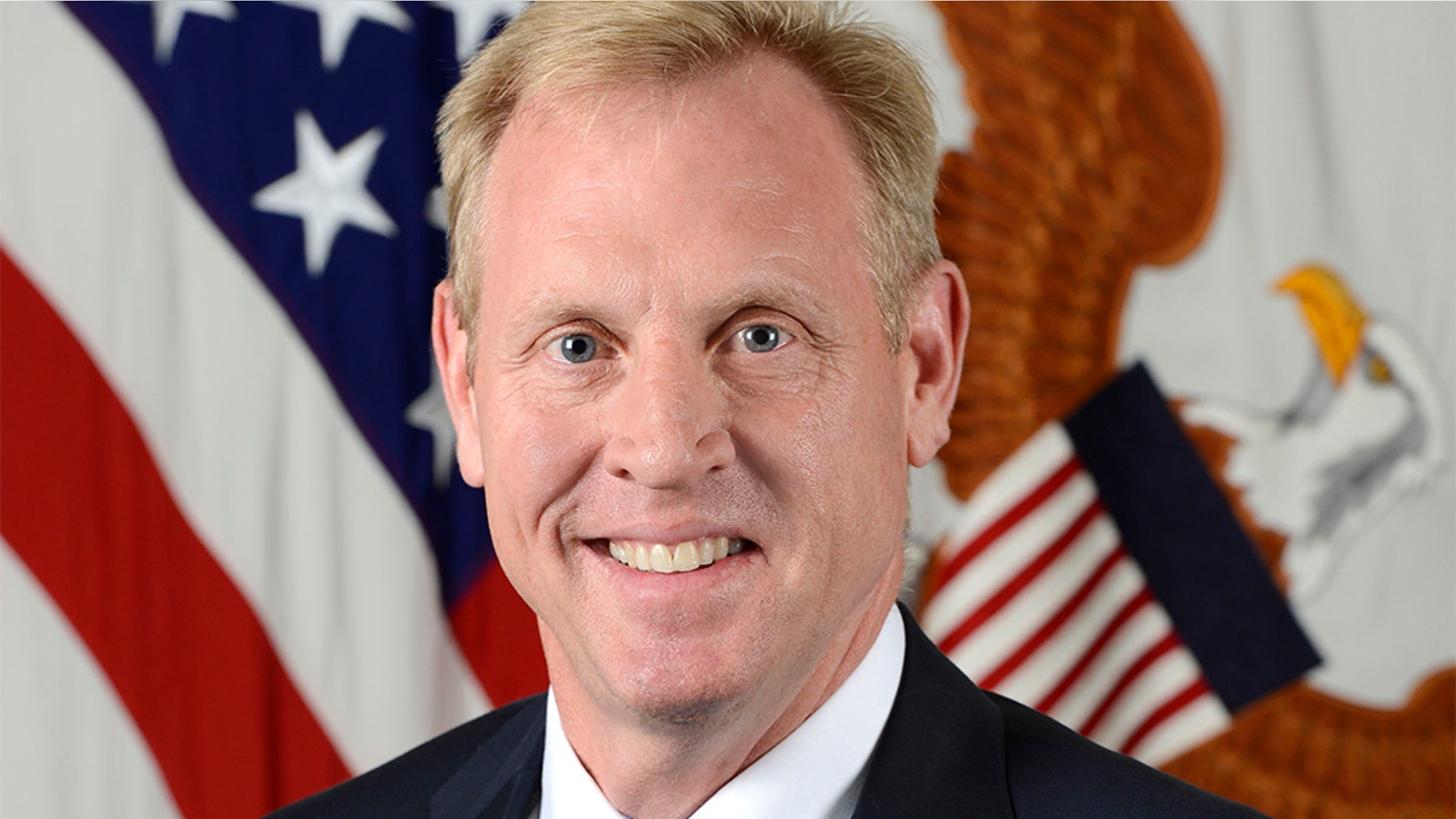
Who is Patrick Shanahan? A look at Trump’s new acting secretary of defense

Deputy Defense Secretary Patrick Shanahan will take over as acting secretary on Jan. 1 to cover the accelerated departure of Jim Mattis, President Trump said Sunday in a tweet.
President Trump on Sunday said deputy defense secretary Patrick Shanahan will take over as acting secretary of the department on Jan. 1 to cover the accelerated departure of Jim Mattis — after a string of disagreements between Trump and Mattis.
“I am pleased to announce that our very talented Deputy Secretary of Defense, Patrick Shanahan, will assume the title of Acting Secretary of Defense starting January 1, 2019,” Trump wrote on Twitter Sunday morning. ”Patrick has a long list of accomplishments while serving as Deputy, & previously Boeing. He will be great!”
...Lt. Col. Joseph Buccino, a spokesman for Shanahan, said the former Boeing Co. executive will accept the appointment as acting secretary.
“Deputy Secretary will continue to serve as directed by the president, and the Department of Defense will remain focused on the defense of the nation,” Buccino said on Sunday.
It is unusual for the Pentagon to have an acting secretary of defense. Historically when a secretary has resigned, he has stayed on until a successor is confirmed. For example, when Obama-era Defense Secretary Chuck Hagel announced his resignation in November 2014, he stayed in office until Ash Carter was confirmed the following February.
National security

House of Frauds! Spy chiefs draw up secret lists of peers with dubious connections to Russia and China amid fears they could pose threat to national security


Spy chiefs have drawn up a secret watchlist of lords with dubious connections to Russia or China
Spy chiefs believe the scale of Russian and Chinese influence on Parliament is now a major threat to national security and have drawn up a secret watchlist of lords with dubious connections.
It is understood that more than a dozen are feared to have been compromised by financial interests with foreign powers – with MPs today demanding a tough crackdown.
However, security sources add that concerns within MI5 and the Home Office go beyond commercial ties, with other members of the Upper House suspected of being cultivated by enemy agents. Concern has soared as diplomatic relations between London and Moscow have plunged in the wake of the Salisbury nerve agent outrage.
The stark warning raised at the highest levels in Whitehall comes as an investigation by The Mail on Sunday reveals 30 members of the House of Lords have direct financial links to Russia or China.
Among them are peers with board memberships on Moscow-owned firms or positions with Chinese companies. They include a Russian expert who has written books about the country and executives of Russian banks, mining firms and state-backed shipping conglomerates. 
Fiancial safety

From Parks to Airports, How a Shutdown Would Affect Federal Agencies

Art Del Cueto wants the wall, but he also needs a paycheck.
Border Patrol agents like Mr. Del Cueto — in the crossfire of the government shutdown fight over President Trump’s demand for a border wall — are preparing to work without pay if the government shuts down Friday night.
“It’s nerve-racking,” said Mr. Del Cueto, who is a vice president of the National Border Patrol Council, a union, and works in Arizona. “It sucks, to be honest.”
Federal bureaucrats have become adept at blunting the effect of shutdowns on federal services, and the two shutdowns this year — a 69-hour interruption in January followed by a nine-hour funding lapse in February — had a negligible impact.
Nuclear security

Trump can launch nuclear weapons whenever he wants, with or without Mattis

The abrupt and pointed resignation of Secretary of Defense Jim Mattis on Thursday alarmed official Washington. Sen. Mark R. Warner (D-Va.) called him an “an island of stability amid the chaos of the Trump administration.” Retiring Sen. Jeff Flake (R-Ariz.) told The Washington Post that “having Mattis there gave all of us a great deal more comfort than we have now.”
Mattis’s departure seems to be provoking unease, especially considering how dangerous our nuclear-command arrangements are. The notion that Mattis, a former four-star Marine Corps general, could have blocked or defied a move by Trump to impulsively launch nuclear weapons may have seemed comforting, but it shouldn’t have been. The secretary of defense has no legal position in the nuclear chain of command, and any attempts by a secretary of defense to prevent the president from exercising the authority to use nuclear weapons would be undemocratic and illegal. With or without Mattis, the president has unchecked and complete authority to launch nuclear weapons based on his sole discretion.
Flight security

Exclusive: TSA planning major shift in air marshal operations


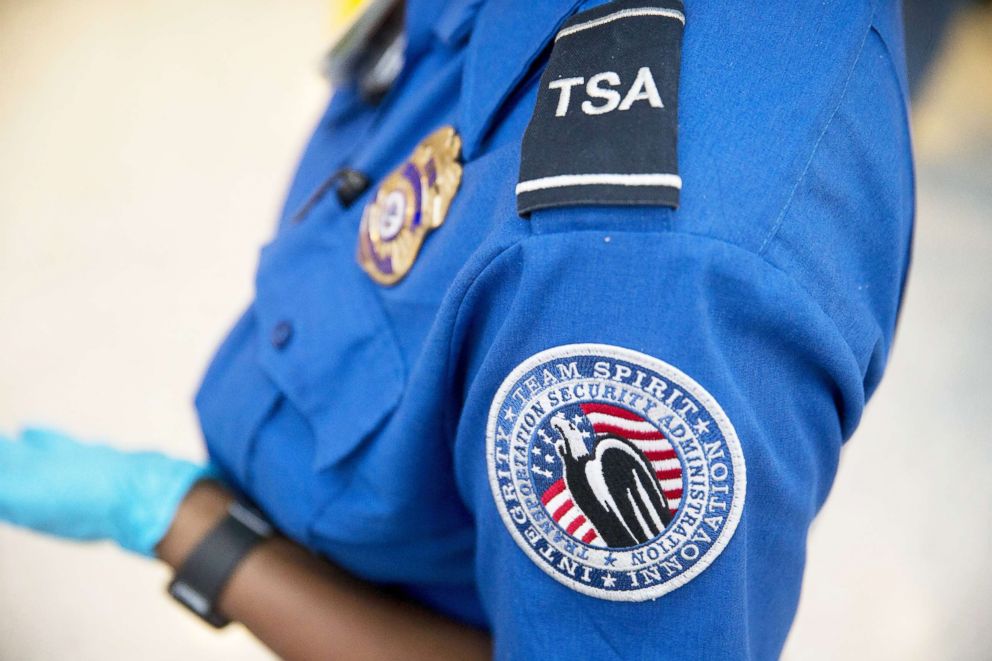
PHOTO: A Transportation Security Administration officer stands in the pre-check area at Dulles International Airport in Dulles, Va., Aug. 19, 2015. Federal air marshals are being moved to the back of the plane -- some of them, at least. The undercover agents who are posted randomly to protect U.S. airliners are -- for the first time -- going to be assigned regularly to seats toward the back, sources briefed on the Transportation Security Administration’s plans told ABC News.Until now, the marshals were always assigned seats toward the front of the planes.The new deployments are scheduled to go into effect Dec. 28.Officials at the TSA, which controls the Federal Air Marshal Service, declined to discuss specifics, citing policies that require operational details to be kept secret. They insisted that it’s important for the agency to sometimes change its routine to keep pace with new and emerging threats.

Intel gathering


CIA shatters a glass ceiling with the appointment of a woman to lead its clandestine arm

The logo of the CIA as seen in the lobby of the agency's headquarters in Langley, Virginia.The Central Intelligence Agency (CIA) made groundbreaking news when Director Gina Haspel appointed Elizabeth (Beth) Kimber to serve as the first woman deputy director for Operations. The Directorate of Operations (DO) is the clandestine arm of the CIA responsible for recruiting spies, stealing secrets, and conducting presidentially authorized covert action programs. The DO produces human intelligence (HUMINT), which is the foundation for the CIA’s all-source analysis.
The United States is facing a myriad of complex and significant national security threats. It will be Kimber’s responsibility to ensure that the DO produces the sensitive source reporting on hard targets like Iran, nuclear proliferation, North Korea, Russia, cyber, China and transnational terrorism, upon which our national security relies.
Clandestine officers develop proficiency in foreign languages, learn espionage tradecraft, and deploy overseas, often in harm’s way. Kimber will lead the men and women who, as Director Haspel said in her May 2018 Senate testimony, “are our country’s silent warriors. These dedicated professionals spend much of their careers in difficult, far-flung outposts of the globe, striving to make our fellow Americans more secure at home.”

Friday, December 21, 2018

Fighting corruption

ICC Business Integrity Compendium 2017

Launched for Anti-corruption Day 2017, the ICC Business Integrity Compendium provides essential guidance on responsible business conduct for companies of all sizes.
The 2017 edition gathers all ICC Anti-corruption and Corporate Responsibility tools to date:
  • ICC Anti-corruption Third Party Due Diligence Guide for SMEs
  • ICC Guidelines on Gifts and Hospitality
  • ICC Anti-corruption Clause
  • ICC Rules on Combating Corruption
  • ICC Guidelines on Agents, Intermediaries and Other Third Parties
  • RESIST
  • ICC Guide to Responsible Sourcing
  • ICC Guidelines on Whistleblowing
ICC, the world business organization, has spearheaded the drive for greater  integrity in business transactions as ICC believes that only a corruption-free system will enable all participants to compete on a level-playing field. ICC has also been a pioneer in asserting the business community’s commitment to act responsibly by taking into account human rights, social requirements, and environmental considerations when conducting business.ICC-Business-Integrity-Compendium
Weapons

USAF receives first LRASM missiles


The US Air Force (USAF) has received into service the first Lockheed Martin AGM-158C Long-Range Anti-Ship Missiles (LRASMs), the company announced on 18 December.
The rollout of an undisclosed number of missiles to unspecified operational units coincides with the declaration of early operational capability (EOC). Lockheed Martin told Jane's that EOC is similar to initial operating capability (IOC) in that it is defined by the delivery of a quantity of missiles. The US Navy (USN), which oversees the LRASM programme, had not responded to a request for information at the time of writing.
In USAF service the LRASM will be carried by the Rockwell B-1B Lancer bomber (up to 24 missiles in its internal weapons bay), while the USN is integrating it on board its Boeing F/A-18E/F Super Hornets (eight missiles on its underwing pylons). With the first LRASMs now with the USAF, the USN should begin receiving its missiles in 2019.
The LRASM is a stealthy subsonic cruise missile that is designed to meet the anti-surface warfare (ASuW) needs of both services in contested environments. Armed with a 1,000 lb penetrator and blast-fragmentation warhead, the LRASM utilises a multimode sensor, weapon datalink, and an enhanced digital anti-jam Global Positioning System to detect and destroy specific targets within a group of ships.
 Privatizing the national security

Mattis is out, and Blackwater is back: ‘We are coming’


If Blackwater returns, it would be the return of a private security contractor that was banned from Iraq, but re-branded and never really went away. By 2016 Blackwater had been re-branded several times and was known at the time as Constellis Group, when it was purchased by the Apollo Holdings Group. Reuters reported earlier this year that Apollo had put Constellis up for sale, but in June the sale was put on hold.
Blackwater’s founder and former CEO Erik Prince has courted President Donald Trump’s administration since he took office with the idea that the now 17-year Afghan War will never be won by a traditional military campaign. Prince has also argued that the logistical footprint required to support that now multi-trillion dollar endeavor has become too burdensome. Over the summer and into this fall Prince has engaged heavily with the media to promote the privatization; particularly as the Trump administration’s new South Asia Strategy, which was crafted with Mattis, passed the one-year mark.
Afghanistan

Pentagon withdrawing 7,000 troops from Afghanistan


President Donald Trump has directed the Pentagon to withdraw thousands of U.S. troops from Afghanistan in coming months, with an eye towards ending the 17-year deployment of American forces there, a U.S. official confirmed to Military Times.
The Wall Street Journal first reported that more than 7,000 service members will begin returning from Afghanistan in coming weeks, per a White House order. The move comes just a day after Trump signaled plans to remove all U.S. forces from Syria, declaring that “We have won against ISIS.”
The U.S. official said there is no timeline set for the return of the troops.
The news also comes on the same day as the announced resignation of Defense Secretary Jim Mattis, who said he is leaving the administration so Trump can find a military leader “whose views are better aligned with yours.”
The withdrawal announcement also comes amid news first reported by Military Times that Erik Prince’s former security contractor firm, Blackwater USA, had announced its return. Prince has lobbied the Trump administration since the president took office to privatize the war in Afghanistan.
International security

American Pressure Against “Revisionist” Russia and China

The great achievement of American foreign policy in the last third of the twentieth century was to establish more cooperative and productive relationships with the two largest communist states than either had with the other. Henry Kissinger famously called this “triangular diplomacy.” The United States drove a wedge between the Soviet Union and the People’s Republic of China by cultivating the leaders of each society and offering arms control and trade agreements that tied Moscow and Beijing directly to Washington. As both communist governments reformed, the United States was poised to encourage openness and benefit from it. Détente increased Washington’s global leverage, it weakened communist bonds, and it contributed to the end of the Cold War on largely American terms.
After the Cold War, the United States continued to pursue similar policies, appealing directly to Russian and Chinese leaders for productive bilateral relations. Presidents Bill Clinton and George W. Bush met frequently with their counterparts in Moscow and Beijing. They worked bilaterally to counter terrorist organisations, especially militant Islamist groups in Southeast and Central Asia. They helped incorporate both societies into the World Trade Organization. Washington emphasised economic cooperation, as it shifted military resources to the Middle East.
Russian and Chinese leaders always maintained a mix of suspicion and resentment toward American policies that affirmed Washington’s dominance, and their subordination. By 2008 both Moscow and Beijing were openly challenging American power in Eastern Europe and the South China Sea. Russian President Vladimir Putin used military and cyber-weapons in Georgia, Ukraine, and Syria to push back against US influence. Chinese leaders Hu Jintao and especially Xi Jinping expanded China’s military presence throughout Asia and its economic resources across the globe. Through initiatives like the Asian Infrastructure Investment Bank and “One Belt, One Road,” China is competing to supplant American economic dominance in multiple regions.
Defense

Mattis quits at Pentagon over policy clashes with Trump

Screenshot 2018-12-21 at 01.04.39
Jim Mattis has resigned on principle as Pentagon chief after President Trump decided to slash U.S. troop presence in Syria and Afghanistan, citing in a letter the need for "a Secretary of Defense whose views are better aligned" with the president's.
In his strikingly frank resignation letter, Mattis issued what amounted to a stark rebuke of Trump. He outlined his beliefs in alliances, opposition to Russia and China, being respectful to allies, and standing up to authoritarianism before concluding that Trump differed with him on key principles.
He said, "Because you have the right to have a Secretary of Defense whose views are better aligned with yours on these and other subjects, I believe it is right for me to step down from my position."
Trump announced Wednesday that all U.S. troops would be withdrawn from Syria. There were reports Thursday that he intended to pull out thousands of troops from Afghanistan. Mattis reportedly told the White House early Thursday he needed to speak with Trump. The two met in the Oval Office at 3 p.m., and Mattis tried — and failed — to persuade Trump to keep American forces in Syria. At that point, Mattis decided to quit.
Minutes before Mattis, 68, released his letter, Trump announced via Twitter that Mattis, a former four-star general in the U.S. Marine Corps, would be retiring "with distinction" at the end of February.
International security

Russian-Chinese Security Cooperation and Military-to-Military Relations

Since the establishment of bilateral relations between post-Soviet Russia and China,both sides have made considerable efforts to enhance strategic trust and establish an institutional infrastructure to deepen their cooperation in the military and general security fields. Both sides have similar views on the general international situation, and recently the progress of their military-to-military interactions sped up as  their relations with the US sharply deteriorated.
The latest major development in military cooperation was Chinese participation in the Russian strategic-level exercise Vostok-2018 (East-2018). Previously,only the closest partners of Russia in the Collective Security Treaty Organization (CSTO) had been invited to participate in such activities. Holding joint strategic-level exercises is now expected to be a regular practice and in 2019 the Russian troops are likely to take part in a similar exercise in China.
Currently, Russia and China are each other`s closest partners in the defence and security field among the major countries. The frequency of their joint military activities recalls the relationship between these formal allies. However, both sides are still denying any intention to form an alliance and are maintaining strategic autonomy on a wide range of regional and global policy issues.
The two sides have significantly influenced each other`s strategic cultures in the past, and this mutual influence is still strong. China's military policies were heavily modelled after the Soviet Union's in the 1950s and in the early period of Reform and Openness in the 1980s when the Chinese military was returning to more professional practices after the excesses of the Cultural Revolution.