Страницы

Friday, November 27, 2015

War on terror

Pressure on ISIS builds: France, Russia consult; Britain calls for airstrikes


War on ISIS: Who's doing what?
The presidents of Russia and France spoke Thursday about strengthening their countries' shared work against terrorism, agreeing to increase the exchange of information and intelligence.
"We are all concerned by terrorism. Terrorism can strike anywhere, so we have to act," French President Francois Hollande told reporters in Moscow.
The two discussed Syria and the fight against the Islamic State. Russian President Vladimir Putin said he believes the decision about the future of Syrian President Bashar al-Assad should be decided by the people of that country.
Capital punishment

Protests As Saudi 'Plans To Execute 50 People'

Ali Mohammed al-Nimr, FacebookAround 1,000 Shi'ite protesters have gathered at a Saudi mosque as officials plan to execute more than 50 prisoners in a single day, reports say.

The demonstrators assembled at Imam Hussein Mosque in Awamiya, a largely Shi'ite town in the oil-producing Eastern Province, to demand the release of activists on death row.

They also closed off roads in the area with burning debris, residents said.

Those about to be put to death reportedly include Ali al Nimr, who was only 17 when he was arrested in 2012.
Congressional  oversight of special services

Secret Service in hot seat, but other agencies could feel the heat

Yet the session called by House and Senate homeland security subcommittees went well beyond a probe into agency employees improperly reviewing the file of Rep. Jason Chaffetz (R-Utah), who had once been denied Secret Service employment. The culture of the agency, the morale of its staff and its discipline of wayward employees all were called into question.Those questions apply across the government, as House subcommittee on oversight and management efficiency Chairman Scott Perry (R-Pa.) made clear at the top of his opening statement: “The purpose of this hearing is to examine failures at the U.S. Secret Service and their implications government-wide.”


Addicts protest

More Than 100,000 People Have Signed a Petition to Oust the DEA Chief


More than 100,000 people have signed a petition calling for the ouster of Drug Enforcement Administration chief Chuck Roseberg after he flatly rejected the idea that smoking marijuana could have medical benefits. "What really bothers me is the notion that marijuana is also medicinal—because it's not," Rosenberg said during a press briefing earlier this month. "We can have an intellectually honest debate about whether we should legalize something that is bad and dangerous, but don't call it medicine—that is a joke."
International security

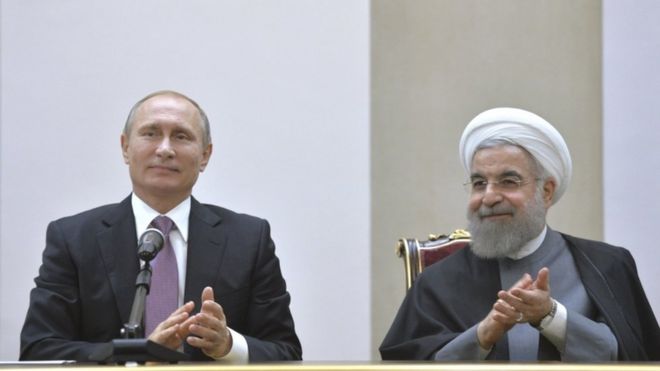
Russia and Iran: an uneasy alliance


Russian President Vladimir Putin and his Iranian counterpart Hassan Rouhani attend a news conference in Tehran
There has been warm praise for his decision to head straight from the airport to a meeting with Iran's Supreme leader, Ayatollah Khamenei.
And the encounter apparently went so well that Iran's veteran former foreign minister Ali Akbar Velayati was moved to describe it as "the best and the most important in the whole history of the Islamic Republic".
Although few details have emerged of what was said between the two, the Iranian media has widely quoted a comment attributed to Mr Putin, assuring the Ayatollah that "Unlike some others, we never stab our allies in the back".
Drug trafficking

The DEA has failed to eradicate marijuana. Some members of Congress want it to stop trying.

Unfortunately for the DEA, the year isn't over yet. Last week, a group of 12 House members led by Ted Lieu (D) of California wrote to House leadership to push for a provision in the upcoming spending bill that would strip half of the funds away from the DEA's Cannabis Eradication Programand put that money toward programs that "play a far more useful role in promoting the safety and economic prosperity of the American people": domestic violence prevention and overall spending reduction efforts.
Electronic surveillance

NSA begins new phone surveillance program as bulk metadata collection ends


Admiral Michael Rogers, director of U.S. National Security Agency (NSA). © Yuri GripasNo longer will the NSA rely on the Patriot Act’s Section 215 to collect all phone records. Instead it will have to contact telecommunications companies holding the data for them. Unlike general warrants leaked by former NSA contractor Edward Snowden such as the one issued by the Foreign Intelligence Surveillance Court (FISC) granting the NSA access to all Verizon customers’ records, the new program only allows the NSA to collect records from telecoms when a “specific selection term” pertaining to limited data is outlined in a FISC warrant, which will limit investigations of the metadata to six months.
The move has encouraged a wide variety of opinions to be voiced.
"The act struck a reasonable compromise which allows us to continue to protect the country while implementing various reforms," Ned Price, a spokesman of the National Security Council, an advisory group to the US President, told Reuters.
Chemical security

What if Isis launches a chemical attack in Europe?

An Israeli girl tries on a gas mask. ‘During the Gulf war, Israelis were advised to carry a small bag containing a gas mask and antidotes to a chemical attack at all times.’The UK government must consider the possibility of an Islamic State attack on its territory with unconventional weapons. As Europe debates how to deal with Isis in the aftermath of the Paris attacks, Isis is revelling in what it considers success, and is undoubtedly planning the next assault. Only that the next strike may be just as Isis vows: more lethal, even more shocking, it may just be one where the internationally banned abhorrent weapons of mass destruction are used. The UK, and other states fighting Isis, need to be on alert.
Weapons

Guest Column -- Why did Turkey shoot down a Russian Air Force jet?


From youtube.com/watch?v=Rmz5F8zTE48: Turkish F16 Shoots Down Russian Su 24Turkey is so militarily inferior to Russia that it is unlikely Turkey would commit an act of war against Russia without encouragement from Washington. We might think that Turkey would feel shielded by NATO, but it is doubtful that many European members of NATO would risk nuclear annihiliation by going to war with Russia in order to save Turkey from the consequences of such a reckless and irresponsible act as shooting down a Russian military aircraft and lying about it.
Turkey has issued no apology and no believable explanation. Unless Erdogan has lost his mind, Washington is behind the shootdown, and the reason is Washington's desperation to decode the new Russian technology that gives Russian forces total control over a battlefield, whether on land, sea, or air.
When the Russians deployed their forces to Syria they also deployed some new stealth technology. So far as I know they've only used this technology in Syria twice, once during their first sortie and one other time when some Israeli Air Force jets entered what they knew was Russian operational airspace.

Turkish premeditated attack

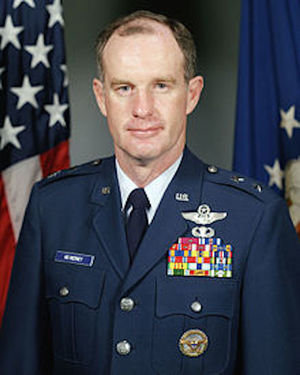
Top US air defense commander: Shootdown of Russian jet had to be pre-planned

Yesterday, McInerney told Fox News - much to the surprise of the reporter interviewing him - that assuming the Turkish version of the flight path of the Russian jet is accurate, Russia wasn't threatening Turkey, and that Turkey's shoot down of the Russian jet "had to be pre-planned", as the jet wasn't in Turkish air space long enough for anything other than a premeditated attack to have brought it down. 

McInerney is right ... especially given that a U.S. official told Reuters that the Russian jet was inside of Syria when it was shot down:
The United States believes that the Russian jet shot down by Turkey on Tuesday was hit inside Syrian airspace after a brief incursion into Turkish airspace, a U.S. official told Reuters, speaking on condition of anonymity.


Hunting for terrorists

FBI using elite surveillance teams to track at least 48 high-risk ISIS suspects


A nationwide law enforcement action has concluded with the recovery of 149 sexually exploited children and the arrests of more than 150 pimps and other individuals.
With as many as 1,000 active cases, Fox News has learned at least 48 ISIS suspects are considered so high risk that the FBI is using its elite tracking squads known as the mobile surveillance teams or MST to track them domestically. 
“There is a very significant number of people that are on suspicious watch lists, under surveillance," Republican Sen. Dan Coats said.   
Coats, who sits on the Select Committee on Intelligence, would not comment on specifics, but said the around-the-clock surveillance is a major commitment for the bureau. "The FBI together with law enforcement agencies across the country are engaged in this. It takes enormous amount of manpower to do this on a 24-7 basis.  It takes enormous amount of money to do this," Coats explained.


Terror threat

Homegrown Extremists Could Seek to Replicate Paris, FBI and DHS Say in Joint Bulletin

PHOTO: The logo of the US Department of Homeland Security is seen at the National Cybersecurity and Communications Integration Center in Arlington, Virginia, Jan. 13, 2015.
The FBI and Department of Homeland Security have issued a joint bulletin reviewing the tactics and techniques used by terrorists in the November 13 Paris attacks, sharing their assessment of the potential for similar attacks to occur in the United States.
The bulletin states that homegrown violent extremists, either inspired or directed by Syria-based operatives, represent the most likely ISIL threat to the homeland. Sent to more than 18,000 law enforcement agencies around the country, the bulletin warns that such extremists, "could seek to replicate the effects of the Paris attacks using similar weapons and tactics, although on a smaller scale."
War prevention

We must prepare for a 30 year war in the Middle East

If we follow the logic of IS wanting war and suggest quietly that it might not be a good idea, then the inevitable response is: “Whatshould we do?”. It is not enough to say, for example, that we should not have invaded Iraq in the first place, true though that is. There are, though, some clear steps that can be taken to start the multi-year process of curbing IS.
An early priority is putting far greater emphasis on ending the Syrian civil war, the necessary precursor to constraining Isis in Syria. There are some small signs of progress here with the two recent meetings in Vienna involving all the proxies to the war including Russia, Iran and Saudi Arabia. But the process must be accelerated and, however difficult, Assad and key militia leaders must somehow be engaged. It is the most difficult of all the tasks and will require the best skills of highly competent conflict resolution specialists.
Nuclear security
Wasting energy

Nuclear power has gone out of fashion in much of the world. The share of electricity from nuclear reactors has fallen to 10.8%, from a peak of 17.6% in 1996. But China, Russia and India are all expanding their nuclear programmes. And several countries in the Middle East are pursuing nuclear power, creating what some have unfortunately called a “boom” in the region.Some fear where this may lead—a nuclear-arms race pitting Sunni states against Shia Iran in pursuit of the bomb. The nuclear deal between Iran and the West has somewhat allayed those worries. Nuclear fuel in the region is mostly controlled by international suppliers. Moreover, there are legitimate reasons for the countries of the Middle East to seek alternative power sources. Demand for electricity is rising, along with pressure to lower carbon emissions; nuclear plants tick both boxes. Diversification away from fossil fuels must come sooner or later, say experts.
Intel war

5 things we learned from inside the U.S. intelligence war


In the wake of the attacks in Paris, the world's attention has refocused on terrorism, and in the U.S., conversations about national security have increased in both frequency and force.
The U.S. intelligence apparatus is vast, spanning some 16 agencies, with a staff of more than 100,000 people, a budget above $66 billion and a staggering array of operations, many of which are necessarily secretive.
CNN sought to shed some light on the United States' many intelligence agencies and what they say they are doing to protect the country from threats around the globe. The overview included interviews with some of the nation's top spies, and behind-the-scenes access never before granted to journalists. Here are five things we learned from inside the U.S. intelligence war...
Chemical & biosecurity

ISIS are trying to buy chemical and biological weapons warns David Cameron's Defence Review


chemical and biological weapons
ISIS terrorists are trying to buy chemical and biological weapons to inflict a new wave of terror on the world, David Cameron's defence review warned today.
Terrorists also want to get hold of 'dirty bombs' that spread radioactive waste, the startling document said.
Chemical and biological weapons were banned in 1925 after mustard and chlorine gas caused soldiers agonising suffering in the First World War.
But they have been used in Syria's brutal civil war, where there are fears President Assad's regime could have been behind attacks using the deadly nerve agent sarin.
The worrying disclosure was made in the 96-page Strategic Defence and Security Review, which spelled out £12bn of new defence spending alongside an eye-watering 17,000 job cuts.
Middle East

Ex-CIA Ops Bob Baer: Middle East Getting Out of Control, Looks Like WWIII

Image: Ex-CIA Ops Bob Baer: Middle East Getting Out of Control, Looks Like WWIIIThe downing of a Russian fighter jet by Turkey is a "huge moment" and is beginning to look like World War III, former CIA operative Bob Baer says."This mosaic in the Middle East of conflict is getting out of control," Baer said Tuesday on CNN's "Out Front."  "It's not just Russia and Turkey, it's Iran and Saudi Arabia. It is expanding rather than contracting, and nobody has a strategic plan."
Baer said he wouldn't be surprised if there is a wider conflict between Turkey and Russia unless the United States steps in.


Terror threat

The ISIS threat to United States

A new report on the threat of ISIS in the United States has been published at Breitbart prior to its release to the general public. And the news is, predictably, not good. Breitbart reports:

The Threat Knowledge Group (TKG), headed by Katherine C. Gorka, its President, and Dr. Sebastian Gorka, the Chair of Military Theory at Marine Corps University and a Breitbart Contributor, released a comprehensive study Monday titled “ISIS: The Threat to the United States.” (snip)

“We wanted to do this study because we felt that the Administration was downplaying the domestic threat of ISIS, focusing instead on ‘right-wing extremism.’ The problem with that is that it means law enforcement is not prepared. They’re looking out the window while the threat is coming in the door,” she added.
Terror threat

Cruz: ISIS has already entered the United States

Republican U.S. presidential candidate Ted Cruz takes the stage at the Presidential Family Forum in Des Moines, Iowa, Nov. 20, 2015. (Photo by Mark Kauzlarich/Reuters)About a year ago, Rep. Duncan Hunter Jr. (R-Calif.) insisted ISIS militants had already entered the United States through the Southern border. All available evidence suggested his claims werecompletely untrue – even his fellow Republicans said they had no idea what Hunter was talking about – and it quickly became apparent that the threat wasn’t real.
 
Thirteen months later, Ted Cruz isn’t going quite as far as Hunter, but he seems to have headed down a similar path. BuzzFeed reported yesterday on the senator’s recent chat with Glenn Beck.
Texas Sen. Ted Cruz said ISIS is already in the United States and more are coming.
 
“Well look, you’re right, eight Syrians were picked up in Texas trying to cross over illegally, and this is the consequence of the president refusing to enforce the law,” Cruz told radio host Glenn Beck last week. “We have a serious national security risk because our southern border is not enforced.”
Strategy for peace

You won’t win a war against Isis if you don’t know what the peace looks like

Kurdish Syrian girls among rubble in the Syrian town of Kobane in March 2015The second world war lasted six years. The war on terror is now in its 15th year. And yet things are demonstrably no better. Why? Because we still have no vision of what peace might look like. For instead of trying to figure out what the politics of a relatively settled Middle East might be, and then working towards that, we think first about dropping bombs from the sky – bombs that will inevitably destroy both Islamic State and its non-Isis neighbours, bombs that will inevitably recruit new forces of vengeance against the west. Carl von Clausewitz famously said that war is politics by another means. And that puts its finger on the problem: we don’t have the politics sorted out. We don’t really know what we want to achieve other than to hear the sound of bombs falling on Raqqa, thus satisfying the need to do something. We can’t win if we don’t know what winning looks like.