Страницы

Wednesday, April 29, 2020

Cybersecurity

Microsoft releases guidance on blocking ransomware attacks

Microsoft releases guidance for blocking ransomware attacks
Microsoft warned today of ongoing human-operated ransomware campaigns targeting healthcare organizations and critical services, and shared tips on how to block new breaches by patching vulnerable internet-facing systems.

Many such attacks start with the human operators first exploiting vulnerabilities found in internet-facing network devices or by brute-forcing RDP servers and then deploying the ransomware payloads.

For instance, Pulse VPN devices have been targeted by threat actors in the past, with one such vulnerable device thought to be behind the Travelex ransomware attack by Sodinokibi (REvil).

Other ransomware gangs such as DoppelPaymer and Ragnarok Ransomware also exploited the Citrix ADC (NetScaler) CVE-2019-1978 vulnerability to get a foothold on the edge of their victims' networks.

As Microsoft details, the final stage of deploying the ransomware and encrypting the systems is normally preceded by a reconnaissance stage where the attackers steal data they can later use for blackmail, as well as harvest credentials and move laterally throughout their victims' networks.

To prevent all of this from happening, Microsoft advises potential victims to prevent threat actors behind ransomware campaigns from being able to exploit the weaknesses they usually abuse to launch their attacks.
Weapons

The U.S. Navy’s Railgun Is Nearly Dead in the Water


The U.S. Navy’s $500 million electromagnetic railgun—capable of slinging projectiles at hypersonic speeds—lacks funding and has no coherent plan to deploy on warships. The Navy is instead pursuing an offshoot of the railgun, a hypervelocity projectile it can fire from existing gun systems.

The electromagnetic railgun (EMRG) is a weapon that uses electricity instead of gunpowder to send projectiles downrange. Railguns use magnetic fields created by high electrical currents to accelerate a projectile to Mach 6, or 5,400 miles an hour. The velocity is sufficient to give the EMRG an effective range of 110 nautical miles, or 126 miles on land.

The Office of Naval Research began development of the gun in 2005, and by 2012 a technology demonstrator was firing projectiles at Naval Surface Warfare Center Dahlgren Division in Virginia. In 2015, the program was apparently doing so well the Navy announced plans to test the weapon from the USNS Trenton, an Expeditionary Fast Transport. In 2017, the Navy released a video of the Dahlgren gun firing multi-shot salvos.
Top secret

Kim Jong Un’s uncle emerges as possible successor in North Korea


Kim Pyong-il
Despite speculation that Kim Jong Un’s sister and closest confidant, Kim Yo Jong, might be next in line to take over leadership of North Korea, the dictator’s uncle Kim Pyong Il also has emerged as a possible successor, according to a report.
The 65-year-old is the last known survivor of the Hermit Kingdom’s founder, Kim Il Sung, whose 108th birthday commemoration his grandson missed on April 15, sparking widespread rumors about his fate, Bloomberg News reported.
In the 1970s, Kim Pyong Il was passed over by his half-brother, Kim Jong II, who took the reins of the rogue regime in 1994 and ruled until 2011.
The peripatetic Kim Pyong Il wound up spending some 40 years as a diplomat in Hungary, Bulgaria, Finland, Poland and the Czech Republic before he returned to his country last year.
Some North Korea watchers now think he might catapult over Kim Yo Jong to take control, mainly due to his gender in the male-dominated society, according to the news outlet.
Intel reporting

Kim Jong-un could be sheltering from Covid-19 pandemic, say US and Seoul

Kim Jong-un riding a horse on Mount Paektu in October. He is believed to be waiting out the Covid storm in the resort town of Wonsan.
Kim Jong-un is not ill and could be sheltering from the coronavirus pandemic, according to South Korean and US officials, in the latest possible explanation for the North Korean leader’s recent absence from public life.
North Korea insists it has yet to identify a single case of Covid-19, despite sharing a border with China, where the outbreak is believed to have started.
Despite recent reports claiming that Kim had missed a key anniversary event after undergoing heart surgery, the South Korean unification minister, Kim Yeon-chul, said it was reasonable to assume that he had decided not to attend as a precaution.

Biosecurity

Bat virus? Bioweapon? What the science says about Covid-19 origins

Experts say the conditions in wet markets increase the chances of a virus jumping from animals to humans. Photo: Simon Song
As the Covid-19 pandemic has infected its way through human populations around the globe, it has been followed by a web of speculation about where the
new coronavirus actually came from.

Some possibilities are scientific hypotheses based on genetic data while others borrow from dark conspiracy theories with little or no basis in fact.

Laboratory researchers have established solid genetic links between the new coronavirus, known as Sars-CoV-2, and one found in a horseshoe bat in southeastern China.

Further genetic detective work – and what is known about the evolution of past coronaviruses that have infected people – indicates the pathogen may have passed through another animal species first. There, scientists believe, it mutated or combined with another virus before finding its way into a human body, latching onto cells and spreading.
Biological warfare

BioweaponCoronavirus outbreak is an opportunity to end all bioweapon programs


The emergence of Coronavirus has sparked a fresh controversy over biological warfare programs being run clandestinely by some countries and the need to put an end to them
The United States recently filed a class-action lawsuit worth $20 trillion against China claiming that Coronavirus is a bioweapon that the latter has designed to kill populations en masse. But, in the absence of any conclusive evidence, the claims still remain speculation.

The origin of the controversy

The ongoing controversy around coronavirus being a bioweapon began with US senator Tom Cotton alleging that the virus was created in Wuhan laboratory, which have been given credence by the statement made by Dr Francis Boyle–the creator of Biological Weapons Anti-terrorism Act and a professor of International Law. Dr Boyle has agreed that the Coronavirus is a biological warfare weapon or dual-use biowarfare weapons agent with DNA-genetic engineering. On the other hand are experts like Professor Richard Ebright, a biosecurity expert and a professor at Rutgers University’s Waksman Institute of Microbiology, who disagree and call it mere speculation.

What exactly is a biological warfare weapon?

That brings us to the question of what afterall a biological warfare weapon is. Also called a germ weapon, it is a biological threat that is deliberately released to cause a number of diseases. Biological warfare agents differ in their potency, length of incubation, lethality, and the ability to be treated with medicines. A biological weapon costs much lesser than a nuclear weapon but can be much more lethal...

United States’ president Donald Trump thinks that COVID19 is a `Chinese virus’. Conspiracy theories are making rounds that the virus was compounded in a Wuhan laboratory. Several American politicians, such as Senator Tom Cotton, suggested that the coronavirus is a bioweapon leaked from the Wuhan Institute of Virology.
Trump is convinced that US economy is suffering for China’s lies about events in Wuhan, with connivance by the World Health Organization. He stalled WHO’s funding to teach it a lesson. With an eye on November re-election, Trump assured voters that his rival, Democratic nominee, Joe Biden is weak on China. And, his son Hunter was involved in cloudy dealings with Beijing.
Americans are receptive to Trump’s tirades. When he suggested taking disinfectants as cure for COVID19, many Americans did so. A Pew Research poll found that two-thirds of U.S. voters had an unfavorable view of China compared to 47 per cent two years back. Wuhan’s lockdown was viewed as “draconian” and “undemocratic” step taken by the “despotic Orient”.  The truth remains that a nation’s ability to contain the coronavirus depends on numerous factors: Climate, demographics, location, wealth, leadership, medical stockpiles, healthcare system, and so on.
Top secret

CHINA SUGGESTS U.S. IS 'HIDING SOMETHING' ABOUT ITS CORONAVIRUS RESPONSE, DEMANDS AN ANSWER FROM TRUMP ADMINISTRATION

Donald Trump, US, CHina, coronavirus, allegation, hiding
The Chinese government has suggested that President Donald Trump's administration might be hiding something about its response to the coronavirus crisis, as both Washington, D.C. and Beijing trade accusations and disinformation while the pandemic continues to spread.

The Chinese foreign ministry sent a tweet on Monday suggesting there were "growing doubts over the US government's handling of the #COVID19."

"When did the first infection occur in the US?" the foreign ministry asked. "Is the US government hiding something? Why they opt to blame others? American people and the international community need an answer from the US government."

The foreign ministry did not elaborate on the assertions. A State Department spokesperson told Newsweek that the president and Secretary of State Mike Pompeo "regularly answer questions about the U.S. government's handling of the COVID crisis."
Biosecurity

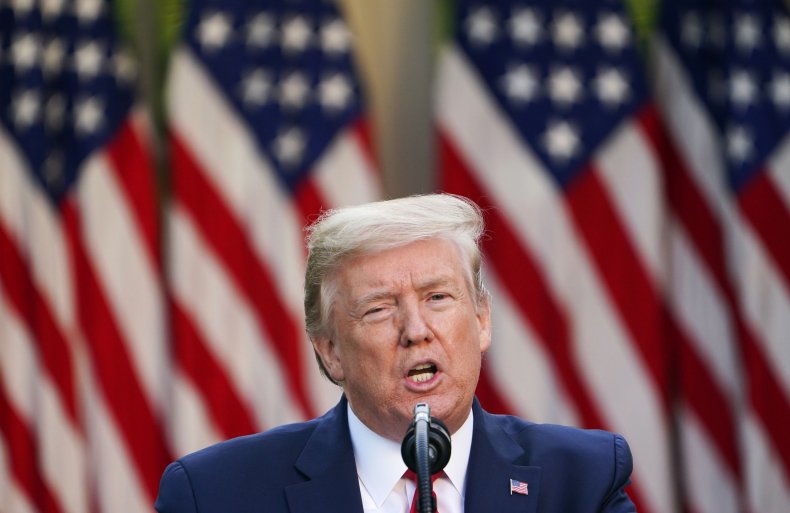
Trump says 'worst days' of coronavirus are 'behind us'


President Trump on Tuesday suggested "the worst days" of the coronavirus pandemic are over as he welcomed a group of small-business owners to the White House who have benefited from an emergency loan program he signed into law last month.
Trump used his speech to express optimism about the country’s path to economic recovery amid the pandemic, which has forced businesses to close and caused millions of layoffs across the country due to stay-at-home orders issued by states.
“As our nation battles against this terrible scourge, we continue to pray for the victims as well as those Americans who are grieving their lost ones and their loved ones,” Trump said at the outset of his remarks in the East Room. “We suffer with one heart, but we will prevail. We are coming back, and we’re coming back strong.”
“Now that our experts believe that the worst days of the pandemic are behind us, Americans are looking forward to the safe and rapid reopening of our country,” the president continued.
...Trump suggested that the U.S. would “very soon” have the capacity to test 5 million Americans each day, without providing an explanation about how the administration would achieve such a goal. The U.S. currently is testing roughly 200,000 Americans daily.

Tuesday, April 28, 2020

Spy work

What Happened to the KGB When the Soviet Union Folded?


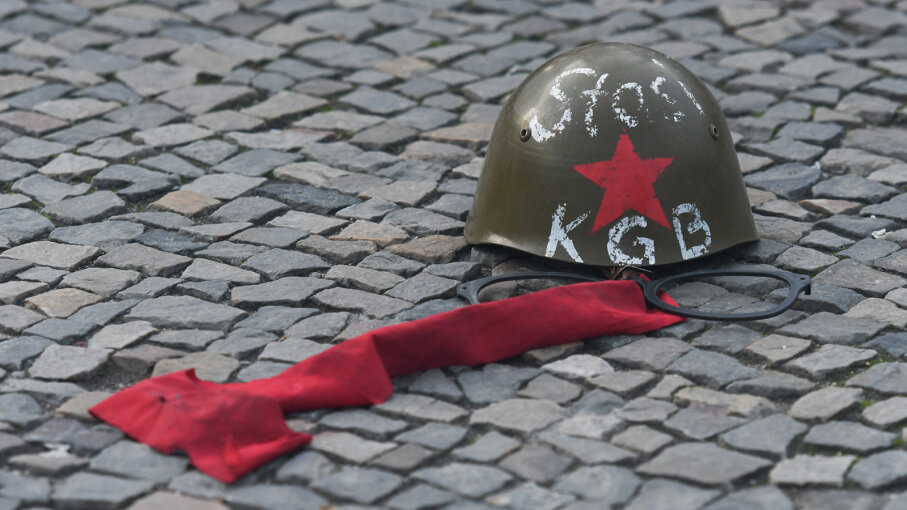
KGBIf you're passing the time by binge-watching episodes of the critically-acclaimed TV series "The Americans," you may have grown fascinated with the story of a married couple living in the Washington, D.C. suburbs during the 1980s, who struggle to protect a dark secret. They're actually operatives for the KGB, the Soviet spy agency that during the Cold War battled clandestinely with the U.S. Central Intelligence Agency and other Western nations' intelligence organizations. The KGB — a Russian acronym that stands for Committee for State Security — became infamous in those years, thanks to its prowess at stealing secrets and assassinating perceived enemies abroad, as well as crushing domestic dissent. In the process it provided subject material for numerous movies and literary thrillers by novelists such as John le Carré and Martin Cruz Smith.

Since the Soviet Union itself ceased to exist back in 1991, you might assume that the KGB vanished with it. Indeed, after the hammer-and-sickle flag on the Kremlin was replaced by the tricolor of the Russian Federation that nation's first president, Boris Yeltsin, dismantled the agency and dispersed its functions among various other parts of the new government. In reality, though, intelligence experts say the KGB never really went away. Instead, like spies often do, it simply has resurfaced with a different name, FSB, whose letters stand in Russian for Federal Security Service. And today, with a former KGB agent and FSB head named Vladimir Putin as the head of state, the organization once known as the KGB seems to have regained much of its old reach and power.

Monday, April 27, 2020

Terror threat

Some militaries and militants see an opportunity in the coronavirus crisis


India KashmirThe global coronavirus outbreak could also create opportunities for non-state actors, such as militant groups, to regroup and eventually resurge. A primary constraint on militant activity across various security hotspots has been constant pressure from security forces. But the diversion of resources and manpower from the frontlines of many of these fights toward containing the virus will ease pressure on these groups.Likewise, these groups face a lesser risk of being directly impacted by the virus, given that many of them operate in rural and isolated regions such as spacious deserts, rugged mountains and dense forests largely cut off from the outside world. These developments will afford these groups opportunities to regroup, reorganize and engage in more training, as well as plan new activity on both operational and strategic levels.
Military

The 5 most powerful armies in the world

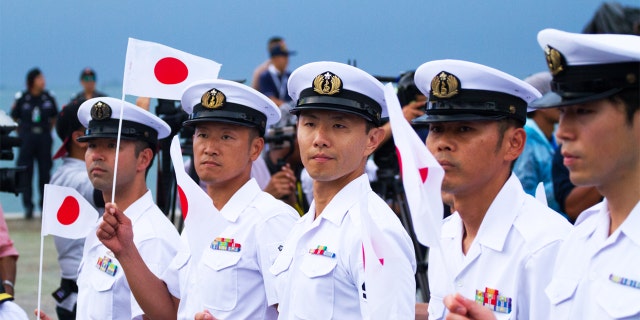
Japan's armed forces have to contend with a volatile neighbor in North Korea.
Battlefields are constantly evolving, leading countries around the world to pump hundreds of billions of dollars each year into their armed forces in a race to develop the most advanced training, technology and weaponry.

As of 2020, Global Firepower, a website that tracks military strength, says the following five armies are the most powerful, based on a rank given to them after looking at how they compare in categories “ranging from military might and financials to logistical capability and geography”:

5) Japan

With an estimated active military personnel of 247,160, this Asian country only has a fraction of the headcount that volatile neighbor North Korea has, but makes up for it with its updated weaponry.

Japan has 152 special mission aircraft – more than any country in the world other than the U.S., according to Global Firepower’s statistics – and a formidable Navy fleet that contains 40 destroyers...
Communication security

China's military developing 6G internet to power AI army of the future


Ming dynasty China was a hotbed for innovative technology
This 6G technology has the capability to put China for the first time ahead of the US, because of 6G's vastly superior bandwidth, extremely low latency, and high connectivity properties.
The future of combat will be autonomous and reliant on data drive artificial intelligence.
5G US autonomous drones will therefore by outmatched by China's 6G alternatives.
An article titled “If 6G Were to be Used in the Future Battlefield”, published by the PLA’s China National Defence News on Monday 13 April.
The article said 6G had a distinct technological edge and rich potential for military applications when compared to 5G.
The article said: “If 6G technology is introduced into the military, it will surely have a major impact on military practices, such as war formation, equipment development, and battlefield communications.
“Promoting the gradual application of 6G in the military might be one of the major focuses for the Chinese armed forces to adapt to the new military changes in the future.”
The terms 6G and 5G refer to the sixth and fifth-generation of mobile wireless networks.
Conspiracy theory

A psychologist explains why people cling to conspiracy theories during uncertainty and after traumatic events

Mandalay Bay
Conspiracy theories are as old as time, but it's only in more recent years that psychologists have begun to unravel the belief that some people have in them. According to researcher Goertzel (1994), conspiracy theories are explanations that refer to hidden groups working in secret to achieve sinister objectives.

Whether it's the killing of a US President (Kennedy), a mass-shooting involving a seemingly-normal older white, adult male (Las Vegas), or the Charlie Hebdo murders, conspiracy theories are never far behind. Even climate change has a conspiracy theory attached to it (the US government is to blame, naturally).

What drives people's belief in these "out there" explanations for significant events? Let's find out.

There is a conspiracy theory that there were two shooters at the Las Vegas massacre, the largest mass-shooting in modern US history. The theory — believed by tens of thousands of people around the world — rests on the "evidence" of two grainy, hard-to-hear videos from eyewitnesses.
Communication security

Zoom or Not? NSA Offers Agencies Guidance for Choosing Videoconference Tools.

Video conferencing platforms Zoom and Microsoft Teams are both FedRAMP-approved, but while Zoom offers end-to-end encryption, Microsoft Teams does not.

These are just two of nine factors the National Security Agency cites in its guide to help federal workers choose commercial telework tools for “safely using collaboration services,” as necessitated by the coronavirus pandemic.

The guide, which NSA released Friday, applies only to commercial applications, and one strong recommendation from the agency is that, when possible, workers use U.S. government services such as Defense Collaboration Services, Intelink Services and others, which were designed specifically for secure government communications. But government workers still need to interact with external entities which might be sending them invitations via commercial applications, and the NSA has detailed a number of factors for them to weigh in deciding which ones to facilitate:
Does the service implement end-to-end encryption?
  • Are strong, well-known, testable encryption standards used?
  • Is multi-factor authentication used to validate users’ identities?
  • Can users see and control who connects to collaboration sessions?
Defense spending

Military spending hits highest level in a decade: Study

India is among the top three military spenders with a total of $71.1bn spent in 2019 [File: Farooq Khan/EPA]
Global military expenditures saw the biggest uptick in a decade in 2019, researchers say, marking the first year two Asian countries were among the top three spenders.

The world's nations spent a combined $1.9 trillion (1.78 trillion euros) on their militaries in 2019, according to a report released by the Stockholm International Peace Research Institute (SIPRI) on Monday.

Compared with 2018, that represented annual growth of 3.6 percent, the largest spending surge since 2010.

"This is the highest level of spending since the 2008 global financial crisis and probably represents a peak in expenditure," Nan Tian, a researcher at SIPRI, told the AFP news agency.
Electronic surveillance

China is installing surveillance cameras outside people's front doors ... and sometimes inside their homes


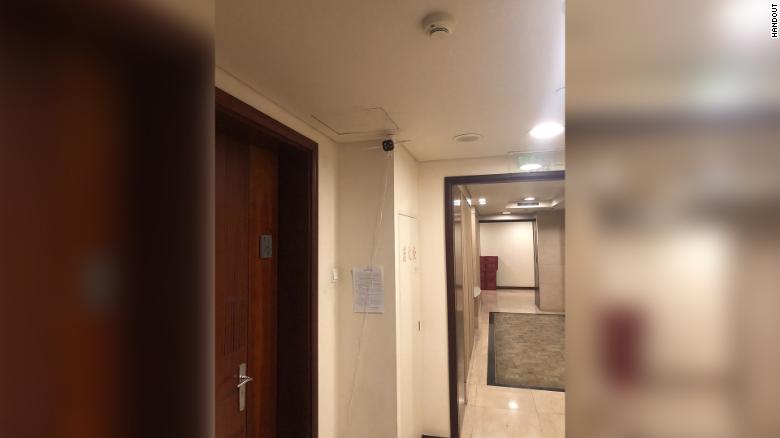
A surveillance camera was installed outside Ian Lahiffe's front door the morning after he returned to Beijing.The morning after Ian Lahiffe returned to Beijing, he found a surveillance camera being mounted on the wall outside his apartment door. Its lens was pointing right at him.
After a trip to southern China, the 34-year-old Irish expat and his family were starting their two-week home quarantine, a mandatory measure enforced by the Beijing government to stop the spread of the novel coronavirus.
He said he opened the door as the camera was being installed, without warning.
    "(Having a camera outside your door is) an incredible erosion of privacy," said Lahiffe. "It just seems to be a massive data grab. And I don't know how much of it is actually legal."
    Biosecurity

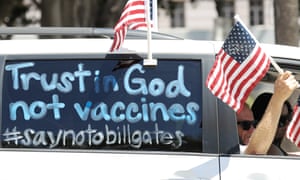
    US was warned of threat from anti-vaxxers in event of pandemic


    Anti-vaccine protesters in California. The paper said opposition to vaccination would hobble the chances of reaching herd immunity to a highly infectious pathogen.America’s “anti-vaxxer movement” would pose a threat to national security in the event of a “pandemic with a novel organism”, an FBI-connected non-profit research group warned last year, just months before the global coronavirus pandemic began.
    In a research paper put out by the little-known in-house journal of InfraGard – a national security group affiliated with the FBI – experts warned the US anti-vaccine movement would also be connected with “social media misinformation and propaganda campaigns” orchestrated by the Russian government.
    Since the virus hit America, anti-vaccination activists and some sympathetic legislators around the country have led or participated in protests against stay-at-home orders designed to slow the spread of the deadly virus. More than 50,000 people have died in the US.

    Saturday, April 25, 2020

    Biosecurity

    Scientists in Italy find coronavirus on air pollution particles

    A worker sprays disinfectant to sanitize Duomo square in downtown Milan, Italy, March 31, 2020. (AP/Luca Bruno)
    In a preliminary study, scientists in Italy detected the coronavirus on particles of air pollution.

    It is still unclear whether the virus is viable or able to cause infections when carried by pollution, according to The Guardian, which first publicized the findings on Friday.

    The study has not yet been peer-reviewed, but previous studies and experts suggest the premise could be valid, and should be researched further.

    If true, the virus could travel farther by air than previously assumed. It could also explain the high rate of infection in heavily polluted northern Italy.

    Italy has been hard hit by the pandemic, especially its northern region. The country has confirmed over 192,000 infections and nearly 26,000 deaths.

    The research was headed by Leonardo Setti from Italy’s University of Bologna. The research team detected a distinct COVID-19 gene on air pollution samples taken from an urban site, and an industrial site, in Bergamo province, near Milan.
    Outer space

    Iran-launched military satellite entered Earth's orbit, US Space Command announces

    Sunrise, Space, Outer Space, Globe, World, Earth
    Earlier Wednesday, Iran said it launched a military satellite into orbit amid wider tensions with the U.S., a successful launch after months of failures.

    “Iran’s first military satellite, Noor, was launched this morning from central Iran in two stages. The launch was successful and the satellite reached orbit,” Iranian state TV reported, according to Reuters.

    The U.S. State Department and the Pentagon both say such launches advance Iran’s ballistic missile program.

    On its official website, Iran’s paramilitary Revolutionary Guard said the satellite successfully reached an orbit of 264 miles above the Earth's surface.

    The two-stage satellite launch took off from Iran’s Central Desert, the Revolutionary Guard said, without elaborating. The paramilitary force said it used a Ghased, or “messenger,” satellite carrier to put the device into space, a previously unheard-of system.