Страницы

Thursday, April 5, 2018

War on terror

Syrian Army Reportedly Finds NATO, Israeli-Made Weapons in Daesh Arsenal (VIDEO)

(File) A picture taken on November 5, 2017, shows weapons reportedly seized by Syrian government forces during a military operation against Islamic State (IS) group jihadists in the eastern city of Deir Ezzor
The discovery comes amid several ongoing operations by the Syrian military to secure and clear areas freed from the jihadists in the country's east and southwest.
A Syrian army mop up operation in the villages of al-Salehiyeh, al-Dowayer, al-Kashmeh and Sabikhan in eastern Deir ez-Zor governate has discovered several major Daesh (ISIS) weapons and ammunition depots containing Israeli and NATO weapons, the Syrian Arab News Agency reports, providing video evidence of the find.
The stocks of weapons shown in the video include rocket-propelled grenade shells and mortars, large caliber ammunition, heavy rockets, as well as improvised explosive devices, suicide belts, and chemical warfare kits. Some of the arms have clear Israeli and US markings.
An officer speaking to SANA said that many of the rocket-propelled grenades were discovered in a secret Daesh arms cache in al-Salehiyeh, with the al-Dowayer depot containing rocket launchers and several types of mortar shells. Anti-tank missiles were found in al-Kashmeh. Finally, Sabikhan was the home to roughly 60,000 rounds of ammunition, as well as barrels of chemicals used for the makeshift creation of explosives.
Cybersecurity

Cybersecurity fiasco: Interior Department computers trying to talk to Russia, inspectors say

More than 143 million Americans are victims of an Equifax cyber breach; Catherine Herridge goes in-depth for 'Special Report'Three years after Chinese hackers stole security clearance files and other sensitive personal information of some 22 million U.S. federal employees, cyber-defenses at the Department of Interior, which hosted White House Office of Personnel Management (OPM) servers targeted in the theft, were still unable to detect “some of the most basic threats” inside Interior’s computer networks — including malware actively trying to make contact with Russia.

In a 16-month examination of Interior’s ability to detect and respond to cyber-threats, evaluators from the department’s Office of Inspector General (OIG) also discovered that Interior’s technicians simply did not implement a sweeping array of mandatory, government-wide defensive measures ordered up after the disastrous OPM hack, didn’t investigate blocked intrusion attempts, and left “multiple” compromised computers on their network “for months at a time,” according to a redacted OIG report issued in March.

Ultra-sensitive security clearance files have since been moved to the Defense Department, but, among other things, the OIG report noted that:

● sensitive data at Interior could be taken out of the department’s networks “without detection.”

● network logs showed that a computer at the U.S. Geological Survey, an Interior bureau, was regularly trying to communicate with computers in Russia. The messages were blocked, but “the USGS facilities staff did not analyze the alerts...”
International security

Chinese defense chief says his trip to Russia is a signal to the US


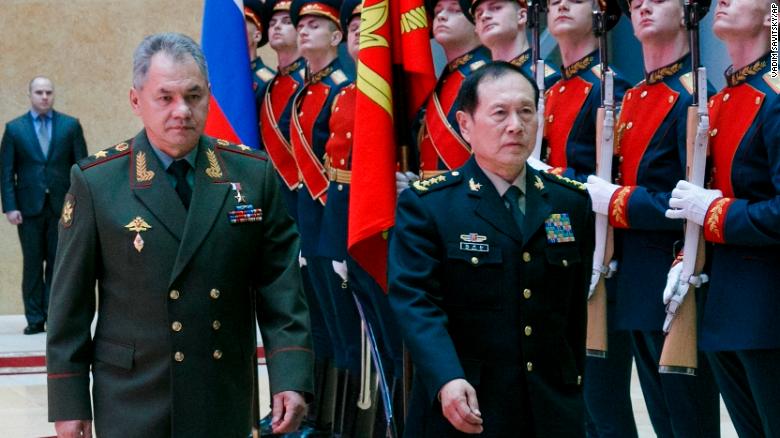
Russian Defense Minister Sergei Shoigu, left, and China's Defense Minister Wei Fenghe review an honour guard prior to their talks in Moscow, Russia, Tuesday, April 3, 2018.
The US should take notice of China and Russia's increasingly close military ties, a top Chinese official said Tuesday.
Gen. Wei Fenghe, China's new defense minister, gave the remarks in Moscow following a meeting with Russian Defense Minister Sergey Shoigu, according to Russian state news agency TASS.
"I am visiting Russia as a new defense minister of China to show the world a high level of development of our bilateral relations and firm determination of our armed forces to strengthen strategic cooperation," Wei said.
"The Chinese side has come (to Moscow) to show Americans the close ties between the armed forces of China and Russia ... we've come to support you."
Wei added that Beijing is ready to express with Moscow "our common concerns and common position on important international problems at international venues as well."
Chemical security

What Russia Did With Its Soviet Chemical Weapons, and Where Else They Ended Up

Soviet and foreign journalists watch the dismantling of chemical munitions.On April 5, 1928, the Soviet Union signed the Geneva Protocol prohibiting the use of chemical and biological weapons in warfare. But the treaty did't ban production, and the USSR stockpiled the weapons until 1991. Military observer Andrei Kotz provides a short history of Soviet chemical weapons, and what happened to them after the USSR collapsed.
Russia first began production of chemical weapons in 1915 during World War I, as a symmetrical response to Germany, which casually used the poison gas weapons on the battlefield on both the Western and Eastern fronts. The Czarist government speedily built three plants – in Ivanovo-Voznesensk, Moscow and Kazan. In a year's time, the Imperial Russian Army amassed nearly 150,000 chemical shells, but would refrain from using them out of fears regarding their unpredictability depending on weather conditions. 
After the Bolsheviks came to power, they quickly established the so-called Chemical Service of the Red Army. The military created chemical units in all rifle and cavalry divisions and brigades, and modern chemical training was established in 1925...
Trade war

How a US-China trade war would hurt us all


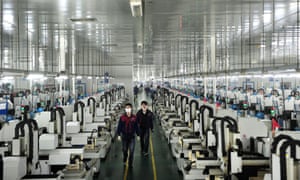
Lens Technology in Liuyang, in China’s Hunan provinceThe tit-for-tat exchange of tariffs between the United States and China gives the impression the world’s two biggest economies are headed down the road towards a trade war, which would have hugely damaging economic consequences. But this could be averted if they continue quiet backroom discussions to open up their markets, particularly China’s.
The US imposition of tariffs on a range of Chinese imports – which amounts to a tax on imported goods – is the first step in a series of measures announced by the Trump administration. So far, China has responded by announcing tariffs on US imports. The next stage would be for the US to restrict Chinese investment into America.
Presumably, if this happens, then China would respond in kind. In other words, the tensions between the US and China could go beyond taxes and directly disrupt global supply chains as investment is targeted.
Any disruption to supply and distribution chains, which are a key part of world trade, could have a lasting impact. In the worst-case scenario, companies may have to relocate factories or distribution centres. Investment decisions affect employment and taxes raised, and are in some ways more disruptive than tariffs, which can be reversed more easily.
Nuclear security

Activists raid nuclear submarine base with hammers and ‘baby bottles of their own blood’

The Kings Bay Naval Submarine Base, a 17,000-acre installation in southeastern Georgia, is known as “the east coast home to the Ohio-class submarines.”

Bassett said about 9,000 people work at the base, which houses two Ohio-class guided-missile submarines (SSGNs) and six Ohio-class nuclear-powered ballistic-missile submarines (SSBNs). The submarines are deployed for several months at a time.

According to the Navy, the “ballistic missile submarines, often referred to as ‘boomers,’ serve as an undetectable launch platform for intercontinental missiles. They are designed specifically for stealth and the precise delivery of nuclear warheads.”

The SSGNs, the military says, “provide the Navy with unprecedented strike and special operation mission capabilities from a stealthy, clandestine platform.”
Energy security

The simple argument for keeping nuclear power plants open


Coal and nuclear (“baseload”) power plants are getting the shit kicked out of them in energy markets. Coal plants are retiring faster than ever, despite President Trump’s bluster, and nuclear plants are going down with them, largely for the same reasons. It’s difficult for big, slow, always-on power plants to compete on a grid being flooded with cheap, nimble natural gas and renewables. (For a deep dive into what’s affecting the profitability of PJM’s nuclear fleet, see this paper from Jesse Jenkins. Spoiler: It’s mostly natural gas.)
There is, of course, an obvious justification for efforts to save nuclear plants: They offer carbon-free energy in a time when it is desperately needed. But in Ohio and Pennsylvania, there is no policy mechanism to compensate the plants for that value. New York figured out a way to do it with zero-carbon energy credits (ZECs), but PJM’s plants are not similarly blessed.
Since there’s no prospect of saving nuclear plants for the right reason, their owners, and PJM, are pressing to save them for the wrong reasons. The Trump administration and the generation companies are now advancing the argument that “baseload” plants (a silly and outmoded term) are needed for grid resilience and should be compensated for that.
Flight security

Disturbing string of crashes in 2018 continues deadly trend for US military

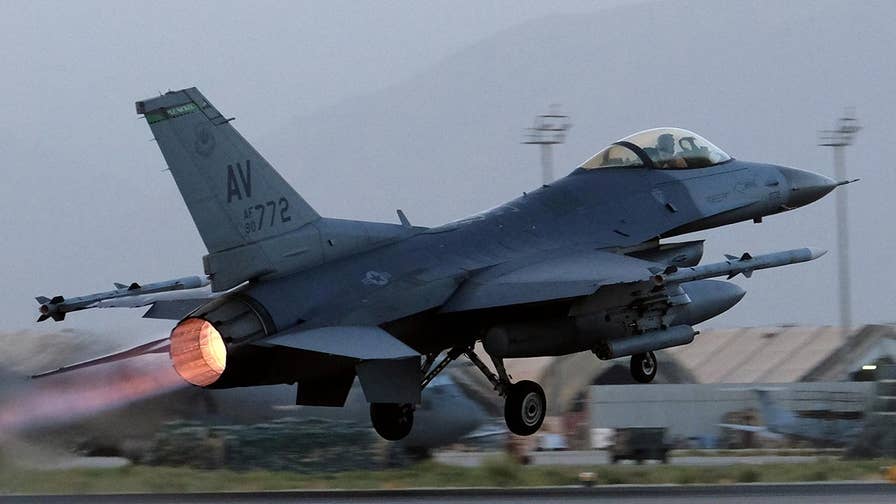
A U.S. Air Force Thunderbirds pilot has died in an F-16 crash outside Las Vegas, marking the third military crash in the last two days. Jennifer Griffin has updates live from the Pentagon.There have been five noncombat aviation crashes in 2018, killing nine service members — 37 were killed in aircraft crashes last year, nearly double the number killed in 2016.

Only 37 percent of Marine Corps CH-53E heavy-lift helicopters can fly right now, the head of Marine Corps aviation, Lt. Gen. Steven R. Rudder, told Congress in November.

“If you are flying a smaller number of airplanes, they break more frequently, and if you can’t pay for the parts, you have a smaller number of airplanes, and so you’re not getting the hours,” Marine Corps Commandant Gen. Robert B. Neller told a Reagan National Defense Forum audience moderated by Fox News’s Jennifer Griffin in December.

“Last year in aviation, we had a horrible safety year, probably the worst year in 10 years,” Neller added.

“I think the high-op tempo and stress on the force over the past 17 years of continuous combat operations in Iraq, Afghanistan, Syria, and elsewhere is catching up to the U.S. military,” Todd Harrison, a defense expert with the Center for Strategic and International Studies, told Task & Purpose.

The Pentagon just received $700 billion in the massive spending bill signed by Trump last month — a sizable portion of that is supposed to help fix aircraft and improve pilot training.
Chemical security

Nazi Chemical Weapons Freely Leaking in Baltics, Prompting Panic Alarm
The Baltic sea of Svetlogorsk's coast in RussiaSeveral decades after tons upon tons of Nazi chemical weapons including mustard gas, arsenic bombs and a host of other toxins were dumped into the sea, the casings have eroded and the chemicals are now leaking freely, poisoning fish and various aquatic organisms.
Chemical weapons dumped into the Baltic Sea in the aftermath of WWII are presenting a greater and greater problem. Salvaging all of them is impossible for practical and economic reasons, and researchers are now working on a mechanism for determining which areas need to be addressed, the Finnish newspaper Hufvudstadsbladet reported, predicting that the sea will never get totally rid of the carelessly discarded arms.
With the axis powers defeated, the allies found a total of 300,000 netric tons of chemical weapons in Germany and Nazi-occupied areas. To address this problem as quickly as possible, partly to demilitarize and partly to prevent them from getting into unruly hands, a large proportion of these were dumped at sea. Most such dumping took place in the wake of WWII itself, but some continued on a smaller scale until the 1970s. The dumps took place as part of the 1945 Potsdam agreement.
All in all, hundreds of thousands of tons of mustard gas, arsenic bombs and a host of other toxins were dumped at various locations in the Baltic and the North Sea.

Wednesday, April 4, 2018

Nuclear security

The Inside Story of How Israel Built Nuclear Weapons


Although Israel doesn’t officially acknowledge it, it is well understood that the country possesses a nuclear weapon arsenal (although the exact number of warheads are in dispute). It is similarly well understood that the United States opposed Israel’s nuclear weapons program during the John F. Kennedy and, to a lesser extent, Lyndon B. Johnson administrations. One part of the history that is less well known is that much of the funding for Israel’s nuclear weapons program came from private Americans in an effort that was spearheaded by, Abraham Feinberg, a prominent American who served as an unofficial advisor to both President Kennedy and President Johnson.
Israel’s interest in nuclear weapons basically dates back to the founding of the Jewish state in 1948. The country’s founding leader, David Ben-Gurion, was haunted both by the Holocaust and the unremitting hostility Israel faced from its much larger Arab neighbors. Ben-Gurion viewed nuclear weapons as a last resort option for ensuring the survival of the Jewish state in case its enemies ever used their much larger populations and economies to build conventionally superior militaries.
Cybersecurity

The Cloud Is Rising To The Cybersecurity Challenge


In a world of seemingly hourly data breaches, it can seem at times that the battle for cybersecurity has officially been lost and that there is nothing more for businesses to do but wait for the inevitable breaches to come and perform damage control. Smaller businesses without the means to invest in advanced cyber defenses find themselves inundated with questionable solutions that offer few protections, while larger companies struggle to afford maintaining large staffs of top security professionals. Into this cyber Wild West, the major cloud companies have begun moving aggressively to take their own lessons learned and massive internal security investments and make them broadly available to the rest of the world. Could this finally shift the cyber tide?
Drug smuggling

Instagram–famous fitness model and her buff ex-boyfriend are accused of 'smuggling 24,000 ecstasy pills with a street value of $1 million'

The raids and the arrests that swept Molloy up were part of an investigation into an alleged ecstasy drugs ring operating around QueenslandA model with a huge social media following has been charged in relation to an alleged drug-trafficking gang.
Mary Molloy was arrested on Tuesday night after two properties in Brisbane were raided by police.
The fitness champion - who has posted dozens of pictures of her posing in bikinis and gym tops flaunting her abs and figure - was reportedly arrested alongside her ex-boyfriend, Jason Atkins. 
...Police allege both were involved in multiple drug-related offences which include trafficking, supply and possessing MDMA, and other offences linking them to carrying out suspected crimes.
Their arrests are believed to be linked to two other arrests made in November after drugs were allegedly seized which a group were said to be trying to move.
Detectives will claim the 24,000 MDMA pills they discovered had a street value of more than $1million.


Chemical security
Картинки по запросу u.s. ambassador nikki haley
US: World 'far more dangerous' due to chemical weapons


U.S. Ambassador Nikki Haley says the U.N.'s failure to hold Syria accountable for its use of chemical weapons has made the world "a far more dangerous place."

She told the Security Council Wednesday that its lack of action on Syria has led others to take notice, pointing to the use of nerve agents against North Korean leader Kim Jong Un's half-brother in Malaysia and the poisoning of a former spy and his daughter in England.

Haley called this "a dangerous trend."

The U.S., Britain, France and Germany issued a joint statement marking Tuesday's first anniversary of a deadly sarin gas attack on the rebel-held Syrian town of Khan Sheikhoun blamed on the Syrian government. They condemned chemical weapons use anywhere and vowed to ensure those responsible are held accountable.
Communication security

WHO IS TRACKING D.C. CELL PHONES? HOMELAND SECURITY CONFIRMS FINDING SURVEILLANCE DEVICES IN WASHINGTON


An undisclosed number of surveillance devices known as “Stingrays”—used to track and intercept smartphone communications by posing as legitimate cell towers—are suspected to be in operation across Washington D.C., leading to fears foreign governments are using them to snoop on the capitol. 
Homeland Security revealed in a March 26 response to Democratic senator Ron Wyden that its National Protection and Programs Directorate [NPPD] had spotted “anomalous activity…that appears to be consistent with International Mobile Subscriber Identity [IMSI] catchers,”—the formal name for the technology.
The NPPD acknowledged that the “malicious use of IMSI catchers is a real and growing risk” and said use by foreign spies would be unlawful and has the potential to threaten the security of communications and personal privacy of U.S. citizens.
Election security

US to sanction Russian oligarchs under law retaliating for alleged election-meddlingox 

The Trump administration plans to sanction a number of Russian oligarchs under a new law targeting Moscow in retaliation for alleged election meddling, Fox News has learned.

A senior administration official told Fox News the sanctions would be announced by the end of this week. It was not immediately clear how many Russian business leaders would be targeted by the measures, but The Washington Post reported that at least six people would be affected.

The Post also reported that the sanctions are expected to be levied against individuals on a list of Russian political and business leaders released by the Treasury Department in January.

Reuters, which first reported on the coming sanctions, said the affected oligarchs have ties to Russian President Vladimir Putin as well as the Kremlin.

Last month, the White House sanctioned 19 individuals and five entities, including Russian intelligence services, in response to Moscow's activities during the 2016 election campaign as well as numerous cyber attacks.
Terror threat

ISIS & Al-Qaeda may merge and produce chemical weapons – FSB chief


ISIS & Al-Qaeda may merge and produce chemical weapons – FSB chief
The two terrorists organizations may merge into a new network, the Russian Federal Security Service (FSB) warns. If so, the terrorist groups may gain access to chemical weapon technology.
Islamic State (IS, formerly ISIS) and Al-Qaeda can reunite into one terrorist network, the FSB’s director and head of the National Anti-Terrorist Committee, Aleksandr Bortnikov, said on Wednesday. This new group would have cells across the globe and would be able to produce chemical weapons.
“Such [an] organization would have sleeper and active cells in many countries around the world with considerable experience of conducting military and subversive actions in field and city conditions, technologies and infrastructure to produce real rather than fake chemical weapons.”
The grim warning was issued at the 7th Moscow Conference on International Security.
The danger from ISIS, which once held vast parts of Iraq and Syria, should still not be underestimated, as half of the more than 1,600 terrorist attacks around the world annually are linked to the group, he added. The attacks have resulted in more than 150,000 casualties since the rise of the terrorist group in 2014, and more than 33,000 people were killed or injured in just the past year.
Private data security

Facebook believes ‘most’ of its 2bn users had their data improperly mined & misused


© Dado Ruvic
The personal information of 87mn users was improperly shared with Cambridge Analytica, the social media giant has said, while also admitting that they “believe most people on Facebook” have had their data misused at some point.
Facebook’s powerful search engine allowed any users to search for accounts by typing an individual's phone number or email to locate the required person. While convenient and efficient, the 'Search and Account Recovery' function likely also helped “malicious actors” gain access to the personal data of “most” of Facebook’s two billion users, the company has admitted. Unless the user changed their setting to block the built-in search function, they were vulnerable to potential misuse of their data.
“Given the scale and sophistication of the activity we’ve seen, we believe most people on Facebook could have had their public profile scraped in this way,” Mike Schroepfer, Chief Technology Officer at the company, revealed in a blogon Wednesday.
Policing

Stop and search: How successful is the police tactic?


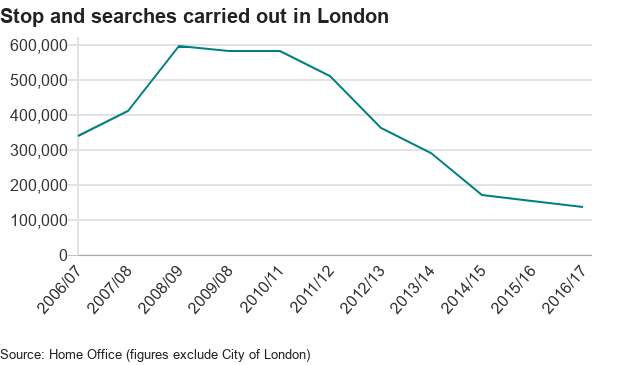
Line graph showing falling stop and searches in London
There's been a big fall in the number of people being stopped and searched by police in England and Wales since 2010. This was after reviews of the policy called for a more "fair and proportionate use of the power".
But there hasn't been a comparable fall in the number of people being arrested after being stopped and searched. This suggests that the police are now more likely to stop and search people who were then found to be committing a crime than they were in 2010.
In fact, the latest figures we have show the year to March 2017 features the highest rate of police stops leading to an arrest since the data was first collected (17%). In 2010, 9% of police stops resulted in an arrest.
When it comes to arrests specifically for the possession of firearms and other offensive weapons, the rate is even higher. Last year about 20% of police stops where possession of a weapon was suspected resulted in an arrest. In 2010, the rate was half that.
Chemical security

Russian spy: Labour criticises Boris Johnson's poisoning response


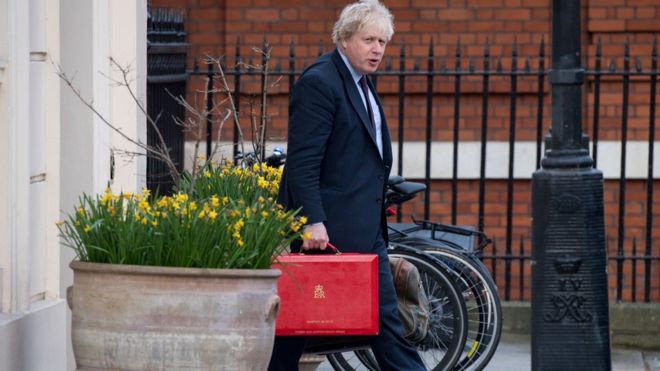
Boris Johnson
Labour has criticised Foreign Secretary Boris Johnson over his response to the poisoning of an ex-Russian spy and his daughter in the UK.
Shadow home secretary Diane Abbott said Mr Johnson had "misled the British public" and leader Jeremy Corbyn said he may have exaggerated when pointing the finger at Russia.
The UK government has repeated its belief that Russia was behind the "brazen and reckless act".
Moscow denies any involvement.
The international chemical weapons watchdog is meeting at The Hague to discuss the incident.
International security

China Military Tells Russia 'We've Come to Support You' Against U.S.


RussiaChinamilitarymeeting
China's military leadership has pledged its support to Russia as tensions between Moscow and the West further deteriorate into diplomatic isolation, economic sanctions and dueling defense drills.
In his first visit to Russia, newly appointed Chinese Defense Minister Wei Feng attended the seventh Moscow International Security Conference accompanied by a delegation of other high-level military officials. Emphasizing that his trip was coordinated directly with Chinese President Xi Jinping, Wei said that he had two major messages for Russia at a time when both nations were attempting to modernize their armed forces and strengthen their hands in global affairs in spite of U.S. fears.
Border security

Troops on the border: Trump ups ante in immigration battle


Troops on the border: Trump ups ante in immigration battle
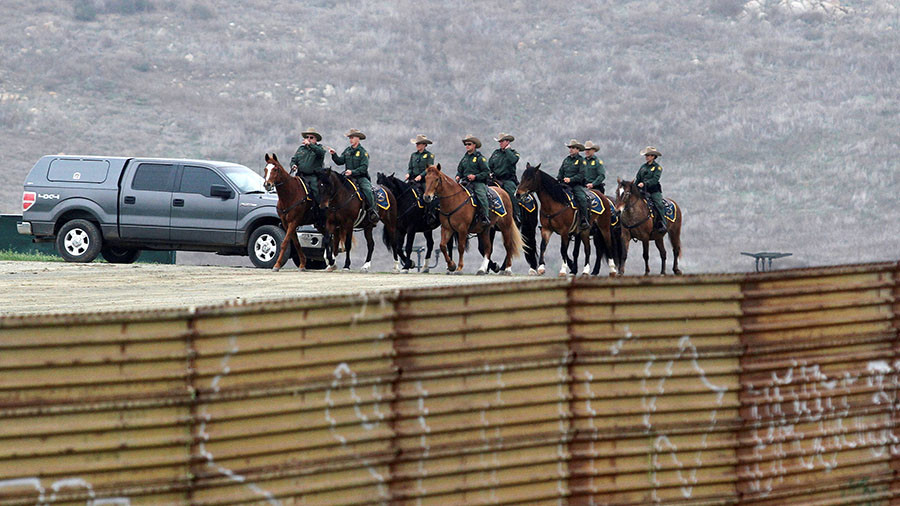
Until the wall along the border with Mexico can be built, US troops will be deployed to prevent illegal crossings, President Donald Trump has announced.
“Until we can have a Wall and proper security, we’re going to be guarding our border with the military,” Trump said on Tuesday, at a working lunch with presidents of Estonia, Latvia and Lithuania at the White House.
“We cannot have people flowing into our country illegally, disappearing, and by the way, never showing up for court,”the US president added.
No details were made available about the possible troop deployment. Trump said he had discussed the deployment with US Defense Secretary James Mattis, who was present for the talks with the Baltic leaders about bolstering the security along their borders with Russia.
Trump’s electoral promise to build a “big, beautiful Wall” along the southern US border ran into a roadblock last month, when a $1.3 trillion omnibus spending bill allocated only $1.6 billion towards repairing existing border fences. Many of Trump’s supporters were outraged, accusing the president and his party of caving to opposition Democrats.
Biosecurity

'Nightmare bacteria' cases seen in 27 states, CDC reports

This image depicts two mustard-colored, rod-shaped carbapenem-resistant Klebsiella pneumoniae (CRKP) bacteria interacting with a green-colored, human white blood cells.
More than 220 cases of a breed of “nightmare bacteria” with new or rare antibiotic-resistant genes, have been found in 27 states, the U.S. Centers for Disease Control and Prevention said in a report released Tuesday.

The CDC has warned of the antibiotic-resistant bacteria for years, but these “nightmare bacteria” are “virtually untreatable” and capable of spreading genes that make them “impervious” to most antibiotics, Scientific American reported.

The nightmare bacteria that are resistant to almost every drug are particularly deadly in the elderly and people with chronic illnesses, as up to 50 percent of the resulting infections are fatal, Dr. Anne Schuchat, the CDC’s principal deputy director, told the magazine.


Schuchat said at news conference that the CDC was working to get “in front of them before they do become common,” Live Science reported.

“We have data showing an aggressive approach works” to halt the spread of these new threats, she said.

About 2 million Americans get sick from antibiotic-resistant bacteria each year and 23,000 die, the CDC reported.
Chemical security

Russian spy: Chemical watchdog to meet at Russia's request


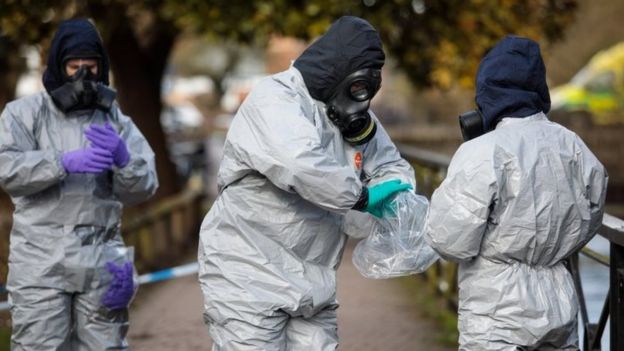
Police officers in protective suits and masks work near the scene
The world's chemical weapons watchdog is to meet in the Hague and discuss the poisoning of a former Russian spy and his daughter in the UK.
The emergency session was called by Russia, who denies being behind the attack and wants the UK to share evidence.
But the UK government says the only "plausible explanation" is that Russia is to blame.
The incident has sparked a deep diplomatic rift.
On Tuesday the UK's Porton Down laboratory said it could not verify the precise source of the nerve agent used against Sergei Skripal and his daughter Yulia.
The laboratory, which has previously identified the substance as a military-grade Novichok nerve agent, said it was likely to have been deployed by a "state actor" but said it was not their job to say where it was manufactured.
Outer space

Cybersecurity and the New Era of Space Activities


Outer space has been a national security priority for spacefaring nations since the 1950s. Governments started space programs for intelligence, military, political, and scientific purposes and developed countermeasures against space-based threats from rivals, such as anti-satellite capabilities. Countries managed security competition by banning weapons of mass destruction in space and cooperating on peaceful uses of space. Government programs catalyzed private-sector adaptation of dual-use technologies to provide satellite communication services.

Despite the importance of satellites, the U.S. General Accounting Office concluded [PDF] in 2002 that efforts on critical infrastructure protection did not include the satellite industry, but should do so. Similarly, cybersecurity has not been a priority in government and private-sector space endeavors. One leading analysis [PDF] asserted that cybersecurity discussions often overlook space activities’ vulnerability to cyberattack. For example, neither the UN governmental group of experts (GGE) on outer space nor the UN GGE on cyberspace addressed the convergence of their respective agendas.
Drug smuggling

Drug and Migrant Smuggling Across the US-Mexico Border: An Interview With Natalia Mendoza

When it comes to policy issues at the center of the U.S.-Mexico relationship, drug trafficking and migrant smuggling are near the top of the list. Yet while President Trump is happy to make off-the-cuff comments about criminal aliens or dangerous drug traffickers, it’s much rarer to hear from people who have viewed these issues from the field.
Seeking to add an expert perspective to the debate, I reached out to Natalia Mendoza, an assistant professor in the Department of Sociology and Anthropology at Fordham University. She spent years living in the important smuggling hotspot of Altar in the Mexican state of Sonora while conducting ethnographic fieldwork on drug and migrant smuggling. Located along the Pacific Coast, it is the stopover point from drugs and people moving north from Sinaloa before crossing into the Arizona desert.
In this interview with Lawfare, Natalia describes how Altar’s community initially viewed drug trafficking and how the smuggling dynamics and business models evolved and centralized over the last decade. Today, the mafia “bureaucracies” and permanent militias present in Altar and other parts of Mexico control broad swaths of Mexican territory. Yet even as the conditions that led to their creation change, these groups show no signs of disappearing.
Drug smuggling

In a corner of Spain, a struggle to staunch drug smuggling
Three dozen clans are believed to be working in Campo de Gibraltar, a county of 268,000 that cradles the Bay of Algeciras. On a clear day, the contours of the coast of Morocco, the world's top producer of hashish, are visible across a busy shipping waterway at the mouth of the Mediterranean, just 30 kilometers (less than 19 miles) away.

A new generation of bolder gangsters is challenging underfunded law enforcement agencies, as local families watch their teenagers lured into a life of easy money.

Criminals that in the past dropped their few hundred kilograms of cargo in the sea as soon as they came across a customs surveillance boat are now ready to defend their bigger, bulkier shipments.

On land and at sea, traffickers use shuttle vehicles — SUVs or inflatable boats without cargo whose function is to mislead authorities and, increasingly, ram patrol cars and boats.

"The earlier generation had a respect for police uniform but there is now a new generation that has an absolute contempt for authority," says Juan Franco, the mayor of La Linea, "My worry is that these guys are armed and so far, they are not using them against civil guard or police agents, but that's the next step."
Electronic surveillance

Facial Recognition In China Is Big Business As Local Governments Boost Surveillance


Dozens of cameras meet visitors to the Beijing headquarters of SenseTime, China's largest artificial intelligence company. One of them determines whether the door will open for you; another tracks your movements.
The one that marketing assistant Katherine Xue is gazing into, in the company's showroom, broadcasts an image of my face with white lines emanating from my eyes, nose and corners of my mouth. It estimates I am a 37-year-old male (I'm 44) with an attractiveness score of 98.
"Is that a high or low score?" I ask Xue, whose digitized face shows that she is a 23-year-old female with an attractiveness score of 99.
"That's a very high score!" she exclaims.
Later Xue whispers to me that everyone receives high scores. This is one of SenseTime's many products, a marketing application that flatters you so that you'll buy merchandise selected for you based on data gleaned from your face. (The machine determines that a cheap brand of Chinese grain alcohol is something I'd likely buy).
Electronic surveillance

Homeland Security finds suspected phone surveillance devices in Washington

The Department of Homeland Security says it has identified suspected rogue cell tower simulators -- popularly known as Stingrays -- in Washington.The U.S. government has acknowledged the existence in Washington D.C. of what appear to be devices that could be used by foreign spies and criminals to track individual cellphones and intercept calls and messages, the Associated Press reported Tuesday.

In a March 26 letter to Sen. Ron Wyden, D-Ore., the Department of Homeland Security admitted that it "has observed anomalous activity in the [Washington D.C. area] that appears to be consistent with International Mobile Subscriber Identity (IMSI) catchers." DHS added that it had not determined the type of devices in use or who might have been operating them, nor did it say how many it detected or where.

However, a DHS official who spoke on condition of anonymity because the agency's reply to Wyden has not been publicly released told AP that the devices were detected in a 90-day trial that began in January 2017 with equipment from a Las Vegas-based DHS contractor, ESD America. The CEO of ESD America, Les Goldsmith, said his company has a relationship with DHS but would not comment further.


The use of what are known as cellphone-site simulators by foreign powers has long been a concern, but American intelligence and law enforcement agencies — which use such eavesdropping equipment themselves — have been silent on the issue until now.

Tuesday, April 3, 2018

Chemical security

Russian spy: Source of nerve agent 'not identified'


Sergei Skripal and his daughter Yulia
The precise source of the nerve agent used to poison a former Russian spy and his daughter has not been verified, according to the head of the Porton Down defence laboratory.
The research facility, which identified the substance in Salisbury as Novichok, said it was likely to have been deployed by a "state actor".
Chief executive Gary Aitkenhead dismissed Russian claims it might have come from the UK military laboratory.
Moscow denies any involvement.
"We have not identified the precise source, but we have provided the scientific info to [the] government who have then used a number of other sources to piece together the conclusions," Mr Aitkenhead told Sky News.
"It is our job to provide the scientific evidence of what this particular nerve agent is - we identified that it is from this particular family and that it is a military grade, but it is not our job to say where it was manufactured."
Sergei Skripal and his daughter Yulia were attacked with the nerve agent on 4 March.