Страницы

Friday, August 17, 2018

Nuclear security

Managing Pakistan’s Bomb: Learning on the job

Imran Khan, at the 2012 World Economic Forum. Photo by Remy Steinegger, World Economic Forum, swiss-image.ch/ .On Saturday, Imran Khan will be sworn in as the next prime minister of Pakistan. His has been a sudden and rapid rise to power; he first came into politics in the late 1990s with no experience and has never held any government office. In his first public address to the nation after winning the July election, with Pakistan’s economy near bankruptcy, Khan said, “The biggest challenge we are facing is the economic crisis.” While this may well be the most pressing issue, the biggest and most important challenge Imran Khan will confront as prime minister is something he did not mention at all in his speech—how to manage the Bomb. The lives and well-being of Pakistan’s 200 million citizens and countless millions in India and elsewhere depend on how well he deals with the doomsday machine Pakistan’s Army and nuclear complex have worked so hard to build.
Climate security

Most economic forecasts have a big blind spot: Climate change

Картинки по запросу climate changeClimate change is having a real impact, not just on the environment but on the economy too. And a growing body of research by economists and climate scientists shows that extreme weather will weigh on economic growth even more so in the future. But almost no mainstream economic forecasting model takes that into account, in an omission that some economists say could affect the accuracy of economic predictions going forward.
The most recent study to quantify the economic impact of the carbon emissions that spur climate change was featured last week in a brief by the Federal Reserve Bank of Richmond. By evaluating the performance of state economies in previous years, the report found that every one degree increase in average summer temperatures decreases annual state-level output growth by between 0.15 and 0.25 percentage points.
Drug smuggling

U.S. soldier charged with smuggling 90 lbs. of cocaine from Colombia to Florida

F-35s rest under a canopy 2014 at Eglin Air Force Base in Florida in 2014.
A decorated Special Forces soldier was arrested Monday for attempting to smuggle nearly 90 pounds of cocaine from Colombia into the U.S. on a military airplane, according to two defense officials.
Army Master Sgt. Daniel Gould, assigned to the 7th Special Forces Group, was arrested after Drug Enforcement Administration agents found 40 kilograms of cocaine in two backpacks on a military airplane in Colombia. A U.S. military official said a service member found the drugs on the plane while it was on the ground in Colombia and reported the discovery. The plane was bound for Eglin Air Force Base, near Fort Walton Beach, Florida.
Intel gathering

A critical top secret intel network needs to evolve

Military leaders are questioning what the next generation of the global top secret network might be.
Despite the fact that the Joint Worldwide Intelligence Communications System — the network used to share and discuss top secret information — is one of the best information tools the military and intelligence community have, it is being used far beyond its original intent.
Officials speaking at the DoDIIS conference Aug. 13 articulated that the JWICS was originally just for analysis and intelligence production by the IC.
Today, “it’s found its way into every element of our operations,” Gen. John Hyten, commander of Strategic Command, said. “In my command it’s a critical tool because it’s the conduit for intel assessments and reports that come to every decision the command [makes] … A lot of our command-and-control functions go through JWICS.”
Information security

Air Force vet facing ‘longest sentence’ ever for leaking to media

Prosecutors say a Georgia woman who pleaded guilty to mailing a secret U.S. report to a news organization faces the “longest sentence” ever for a federal crime involving leaks to the media.
Ex-National Security Agency contractor Reality Winner is scheduled for sentencing Aug. 23 by a federal judge in Augusta. She pleaded guilty in June.
Winner’s plea deal calls for a prison sentence of five years and three months. The judge isn’t bound by that agreement, and the charge carries a maximum penalty of 10 years.
Prosecutors said in a court filing Tuesday their recommended sentence is stiffer than punishments in prior leak cases.
Winner’s arrest last year was announced the same day The Intercept published a story on a classified NSA report on Russian hackers and the 2016 election. She is a former Air Force linguist who speaks Arabic and Farsi and had a top-secret security clearance.

Thursday, August 16, 2018

Innovations & technologies

DARPA Wants to Make Underground Maps on the Fly


Through the program, DARPA aims to develop a versatile technology that military personnel and first responders can use to better understand underground environments. Such systems could lead to breakthroughs in infrastructure inspection, mining, construction and archeology, it said.

The competition is divided into two parts: a systems track and a software track. Systems participants must build technologies that can navigate a physical test course while software teams would demonstrate products in a simulated environment.

Teams must prove their technologies’ worth in three different environments—underground tunnels, caves and urban infrastructure like subway systems—with scores based on speed, maneuverability, mapping accuracy and object identification. The program includes one-off demonstrations in each environment, and a final event that tests systems in all three spaces at once.

DARPA expects to award some $30 million to fund additional competition participants, and winners will receive an additional $4 million in prize money. Self-funded teams are also allowed to enter the contest.
Military

The Recruitment Problem the Military Doesn’t Want to Talk About


In April, the Army revised that number—downwards. Instead of recruiting 80,000, it announced that it would recruit 76,500 new soldiers. But even that number might be too high, as the Army notes that it’s recruited only 28,000 in the first six months of the year. The problem, it seems, isn’t that young people don’t want to join the Army—or any of the services—it’s that they can’t. And therein lies a paradox: for while the U.S. military represents the best in America (as its most senior officers claim), it doesn’t actually represent America. For that to be true, two thirds of our military would have to consist of obese, under-educated former drug users and convicted criminals.
Here’s the arithmetic: one in three potential recruits are disqualified from service because they’re overweight, one in four cannot meet minimal educational standards (a high school diploma or GED equivalent), and one in 10 have a criminal history. In plain terms, about 71 percent of 18-to-24-year-olds (the military’s target pool of potential recruits) are disqualified from the minute they enter a recruiting station: that’s 24 million out of 34 million Americans. The good news is that while the military takes pride in attracting those who are fit, educated, law abiding, and drug-free, they’re having difficulty finding them—manifestly because fewer of them actually exist.
Communication security

Malicious Eavesdropping – What Can Be Done Against it?

eaMobile devices contain access to all of our personal and corporate data. Eavesdropping is a prevailing threat among many on mobile phones, with technology capable of tracking users, listening to their conversations and even logging their application usage becoming more pervasive and easier to come by. There is an increase in attackers’ use of surveillanceware, which can be used to eavesdrop on people. The number and frequency of such incidents are substantial. Data Theorem has identified more than 100 million eavesdropping attempts on iOS and Android applications since its TrustKit release in 2015.
Moreover, telecom network conditions are not improving, with 4G subscribers across Europe and Asia exposed to the same threats as subscribers of previous-generation networks. It is the diversity in types of attacks that make building a strong defense against eavesdropping all the more challenging.
The list of dangers is growing, however, given the proliferation of the internet of things (IoT), many of which connect to or are accessible by mobile networks.
Communication security

Unknown Threat Posed by Satellite Systems

The satellite communications that ships, planes and the military use to connect to the internet are vulnerable to hackers that, in the worst-case scenario, could carry out “cyber-physical attacks”, turning satellite antennas into weapons.
A new research has found that a number of popular satellite communication systems are vulnerable to the attacks, which could also leak information and hack connected devices. The attacks, which are merely a nuisance for the aviation sector, could pose a safety risk for military and maritime users, the research claims.
The attack works by connecting to the satellite antenna from the ground, through the internet, and then using security weaknesses in the software that operates the antenna to seize control.
At the very least, the attack offers the ability to disrupt, intercept or modify all communications passed through the antenna, allowing an attacker to, for instance, eavesdrop on emails sent through an in-flight wifi system, or attempt to launch further hacking attacks against devices connected to the satellite network.
Opinion

Silence of the Lambs Clarice Starling FBIAn FBI negotiator who worked over 150 hostage cases shares the key to getting anyone to change their mind


  • Negotiate your salary, business deals, or relationships using the same strategies as an FBI agent: by navigating emotions and leveraging influence.
  • Influence is key to affecting someone's character or behavior without force or direct command.
  • In his book "EQ Applied," author Justin Barison explains how an FBI hostage negotiator, Chris Voss, used influence tonegotiate masterfully.
  • According to Bariso, managing an influential relationshiprequires three skills of emotional intelligence: self-awareness, self-management, and social awareness.
  • These skills can help you negotiate, persuade, and more effectively manage conflict in a variety of situations.

Wednesday, August 15, 2018

Economic security

The Dow just registered its longest stint in correction territory in nearly 60 years


The Dow Jones Industrial Average notched a dubious distinction on Wednesday, as U.S. equity benchmarks fell firmly lower.
The blue-chip benchmark failed to move 10% above the closing low hit earlier in the year, and has now spent the longest period in correction territory—131 trading sessions—since the 223 sessions in 1961, according to Dow Jones Market Data.
The Dow industrials DJIA, -0.54% stands now about 2.8% short of emerging from correction territory after hitting its 2018 closing low of 23,533.20 on March 23. It needs to close at 25,886.42 or above to achieve that. Some market-technician purists believe that an asset must put in a new high to officially emerge from correction phase. Other technicians say that a 10% gain from an asset’s low is sufficient to exit correction territory, a characterization that MarketWatch adheres to.
The Dow and the S&P 500 index SPX, -0.76% fell into correction territory, usually defined as a drop of at least 10% from a recent peak, on Feb. 8.


Electronic surveillance

Employee privacy at stake as surveillance technology evolves

cctv camera
Like it or not, employers have always been able to monitor workers. Company email isn't private, and phone calls often come with a familiar voice saying, "This call may be monitored or recorded for quality assurance." But today, the emergence of new technologies that lets businesses track, listen to and even watch employees while on company time is raising concern about "Big Brother" levels of surveillance.
Life on the job, privacy advocates fear, is rapidly turning into life under a managerial microscope.
Take Walmart, which recently patented a system that could take employee monitoring to a new level by letting the retail giant listen in on workers and customers. The patent filing, for a system Walmart calls "Listening to the Frontend," calls for the use of "sound sensors" to zero in on customers' shopping and check-out experience. It would also monitor specific noises, like the beeps of item scanners and rustling of bags, and even the conversations of workers and shoppers.
Drug smuggling

U.S. and Mexico to set up joint team to fight drug cartels

Cynicism 2
U.S. and Mexican law enforcement authorities will set up a joint team based in Chicago targeting the leaders and finances of drug cartels that ship opioids into the United States, aiming to stanch a spike in overdose deaths, officials said on Wednesday.

The announcement of a fresh effort at co-operation on security issues comes at a time of strained relations between the two neighboring countries and around four months before President-elect Andres Manuel Lopez Obrador, a left-leaning nationalist, is due to take power in Mexico.

Lopez Obrador has vowed to shake up Mexico’s war on drug cartels and wants to rewrite the rules, aides have said, suggesting negotiated peace and amnesties rather than a hardline strategy that critics say has only perpetuated violence.

He has also said he wants to reset relations with the United States, which have been rocky since Donald Trump became U.S. president.
Transportation security

Italy Bridge Was Known to Be in Trouble Long Before Collapse

As deaths from the bridge failure in Genoa rose on Wednesday to 39, it became clear that while the collapse was catastrophic, it was not exactly a surprise.

Years before part of the structure dissolved in a lethal cascade of concrete and steel, it required constant repair work, and experts in Parliament, industry and academia raised alarms that it was deteriorating and possibly dangerous.

Those warnings fueled an intense round of finger-pointing on Wednesday among political parties and the private company that operated the bridge, none offering an answer to a set of crucial questions that will not be answered quickly: Should everyone involved have anticipated a disaster of this scale? How were so many omens ignored? And how much of Italy’s aging, often neglected infrastructure is also at risk of failure?
Aerospace

'Su-35 Can See F-35 All Right': Military Expert Says US Jet 'Too Complex'

AMRAAM F-35
The US’ fifth generation F-35 stealth fighter is too expensive and will become less and less invisible as new and more sophisticated radars come along, Russian military expert Dmitry Drozdenko told Sputnik.
Too Complex
“The F-35 is a very complex system and, as such, it has lots of holes, bugs and other things, and it is very difficult to debug it. Like other problems, all this is because it is an excessively high-tech aircraft," Drozdenko said.
He mentioned the problems the F-35 has had with its radar-evading coating and the life support system for its pilots.
“The Americans tolerate this plane because it’s a very big and expensive business with contracts running into trillions of dollars. While they keep making the F-35as, the Americans are modernizing their 4++ generation F-18s and F-15s trying to bring them up to par with Russia’s Su-35,” he noted.
Sex abuse

U.S. clergy sex abuse revelation fuels push to reform assault laws

Hand Cuffs
The latest revelation of widespread child sexual abuse by Roman Catholic clergy has given impetus to efforts by legislators, including a Pennsylvania lawmaker who has said he was raped by a priest as a child, to make it easier to prosecute such cases.

State Representative Mark Rozzi, 47, said he has fought for years to give people who say they were sexually assaulted as children more time to report such crimes to police in Pennsylvania, one of 14 U.S. states considering bills to extend the statute of limitations for such offenses.

“We’re going to get what the victims want,” Rozzi said in a telephone interview on Wednesday, a day after a grand jury found that 301 priests had sexually abused about 1,000 children over the past 70 years in Pennsylvania.

Tuesday, August 14, 2018

Climte security

Extreme temperatures 'especially likely for next four years'

‘If the warming trend caused by greenhouse gas emissions continues, years like 2018 will be the norm in the 2040s, and would be classed as cold by the end of the century.’
The world is likely to see more extreme temperatures in the coming four years as natural warming reinforces manmade climate change, according to a new global forecasting system.
Following a summer of heatwaves and forest fires in the northern hemisphere, the study in the journal Nature Communications suggests there will be little respite for the planet until at least 2022, and possibly not even then.
Rising greenhouse gas emissions are steadily adding to the upward pressure on temperatures, but humans do not feel the change as a straight line because the effects are diminished or amplified by phases of natural variation.


Nuclear security

Radioactive sheep boost claims of secret Israeli nuke test


Radioactive sheep boost claims of secret Israeli nuke testRadioactive isotopes discovered by scientists in Australian sheep have added gravity to longstanding claims that a mysterious flash above the Indian Ocean 39 years was actually an illegal Israeli nuclear weapon test.
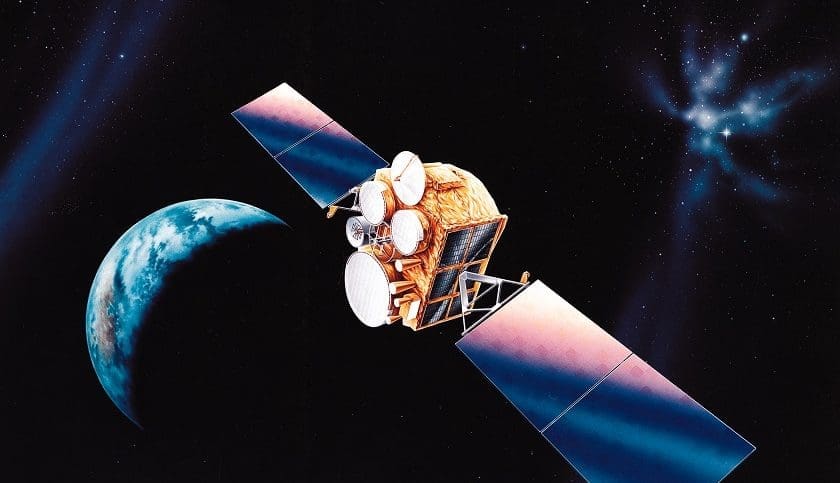
On September 22, 1979, US satellite Vela 6911 detected a ‘double flash’ near the Marion and Prince Edward islands in the southern Indian Ocean. Ever since, there have been speculations that it was actually a nuclear weapon test carried out by Israel. According to the memoirs of then-US President Jimmy Carter, this was also the assumption of American generals who briefed him on the incident. The official position of the Israeli state is to neither confirm nor deny having a homegrown military nuclear program.
Terror threat

Car rams U.K. parliament gate, driver suspected of "terrorist offences"


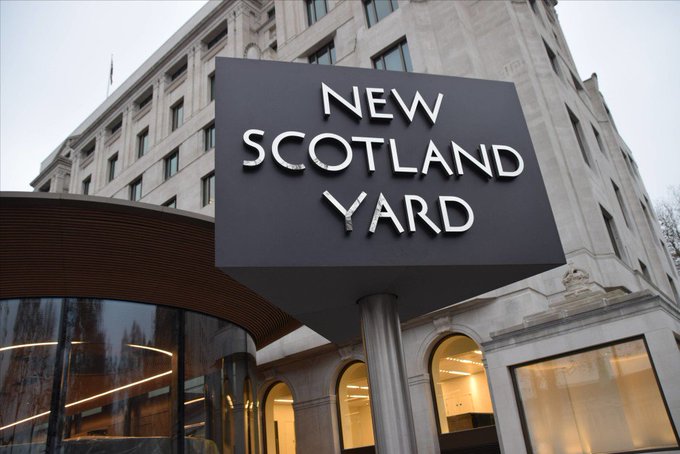
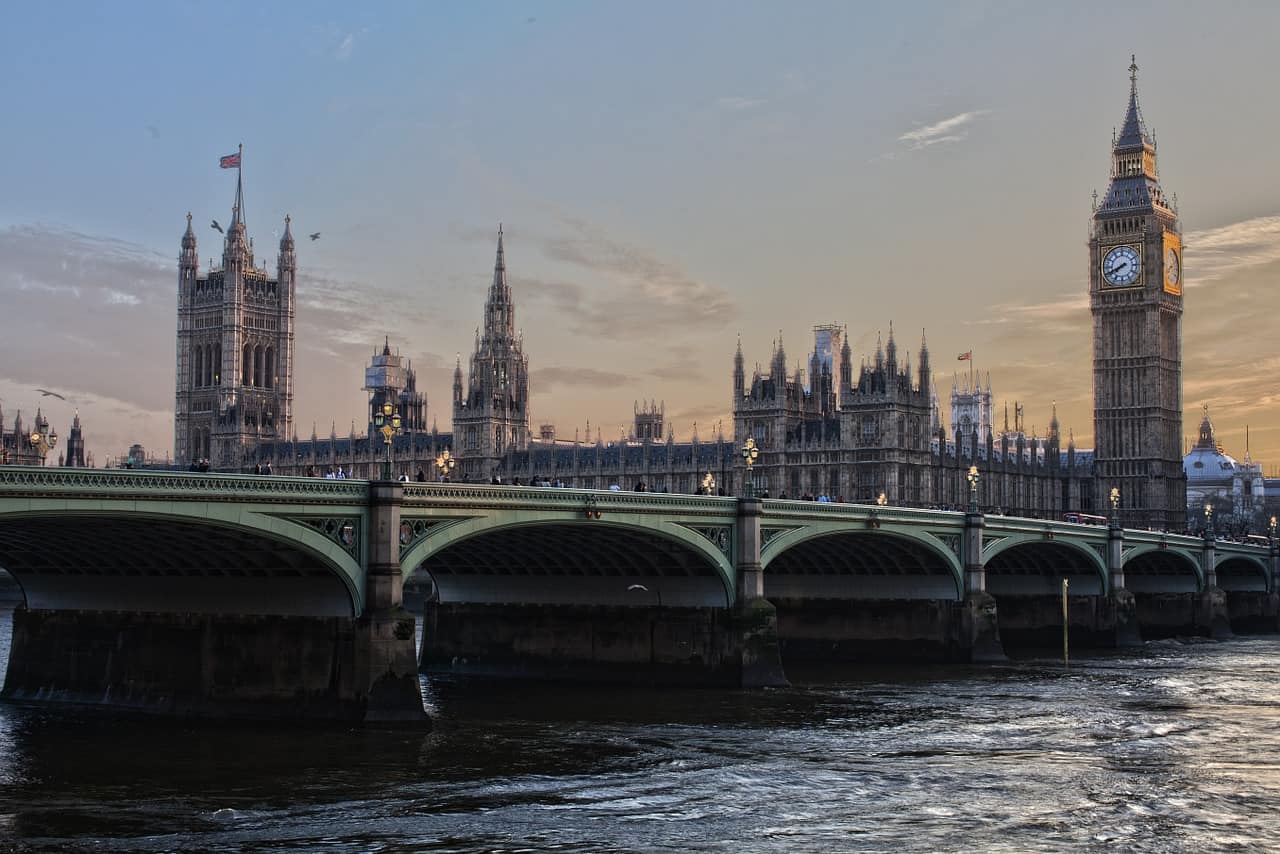
View image on TwitterLondon's Metropolitan Police said Tuesday that a man was under arrest on suspicion of terrorism after driving through a group of pedestrians and then ramming a gate outside the Houses of Parliament in the British capital. Police said they were treating the crash as a terrorist incident, and noted that the investigation was being led by their counter-terrorism division.
"The driver of the car, a man in his late 20s, was arrested at the scene by armed officers... He was arrested on suspicion of terrorist offences," the Metropolitan Police, also known as the Met and Scotland Yard, said in a statement, adding that there was nobody else in the vehicle at the time of the crash and that no weapons were found.
"At this stage, we are treating this as a terrorist incident and the Met's Counter Terrorism Command is now leading the investigation," the police said.
Intel gathering

The key to the intelligence in the future


If the Department of Defense’s intelligence operations are going to be successful in the future, the intelligence community must move from a descriptive model, in which analysts offer details on an event, to a predictive model, in which analysts describe what may happen, top defense leaders said Aug. 13.

“The ultimate goal of intelligence is not just to win wars. As President Eisenhower said, the only way to win the next war is to prevent it,” Lt. Gen. Robert Ashley, director of the Defense Intelligence Agency, said during an Aug.13 keynote presentation at the DoDIIS conference in Omaha, Nebraska.

The key challenge for intelligence operations today is to determine the indicators of an event that could take place and what is being missed, Ashley added. He noted the intelligence community has to move past descriptive intelligence — how high, how fast, how far — and be more predictive.
Drones

New Spy Drone Flies Non-Stop for a Month

New Spy Drone Flies Non-Stop for a MonthAirbus’s Zephyr solar-powered drone flew for 25 days straight during a test-flight over Yuma, Arizona beginning on July 11, 2018. The flight represented a record for aircraft endurance, breaking the previous 14-day record also set by a Zephyr back in 2015.
The long flight has big implications for military surveillance. Drones like Zephyr could loiter over a low-intensity battlefield far longer than current drones can do. The latest high-endurance Reaper drone maxes out at 40 hours in the air.
The propeller-driven Zephyr belongs to a class of aircraft known as “high-altitude pseudo-satellites,” or HAPs. Flying as high as 70,000 feet for weeks or even months at a time, HAPs perform many of the same missions that low-orbiting satellites do.
Cybersecurity

Russian Military Spy Software is on Hundreds of Thousands of Home Routers

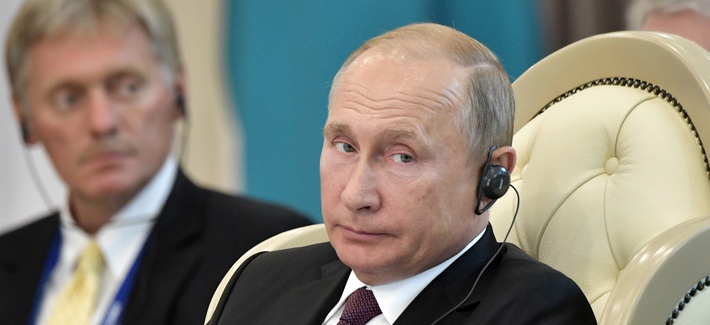
ussian President Vladimir Putin and presidential spokesman Dmitry Peskov, left, attend a meeting during the 5th Caspian summit in Aktau, the Caspian Sea port in Kazakhstan, Sunday, Aug. 12, 2018.
The Russian military is inside hundreds of thousands of routers owned by Americans and others around the world, a top U.S. cybersecurity official said on Friday. The presence of Russian malware on the routers, first revealed in May, could enable the Kremlin to steal individuals’ data or enlist their devices in a massive attack intended to disrupt global economic activity or target institutions.

On May 27, Justice Department officials asked Americans to reboot their routers to stop the attack. Afterwards, the world largely forgot about it. That’s a mistake, said Rob Joyce, senior advisor to the director of the National Security Agency and the former White House cybersecurity coordinator.

“The Russian malware is still there,” said Joyce.

On May 8, cybersecurity company Talos observed a spike in mostly Ukrainian victims of a new malware attack. Dubbed VPNFilter, the malware used code similar to the BlackEnergy tool that Russian forces have used (in modified form) to attack Ukrainian infrastructure. The U.S. intelligence community believes the culprits are the hackers known as APT 28 or Fancy Bear, Russian military operatives who were behind information attacks against the Democratic National Committee, State Department, and others. The new malware, if activated, could allow the Russian military to peer into the online activities of hundreds of thousands of people.
Defense spending

Trump signs bill named for Sen. John McCain, doesn’t mention him

President Donald Trump on Monday signed a $716 billion defense policy bill named for John McCain but included no mention in his remarks of the Republican senator, who is battling brain cancer at home in Arizona.

Trump and McCain are engaged in a long-running feud that dates to Trump’s 2016 presidential run. At campaign rallies, Trump regularly castigates McCain — without outright naming him — for casting a dramatic thumbs-down vote that doomed Trump’s effort last year to repeal the Affordable Care Act, which was enacted by President Barack Obama.

Trump said there was “no better place than right here at Fort Drum” to celebrate passage of the defense bill, which will boost military pay by 2.6 percent, giving service members their largest increase in nine years.
Arms trade

How would reforming conventional arms transfer policy bolster national security?

Last year was a strong one for the U.S. aerospace and defense industry, generating $865 billion in economic output and accounting for nearly 2 percent of the country’s gross domestic product. But reforming the conventional arms transfer, or CAT, policy could do even more for defense companies that bemoan the current arms transfer bureaucracy, sometimes criticized as sluggish and ineffective.

The overall security cooperation enterprise that reviews and approves all defense exports is comprised of various agencies in the departments of State, Commerce and Defense. The enterprise is understaffed and organized in a way that can make the approval process inefficient and redundant, which impedes the ability of the U.S. to engage with allies and partners. In April, the Trump administration issued a national security presidential memorandum, adjusting the arms transfer rules and priorities and requesting an implementation plan for the changes within 60 days.
Military spending

NATO's East Is Rearming, But It's Because of Putin, Not Trump


Картинки по запросу nato
Donald Trump has taken credit for a rise in military spending by NATO states, but in the alliance’s eastern reaches, it’s his Russian counterpart, Vladimir Putin, who’s driving the rearming effort.
Last month, North Atlantic Treaty Organization Secretary General Jens Stoltenberg thanked the U.S. President for “clearly having an impact” on defense spending by allies while Trump said his demands had added $41 billion to European and Canadian defense outlays.
But the jump in acquisitions behind the former Iron Curtain of aircraft, ships and armored vehicles began when Russia annexed Crimea from Ukraine, well before Trump’s 2016 election victory, according to analysts including Tomas Valasek, director of Carnegie Europe in Brussels. While the median defense expenditure of NATO members is 1.36 percent of gross domestic product, below the alliance’s requirement of 2 percent, eastern members comprise seven of the 13 members that are paying above that level.
Transportation security

Motorway Bridge Collapses in Northern Italy, Dozens Dead (PHOTO, VIDEO)

A motorway bridge has collapsed in the northern Italian city of Genoa, the Rainews24 broadcaster reported on Tuesday.
Several cars could have fallen down, according to the broadcaster. A rescue team is currently at the scene of the incident. The bridge has been closed to traffic.
At the same time, the head of the local ambulance service said there were "dozens of dead", Italian news agency Adnkronos reported. According to the local fire brigade, the bridge collapsed at around 11:30 a.m. local time during torrential rainfall.

Monday, August 13, 2018

Navy

These 5 Submarines Could Destroy Entire Countries. Here Is What They Can Do.

Columbia-class Ballistic Missile Submarine

The Ohio-class submarine is an aging design despite its formidable capabilities and the first of the class are reaching the end of their 42-year service lives. To replace the Ohio-class, the United States Navy is building the new Columbia-class boomer. The new SSBNs are slightly larger than the Ohio-class at a displacement of 20,800 tons, but the vessels only have 16 Trident II D5 missiles onboard. Most of the vessels’ massive size is taken up by a new life-of-the-boat reactor and permanent magnet motor drive, which while extremely quiet, is also enormous. The new vessels are largely based on technology from the Virginia class attack submarines and leverages many of the smaller boats’ systems. Indeed, in some respects, the Columbia is an enlarged advanced derivative of the excellent Virginia-class design. Construction will start in 2021 while the first boat will enter service in 2031.
Finacial safety

FBI warns banks about potential ATM hacking scheme

cashbox - ATM1
The FBI is warning financial institutions that their ATMs could be targeted in a hacking attempt.

The threat was reported Sunday by Krebs On Security, a popular cybersecurity blog run by the journalist Brian Krebs.

Krebs reported that the scheme is known as an "ATM cash-out," which means the attackers can hack a bank or payment card processor and use stolen information to withdraw large sums of money at ATMs worldwide. His report cited a confidential alert the FBI shared with banks last Friday.

The FBI did not comment specifically on this potential attack. In a statement to CNN, a spokeswoman said that "in furtherance of public-private partnerships, the FBI routinely advises private industry of various cyber threat indicators observed during the course of our investigations."
Poll results

1 data point that should make Democrats nervous
That's the finding of a new Gallup Poll that showed that 57% of Democrats (and Democratic leaning voters) have a positive view of socialism, while just 47% of Democrats (and Democratic leaners) have a positive view of capitalism. That's the first time in the last decade of Gallup data -- they've asked the question a total of four times -- that socialism has passed capitalism in the eyes of Democrats. (Republicans are less sanguine about socialism, with just 16% holding a positive view of it while 71% have a favorable opinion of capitalism.)
Numbers like that come as a strain of socialism grows stronger within the Democratic Party -- as evidenced by Bernie Sanders' surprisingly strong showing in the 2016 Democratic presidential primary process and the stunning upset of Rep. Joe Crowley, D-New York, by Alexandria Ocasio-Cortez. Both Ocasio-Cortez and Sanders refer to themselves as democratic socialists.
    "Democrats are a big tent party," Ocasio Cortez told NBC's Chuck Todd earlier this summer when asked about her alignment with socialism. "I'm not trying to impose an ideology on all several hundred members of Congress. But I do think that once again it's not about selling an ism, or an ideology, or a label or a color, it's about selling our values."
    War on terror

    UK Expert Discusses Preventing Terrorism, Limits of Deportation, and Radicalized Children


    Security versus civil liberties. How to safeguard the population from the actions of terrorists, while at the same time preserving fundamental rights such as freedom of speech, movement and association? This is the age-old debate that lies at the heart of counter-terrorism (CT) in liberal democracies. The precise balance varies from country to country and across time but in the aftermath of attacks it is particularly likely to tip in favour of security, sometimes at the expense of certain liberties.
    The UK is no stranger to terrorism, but – similar to many other countries around the world – it has been on a heightened state of alert since 2014 when ISIS declared its caliphate, and last year the UK was rocked by a string of successful attacks, resulting in 36 fatalities [1]. Within days of the attack on London Bridge and Borough Market in June 2017, Prime Minister Theresa May declared that “If human rights get in the way of [new measures to counter-terrorism], we will change those laws to make sure we can do them” [2]. But although strong powers may well be appropriate, the danger in adopting such a stance is that we end up sacrificing our way of life and playing into the terrorists’ hands. Indeed, a key part of terrorist strategy is to deliberately provoke a heavy-handed response that only adds fuel to the fire [3]. In striving to maintain balance, the British government relies –at least in part– on the Independent Reviewer of Terrorism Legislation (IRTL).

    Sunday, August 12, 2018

    Military

    Italy's Salvini announces possible return of military conscription

    Italy's Interior Minister and deputy Prime Minister Matteo Salvini
    Italy is considering reinstating compulsory national service for its restless young citizens, according to its hardline interior minister. Matteo Salvini, Italy's deputy prime minister and interior minister, called for a return to military service on Saturday, saying: “Above and beyond 'rights' I would like to see a return to there being 'duties'".

    Speaking at a rally in Lesina, Puglia, he added: “We are doing well to study the costs, ways and timings for evaluating if, how and when to reintroduce – for a few months – obligatory military and civil service to our boys and girls, so at least they learn a bit of 'education' that mom and dad are not capable of teaching them.”

    Mr Salvini has repeatedly expressed his support for compulsory military service, both as a tool for social cohesion and integration, we well as for training young people to use arms responsibly.
    Climate security

    Ignore the climate change deniers. California's hellish summer really is a grave warning

    Ignore the climate change deniers. California's hellish summer really is a grave warning
    Wind-swept wildfires raging. Homes incinerated. Families displaced. Lives lost.

    In the long, hot, smoky California summer of 2018, as we camp under ash-hued sunset skies, the scariest thought is that the future has arrived, and more intense weather extremes will continue to wreak havoc in years to come. Not just in summer, but with drought-deluge cycles and higher temperatures even in cooler months.

    Last week, an 81-year-old Van Nuys resident told me that sure, summers have always been hot, but lately they seem to have been imported from Palm Springs.

    Near Santa Cruz, a winery owner told me there are fewer foggy days and more high temperatures, shrinking what have long been prime grape-growing regions.

    But not everyone is alarmed, it turns out, which I’ve discovered since my July 18 column on climate change. Reaction has fallen into the following categories:

    There is no climate change, and I’m a stooge to have fallen for a hoax.

    Global warming exists, but it’s not man-made.