Страницы

Tuesday, December 30, 2014

International Security

Washington and NATO are not seeking confrontation with Russia, but will not compromise on international principles vital for European and US security, Pentagon spokesperson Lt. Col. Vanessa Hillman said
US, NATO Unwilling to Raise Tensions With Russia: Pentagon
© Sputnik/ David B. Gleason
03:14 31.12.2014(updated 03:41 31.12.2014)

Pentagon spokesperson said that Washington and NATO are not seeking confrontation with Russia.
WASHINGTON, December 31 (Sputnik) – Washington and NATO are not seeking confrontation with Russia, but will not compromise on international principles vital for European and US security, Pentagon spokesperson Lt. Col. Vanessa Hillman told Sputnik commenting on Russia's revised military doctrine.
"The United States is reviewing Russia's new military doctrine. Neither the United States nor our NATO allies are a threat to Russia, and for more than two decades, NATO worked to build a partnership with Russia. The United States and its NATO allies do not seek confrontation with Russia," Hillman said on Tuesday.
The spokesperson noted that Russia's alleged actions in Ukraine challenged US vision of the peace in Europe, and stressed the importance of adherence to the Minsk agreements by all parties involved.
"It is incumbent upon Russia to comply with international law and its international obligations and responsibilities. We will not compromise on the rules-based international order and principles on which security in Europe and North America rest, of which NATO is a key component," Hillman stated.
The West and Kiev are accusing Russia of providing aid to pro-independence forces in eastern Ukraine and even of a direct military intervention in Ukraine. Moscow has dismissed the accusations as groundless.
The new doctrine, signed by Russian President Vladimir Putin on December 26, highlighted NATO's military build-up and the bloc's expansion toward the Russian borders among the main external threats to the national security.
Furthermore, for the first time ever the doctrine named the protection of national interests in the Arctic among the main priorities for Russian armed forces in times of peace.
Hillman noted that the United States has a clear interest in preserving stability, security and cooperation in the Arctic, as outlined in the US National Strategy for the Arctic Region.
"The Arctic is a harsh environment that rewards cooperation, not confrontation. And I trust we will continue to see cooperation there as we work with the other Arctic nations on shared concerns, such as search and rescue and oil spill response preparedness," she said.
Other external threats listed in the doctrine include the development and deployment of strategic missile defense systems, the implementation of the 'global strike' doctrine, plans to place weapons in space as well as the deployment of high-precision conventional weapons systems.

According to the document, Moscow reserves the right to use nuclear weapons in response to the use of nuclear weapons or any other types of weapons of mass destruction against Russia or its allies, as well as in the case of an attack with conventional weaponry that threatens the existence of the state.
Among the main internal threats, the document listed "activities aimed at destabilizing the situation in the country", terrorist activities to harm sovereignty and territorial integrity of Russia, and actions involving anti-patriotic propaganda.
Russia's military doctrine remains purely defensive in nature, the document emphasized.


Territory Security
Israel's oil drilling in Golan criticised


Drilling for oil in occupied Golan is part of a larger plan to increase Israeli settlement activity, rights groups say.
Creede Newton and Patrick StricklandLast updated: 30 Dec 2014 07:33

Israeli oil and gas company, Afek, has been granted a license to drill for oil in annexed Golan Heights [Getty Images]

Southern Golan Heights - Heavily subsidised Jewish-only settlements, large Israeli military areas and tanks dot the rolling green hills in this part of the Golan Heights; Syrian territory occupied by Israel since the 1967 Middle East war.
In addition to the ubiquitous signs warning of landmines, remnants of Syrian life are everywhere; bombed-out homes, dilapidated schools, crumbling hospitals. Most of the region's indigenous Syrians - an estimated 90,000 Christians, Muslims and Druze - were expelled from the 70 percent of the Golan Heights under Israeli control.
Today, only some 20,000 Syrian Druze live in six villages still standing in the territory, while more than 21,000 Israeli settlers reside in dozens of Jewish-only colonies built atop villages demolished after the war.
It is here that Afek Oil and Gas, an Israeli company, has been granted exclusive license to conduct exploratory drilling for oil. Afek is a subsidiary of Genie Energy Limited, a New Jersey-based company for which former US Vice President Dick Cheney is an adviser.
On September 11, Afek won approval to conduct exploratory drilling in 10 possible locations throughout the Syrian territory. Shortly thereafter, the Israeli High Court froze Afek's efforts due to a petition submitted by environmental activists. The petition remains undecided. 


Industrial Security

 Policemen and medical staff gather outside a damaged factory after an explosion in Foshan, Guangdong province, December 31, 2014
Explosion at Southern Chinese Factory Kills 17, Injures 20: Reports
© REUTERS/ Stringer
09:01 31.12.2014(updated 09:34 31.12.2014)
3800
An explosion took place in the Fuwa Engineering Manufacturing facility, in the city of Foshan, Shunde District, in China's Guangdong Province, killing 17 people and injuring 20 others.

MOSCOW, December 31 (Sputnik) — An explosion took place in southern China, killing 17 people and injuring 20 others, Xinhua reported Wednesday.
The news outlet reported that the explosion occurred in the Fuwa Engineering Manufacturing facility, in the city of Foshan, Shunde District, in China's Guangdong Province, on Wednesday morning. Those injured have been admitted to local hospitals, Xinhua said.
In August, an explosion at Zhongrong Metal Production Company in Jiangsu Province, eastern China, was reported to have killed over 70 people, with more than 180 injured. Media reports this week have revised the death toll of the August explosion upwards to 146.


Search Operation
Sonar spots ‘large object’ in AirAsia search
Indonesian Navy ship KRI Yos Sudarso takes part in the search operation for missing AirAsia Flight QZ8501. (Reuters)
By Al Arabiya with Agencies | Pangkalan Bun, Indonesia
Wednesday, 31 December 2014
A sonar image showing a large, dark object under the sea was presumed to be the missing AirAsia plane, an official with Indonesia’s search and rescue agency said on Wednesday.
“It’s about 30-50 meters under water,” said the official, Hernanto.
Crews are standing by to collect and identify bodies from the plane that crashed on Sunday during bad weather on a flight from Indonesia to Singapore.
“We are praying it is the plane so the evacuation can be done quickly,” Hernanto said.
The massive hunt for the 162 victims of Flight 8501 resumed in the Java Sea on Wednesday, with six bodies, including a flight attendant identified by her trademark red uniform, recovered. But wind, strong currents and high surf hampered recovery efforts as distraught family members anxiously waited to identify their loved ones.
Three bodies were retrieved Tuesday, while the others were found after the search resumed Wednesday morning, said Indonesia's Search and Rescue Agency chief Henry Bambang Soelistyo.

On Tuesday, the number had varied with different officials saying as many as six corpses had been discovered.
A crew member of an Indonesian Maritime Surveillance plane says a prayer before a search mission to look for AirAsia's Flight QZ8501 in Pangkal Pinang, Bangka island. (Reuters)
He said half of those found were male and half female, including the flight attendant.

The first proof of the jet's fate emerged Tuesday in an area not far from where it dropped off radar screens. Searchers found the bodies and debris that included a life jacket, an emergency exit door and a suitcase about 10 miles from the plane's last known coordinates.

On Wednesday, divers were deployed, but heavy rain and clouds grounded helicopters, said Soelistyo.

Members of the Search and Rescue Agency carry debris recovered from the sea presumed from missing Indonesia AirAsia flight QZ 8501. (Reuters)
The airliner's disappearance halfway through a two-hour flight between Surabaya, Indonesia, and Singapore triggered an international search for the aircraft involving dozens of planes, ships and helicopters. It is still unclear what brought the plane down.

The plane needs to be located and its cockpit voice and flight data recorders, or black boxes, recovered before officials can start determining what caused the crash.
Family members of passengers onboard AirAsia flight QZ8501 react at a waiting area in Juanda International Airport. (Reuters)
Images of the debris and a bloated body shown on Indonesian television sent a spasm of anguish through the room at the Surabaya airport where relatives awaited news.

The first sign of the jet turned up about 10 miles (16 kilometers) from its last known coordinates. Parts of the interior, including the oxygen tank, were brought to the nearest town, Pangkalan Bun. Another find included a bright blue plastic suitcase, completely unscratched.


War on Terror

US MQ-9 Reaper drone in flight

UAV Strikes to Continue in Afghanistan Despite Mission End: Former Official
© Photo: US Air Force / Staff Sgt. Brian Ferguson
01:32 31.12.2014(updated 02:51 31.12.2014)
10900
Former CIA official claims that US drone strikes targeting the Taliban and other insurgent groups will continue despite the official end of NATO combat operations in Afghanistan.

WASHINGTON, December 31 (Sputnik) – US drone strikes targeting the Taliban and other insurgent groups will continue despite the official end of NATO combat operations inAfghanistan, a former CIA official told Sputnik.
“The current transition in the NATO operation presumably means there will be less overall kinetic activity by any foreign forces in Afghanistan, but there probably will continue to be some US operations, especially with unmanned aerial vehicles [drones],” Paul Pillar, a 28-year veteran of the CIA, currently a fellow at Georgetown University, said on Tuesday.
Pillar said that the mission has been gradually losing the Afghan people's support due to heavy civilian death toll of NATO military operations.
"We missed opportunities to find an off-ramp and subsequently found ourselves in a prolonged war in which support from the Afghan people has declined. The collateral casualties have much to do with that declining support," he said.
Civilian casualties – or collateral damage – have been a major political issue between the Afghan government and NATO's International Security Assistance Force (ISAF). In the first 11 months of 2014, 3,188 civilians were killed and 6,429 wounded, the highest numbers since the United Nations started issuing reports in 2009.
A report published this week by the German newspaper Spiegel analyzing documents from whistleblower Edward Snowden revealed that NATO forces in Afghanistan not only conducted airstrikes against the Taliban leadership but also routinely targeted mid- and lower-level group members, leading to more civilian deaths.
However, Pillar argued that there is no "magical distinction" between high- and low-level targets in counterinsurgency operations.

“The procedures that NATO forces have used to vet targets and to determine who is or is not part of the insurgency appear to be thorough and careful procedures,” Pillar noted.
On December 28, the US-led NATO coalition formally ended its 13-year military campaign in Afghanistan. However, US President Barack Obama said earlier this week that around 10,000 US troops will remain behind in a train and support role as the Taliban and other insurgent groups still threaten Afghanistan.

 Sentry Point Security
Security beefed up at London royal guard posts
By AFP | AFP – 19 hours ago

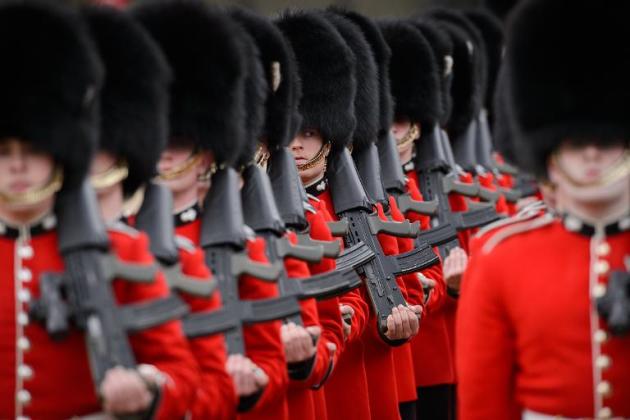
 Royal guards, who are soldiers in British cavalry and infantry units, are a popular tourist attraction due to their brightly-coloured uniforms, bearskin hats and gleaming helmets
AFP/Pool/AFP/File - Royal guards, who are soldiers in British cavalry and infantry units, are a popular tourist attraction due to their brightly-coloured uniforms, bearskin hats and gleaming helmets
Security has been stepped up at royal guard posts in London including the sentry points on Whitehall where tourists from around the world take pictures of stern-faced guardsmen on horseback.
An armed police officer was seen next to the famous horse guards this week in what British media said was a response to recent concerns over Islamist militants.
The Mail on Sunday newspaper quoted an officer on duty at the Horse Guards Parade on Whitehall saying: "We are a recent addition here. It's us guarding the Guards."
Royal guards were also seen patrolling behind the gates of nearby Clarence House, the official residence of heir to the throne Prince Charles and his wife Camilla, instead of in front of them on a public road as before.
At St James's Palace, where Queen Elizabeth II's daughter Princess Anne and granddaughters Princesses Beatrice and Eugenie live, the guards had apparently been moved from the main gates to an inner courtyard.
British media reported that armed officers had also been deployed next to the royal guard outside Windsor Castle, another residence used by the royal family.
Contacted by AFP, the police and the defence ministry declined to comment on security matters.
Royal guards, who are soldiers in British cavalry and infantry units, are a popular tourist attraction due to their brightly-coloured uniforms, bearskin hats and gleaming helmets.
A soldier at Buckingham Palace earlier this year pointed his bayonet-fixed rifle at a member of the public after an argument erupted at the gates.
The soldier left his post to intervene when a man refused to stop shouting at a police officer manning the gates of the monarch's London residence.
In January, a man was jailed for 16 months for trying to storm the palace armed with a knife to complain to the queen about his welfare payments.
The most serious breach at Buckingham Palace came in 1982 when unemployed man Michael Fagan got inside the queen's private chambers while she was in bed.
Fagan, who had climbed over the palace walls and scaled a drainpipe, spent 10 minutes talking to the sovereign before she was able to raise the alarm.


International Security
2014: RUSSIA'S FOREIGN AFFAIRS TAKE CENTER STAGE
By Ivan Nechepurenko
The St. Petersburg Times
Published: December 29, 2014 (Issue # 1843)


Despite the enormity of the effort, which cost Russia more than $50 billion, the attempted charm offensive of the Sochi Olympic Games failed to sway either hearts or minds.
Photo: Republic of Korea / Flickr

A year that began in a flash of Olympic glitz and glory is ending on a much darker note, amid an economic meltdown aggravated by plummeting oil prices and the tensest diplomatic standoff between Russia and the West since the Cold War.
Looking back upon a truly memorable year, The St. Petersburg Times has compiled a list of the top six affairs that shaped Russia's foreign policy trajectory in 2014.

Sochi's Failed Charm Offensive

In hosting the 2014 Olympic Games in Sochi, Russia strived to present itself as a modern, attractive country bursting with opportunities. As spectators and athletes milled into the Olympic Park, they were greeted by a massive poster boasting the English-language logo: "Russia: Great, New, Open."

Despite the enormity of the effort — and it truly was enormous, ultimately costing Russia more than $50 billion — the attempted charm offensive failed.

Western media coverage of the games consisted of the occasional ounce of awe over Russian achievements, watered down by endless steams of condemnation over everything from corruption to gay rights and controversial policies, including the alleged mass extermination of stray dogs in Sochi.

The strongest indication that the Sochi Olympics lacked the desired outcome can be seen in how quickly the international community seems to have forgotten about them. But one detail of the games seems particularly notable in retrospect: U.S. President Barack Obama's decision to skip the games illustrates that relations between the two superpowers had already begun to pale well before the annexation of Crimea.

Crimea Annexation

The crisis in Crimea will go down as one of the year's most crucial events worldwide. By annexing the Crimean Peninsula in March, Russian President Vladimir Putin boldly pushed his grip on power within Russia, as well as the country's relations with the West, past the point of no return.

Russia can back away from the conflict in Donbass, but it cannot do so with Crimea. Putin will never turn his back on the peninsula because he owes it so much political capital. After the annexation, his approval ratings within Russia surged to unparalleled highs — 81 percent of Russians still support the Crimea annexation, according to a poll conducted by the Levada Center last week.


Financial Safety
Russian Ruble Seesaws as Oil Prices Fall, Exporters Sell Dollars
Reuters
Dec. 30 2014 16:48
Last edited 16:49
Sergei Karpukhin / ReutersPeople queue to enter a currency exchange office in Moscow on Dec. 29, 2014.

The Russian ruble staged an uncertain recovery on Tuesday as traders saw modest foreign-currency sales on the final day of trading before the New Year holidays.
At 3:30 p.m. in Moscow, the ruble was around 2.6 percent stronger against the dollar at 56.81 rubles per dollar and 2.1 percent firmer against the euro at 69.52.
Within the first hour of trading, the ruble had surged to trade as much as 6 percent higher against the U.S. currency, before sliding back into negative territory and then rising once more.
The Russian currency has swung wildly in recent weeks after the Central Bank floated it and panic gripped the market, threatening to shatter the economic prosperity on which President Vladimir Putin's popularity partly rests.
"We think that state companies were 'explicitly recommended' to sell foreign currency today so that the ruble ends the year on a beautiful note," said Vladimir Miklashevsky, a trading desk strategist at Danske Bank.
"Today the authorities will do everything so that the ruble ends below 60 [to the dollar], whatever happens,” he said.
A forex trader at a Russian bank said the Central Bank was unlikely to have intervened on Tuesday, citing the small volumes that were moving the market.
"Our market is very thin ahead of the New Year's holidays. With just $700 million in tomorrow trades, the ruble had moved by over 5 percent," the trader said.
Analysts at Nordea Bank said the early surge was probably driven by forex sales by one of Russia's state exporters, which were recently ordered to sell part of their overseas revenues to support the ruble.
A Finance Ministry official was unable to immediately say whether the ministry had sold foreign currency left over on its accounts on Tuesday.
The Russian currency is down more than 40 percent against the dollar this year, hurt by plunging oil prices and Western sanctions imposed over Moscow's role in Ukraine's crisis. They have limited Russian firms' ability to borrow abroad and spurred demand for dollars.
That slide has prompted heavy Central Bank interventions of more than $80 billion to defend the ruble, sending Russia's reserves to their lowest since 2009.
The Central Bank said on Tuesday that the Finance Ministry had sold $80 million in forex market interventions on Dec. 26, part of coordinated government efforts to defend the ruble. It said it did not intervene itself on Dec. 26.
Front-month Brent crude oil slumped on Tuesday to a new five-and-a-half year low on Tuesday at below $57 a barrel, checking gains in the ruble.

Cybersecurity
US Investigators Have A Theory For How North Korea Pulled Off Such A Sophisticated Hack

MARK HOSENBALL AND JIM FINKLE, REUTERS
DEC. 29, 2014, 8:07 PM

North Korean DMZ Soldier Rain
APDid North Korea have help?


US investigators believe that North Korea most likely hired hackers from outside the country to help with last month's massive cyberattack against Sony Pictures, an official close to the investigation said Monday.
As North Korea lacks the capability to conduct some elements of the sophisticated campaign by itself, the official said, US investigators are looking at the possibility that Pyongyang "contracted out" some of the cyberwork. The official was not authorized to speak on the record about the investigation.
The attack on Sony Pictures is regarded to be the most destructive against a company on US soil because the hackers not only stole huge quantities of data, but also wiped hard drives and brought down much of the studio's network for more than a week.
While US officials investigate whether North Korea enlisted help from outside contractors, the FBI stood by its previous statement that Pyongyang was the prime author of the attack against the Sony Corp unit.
"The FBI has concluded the government of North Korea is responsible for the theft and destruction of data on the network of Sony Pictures Entertainment," the Federal Bureau of Investigation said in a statement to Reuters.
North Korea has denied that it was behind the Sony attack and has vowed to hit back against any US retaliation.
The people who claimed responsibility for the hack have said on internet postings that they were incensed by the Sony Pictures film "The Interview," a comedy about a fictional assassination of North Korean leader Kim Jong Un.
Because of the hackers' threats, major US cinema chains refused to show the film. Last week, Sony struck deals with some 320 independent theaters to distribute "The Interview" and also made the film available online…

Corruption
Poland charges five in latest Alstom bribery case
DEC. 30, 2014, 4:02 PM
The company logo of French engineering firm Alstom is pictured during a trade fair in Berlin, September 23, 2014© AFP/File Tobias Schwarz
The company logo of French engineering firm Alstom is pictured during a trade fair in Berlin, September 23, 2014

Warsaw (AFP) - Polish prosecutors on Tuesday said they have charged five people in a corruption case involving transport contracts won by Alstom, just days after the United States fined the French industrial giant a record penalty for bribery.
Two ex-managers at Alstom Konstal -- the firm's Polish subsidiary -- and three former Warsaw municipal employees are suspected of links to three contracts for delivering 108 subway cars and 122 tramways to the Polish capital in 1998-2002, according to prosecutors. 
Prosecutors in the western city of Wroclaw told AFP that French justice officials had been slow to cooperate in the investigation launched in 2008.
A spokesman for Alstom Konstal declined to comment on the ongoing case.
The US Justice Department announced last week that Alstom would plead guilty and pay a record $772.3-million (635.2-million-euro) penalty in a wide-ranging foreign bribery case.  
Alstom admitted to bribing officials to win power and transportation projects from state-owned entities around the world, including the Bahamas, Egypt, Indonesia, Saudi Arabia and Taiwan.
Fresh corruption charges have also been brought against a British subsidiary of Alstom.
London's Serious Fraud Office has filed corruption charges against the unit and two employees in securing a contract for a power plant in Lithuania, according to court documents seen by AFP.
It was the second Alstom unit to face charges in Britain this year, after Britain's SFO in July launched proceedings against an Alstom unit over alleged corruption in India, Poland and Tunisia.

Corruption
ISA arrests IEC managers in Siemens bribery affair
IEC
      
28/12/2014, 16:45
The Israel Securities Authority has made further arrests in connection with suspected bribery at Israel Electric Corporation.
The gag order barring reports that the Israel Securities Authority has detained for questioning additional senior Israel Electric Corporation(IEC) (TASE: ELEC.B22) officers in the Siemens bribery affair was lifted today. Among those detained are Yakov Hain, until a few days ago deputy CEO of the company, and former deputy CEO David Kohn, who left the company in 2004. A gag order still applies to other particulars of the affair.
While former District Court Judge Dan Cohen is serving a six-year sentence, after admitting that he took a NIS 4 million bribe from Siemens for steering very large-scale IEC tenders, in recent months the authorities have continued their efforts to identify and prosecute additional parties suspected of receiving millions of shekels in bribes from Siemens.

In June, it was permitted to report that the Securities Authority and the police were questioning under caution four businessmen and former public servants at IEC suspected of receiving or being involved in transferring $16 million in bribes from Siemens.

The four men are former Siemens Israel energy and industry division manager Oren Aharonson, who later became CEO of the company in Israel, and who was a state's witness against Dan Cohen; Oakfield Ltd. owner Shlomo Daniel, Aharonson's brother-in-law; forex trader Anton Mitchell Dalin, who has been an associate of Aharonson for years; and Haim Bar-Nir, until recently IEC business development - production manager and IEC deputy planning manager during the relevant period.

The four men are suspected of taking $16 million in bribes. It is suspected that the bribes were given by Siemens and transferred by Aharonson through Daniel and other to Bar-Nir and Dalin using various overseas accounts.

IEC said in response to the report, "Israel Electric Corporation will assist all the enforcement agencies to uncover the truth in whatever is required. The events in the Siemens affair occurred more than a decade ago, a long time before current chairman Yiftah Ron-Tal and CEO Eli Glickman were appointed. The chairman, CEO, directors and management are acting with maximum transparency and will assist as much as is required to reach the truth. We also stress that the company's management has a policy of zero tolerance for corruption and does all in its power to maintain transparency and proper corporate governance."


Bad habits
Court Orders Arrest of Ex-Executive at Korean Airlines Over ‘Nut Rage’
By MARTIN FACKLER DEC. 30, 2014
Photo
Journalists surrounded Cho Hyun-ah, a former Korean Airlines executive, at a court in Seoul on Tuesday.CreditJung Yeon-Je/Agence France-Presse — Getty Images

SEOUL, South Korea — A court issued an arrest warrant on Tuesday for a former Korean Airlines executive whose tantrum over a bag of nuts halted a flight at a New York airport this month and made her a target of national outrage at South Korea’s powerful business dynasties.
The Seoul Western District Court ordered the arrest of the former executive, Cho Hyun-ah, 40, who will probably face charges of assaulting flight attendants and disrupting the performance of their duties. The charges stem from an episode on Dec. 5 when Ms. Cho delayed the departure of a Korean Air flight from Kennedy International Airport after a flight attendant in first class served her macadamia nuts in a bag instead of the required bowl.
According to witnesses, Ms. Cho flew into a rage, demanding that the aircraft, which had already left the gate, return so that the offending crew member could be kicked off. Ms. Cho’s outburst has become known as “nut rage,” making her and the airline objects of mockery abroad.
It also made her the target of angry derision back in South Korea, where Ms. Cho is the scion of one of the wealthy families that control much of South Korea’s export-driven economy. Her father, the chairman of the family-run Korean Air, stripped her of her posts at the airline and also an affiliated hotel chain, and apologized for failing to raise her properly. On Tuesday, she arrived at the court in Seoul dressed in black, her face hung low in shame.
However, her shows of contrition have not been enough to appease public anger at the episode, which struck a nerve in a country that harbors deep unease at the domination of major industries by a handful of family-run business groups, known as chaebol. This has made many South Koreans particularly sensitive to what they see as arrogant or overbearing behavior by members of those families, and particularly young heirs like Ms. Cho.
Ms. Cho was a vice president in charge of cabin service when she was served the unopened bag of nuts on the flight bound for Seoul’s main international airport in Incheon. Forcing the plane back to the gate caused an 11-minute delay for the aircraft’s 250 passengers, the South Korean news media say.
The news media here report that the airline at first brushed aside the episode, saying it was Ms. Cho’s job to discipline flight attendants. But the authorities also believe the company was trying to protect her by urging employees to tell a less incriminating version of events. On Tuesday, the court also ordered the arrest of another Korean Air executive, who is expected to be charged with forcing flight attendants to give false testimony and ordering a flight attendant to delete an email about what happened.