Страницы

Wednesday, March 28, 2018

Artificial intelligence security

The workplace of the future
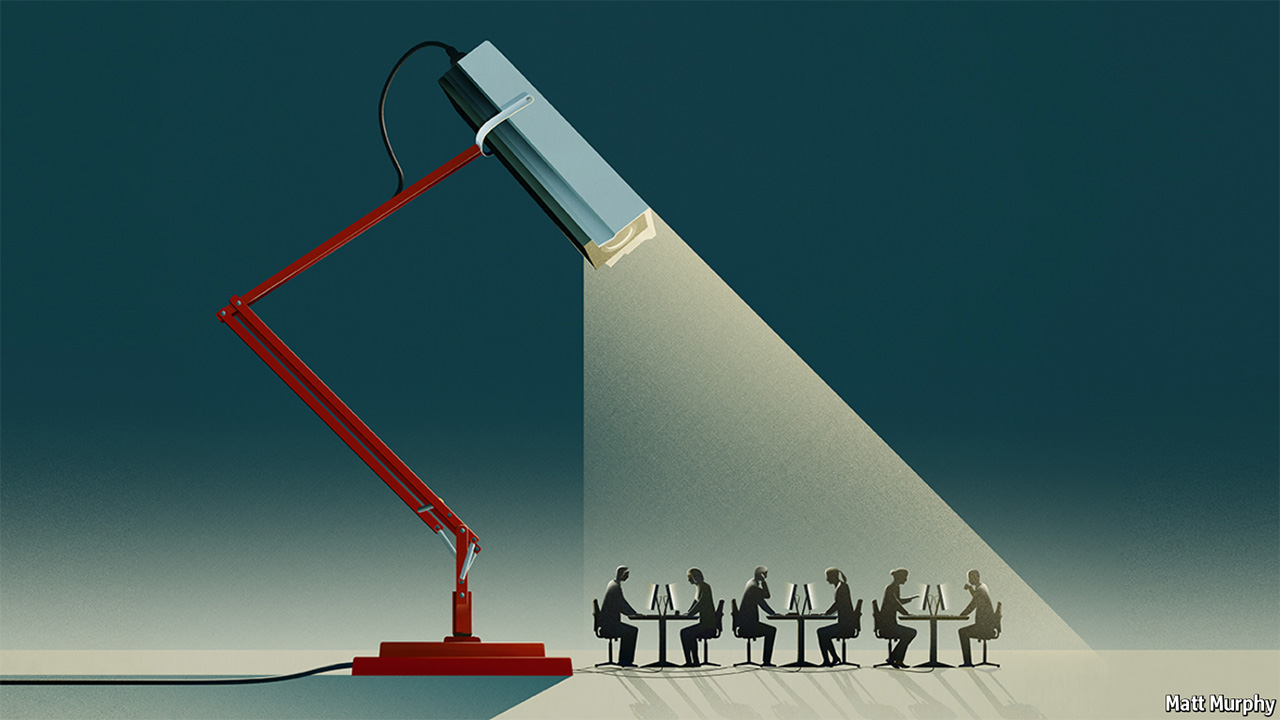
ARTIFICIAL intelligence (AI) is barging its way into business. As our special report this week explains, firms of all types are harnessing AI to forecast demand, hire workers and deal with customers. In 2017 companies spent around $22bn on AI-related mergers and acquisitions, about 26 times more than in 2015. The McKinsey Global Institute, a think-tank within a consultancy, reckons that just applying AI to marketing, sales and supply chains could create economic value, including profits and efficiencies, of $2.7trn over the next 20 years. Google’s boss has gone so far as to declare that AI will do more for humanity than fire or electricity.
Such grandiose forecasts kindle anxiety as well as hope. Many fret that AI could destroy jobs faster than it creates them. Barriers to entry from owning and generating data could lead to a handful of dominant firms in every industry.
Electronic surveillance

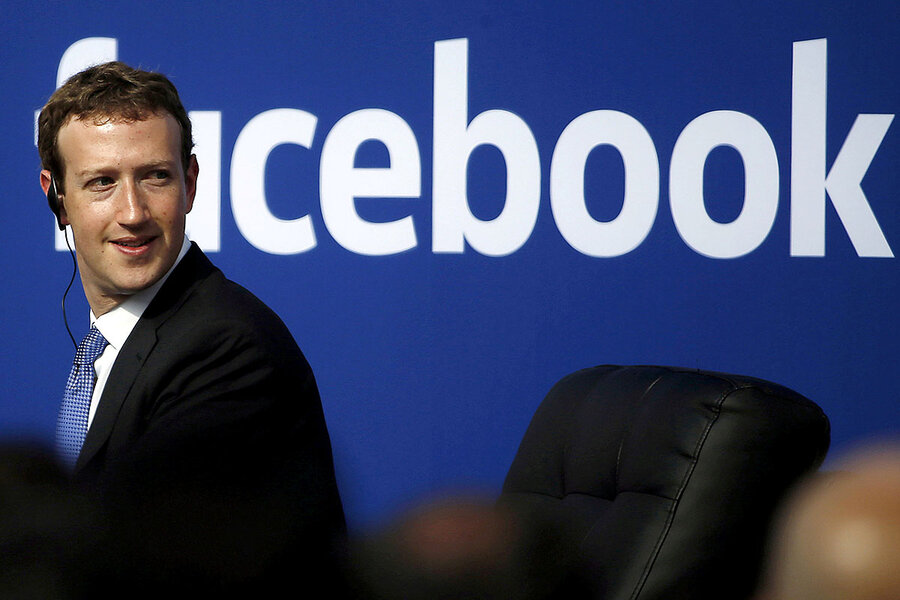
Facebook under fire, but it’s just part of ‘surveillance economy’

...That moment contributed to her growing realization that the digital economy – about which she had once had so much hope – had a hidden side, something she would come to call “surveillance capitalism.”

Although Facebook is currently at the center of a backlash against its sale of users’ personal data, the trend is much larger than that. It involves Google, Microsoft, Amazon, and a growing number of firms with nondigital roots, who are building tools to track and analyze how people act and where they go in the physical world as well as online.

The reason? If they can predict what consumers will do – what they’ll buy, where they’ll travel, even how they’ll vote – their data becomes extremely valuable.
Corruption

Senior Tory MPs accused of accepting money from former Soviet states

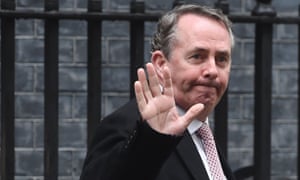
The UK’s trade secretary, Liam Fox
Allegations about financial links between two Conservative MPs and former Soviet states sympathetic to Vladimir Putin aired during a foreign affairs select committee hearing, prompted the chair to urge witnesses to stop repeating them, saying it was not a kangaroo court.
The claims, made under parliamentary privilege on Wednesday, concerned Liam Fox, the trade secretary, and John Whittingdale, the former culture secretary.
The Conservative chair, Tom Tugendhat, called for an inquiry into the role of corrupt Russian money in the British economy in the wake of the poisoning of the Russian double agent Sergei Skripal in Salisbury.
Tugendhat has been leading the calls on Tory benches for the British government and prosecuting authorities to clamp down on Russian money laundering and, in particular, oligarchs close to Putin with major assets in the UK.

Economic security

Almost 40% of the market value created during the Trump rally is gone


It’s been an ugly couple of weeks for the stock market.
After dropping 5% for the week ending March 23, stocks jumped 3% on Monday and gave almost all of this back on Tuesday. Markets are now sitting just above where they were in early February when the market dropped 10% in just a few days.
And with this past week’s latest leg lower being led by big tech names — notably Facebook (FB) — the total market cap the S&P 500 has shed since late January is now over $2 trillion. This drop has also erased almost 40% of the market cap gains the S&P has enjoyed since President Donald Trump was elected to office.
“From Election Day 2016 through the S&P 500’s last all-time high on January 26th, the index added $6.3 trillion in market cap to take its total market cap up to $25.46 trillion,” analysts at Bespoke Investment Group said in a blog post published Tuesday.
“Since the high on 1/26, the index has now lost $2.34 trillion in market cap, bringing the total down to $23.12 trillion. This means that 37% of the post-Trump gains in market cap have been erased during the current market pullback.” (Emphasis ours.)
Cybersecurity

The Illusion Of Perfect Cybersecurity


“Security is mostly a superstition. It does not exist in nature, nor do the children of men as a whole experience it. Avoiding danger is no safer in the long run than outright exposure. Life is either a daring adventure, or nothing.” – Helen Keller
One of my employees has a theory. The lock on your front door or the padlock on your locker isn’t actually a lock -- it’s a social contract. When you walk up to a door, the lock there is a little reminder from the owner that the stuff inside is his, and he would like you to leave that stuff alone.
We know in the physical world that locks aren’t perfect security. A padlock can easily be picked, shimmed or cut within seconds. Yet our society functions as though we believe our lockers, cars and homes are secure. A door can be taken off the hinges. You can break a window open. There hasn’t ever been a lock that couldn’t be picked. Almost.
Foreign affairs

The Threat of a Trade War Is Overblown―Real War Is Far More Likely
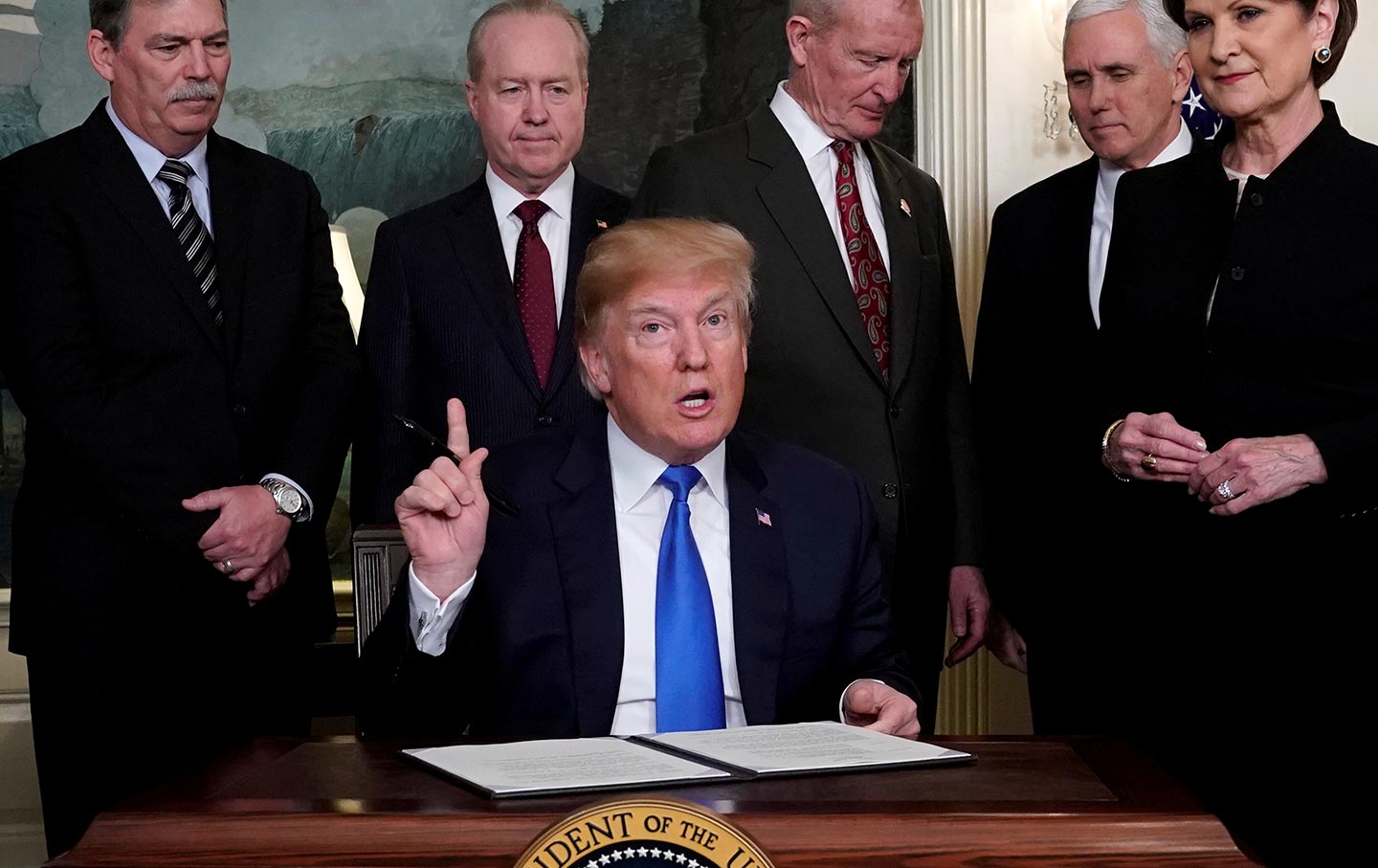
Trump China TariffsTrump has been all about weapons of mass distraction; the real danger now is that he will switch to the distraction of weapons as his presidency crumbles—with a real war, not a trade war. His appointment as national security adviser of the extremist John Bolton, who still defends the Iraq invasion and wants to bomb both North Korea and Iran, is an ugly premonition. The same goes for scrapping Secretary of State Rex Tillerson for Mike Pompeo, another advocate of bombing Iran.
On Fox News Sunday, Treasury Secretary Steven Mnuchin defended Trump’s acceptance of the omnibus spending bill by saying that “in Iran, in North Korea, in Venezuela, and Russia, all around the world where we’re using sanctions, we need to make sure we have a military that has the necessary resources.” At the same time, Mnuchin offered some soothing comments about trade negotiations with China, which calmed stock markets on Monday.
While most of the major media have expressed consternation at Trump’s new “war cabinet,” in the past such sentiments dissipated rapidly once the bombs started falling, as pundits and politicians rallied around the flag.
Defense

US general warns of hypersonic weapons threat from Russia and China

Hyten and other military officials say the current generation of missile detecting satellites and radars won't be enough to detect these new generation weapons. Hypersonic is generally defined as a speed of Mach 5 or over 3,806 miles per hour.
"We've watched them test those capabilities," Hyten told Congress last week. But with unusual public candor about potential US military shortfalls, he acknowledged "we don't have any defense that could deny the employment of such a weapon against us, so our response would be our deterrent force, which would be the triad and the nuclear capabilities that we have to respond to such a threat."
Hypersonic missiles fly into space after launch, but then come down and fly at high speeds on a flight path similar to an airplane. Their lower trajectory make them more difficult for US missile defense satellites and radars to detect. Russia has openly stated it is developing high-speed air-launched missiles as well as underwater hypersonic drones.
International security

Unproven Allegations Against Trump and Putin Are Risking Nuclear War
Картинки по запросу stephen f. cohenHaving discussed the fallacies of “Russiagate” often and at length, Cohen focuses on the Skripal affair. Putin had no conceivable motive, especially considering the upcoming World Cup Games in Russia, which both the government and the people consider to be very prestigious and thus important for the nation. No forensic or other evidence has yet been presented as to the nature of the purported nerve agent used or whether Russia still possesses it; or, even if so, whether Russia really is the only state whose agents did so; or when, where, and how it was inflicted on Skripal and his daughter; or why they and many others said to have been affected by this “lethal” agent are still alive. Nonetheless, even before the Organization for the Prohibition of Chemical Weapons has issued its obligatory tests, and while refusing to give the Russian government a required sample to test, the British leaders declared that it was “highly likely” Putin’s Kremlin had ordered the attack.
§ Nonetheless, on this flimsy basis, Western governments, led by the UK and reluctantly by the Trump administration, rushed to expel 100 or more Russian diplomats—the greatest number ever in this long history of such episodes.
§ It should be noted, however, that not all European governments did so, and a few others in only a token way, thereby again revealing European divisions over Russia policy.
Personal data security

Cambridge Analytica controversy must spur researchers to update data ethics

A sign showing a Facebook icon outside their corporate headquarters
Revelations keep emerging in the Cambridge Analytica personal-data scandal, which has captured global public attention for more than a week. But when the dust settles, researchers harvesting data online will face greater scrutiny. And so they should.
At the centre of the controversy is Aleksandr Kogan, a psychologist and neuroscientist at the University of Cambridge, UK. In 2014, he recruited people to complete a number of surveys and sign up to an app that handed over Facebook information on themselves — and tens of millions of Facebook friends. Kogan passed the data to SCL, a UK firm that later founded controversial political-consultancy firm Cambridge Analytica in London. (All those involved deny any wrongdoing.)
Last week, Facebook announced restrictions on data harvesting by third parties, including drastically reducing the kinds of information that app developers can access. (It had already changed its rules in 2014 to stop developers gleaning data from users’ friends through their apps.) But damage has been done: the public has good reason to be angry about the way in which researchers and companies have seemingly used personal data without consumers’ full understanding or consent.
Economic security

The Dow may break a 20-year record this week


The recent weakness in the U.S. stock market may mean the end of a couple of major streaks, including one that has stood for more than 20 years.
This week marks the final trading week of the first quarter of 2018, and at current levels it remains a tossup about whether major indexes will extend or end lengthy winning streaks on a quarterly basis.
With two full trading sessions left in the first three months of the year, the Dow Jones Industrial Average (^DJI) is down 1.3% for the quarter. If it closes in negative territory for the period, that will snap a nine-quarter streak of gains, the longest such streak for the blue-chip average since an 11-quarter rally that ended in the third quarter of 1997.
The S&P 500 (^GSPC) is also coming off nine straight quarterly gains, matching a streak that ended in the first quarter of 2015. Currently the S&P 500 is down 0.2% for the quarter, a move it could easily erase over the coming sessions. If it ends positive on the quarter, marking a 10th straight quarterly advance, that will represent the longest such streak since a 14-quarterly rally that ended in the second quarter of 1998.
On a total-return basis, the S&P is down 0.1% over the first quarter. The total-return S&P has also risen for nine straight quarters, but if it goes green for a 10th, that will only match the longest streak since a 10-quarter rally ending in the second quarter of 2015.
The Nasdaq Composite Index (^IXIC) looks safe to extend a notable quarterly streak of its own; it is up 4.3% thus far in the first quarter. However, that only represents its seventh straight quarterly gain, its longest such streak since a 10-quarter rally that ended in 2015.

Tuesday, March 27, 2018

Financial safety

The US needs to borrow almost $300 billion this week

Картинки по запросу us dollars
The United States plans to sell about $294 billion of debt, according to the Treasury Department. That's the highest for a week since the record set during the 2008 financial crisis.


Federal revenue is declining because of President Trump's tax cuts, so the government needs to borrow more to make ends meet. At the same time, Washington's borrowing costs have climbed rapidly in recent months.

"The amount of debt coming on the market this week is extremely large," said Rick Rieder, global chief investment officer of fixed income at BlackRock, the world's largest asset manager.

Awkward timing

The government is auctioning all this short- and longer-term debt at an awkward time. Last week, Trump vowed to impose wide-ranging tariffs on China, which owns of more Treasury bonds than any foreign country.

China responded by saying it would fight any trade war "to the end." When asked by Bloomberg Televisionwhether China was considering scaling back purchases of US debt, China's ambassador to the United States said, "We are looking at all options."

China holds $1.17 trillion of US debt. It trimmed those holdings by 1.4% between December and January, the latest data show.
International security

US House Intel Panel to Probe China Military Footprint in Africa

The People's Republic of China flag and the U.S. Stars and Stripes fly along Pennsylvania Avenue near the US Capitol during Chinese President Hu Jintao's state visit in Washington, DC, US on January 18, 2011.
China’s growing military and economic clout in Africa is the cause of serious concern in Washington.
Members of the House Intelligence Committee are going to investigate “many aspects” of China’s growing worldwide military and economic presence.
“We believe they are looking at investing in ports and infrastructure around the world, not just for military capabilities but also to control those governments,” the committee’s chairman, Devin Nunes, told Fox News.
He also mentioned the military base that China recently opened in Djibouti. 
In February 2016, Beijing said it was launching the construction of the Djibouti facility, which it calls a logistical center. The base was opened on August 1, 2017.
Military

How the Military Changed What America Eats


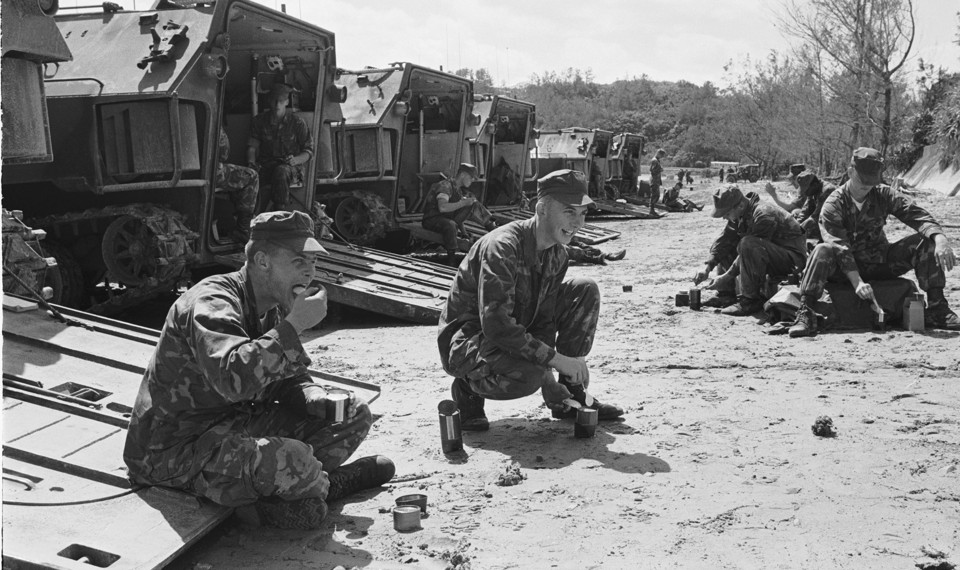
A black-and-white photo of U.S. Marines eating canned food behind a line of tanksFor most of us, eggs are perfect packets of portable protein, and pizza is the lazy option for dinner. For the research team at the U.S. Army Natick Soldier Systems Center, pizza and eggs are two of the most nightmarish food-science challenges of the last 50 years—but the struggle to perfect such dishes for the military has shaped civilian meals, too. Join us this episode as we venture into the Willy Wonka–style labs where the U.S. Army is developing the rations of the future, and then take a trip to the supermarket with the author Anastacia Marx de Salcedo to see how military R&D has made much of the food on our grocery-store shelves longer-lasting, more portable, and convenient—and, yes, more highly processed, too.
Nuclear security

How to Spot a Nuclear Bomb Program? Look for Ghostly Particles

What are nations like North Korea and Iran really doing at nuclear reactors that are out of sight?

Someday, wispy subatomic particles known as antineutrinos could provide a clear view of what countries with illicit nuclear weapons programs are trying to hide.

Antineutrinos are devilishly difficult to detect, but this quality is precisely what makes them potentially ideal for monitoring international nonproliferation agreements aimed at preventing the spread of atomic weapons.

A collaboration of American and British scientists announced on Tuesday that they would build a test antineutrino detector called Watchman in a mine on the northeast coast of England. The project is sponsored by the National Nuclear Security Administration, part of the United States Department of Energy.
Drug smuggling

Charges in Mexico-NY fentanyl smuggling case

An alleged drug trafficker was accused on Tuesday of flooding the New York City area with large quantities of fentanyl from Mexico at a time when overdoses related to the powerful opioid have skyrocketed.
Francisco Quiroz-Zamora faced drug-trafficking conspiracy charges following an investigation by the Drug Enforcement Administration, the office of Special Narcotics Prosecutor Bridget Brennan and other law enforcement agencies.
Quiroz-Zamora, 41, was arrested in a sting operation late last year after he traveled to New York City to collect a payment from an undercover agent posing as a drug dealer, authorities said. An indictment in state court charges him in connection with the seizure of more than 44 pounds of fentanyl last year at a hotel in the Bronx and at an apartment in upper Manhattan used as a stash house.
An arraignment for Quiroz-Zamora was scheduled for later Tuesday. His attorney did not immediately respond to a request for comment.
Last year, seizures of fentanyl in cases brought by the narcotics prosecutor increased from 35 pounds to 491 pounds. At the same time, fatal overdoses tied to fentanyl reached an all-time high of more than 1,400 in New York City in 2017, officials said.
The drug is far stronger than heroin and cheaper to produce, making the potential profit margin much higher for traffickers who usually mix it with heroin for sale to users who often don't know what they're getting, officials said.
Nuclear security

US nuclear stockpile decreasing in size, but not capability


The number of nuclear warheads kept in U.S. stockpiles decreased by nearly 200 since the end of the Obama administration, according to information released by the Defense Department in response to a Freedom of Information Act request from the Federation of American Scientists. This reduction brings the total number of warheads down to 3,822 as of September 2017.

While this downsizing may seem to contradict the Trump administration’s position on U.S. nuclear posture, these reductions reflect “a longer trend of the Pentagon working to reduce excess numbers of warheads while upgrading the remaining weapons,” according to Hans Kristensen, director of the nuclear information project at FAS.

In October 2017, President Donald Trump and Secretary of Defense Jim Mattis denied reports claiming the president was calling for an increase in the size of the U.S. nuclear arsenal.
Economic security

Opinion: Stocks may already be in a bear market —here’s how long it could last

The Dow Jones Industrial Average surged 670 points on Monday, but it will hit bottom on Mar. 4, 2019, at 18,328.27.
That’s on the assumption that a major bear market began at the Jan. 26 highs, and that the ensuing bear market will be average both in terms of length and loss.
That would mean we face 11 more months of a declining market, in which the Dow DJIA, +2.84%  will drop another 5,205 points (or 22.1%) from its Jan. 26 peak.
Of course, we don’t know yet whether we’re in a major bear market. The Dow’s impressive rally on Monday surely is letting the bulls breathe a little more easily, since last Friday the Dow Theory, the oldest stock-market timing system in widespread use today, came within a hair’s breadth of issuing a major bear market signal.

Power grid security

IF WE ARE GOING TO SPEND THE MONEY ANYWAY, LET’S SPEND IT TO HARDEN THE ELECTRIC GRID FROM AN EMP (ELECTROMAGNETIC PULSE)


Electricity
The HVTs are vulnerable to four types of attacks:
  1. EMP- An Electromagnetic Pulse is generated as a result of a nuclear bomb. It is a burst of electromagnetic energy that damages electrical equipment, such as the Supervisory Control and Data Acquisition (SCADA) systems regulating the voltage in HVTs. If the SCADA systems go down, the HVTs go down.
  2. CME- The sun is perhaps the most dangerous adversary of the electric grid. A Coronal Mass Ejection from the Sun would have the same effect as an EMP, but on a global scale. A CME is an ejection of particles from the sun, also known as a solar flare. These happen quite often. The last major CME event to hit the Earth was in 1859. When it hit, there were reports of sparks shooting off telegraph wires in telegraph stations. A CME event today could shut down electronic devices worldwide.
  3. Cyber- As we saw with Stuxnet, SCADA systems are vulnerable to cyber-attacks. Attacking the SCADA systems that run the electric grid could cause severe physical damage and shutdown significant portions of the system.
  4. Physical- Since 2013 there have been two attacks on electric substations. One in Metcalf, California and another in rural Utah. In both attacks the HVTs were targeted with rifles and caused temporary shutdowns.
Clearly the electric grid is the most important of the sixteen infrastructure sectors the Department of Homeland Security declared critical. Without electricity the banking system fails, without electricity the healthcare industry becomes non-existent, and without electricity there is no way to pump water to homes and businesses.
Innovations & technologies

DARPA Is Funding Time Crystal Research

The DoD’s Defense Advanced Research Projects Agency, or DARPA, announced a new program to fund research on these systems. More generally, the new DRINQS program will study exactly what its acronym stands for: “Driven and Nonequilibrium Quantum Systems.” But why?
“The applications could be for atomic clocks, where you have an ensemble of atoms you’re vibrating to extract time information,” Ale Lukaszew, program manager in DARPA’s defense sciences offices, told Gizmodo. “There might be applications related to measuring things with exquisite sensitivity in time and magnetic field domains. Not a lot of these applications are open for discussion.” In other words, time crystal-based military technology is classified.
Despite their name, time crystals are relatively easy to understand. Their atoms have an innate property called spin, which turns each one into the smallest possible bar magnets. Time crystals are systems of atoms with a regularly pulsing force, like an electric field, acting on them. This force causes the spins to swap directions regularly. Except the spin’s ticking need not align with the field’s pulsing.

EMP security

Official Washington flocking to Doomsday Camps

A building network of backwoods doomsday camps around the country are pulling in members from affluent areas and even Washington national security officials as the threats grow from nuclear war, an EMP or virus attack.
Called Fortitude Ranch, the outposts promise protection and a year’s supply of food for those unable to build their own bunker. What’s more, until a crisis strikes, they are being used for prepper training and vacations.
“We’re seeing members from all the three letter agencies,” said Fortitude creator Drew Miller, a retired Air Force colonel and intelligence officer, in a reference to the Central Intelligence Agency, Defense Intelligence Agency and Federal Bureau of Investigation.
He called an attack or even a weather-related electromagnetic pulse shutdown of the electric grid “inevitable,” and a driving force in his project.
One of his members from the Baltimore area, speaking on background, said that he and others joined after “waking up” to the potential of a national crisis from an attack, financial meltdown or political violence. “For most of us, something rattled our cages and woke us up,” he said.