National Security Council: Fractured Advice, Conflicting Messages
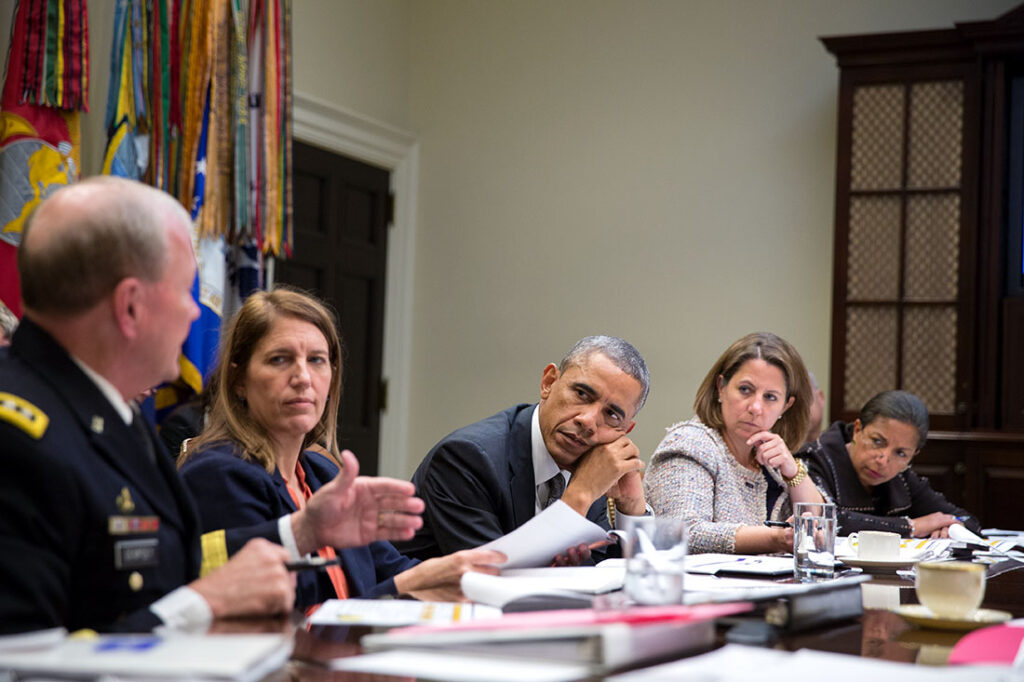
The most challenging national security problem for the Obama administration may be one of its own creation: the micromanagement of the Pentagon and Intelligence Community by a bloated and lackluster National Security Council.
This is one of those stories I’ve talked with dozens of people about for months. Every single person with whom I’ve spoken — Democrats and Republicans with vast experience in national security — has expressed deep worry about the issue and expressed exasperation with the administration’s conduct. They have been especially critical, regardless of party, of the performance of President Obama’s National Security Advisor Susan Rice.
A lifelong Democrat with more than 40 years experience told me he’d never seen such an inept group manning the desks in the NSC’s offices in the Old Executive Building. He pointed to the lack of real-world military or intelligence experience as a key problem. What are some of the symptoms?

No comments:
Post a Comment