Politics and Predictions: a Post-Cartesian Perspective (interview)
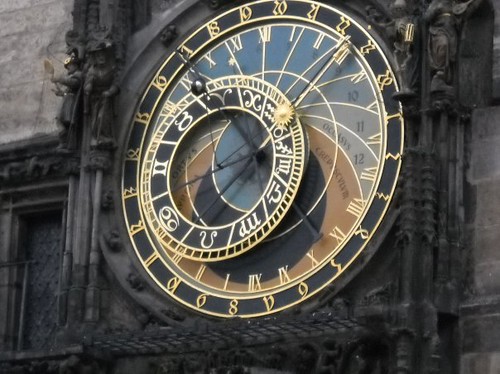 An erratic political primary season full of the unexpected may inspire the curious to extend their search for answers toward the secrets in the firmaments. In the ancient world, astrology was a revered science, although, with the advent of the Cartesian disassociation with symbolism and archetypes, it mostly fell into disfavor. But there are exceptions.
We know that the moon has effects on tides and moods. The Effect of the Full Moon on Human Behavior, a report by the American Institute of Medical Climatology, done for the Philadelphia Police Department, showed that "the full moon marks a monthly peak in various kinds of psychotically oriented crimes such as murder, arson, dangerous driving, and kleptomania."
Also, the Farmer's Almanac is well known for its predictions based on lunar cycles. Since the first edition was published in 1792, The Old Farmer's Almanac has included an astrology section in every issue.
And Descartes' perspective on the divorce of spirit and matter did not convince Carl Jung, who trailblazed a return to the archetypes, and to a world where there was indeed something superior to man's rational mind.
Jung stated that astrology was based on "meaningful coincidence," noting, importantly, that this "synchronicity does not admit causalityin the analogy between terrestrial events and astrological constellations." (Italics, mine.) Jung notes a "curious coincidence between astrological and psychological facts" and defines astrology as "projected psychology in which the different attitudes and temperaments of man are represented as gods and identified with planets and zodiacal constellations."

No comments:
Post a Comment